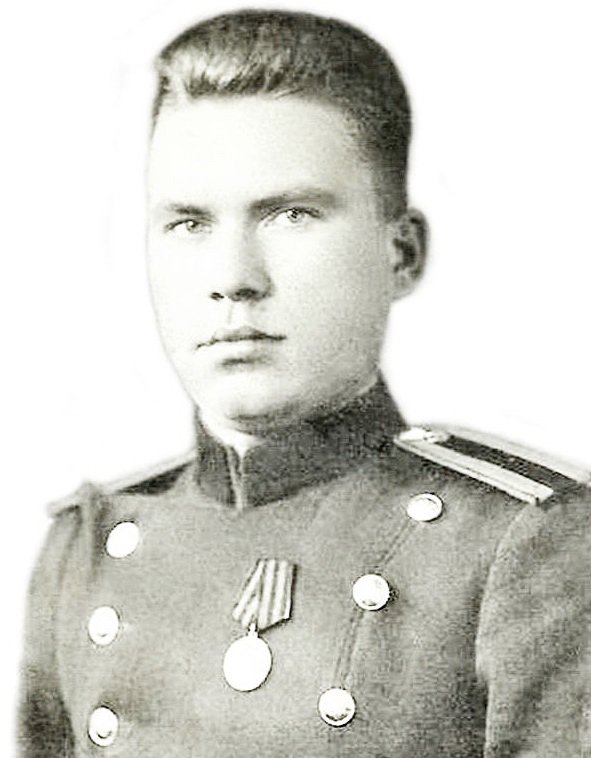
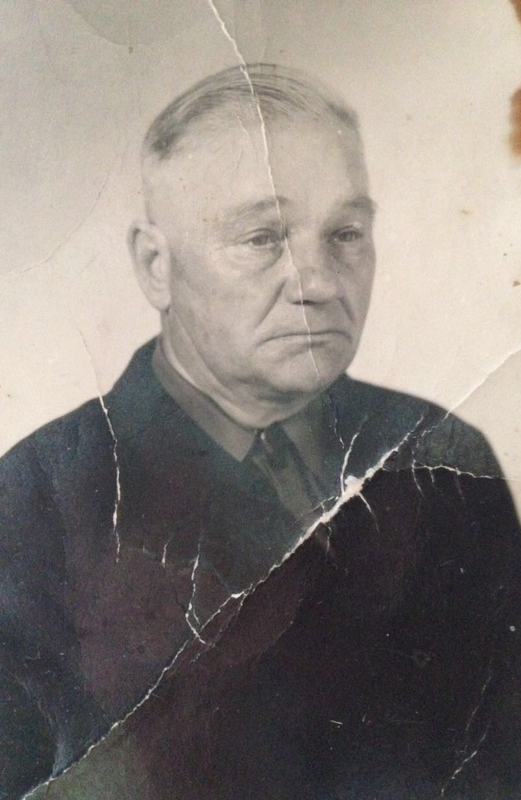
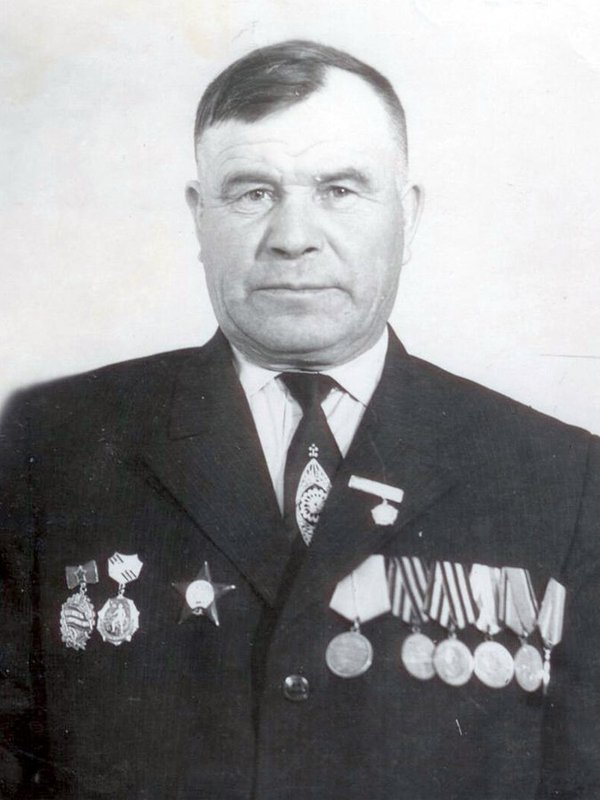
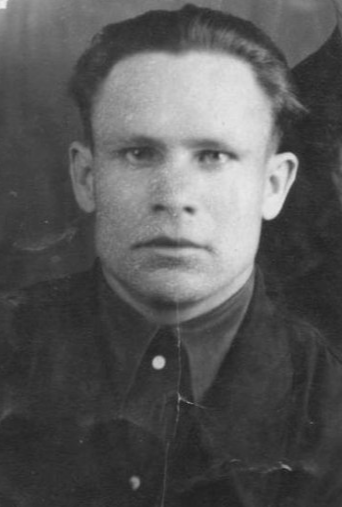
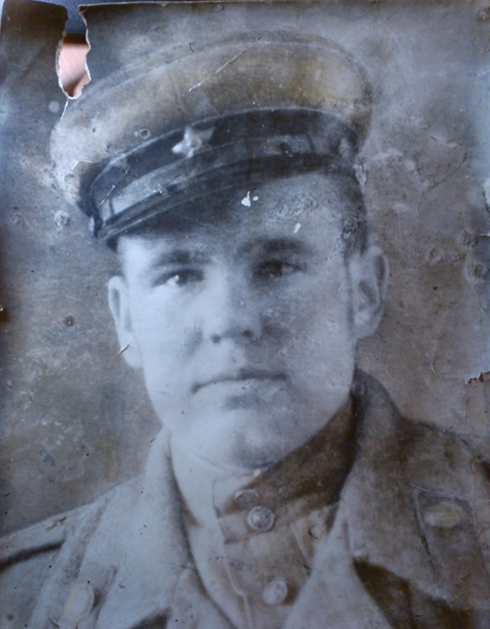
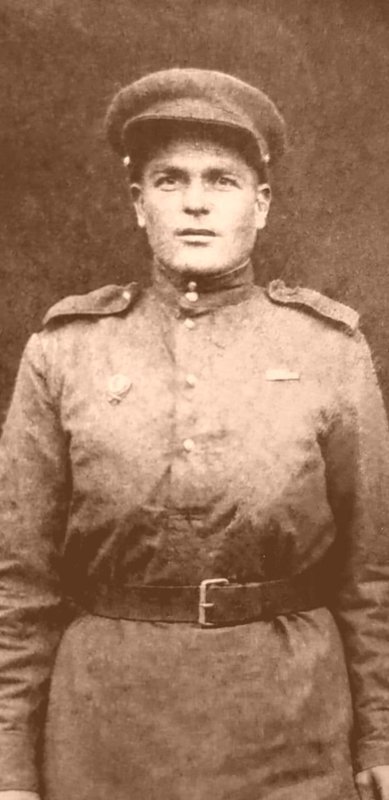
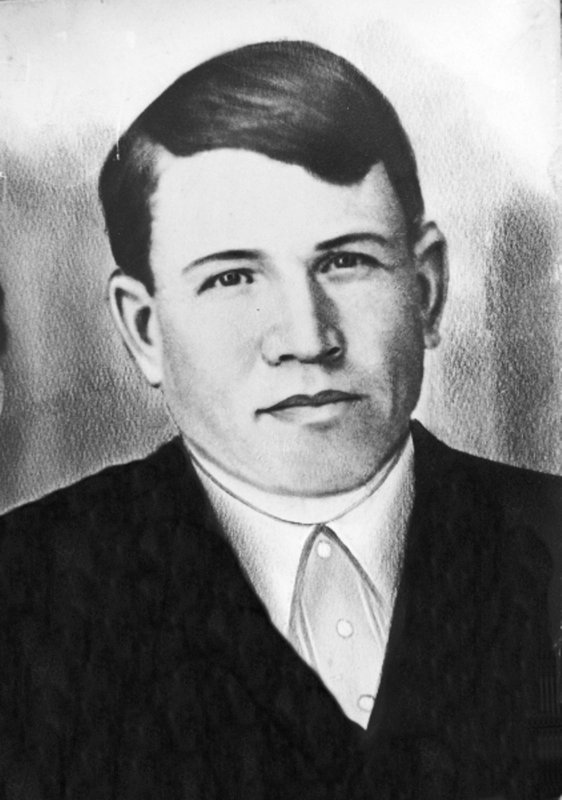
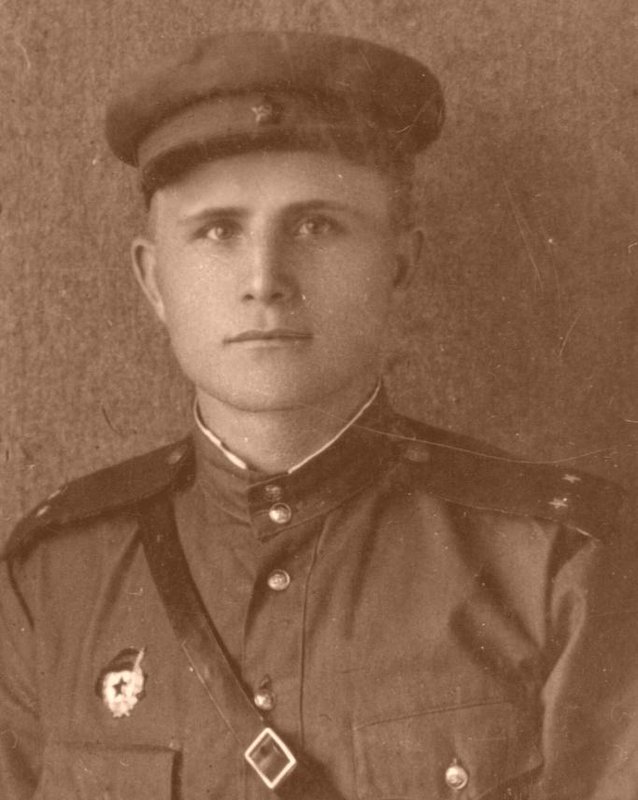


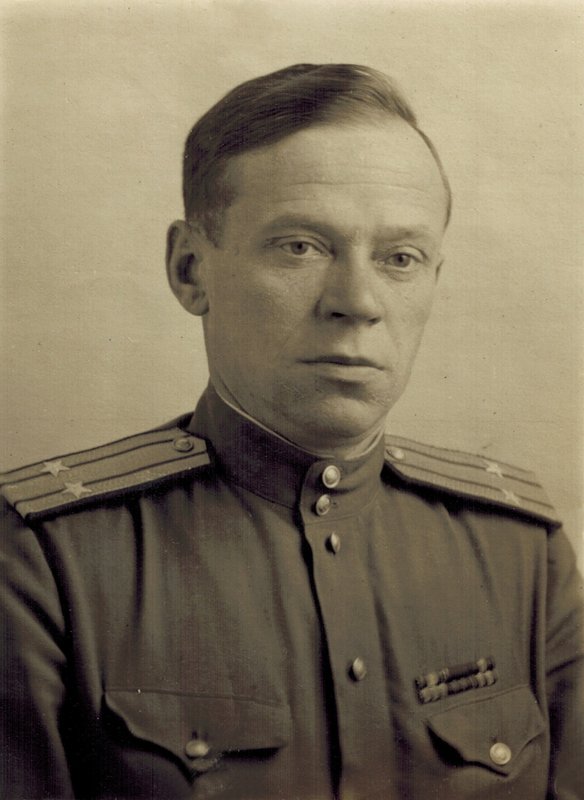
Kabanov Mikhail Ivanovich
Rank: Major. Branch of the armed forces: Military and political composition. Before the war, my grandfather, Mikhail Ivanovich Kabanov was born in the village of Pustotino Simeon district (now Korablinskiy) Ryazan region on October 28, 1905. In 1927, while working in the village of Archangel in the Ryazan region, he met and married my grandmother Valikova Marfa Ivanovna, where she worked as a paramedic in a hospital. In the same year, Mikhail Ivanovich joined the CPSU (b). The first daughter Vera was born in the same village of Archangel in 1928. The second – Olga – in 1930 in Ryazan. In 1933, Mikhail Ivanovich graduated from the Ryazan Pedagogical Institute as a teacher of history. Immediately after graduation, he was assigned to work as the Director of school No. 1 in the city of Ryazan. From 1935 to 1937, he worked as an inspector of the RONO, then from the beginning of 1938 to the beginning of 1940 –as head of the GorONO. Then he was transferred to work in the editorial office of the newspaper "Stalinskoe Znamya". On October 25, 1941, when he was already at the front, his youngest daughter, Natalia, my mother, was born. During the war, the story of the battle path will begin with a fragment of Mikhail Ivanovich's autobiography: "on July 3, 1941, on mobilization, I was drafted into the Red Army. Before that, I did not serve in the army, because during the draft in 1927 I was released from the register under article 36 (heart disease), but in 1933 I was awarded the title of reserve political officer, since 1939 – senior political officer. On mobilization, I was appointed military Commissar of the 536th separate motor transport battalion, the 14th automobile brigade, formed in the city of Ryazan. Until October 1941, I was in Moscow with the Motor Battalion, and as the reserve of the Commander-in-Chief (we) performed tasks of the General Staff Auto Department. In October, our battalion was transferred to the 10th airborne brigade, which operated as part of the 43rd army, Western front, Maloyaroslavets direction. In February 1942, due to the recall of the brigade for re-formation, our battalion moved to the reserve of the Western front. In April 1942, the battalion was integrated into the newly created 48th army in the area of Yelets, Bryansk front. In January 1943, I was appointed a lecturer in the political Department of the 48th army. I served in this position until it was disbanded and the Kazan military district was created on its basis." So, Mikhail Ivanovich served as a senior political officer and battalion Commissar in the 536th motor transport battalion, and then as a lecturer in the political Department of the 48th army. First, let us say a few words about the post of military Commissar. That position was not invented in Russia and long before the establishment of Soviet power. The Commissar in a military unit was appointed by the political leadership of the state to control the command and personnel. The Soviet government introduced this position during the Civil War to control "military experts" - former officers of the tsarist army, not all of whom were loyal. After the Civil war, the function of controlling the commanders was then taken away from the Commissars and Deputy commanders in the political part, replaced only by the educational function, then returned again. At the beginning of the Great Patriotic War, the political staff of the army had no control functions, the deputies were only educators and agitators. However, very soon, in July 1941, the Institute of Commissars was restored, and several tens of thousands of Communists were urgently mobilized into the army as political fighters. Among them was Mikhail Ivanovich. I do not fully understand why, despite his health exemption from military service, he was promoted to the rank of political worker. But, since the year of awarding the title coincides with the year of graduation, I assume that some military training was included in the general program. After the collapse of the Soviet Union, it became fashionable to criticize everything related to communist ideology. The Commissars also got it. They were accused of only interfering with their commanders and sitting at their headquarters. Of course, people are different, but when I studied the issue of Commissars, I found a very simple criterion for their activities. Among the political staff, the losses were the same as among other officers, so most of the political staff was holing up a headquarters! Among the bright examples of heroism of political workers, everyone remembers political instructor Vasily Georgievich Klochkov. In 1942, when the situation at the fronts was stabilized, one-man command was re-introduced, and the political fighters again became only educators. We will focus on these events later, but for now we will turn to the harsh days of October 1941, when the catastrophe near Moscow seemed inevitable. The 10th airborne brigade, to which the 536th Autobatic Battalion was assigned, was moved to positions on the Nara river on October 20, 1941. The defense from Naro-Fominsk to Serpukhov along the Nara river was held by the 43rd army. The enemy was unable to overcome this borderline. On October 21, 1941, the first battalion of the brigade was preparing a defensive strip at the Inino-Gorki-Olkhovo section (this is a section of the Warsaw highway 40 km southwest of Podolsk), the second battalion was defending Kresty; the third one - Stremilovo. On October 24, 1941 it defends Gorki-Olkhovo and goes into counterattack. On October 26, 1941, the brigade reached the Eastern Bank of the Nara river 1.5 kilometers South of the Gorki district. On October 27, 1941, the 2nd and 3rd battalions left the Eastern outskirts of the Gorki district and fought for the capture of the Olkhovka district and in the direction of the Cherpishnya district. On October 29, 1941, it was placed along the Northern Bank of the Nara river near the village of Stremilovo, together with parts of the 93rd rifle division and the 24th tank brigade, where it held the defense until December 1941. On December 18, the 10th airborne brigade, along with other units, went on the offensive, which resulted in the liberation of Maloyaroslavets on January 2, 1942, and Medyn on January 14. At the end of January, the brigade was withdrawn from combat and sent to re-form. The heroic city - Maloyaroslavets, in 1812 there was a heavy battle as well, and in 1941-early 1942 there were also very heavy battles. Not far from these places is the village of Tarutino, where Kutuzov's army was stationed in 1812. Troops of the army of the 2nd formation of the 48th army, which included the 536th motorized battalion, in April 1942 took up defense west of the city of Novosil. In late June-July 1942, they fought heavy defensive battles in the Yelets direction, during which they retreated to the line of Bolshoy Malinovets, Zalegoshch (55 km East of the city of Orel), Seteneva, Svetitsky (30 km West of the city of Livny) and firmly held it until February 1943. In June 1942, Mikhail Ivanovich was awarded the rank of battalion Commissar, which corresponds to the general military rank of Major. On October 9, 1942, by the Decree of the Presidium of the Supreme Soviet of the USSR "On Establishment of Full Unity and Abolition of the Institute of Military Commissars in the Red Army", the Institute of Commissars was replaced by the Institute of Deputy commanders for Political Affairs. Deputies was responsible for the education of personnel and was fully obeyed the commander. All Commissars were re-certified and received standard army and navy ranks; when re-certified, the rank was given a step lower. On November 5, 1942, Mikhail Ivanovich was awarded the rank of captain, which is one step lower than the rank of battalion Commissar.
It is written that the Institute of Military Commissars was abolished in many respects due to a huge shortage of command personnel, and a significant part of the Commissars were transferred to command positions. In the personal file of Mikhail Ivanovich stored in TSAMO, I found the following document, dated 30 November 1942 – " Presentation of the Military Council of the Bryansk Front": Captain M.I. Kabanov is submitted for approval as the Deputy Commander for the political part of the 536th Independent Motor Transport Battalion. At work of the Deputy Commander for the political part of the Motor Transport Battalion, comrade Kabanov proved to be a capable and energetic and thoughtful worker. Despite the fact that comrade Kabanov had no experience of party-political work in army conditions, he quickly mastered the forms and methods of party-political work in the Red Army. In his work, comrade Kabanov shows initiative, understands all the issues of life and living of subordinates, himself is directly connected with the masses, daily and specifically provides practical assistance to secretaries of party and Komsomol organizations in setting up intra-party and educational work. As a party leader, comrade Kabanov is a good and capable agitator, and he himself often makes reports and talks for the battalion staff. He is disciplined, demanding of himself and his subordinates. He works hard to improve his military knowledge and requires his subordinates to do so. The position he occupies is appropriate. The Military Council is petitioning for the approval of Comrade Kabanov as deputy commander of the 536th Independent Motor Transport Battalion's political part. Signed by Major-General Khalyuzin, commander of the 48th Army. In early 1943, Mikhail Ivanovich was transferred to the position of lecturer in the political Department of the 48th army. In February 1943, the 48th army launched an offensive in the direction of Maloarkhangelsk. By February 23, it reached the border southwest of Novosil, north of Maloarkhangelsk. In March, Mikhail Ivanovich was awarded the rank of Major. In the summer of 1943, the 48th army participated in the Battle of the Northern front of the Kursk bulge as part of the Central front. On July 5-11, 1943, a defensive operation took place in the Oryol-Kursk direction, followed by an operational pause (July 12-14) and a counterattack with an exit to the frontier before the German offensive (July 15-18). This battle is also part of the Kursk strategic defense operation (July 5-23, 1943). For participation in this battle, M. I. Kabanov was awarded the Order of "Patriotic War II degree". Brief description of his merits from the award sheet (based on archived materials of the site https://pamyat-naroda.ru/ [ https://pamyat-naroda.ru/ ] ): Major KaABANOV works as a POARM’s lecturer (of the political Department of the 48th army). When the divisions were on the defensive, com. Kabanov has repeatedly been at the frontline, providing great assistance to the command and the party political apparatus in the practical implementation of the instructions of the Military Council of the Army and the directives of the Head of the PURKKA (the main political Directorate of the RKKA) on the organization of party and political work at the frontline. On 5-6 July at when the Germans attacked, POARM was sent to 73rd SD (Rifle Division) and 471st JV (Rifle Regiment). Units of this regiment withstood 2 enemy attacks. Tov. KABANOV, being in the 2nd and 3rd companies of this regiment, did a lot of work to strengthen the resistance. For example, the 2nd company was attacked by the enemy's force reconnaissance. The company stubbornly maintained its line, the soldiers and commanders of this unit successfully repulsed the fierce attack of the enemy, inflicting great damage. At the end of the battle, tov. KABANOV helped the command of the regiment in summing up the results of this battle and identifying distinguished soldiers and commanders, their heroic deeds and high military skill became the property of the entire personnel of the regiment and division. From July 14 to 25, Major KABANOV was in 399 RD, where he provided effective assistance to the command and political apparatus in bringing the Central Front Military Council and the command's combat orders to the personnel. Working in 1345 RP 399 RD, tov. KABANOV did a lot of work with the Red Army personnel of the 1st battalion, as a result of which the battalion successfully broke through the enemy defenses in the Khoroshevsky area and thereby opened the way to the depth of the enemy defense to other parts of the division. Tov. KABANOV, being in the battle formations of 1345 RP, inspired the personnel with his passionate Bolshevik words, personal courage and bravery for the command's combat mission. As a result, the regiment occupied a number of settlements (Preobrazhenskoye, 1 and 2 Pozdeyevo, Borisoglebsky, etc.). These settlements are located 40...50 km South-East of Orel. The next major operation in which the 48th army took part was the Chernigov-Pripyat offensive (August 26-September 30, 1943). This operation was the first stage of the battle of the Dnieper. On September 3, Soviet troops reached Desna north of the city of Novgorod-Seversky, crossed the Seim river, liberated Konotop on September 6, and Novgorod-Seversky was liberated on September 16. Then the Central front was redirected from Kiev to Gomel direction. On September 21, Chernigov was liberated. The 48th army seized the bridgehead on the right bank of the Sozh river. Further, the number of bridgeheads was increased. The advance of the troops during the operation was 300-320 km in 30 days. In our family archive there is a photo taken on September 8, 1943 in the city of Seredina-Buda. On the back of it there is the following inscription: "Here is our entrance to this quiet Ukrainian town. The photo was taken right at the entrance to the city after a 130-kilometer incredibly dusty road." The photo shows five officers with dusty, dark faces, but wide, white-toothed smiles. They probably still had many kilometers to go that month. In 1943, the 48th army, already part of the Belorussian front, took part in another operation that went down in history as the Gomel-Rechitsa offensive. It was held from 10 to 30 November. During this operation, the city of Gomel was liberated on November 26, and the enemy's defenses were breached in a strip 100 km wide and 130 km deep. Mikhail Ivanovich was awarded the Order of the Red Star for his participation in the Gomel-Rechitsa operation, as well as in a private operation that the army conducted in early 1944 in the Bobruisk direction. Below is the text from the award list. Major KABANOV M. I., lecturer of the Political Department of the Army, from 16 to 22 November 1943 participated in the battle for Rechitsa, was personally involved in the training of personnel, 616 rifle regiment 194 RD, who first broke into the city and successfully broke enemy's resistance, was the first to reach the South-Eastern outskirts of the city. Major tov. KABANOV, together with the regiment's political workers, spoke directly with the personnel of the 1st Security Service Company (rifle battalion), targeting fighters, sergeants and officers for the quickest release of the working village occupied by the Germans. On the night of 18-19, he took part in the battle near the railway station, helped the regiment's command successfully complete the task, as a result of which the Germans were knocked out of the state farm and the working village. From February 14, 1944 to February 22, he was in the 96th Special Forces 338 SP 3 SB, conducted conversations in all companies of the battalion about the art of attack according to KHARLAMOV's article, paying special attention to the training of machine gunners and their role in battle. Units of this regiment, developing a successful offensive of 331 SP, almost without loss to themselves knocked the Germans out of the forest and captured the road. Being in the 331 JV of this division, he prepared the agitators of the units for their work in the offensive, as a result of which on February 19, the regiment skillfully used fire on the move to clear the village of Korma from the Germans and saddled the road.. Major KABANOV, as a lecturer of POARM' has done a lot of work on the education of officers, sergeants and enlisted personnel and has great authority among soldiers and officers. In the summer of 1944, the 48th army as part of the 1st Belorussian front participated in the Grand Belarusian offensive operation Bagration. During this operation, the 48th army captured the city of Zhlobin (June 26), Bobruisk (June 29) and reached the area South of Surazh. In August-early September, it marched with battles for about 150 km and reached the Narev river, where it went on the defensive. In 1945, the 48th army as part of the 2nd Belorussian, from February 11, the 3rd Belorussian fronts participated in the East Prussian strategic operation, during which its formations reached the Frisches Haff (Vistula) Bay on March 25, where they went on the defensive. Another preserved photo, taken on March 25, 1945, shows Mikhail Ivanovich with fellow soldiers in the city of Tigengof (near Gdansk). In February 1945, Mikhail Ivanovich was awarded the Order of the Red Banner. Next, the text from the award list. From January 15 to January 20, tov. KABANOV as a representative of the army Department worked in 96 SD, mainly in 338 SP. On the night of 17.1.45, 338 SP was assigned the task of capturing the village of Romanov. Comrade Kabanov, together with the command and the political apparatus, checked the units' readiness for a combat mission at night. He personally worked to prepare the personnel for the task. Units of the regiment rapidly attacked the enemy and at dawn captured the area, as a result of which the enemy was finally shot down from the last intermediate line, and this ensured the rapid pursuit of the retreating enemy. Working in 3 battalions of this regiment, Comrade Kabanov told the personnel about the Red Army's remarkable victories in the period of calmness, showed the valiant way of the 48th Army with a map in his hands, and convincingly told about the heroes of the army and their military skills. In addition to his direct propaganda and outreach work, Comrade Kabanov was actively engaged in rewarding distinguished heroes, evacuating wounded from the battlefield, burial of dead comrades, catering, pulling up the rear and other urgent issues of combat practice. The village of Romanovo is located on the territory of modern Poland near the town of Makow Mazowiecki. On April 10, during the East Prussian operation, the Konigsberg fortress was taken. Mikhail Ivanovich was awarded the medal "For the Capture of Konigsberg". Mikhail Ivanovich, like many other front-line soldiers, did not like to talk about the war. But one funny incident that happened at the end of the war has been preserved in our family legend. In 1945, in East Prussia, an American soldier somehow got into the location of the unit where Mikhail Ivanovich served. No one in our military knew a word of English. And only the grandfather proudly asked the American: "Du Yu drink whiskey"? He was just happy to hear his native speech. It is a pity that this phrase was the only one that my grandfather could put together in English. After the war, Mikhail Ivanovich remained in the army. He served as a lecturer, inspector of military educational institutions. In July 1958, he was transferred to the position of Deputy head of the faculty of foreign languages at the Military diplomatic Academy. Participated in the deployment of the faculty, which was created on the basis of the former Military Institute of foreign languages closed in 1955. In October 1959, Mikhail Ivanovich was declared unfit for military service in peacetime due to health reasons and was dismissed to the reserve with the rank of Colonel. As a civilian, he taught at a technical school. In addition, he worked as a lecturer at the society "Znanie", lectured on the international situation. He died in 1991.
Kabanov Mikhail Ivanovich
Rank: Major. Branch of the armed forces: Military and political composition. Before the war, my grandfather, Mikhail Ivanovich Kabanov was born in the village of Pustotino Simeon district (now Korablinskiy) Ryazan region on October 28, 1905. In 1927, while working in the village of Archangel in the Ryazan region, he met and married my grandmother Valikova Marfa Ivanovna, where she worked as a paramedic in a hospital. In the same year, Mikhail Ivanovich joined the CPSU (b). The first daughter Vera was born in the same village of Archangel in 1928. The second – Olga – in 1930 in Ryazan. In 1933, Mikhail Ivanovich graduated from the Ryazan Pedagogical Institute as a teacher of history. Immediately after graduation, he was assigned to work as the Director of school No. 1 in the city of Ryazan. From 1935 to 1937, he worked as an inspector of the RONO, then from the beginning of 1938 to the beginning of 1940 –as head of the GorONO. Then he was transferred to work in the editorial office of the newspaper "Stalinskoe Znamya". On October 25, 1941, when he was already at the front, his youngest daughter, Natalia, my mother, was born. During the war, the story of the battle path will begin with a fragment of Mikhail Ivanovich's autobiography: "on July 3, 1941, on mobilization, I was drafted into the Red Army. Before that, I did not serve in the army, because during the draft in 1927 I was released from the register under article 36 (heart disease), but in 1933 I was awarded the title of reserve political officer, since 1939 – senior political officer. On mobilization, I was appointed military Commissar of the 536th separate motor transport battalion, the 14th automobile brigade, formed in the city of Ryazan. Until October 1941, I was in Moscow with the Motor Battalion, and as the reserve of the Commander-in-Chief (we) performed tasks of the General Staff Auto Department. In October, our battalion was transferred to the 10th airborne brigade, which operated as part of the 43rd army, Western front, Maloyaroslavets direction. In February 1942, due to the recall of the brigade for re-formation, our battalion moved to the reserve of the Western front. In April 1942, the battalion was integrated into the newly created 48th army in the area of Yelets, Bryansk front. In January 1943, I was appointed a lecturer in the political Department of the 48th army. I served in this position until it was disbanded and the Kazan military district was created on its basis." So, Mikhail Ivanovich served as a senior political officer and battalion Commissar in the 536th motor transport battalion, and then as a lecturer in the political Department of the 48th army. First, let us say a few words about the post of military Commissar. That position was not invented in Russia and long before the establishment of Soviet power. The Commissar in a military unit was appointed by the political leadership of the state to control the command and personnel. The Soviet government introduced this position during the Civil War to control "military experts" - former officers of the tsarist army, not all of whom were loyal. After the Civil war, the function of controlling the commanders was then taken away from the Commissars and Deputy commanders in the political part, replaced only by the educational function, then returned again. At the beginning of the Great Patriotic War, the political staff of the army had no control functions, the deputies were only educators and agitators. However, very soon, in July 1941, the Institute of Commissars was restored, and several tens of thousands of Communists were urgently mobilized into the army as political fighters. Among them was Mikhail Ivanovich. I do not fully understand why, despite his health exemption from military service, he was promoted to the rank of political worker. But, since the year of awarding the title coincides with the year of graduation, I assume that some military training was included in the general program. After the collapse of the Soviet Union, it became fashionable to criticize everything related to communist ideology. The Commissars also got it. They were accused of only interfering with their commanders and sitting at their headquarters. Of course, people are different, but when I studied the issue of Commissars, I found a very simple criterion for their activities. Among the political staff, the losses were the same as among other officers, so most of the political staff was holing up a headquarters! Among the bright examples of heroism of political workers, everyone remembers political instructor Vasily Georgievich Klochkov. In 1942, when the situation at the fronts was stabilized, one-man command was re-introduced, and the political fighters again became only educators. We will focus on these events later, but for now we will turn to the harsh days of October 1941, when the catastrophe near Moscow seemed inevitable. The 10th airborne brigade, to which the 536th Autobatic Battalion was assigned, was moved to positions on the Nara river on October 20, 1941. The defense from Naro-Fominsk to Serpukhov along the Nara river was held by the 43rd army. The enemy was unable to overcome this borderline. On October 21, 1941, the first battalion of the brigade was preparing a defensive strip at the Inino-Gorki-Olkhovo section (this is a section of the Warsaw highway 40 km southwest of Podolsk), the second battalion was defending Kresty; the third one - Stremilovo. On October 24, 1941 it defends Gorki-Olkhovo and goes into counterattack. On October 26, 1941, the brigade reached the Eastern Bank of the Nara river 1.5 kilometers South of the Gorki district. On October 27, 1941, the 2nd and 3rd battalions left the Eastern outskirts of the Gorki district and fought for the capture of the Olkhovka district and in the direction of the Cherpishnya district. On October 29, 1941, it was placed along the Northern Bank of the Nara river near the village of Stremilovo, together with parts of the 93rd rifle division and the 24th tank brigade, where it held the defense until December 1941. On December 18, the 10th airborne brigade, along with other units, went on the offensive, which resulted in the liberation of Maloyaroslavets on January 2, 1942, and Medyn on January 14. At the end of January, the brigade was withdrawn from combat and sent to re-form. The heroic city - Maloyaroslavets, in 1812 there was a heavy battle as well, and in 1941-early 1942 there were also very heavy battles. Not far from these places is the village of Tarutino, where Kutuzov's army was stationed in 1812. Troops of the army of the 2nd formation of the 48th army, which included the 536th motorized battalion, in April 1942 took up defense west of the city of Novosil. In late June-July 1942, they fought heavy defensive battles in the Yelets direction, during which they retreated to the line of Bolshoy Malinovets, Zalegoshch (55 km East of the city of Orel), Seteneva, Svetitsky (30 km West of the city of Livny) and firmly held it until February 1943. In June 1942, Mikhail Ivanovich was awarded the rank of battalion Commissar, which corresponds to the general military rank of Major. On October 9, 1942, by the Decree of the Presidium of the Supreme Soviet of the USSR "On Establishment of Full Unity and Abolition of the Institute of Military Commissars in the Red Army", the Institute of Commissars was replaced by the Institute of Deputy commanders for Political Affairs. Deputies was responsible for the education of personnel and was fully obeyed the commander. All Commissars were re-certified and received standard army and navy ranks; when re-certified, the rank was given a step lower. On November 5, 1942, Mikhail Ivanovich was awarded the rank of captain, which is one step lower than the rank of battalion Commissar.
It is written that the Institute of Military Commissars was abolished in many respects due to a huge shortage of command personnel, and a significant part of the Commissars were transferred to command positions. In the personal file of Mikhail Ivanovich stored in TSAMO, I found the following document, dated 30 November 1942 – " Presentation of the Military Council of the Bryansk Front": Captain M.I. Kabanov is submitted for approval as the Deputy Commander for the political part of the 536th Independent Motor Transport Battalion. At work of the Deputy Commander for the political part of the Motor Transport Battalion, comrade Kabanov proved to be a capable and energetic and thoughtful worker. Despite the fact that comrade Kabanov had no experience of party-political work in army conditions, he quickly mastered the forms and methods of party-political work in the Red Army. In his work, comrade Kabanov shows initiative, understands all the issues of life and living of subordinates, himself is directly connected with the masses, daily and specifically provides practical assistance to secretaries of party and Komsomol organizations in setting up intra-party and educational work. As a party leader, comrade Kabanov is a good and capable agitator, and he himself often makes reports and talks for the battalion staff. He is disciplined, demanding of himself and his subordinates. He works hard to improve his military knowledge and requires his subordinates to do so. The position he occupies is appropriate. The Military Council is petitioning for the approval of Comrade Kabanov as deputy commander of the 536th Independent Motor Transport Battalion's political part. Signed by Major-General Khalyuzin, commander of the 48th Army. In early 1943, Mikhail Ivanovich was transferred to the position of lecturer in the political Department of the 48th army. In February 1943, the 48th army launched an offensive in the direction of Maloarkhangelsk. By February 23, it reached the border southwest of Novosil, north of Maloarkhangelsk. In March, Mikhail Ivanovich was awarded the rank of Major. In the summer of 1943, the 48th army participated in the Battle of the Northern front of the Kursk bulge as part of the Central front. On July 5-11, 1943, a defensive operation took place in the Oryol-Kursk direction, followed by an operational pause (July 12-14) and a counterattack with an exit to the frontier before the German offensive (July 15-18). This battle is also part of the Kursk strategic defense operation (July 5-23, 1943). For participation in this battle, M. I. Kabanov was awarded the Order of "Patriotic War II degree". Brief description of his merits from the award sheet (based on archived materials of the site https://pamyat-naroda.ru/ [ https://pamyat-naroda.ru/ ] ): Major KaABANOV works as a POARM’s lecturer (of the political Department of the 48th army). When the divisions were on the defensive, com. Kabanov has repeatedly been at the frontline, providing great assistance to the command and the party political apparatus in the practical implementation of the instructions of the Military Council of the Army and the directives of the Head of the PURKKA (the main political Directorate of the RKKA) on the organization of party and political work at the frontline. On 5-6 July at when the Germans attacked, POARM was sent to 73rd SD (Rifle Division) and 471st JV (Rifle Regiment). Units of this regiment withstood 2 enemy attacks. Tov. KABANOV, being in the 2nd and 3rd companies of this regiment, did a lot of work to strengthen the resistance. For example, the 2nd company was attacked by the enemy's force reconnaissance. The company stubbornly maintained its line, the soldiers and commanders of this unit successfully repulsed the fierce attack of the enemy, inflicting great damage. At the end of the battle, tov. KABANOV helped the command of the regiment in summing up the results of this battle and identifying distinguished soldiers and commanders, their heroic deeds and high military skill became the property of the entire personnel of the regiment and division. From July 14 to 25, Major KABANOV was in 399 RD, where he provided effective assistance to the command and political apparatus in bringing the Central Front Military Council and the command's combat orders to the personnel. Working in 1345 RP 399 RD, tov. KABANOV did a lot of work with the Red Army personnel of the 1st battalion, as a result of which the battalion successfully broke through the enemy defenses in the Khoroshevsky area and thereby opened the way to the depth of the enemy defense to other parts of the division. Tov. KABANOV, being in the battle formations of 1345 RP, inspired the personnel with his passionate Bolshevik words, personal courage and bravery for the command's combat mission. As a result, the regiment occupied a number of settlements (Preobrazhenskoye, 1 and 2 Pozdeyevo, Borisoglebsky, etc.). These settlements are located 40...50 km South-East of Orel. The next major operation in which the 48th army took part was the Chernigov-Pripyat offensive (August 26-September 30, 1943). This operation was the first stage of the battle of the Dnieper. On September 3, Soviet troops reached Desna north of the city of Novgorod-Seversky, crossed the Seim river, liberated Konotop on September 6, and Novgorod-Seversky was liberated on September 16. Then the Central front was redirected from Kiev to Gomel direction. On September 21, Chernigov was liberated. The 48th army seized the bridgehead on the right bank of the Sozh river. Further, the number of bridgeheads was increased. The advance of the troops during the operation was 300-320 km in 30 days. In our family archive there is a photo taken on September 8, 1943 in the city of Seredina-Buda. On the back of it there is the following inscription: "Here is our entrance to this quiet Ukrainian town. The photo was taken right at the entrance to the city after a 130-kilometer incredibly dusty road." The photo shows five officers with dusty, dark faces, but wide, white-toothed smiles. They probably still had many kilometers to go that month. In 1943, the 48th army, already part of the Belorussian front, took part in another operation that went down in history as the Gomel-Rechitsa offensive. It was held from 10 to 30 November. During this operation, the city of Gomel was liberated on November 26, and the enemy's defenses were breached in a strip 100 km wide and 130 km deep. Mikhail Ivanovich was awarded the Order of the Red Star for his participation in the Gomel-Rechitsa operation, as well as in a private operation that the army conducted in early 1944 in the Bobruisk direction. Below is the text from the award list. Major KABANOV M. I., lecturer of the Political Department of the Army, from 16 to 22 November 1943 participated in the battle for Rechitsa, was personally involved in the training of personnel, 616 rifle regiment 194 RD, who first broke into the city and successfully broke enemy's resistance, was the first to reach the South-Eastern outskirts of the city. Major tov. KABANOV, together with the regiment's political workers, spoke directly with the personnel of the 1st Security Service Company (rifle battalion), targeting fighters, sergeants and officers for the quickest release of the working village occupied by the Germans. On the night of 18-19, he took part in the battle near the railway station, helped the regiment's command successfully complete the task, as a result of which the Germans were knocked out of the state farm and the working village. From February 14, 1944 to February 22, he was in the 96th Special Forces 338 SP 3 SB, conducted conversations in all companies of the battalion about the art of attack according to KHARLAMOV's article, paying special attention to the training of machine gunners and their role in battle. Units of this regiment, developing a successful offensive of 331 SP, almost without loss to themselves knocked the Germans out of the forest and captured the road. Being in the 331 JV of this division, he prepared the agitators of the units for their work in the offensive, as a result of which on February 19, the regiment skillfully used fire on the move to clear the village of Korma from the Germans and saddled the road.. Major KABANOV, as a lecturer of POARM' has done a lot of work on the education of officers, sergeants and enlisted personnel and has great authority among soldiers and officers. In the summer of 1944, the 48th army as part of the 1st Belorussian front participated in the Grand Belarusian offensive operation Bagration. During this operation, the 48th army captured the city of Zhlobin (June 26), Bobruisk (June 29) and reached the area South of Surazh. In August-early September, it marched with battles for about 150 km and reached the Narev river, where it went on the defensive. In 1945, the 48th army as part of the 2nd Belorussian, from February 11, the 3rd Belorussian fronts participated in the East Prussian strategic operation, during which its formations reached the Frisches Haff (Vistula) Bay on March 25, where they went on the defensive. Another preserved photo, taken on March 25, 1945, shows Mikhail Ivanovich with fellow soldiers in the city of Tigengof (near Gdansk). In February 1945, Mikhail Ivanovich was awarded the Order of the Red Banner. Next, the text from the award list. From January 15 to January 20, tov. KABANOV as a representative of the army Department worked in 96 SD, mainly in 338 SP. On the night of 17.1.45, 338 SP was assigned the task of capturing the village of Romanov. Comrade Kabanov, together with the command and the political apparatus, checked the units' readiness for a combat mission at night. He personally worked to prepare the personnel for the task. Units of the regiment rapidly attacked the enemy and at dawn captured the area, as a result of which the enemy was finally shot down from the last intermediate line, and this ensured the rapid pursuit of the retreating enemy. Working in 3 battalions of this regiment, Comrade Kabanov told the personnel about the Red Army's remarkable victories in the period of calmness, showed the valiant way of the 48th Army with a map in his hands, and convincingly told about the heroes of the army and their military skills. In addition to his direct propaganda and outreach work, Comrade Kabanov was actively engaged in rewarding distinguished heroes, evacuating wounded from the battlefield, burial of dead comrades, catering, pulling up the rear and other urgent issues of combat practice. The village of Romanovo is located on the territory of modern Poland near the town of Makow Mazowiecki. On April 10, during the East Prussian operation, the Konigsberg fortress was taken. Mikhail Ivanovich was awarded the medal "For the Capture of Konigsberg". Mikhail Ivanovich, like many other front-line soldiers, did not like to talk about the war. But one funny incident that happened at the end of the war has been preserved in our family legend. In 1945, in East Prussia, an American soldier somehow got into the location of the unit where Mikhail Ivanovich served. No one in our military knew a word of English. And only the grandfather proudly asked the American: "Du Yu drink whiskey"? He was just happy to hear his native speech. It is a pity that this phrase was the only one that my grandfather could put together in English. After the war, Mikhail Ivanovich remained in the army. He served as a lecturer, inspector of military educational institutions. In July 1958, he was transferred to the position of Deputy head of the faculty of foreign languages at the Military diplomatic Academy. Participated in the deployment of the faculty, which was created on the basis of the former Military Institute of foreign languages closed in 1955. In October 1959, Mikhail Ivanovich was declared unfit for military service in peacetime due to health reasons and was dismissed to the reserve with the rank of Colonel. As a civilian, he taught at a technical school. In addition, he worked as a lecturer at the society "Znanie", lectured on the international situation. He died in 1991.
0 comment



2026 © Russian Military Historical Society Developed by Jetmix