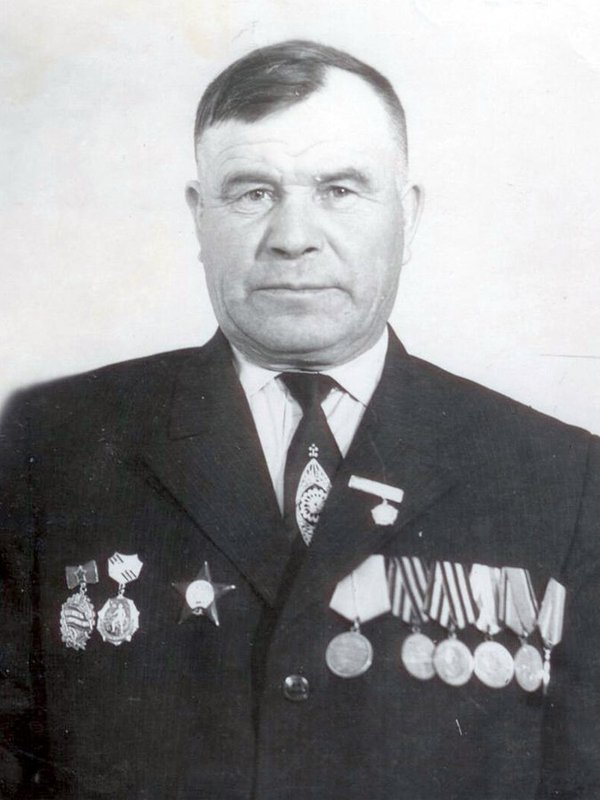
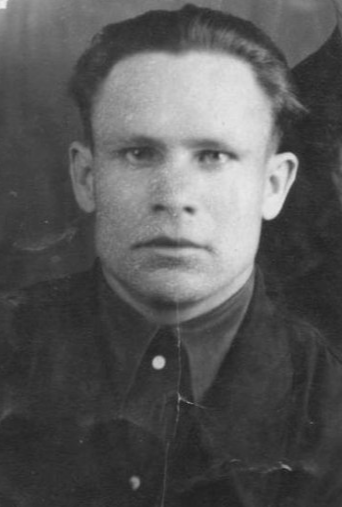
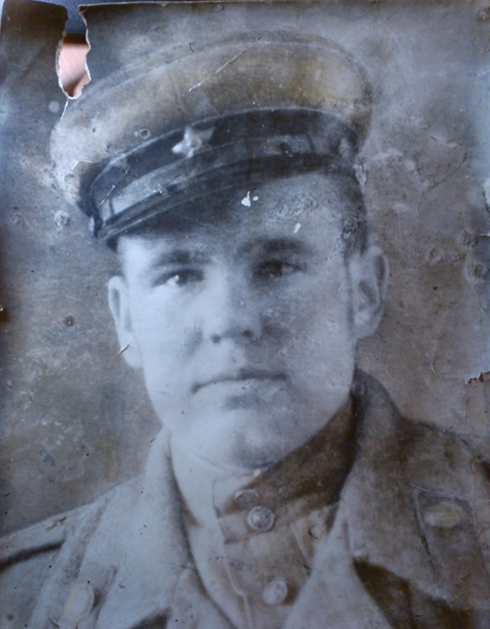
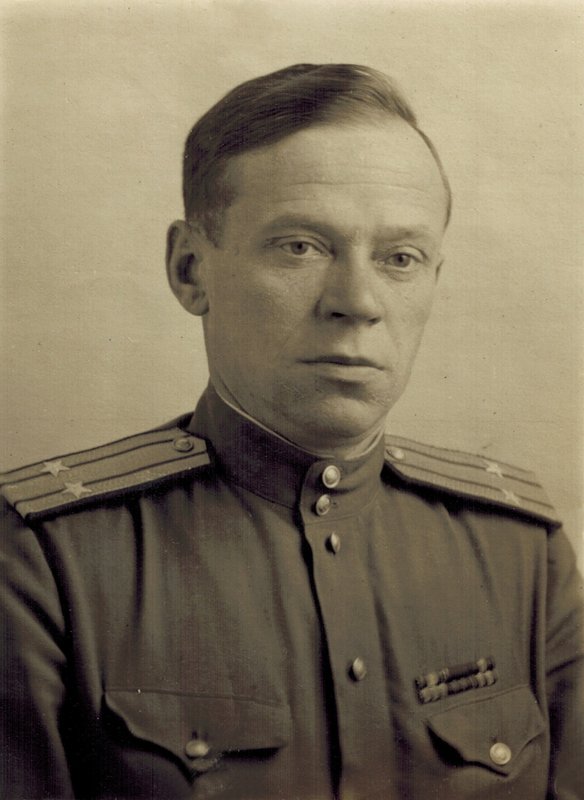
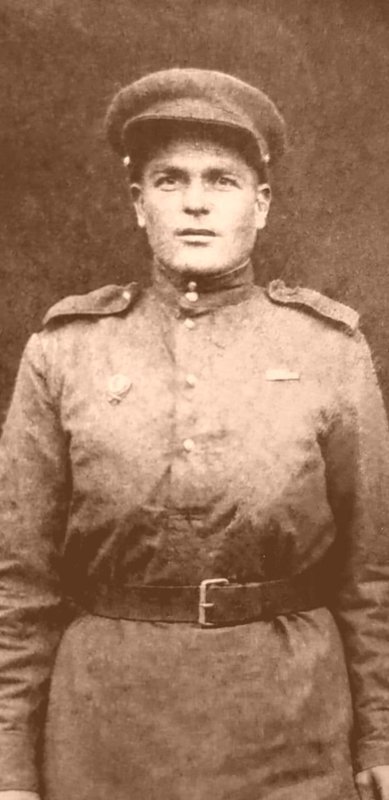
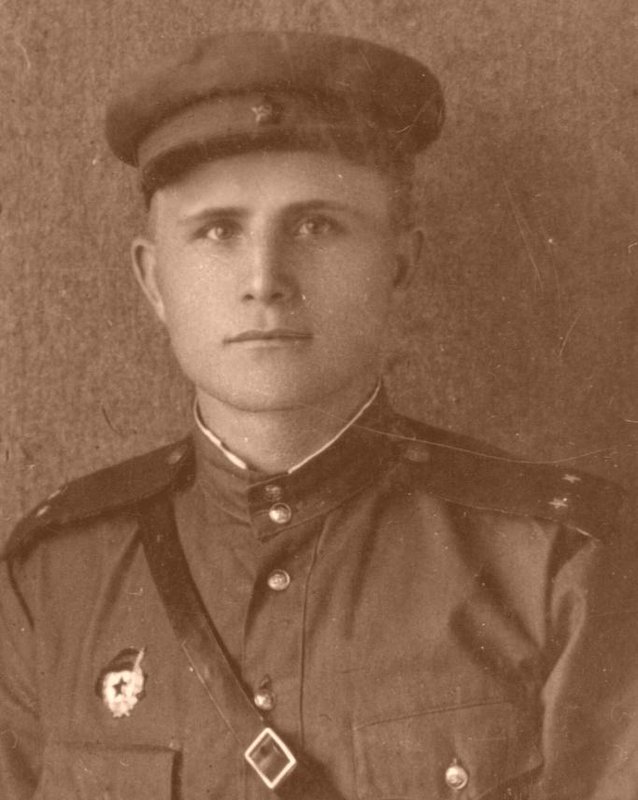


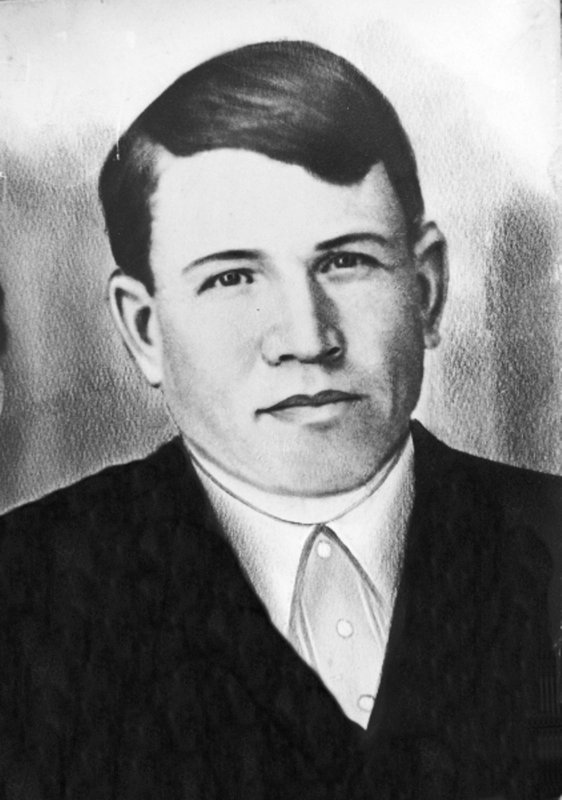
Kugaevsky Philipp Tikhonovich
Rank: Red Army soldier. Division: 368th Pechenga Red Banner rifle division. He was called up in 1941 and fought until October 11, 1942. According to this date, he was injured and taken to the hospital already dead. He was buried in the village of Patrikeevna, Oshta district, Vologda region. Currently, the village Patrikeevna does not exist, since several villages have been combined. Two villages were formed: Upper Vodlitsa and Lower Vodlitsa and now in the village of Oshta, Vologda region, Vytegra district stands a memorial to soldiers who fought in these places. Oshta residents remember their defenders and honor their memory. In the center of the village, an obelisk with the names of the dead soldiers whose names were identified was erected on a mass grave. A monument "The enemy was stopped here" was erected on the defense line. In the village of Vodlitsa, which is located ten kilometers from Oshta, there is a monument to those who died during mine clearance. In the village of Oshta there is a branch of the Vytegorsky Museum of local lore, one of the sections of which is dedicated to the Great Patriotic War, the defenders of the frontier. The Oshta secondary school has a Museum of Military Glory, which most fully reflects the combat exploits of soldiers of the 272nd and 368th rifle divisions. Philip Tikhonovich Kugaevsky, a Red Army soldier, was also buried there. He fought on the banks of lake Onega and lake Ladoga in the 368th rifle division and 1228th rifle regiment. 368 Pechenga Red Banner rifle division was formed in autumn 1941 in Tyumen. According to the Directive of the Stavka VGK No. 004275 to the commander of the Sibvo troops on the formation of the 58th reserve army on November 2, 1941, the division was included in the 58th reserve army and by November 7, 1941, it was ordered to prepare the division for transfer to Vytegra. From 6 to 10 November 1941, the division was loaded into wagons and sent to Nyandoma station. From here, in 10 days, the division covered 340 kilometers on foot across the snow-covered virgin land to the front line to Vytegra and on November 23, 1941, occupied the designated defense line. Then, the 368th rifle division as part of the 58th reserve army from March 7, 1942, in accordance with the order to the troops of the 7th separate army No. 00194 of March 14, 1942, became part of the troops of the 1st operational group of the 7th separate Army. Based on the Directive of the Supreme high command Headquarters No. 994055 and order of the 7th separate Army No. OP / 00492 of June 15, 1942, the 1st operational group was re-formed into the 4th rifle corps. At the entrance to the professional College No. 18 (Permyakova street, 3 k. 1) in Tyumen, there is a monument to soldiers and officers of the 368th Siberian rifle division. The Lyceum has had a Museum of the 368th division since 1974. Currently, in the village of Oshta, Vologda region, Vytegorsky district, there is a memorial to the soldiers who fought in these places.
Kugaevsky Philipp Tikhonovich
Rank: Red Army soldier. Division: 368th Pechenga Red Banner rifle division. He was called up in 1941 and fought until October 11, 1942. According to this date, he was injured and taken to the hospital already dead. He was buried in the village of Patrikeevna, Oshta district, Vologda region. Currently, the village Patrikeevna does not exist, since several villages have been combined. Two villages were formed: Upper Vodlitsa and Lower Vodlitsa and now in the village of Oshta, Vologda region, Vytegra district stands a memorial to soldiers who fought in these places. Oshta residents remember their defenders and honor their memory. In the center of the village, an obelisk with the names of the dead soldiers whose names were identified was erected on a mass grave. A monument "The enemy was stopped here" was erected on the defense line. In the village of Vodlitsa, which is located ten kilometers from Oshta, there is a monument to those who died during mine clearance. In the village of Oshta there is a branch of the Vytegorsky Museum of local lore, one of the sections of which is dedicated to the Great Patriotic War, the defenders of the frontier. The Oshta secondary school has a Museum of Military Glory, which most fully reflects the combat exploits of soldiers of the 272nd and 368th rifle divisions. Philip Tikhonovich Kugaevsky, a Red Army soldier, was also buried there. He fought on the banks of lake Onega and lake Ladoga in the 368th rifle division and 1228th rifle regiment. 368 Pechenga Red Banner rifle division was formed in autumn 1941 in Tyumen. According to the Directive of the Stavka VGK No. 004275 to the commander of the Sibvo troops on the formation of the 58th reserve army on November 2, 1941, the division was included in the 58th reserve army and by November 7, 1941, it was ordered to prepare the division for transfer to Vytegra. From 6 to 10 November 1941, the division was loaded into wagons and sent to Nyandoma station. From here, in 10 days, the division covered 340 kilometers on foot across the snow-covered virgin land to the front line to Vytegra and on November 23, 1941, occupied the designated defense line. Then, the 368th rifle division as part of the 58th reserve army from March 7, 1942, in accordance with the order to the troops of the 7th separate army No. 00194 of March 14, 1942, became part of the troops of the 1st operational group of the 7th separate Army. Based on the Directive of the Supreme high command Headquarters No. 994055 and order of the 7th separate Army No. OP / 00492 of June 15, 1942, the 1st operational group was re-formed into the 4th rifle corps. At the entrance to the professional College No. 18 (Permyakova street, 3 k. 1) in Tyumen, there is a monument to soldiers and officers of the 368th Siberian rifle division. The Lyceum has had a Museum of the 368th division since 1974. Currently, in the village of Oshta, Vologda region, Vytegorsky district, there is a memorial to the soldiers who fought in these places.
0 comment




2026 © Russian Military Historical Society Developed by Jetmix