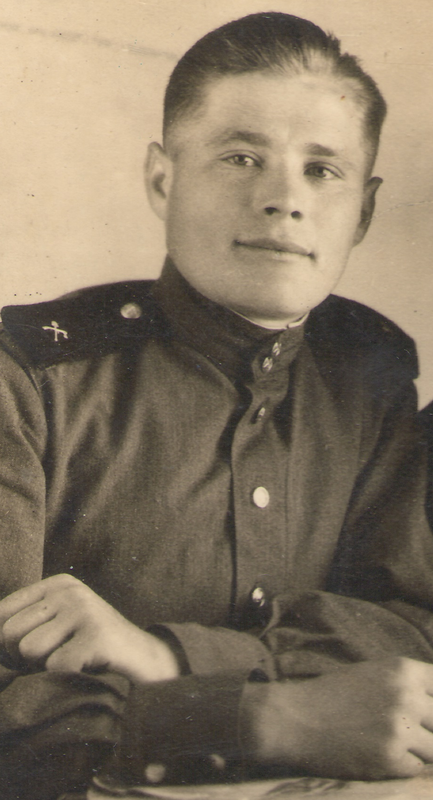
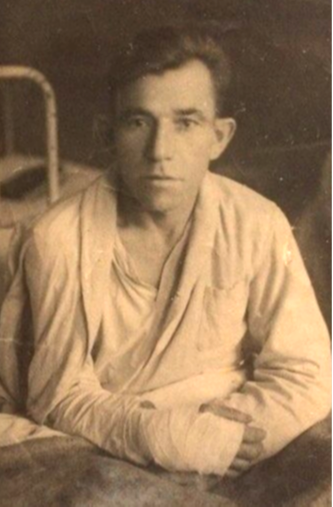
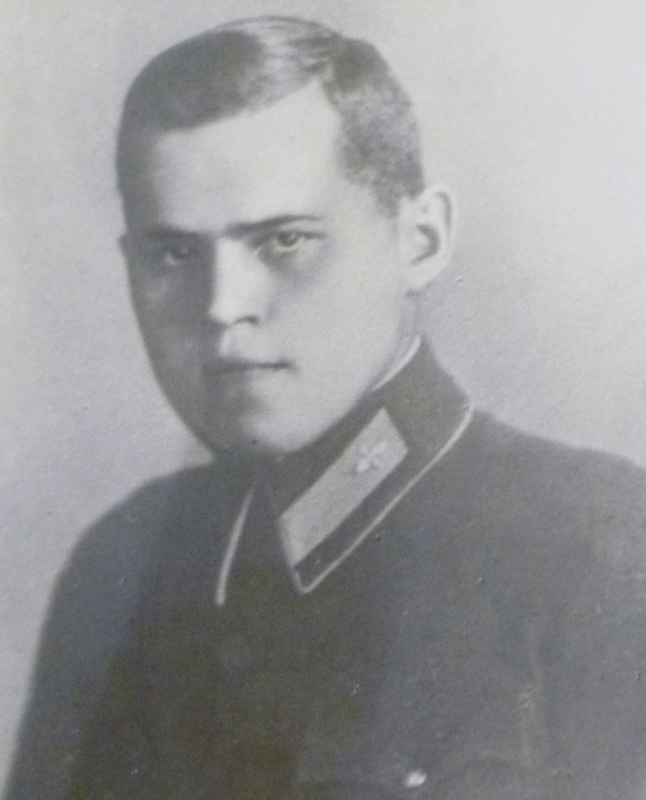
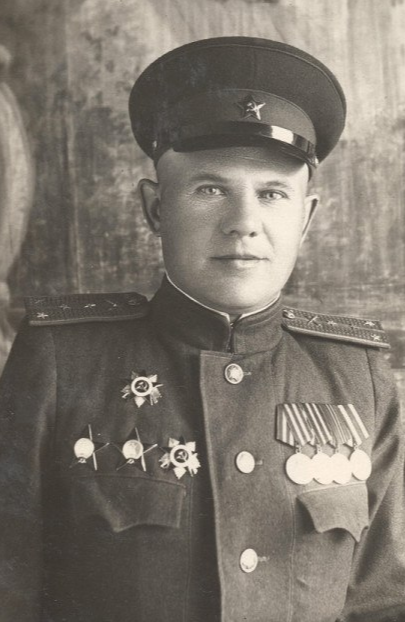

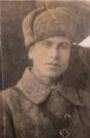


Bulgakov Aleksandr Gerasimov
He was born on 19 February 1910 in the village Nizhnyaya Medvedka in the district of Tjumenzewski (today Kamenski) in the Altai region in a farming family. Russian. From the age of 15 he was employed by the Kulaks. He was an organizer of the Komsomol and since 1927 - instructor of the district committee of the Komsomol. In 1928 he graduated 7 classes, then the Novosibirsk Part.School. He was chairman of the village council in his native village, one of the organizers of the collective farm. Served in the Red Army since 1932. He graduated from the school for border troops of the NKVD in the city of Kyakhta. He served as a border guard officer, as a platoon commander of a maneuvering group at the outpost of the 19th separate Tunka Border Commandant's Office in the Chita military district. In 1937 he graduated from the Kharkiv tank school in the village of Dauria. After the school he served as the head of the border post of the 74th Border Command on the Argun River. Member of the CPSU (b) since 1938. In the active army since September 1941. He was commander of the Headquarters, commander of the administration company, communications officer of the Headquarters, adjutant of the leading battalion, commander of the tank battalion. He fought on the West, Kalinin, Central, South, 1st Ukrainian and 1st Belarusian fronts. He was wounded four times in battle. Participated in the defensive battles in the Battle of Moscow in the area of Spas Demensk, Vereya, a village Borodino in a counterattack near Moscow in the direction of the city of Gzhatsk (Gagarin) - 1941; in the Bai for the city Velikie Luki - 1942-1943; - in the battle on the Orel-Kursk bulge, the liberation of the city of Orel, Karachev, in the Melitopol operation 1943; - in the operation Rovno-Lutsk, in the operation for the liberation of the cities of Olevsk, Sarny, Kovel to Brest-Lublin, in the operation across the western Bug, for the liberation of the city of Siedlce (Siedlce) and the conquest of the bridgehead Puławy in 1944; in the operation Vistula-Oder, including the liberation of the cities of Radom, Tomaszów, in the conquest of the bridgehead Kostromskogo on the Oder, in the Battle of Berlin and the street fighting in Berlin in 1945 The tank battalion of the 20th Armored Brigade of the 11th Armored Corps under the command of Captain Bulgakow crossed the western Bug River near the village of Gushcha (Lubomlsky district in the Volyn region) in the night of July 20, 1944, participated in the capture of enemy strongholds in the cities of Parczew, Radzyn Podlaski and Lukow in Poland. The battalion, which had cut off the railway and the highway Brest-Warsaw, caused panic in the enemy ranks and forced them to retreat. Soviet Union By the decree of the Presidium of Supreme Soviet of USSR of 26 September 1944, Captain Alexander Bulgakov was awarded the Order of Lenin and the Gold Star Medal (№ 5153) for the exemplary performance of the combat tasks of the command at the front in the fight against the Nazi invaders and for the courage and heroism shown in this case. Since 1946 Major A. G. Bulgakov - in reserve. He was the head of the trade department of the Tyumentievsky district Executive Committee, worked in the mine Vostochnaya in the Altai region, then headed the department of the Chernovsky forestry enterprise in Chita. He died on November 28, 1984. Chernovskoy is buried in the cemetery of Chita city.
Bulgakov Aleksandr Gerasimov
He was born on 19 February 1910 in the village Nizhnyaya Medvedka in the district of Tjumenzewski (today Kamenski) in the Altai region in a farming family. Russian. From the age of 15 he was employed by the Kulaks. He was an organizer of the Komsomol and since 1927 - instructor of the district committee of the Komsomol. In 1928 he graduated 7 classes, then the Novosibirsk Part.School. He was chairman of the village council in his native village, one of the organizers of the collective farm. Served in the Red Army since 1932. He graduated from the school for border troops of the NKVD in the city of Kyakhta. He served as a border guard officer, as a platoon commander of a maneuvering group at the outpost of the 19th separate Tunka Border Commandant's Office in the Chita military district. In 1937 he graduated from the Kharkiv tank school in the village of Dauria. After the school he served as the head of the border post of the 74th Border Command on the Argun River. Member of the CPSU (b) since 1938. In the active army since September 1941. He was commander of the Headquarters, commander of the administration company, communications officer of the Headquarters, adjutant of the leading battalion, commander of the tank battalion. He fought on the West, Kalinin, Central, South, 1st Ukrainian and 1st Belarusian fronts. He was wounded four times in battle. Participated in the defensive battles in the Battle of Moscow in the area of Spas Demensk, Vereya, a village Borodino in a counterattack near Moscow in the direction of the city of Gzhatsk (Gagarin) - 1941; in the Bai for the city Velikie Luki - 1942-1943; - in the battle on the Orel-Kursk bulge, the liberation of the city of Orel, Karachev, in the Melitopol operation 1943; - in the operation Rovno-Lutsk, in the operation for the liberation of the cities of Olevsk, Sarny, Kovel to Brest-Lublin, in the operation across the western Bug, for the liberation of the city of Siedlce (Siedlce) and the conquest of the bridgehead Puławy in 1944; in the operation Vistula-Oder, including the liberation of the cities of Radom, Tomaszów, in the conquest of the bridgehead Kostromskogo on the Oder, in the Battle of Berlin and the street fighting in Berlin in 1945 The tank battalion of the 20th Armored Brigade of the 11th Armored Corps under the command of Captain Bulgakow crossed the western Bug River near the village of Gushcha (Lubomlsky district in the Volyn region) in the night of July 20, 1944, participated in the capture of enemy strongholds in the cities of Parczew, Radzyn Podlaski and Lukow in Poland. The battalion, which had cut off the railway and the highway Brest-Warsaw, caused panic in the enemy ranks and forced them to retreat. Soviet Union By the decree of the Presidium of Supreme Soviet of USSR of 26 September 1944, Captain Alexander Bulgakov was awarded the Order of Lenin and the Gold Star Medal (№ 5153) for the exemplary performance of the combat tasks of the command at the front in the fight against the Nazi invaders and for the courage and heroism shown in this case. Since 1946 Major A. G. Bulgakov - in reserve. He was the head of the trade department of the Tyumentievsky district Executive Committee, worked in the mine Vostochnaya in the Altai region, then headed the department of the Chernovsky forestry enterprise in Chita. He died on November 28, 1984. Chernovskoy is buried in the cemetery of Chita city.
0 comment



2026 © Russian Military Historical Society Developed by Jetmix