


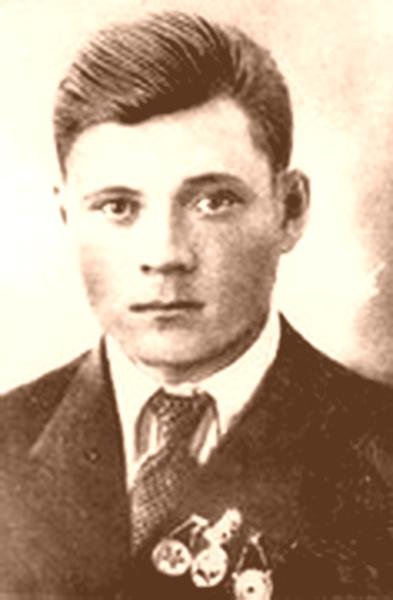


Koshelev Nikolay Vasilyevich
From the memories of my grandfather, a veteran and disabled from the Great Patriotic War of the 3rd Group, his sister Antonina and mine (his granddaughter Nastia). My grandfather was born on May 22, 1926 in the district North-Western, Leningrad region, Voznesensky district, (now Podporozhsky) village Shustruchey. At the beginning of the war the male part of the family went to the front. And in 1941 the family was captured by the Nazis (Finns) in Voznesenye village, Shustruchey settlement. The whole family was sent to a camp in Petrozavodsk, and the 15-year-old was left behind with children of the same age. They were forced to carry hay across the front line. Three months later he was taken to a concentration camp to join his family. He was hungry, lousy and very thin. There he was with his mother, his aunt, his two sisters Tonya and Galina and the wife of Peter's older brother Tamara. In 1944 their family (as there is a lot of adult labor in the family) was taken to the village of Martnavolok in the Kondopozhsky district of the Republic of Karelia for deforestation. This saved them from death, because in the village they could fish, pick berries, mushrooms and various herbs. In this village my grandfather began to communicate with our partisans and gave them information about the Nazis. In autumn 1944 the area of the village and their family was liberated by Soviet troops. In July 1944, when my grandfather became 18 years old he was drafted into the Red Army. 2 months after short courses, the 70th Marine Brigade, the 1st Battalion and the 1st Machine Gun Platoon were sent to the Karelian front as part of the Marine Machine Gun Crew The company commander was Senior Lieutenant Dresvennikov, the platoon commander was Senior Lieutenant A.P. Strukov. There he actually learned what is the mutual help of a soldier, which helped him to endure the hardships of life on the front. No wonder our grandfathers and great-grandfathers said, "Die yourself but help your comrade." In cold and rain, the soldiers slept in the trenches, huddled together and warmed each other with their warmth. The Karelian front consists almost entirely of hills, swamps and tundra. It was particularly difficult to fight there. They were often up to their necks in a cold water. Heavy fighting took place in the so-called Valley of Death, which was later renamed the Valley of Glory (Murmansk region), because our soldiers fought heroically there. Both sides suffered heavy losses. In September-October 1944 he took part in the fights for the liberation of the Soviet Arctic (Petsamo-Kirkenes operation). During one of these fights my grandfather was shaken by a grenade (I have heard very little about this all my life). He was taken to a hospital near Petsamo (today Pechenga, Murmansk region), where he lay for 1.5 months. After he was discharged from the hospital, he joined his military unit, which is formed in Gryazovets (Vologda region). During this time he graduated from the sniper school. In February 1945, his military unit, the 70th Naval Brigade of the 127th Light Mountain Rifle Corps, was sent to the West, so he was sent to the 4th Ukrainian Front. He liberated the southern regions of Poland, a significant part of Czechoslovakia, which ensured the offensive of our troops towards Warsaw-Berlin. In March 1945, during the liberation of the industrial district Moravsk-Ostrava of Czechoslovakia, he was seriously wounded and found himself again in the hospital of Przemysl, Kaluga Oblast, for a long time - up to 7 months. There he met Victory Day. After he was released from the hospital, he continued to serve in Podporozhye and guarded prisoners. There he served for 4.5 years. There he met a paramedic (my grandmother Larisa Konstantinovna, with whom they lived for 65 years). They married and lived in Podporozhye. In 1953 he moved with his family to Schatura in the Moscow region (his grandmother's house). In 1958 he graduated from the Schaturski School of Power Engineering and worked all his life at Power Plant No. 5 in Schatura as a shift supervisor for the boiler plant. My grandfather had many awards, especially the medal "for the defense of Soviet Arctic", where he became a real soldier. Order of the Patriotic War. My grandfather also spoke very sparingly about his past at the front. He was a modest man, and to all my attempts to get something special out of him, heroically so to speak, he replied briefly: "I fought like everyone else." He retired in 1983. He was engaged in gardening, liked going into the woods and fishing. The day of Victory is very dear to me, it is a memory of my grandfather, a dear person for me. My grandfather died on October 17, 2012. Unfortunately he did not manage to live to celebrate the 70th anniversary of Victory, but he really wanted to.
Koshelev Nikolay Vasilyevich
From the memories of my grandfather, a veteran and disabled from the Great Patriotic War of the 3rd Group, his sister Antonina and mine (his granddaughter Nastia). My grandfather was born on May 22, 1926 in the district North-Western, Leningrad region, Voznesensky district, (now Podporozhsky) village Shustruchey. At the beginning of the war the male part of the family went to the front. And in 1941 the family was captured by the Nazis (Finns) in Voznesenye village, Shustruchey settlement. The whole family was sent to a camp in Petrozavodsk, and the 15-year-old was left behind with children of the same age. They were forced to carry hay across the front line. Three months later he was taken to a concentration camp to join his family. He was hungry, lousy and very thin. There he was with his mother, his aunt, his two sisters Tonya and Galina and the wife of Peter's older brother Tamara. In 1944 their family (as there is a lot of adult labor in the family) was taken to the village of Martnavolok in the Kondopozhsky district of the Republic of Karelia for deforestation. This saved them from death, because in the village they could fish, pick berries, mushrooms and various herbs. In this village my grandfather began to communicate with our partisans and gave them information about the Nazis. In autumn 1944 the area of the village and their family was liberated by Soviet troops. In July 1944, when my grandfather became 18 years old he was drafted into the Red Army. 2 months after short courses, the 70th Marine Brigade, the 1st Battalion and the 1st Machine Gun Platoon were sent to the Karelian front as part of the Marine Machine Gun Crew The company commander was Senior Lieutenant Dresvennikov, the platoon commander was Senior Lieutenant A.P. Strukov. There he actually learned what is the mutual help of a soldier, which helped him to endure the hardships of life on the front. No wonder our grandfathers and great-grandfathers said, "Die yourself but help your comrade." In cold and rain, the soldiers slept in the trenches, huddled together and warmed each other with their warmth. The Karelian front consists almost entirely of hills, swamps and tundra. It was particularly difficult to fight there. They were often up to their necks in a cold water. Heavy fighting took place in the so-called Valley of Death, which was later renamed the Valley of Glory (Murmansk region), because our soldiers fought heroically there. Both sides suffered heavy losses. In September-October 1944 he took part in the fights for the liberation of the Soviet Arctic (Petsamo-Kirkenes operation). During one of these fights my grandfather was shaken by a grenade (I have heard very little about this all my life). He was taken to a hospital near Petsamo (today Pechenga, Murmansk region), where he lay for 1.5 months. After he was discharged from the hospital, he joined his military unit, which is formed in Gryazovets (Vologda region). During this time he graduated from the sniper school. In February 1945, his military unit, the 70th Naval Brigade of the 127th Light Mountain Rifle Corps, was sent to the West, so he was sent to the 4th Ukrainian Front. He liberated the southern regions of Poland, a significant part of Czechoslovakia, which ensured the offensive of our troops towards Warsaw-Berlin. In March 1945, during the liberation of the industrial district Moravsk-Ostrava of Czechoslovakia, he was seriously wounded and found himself again in the hospital of Przemysl, Kaluga Oblast, for a long time - up to 7 months. There he met Victory Day. After he was released from the hospital, he continued to serve in Podporozhye and guarded prisoners. There he served for 4.5 years. There he met a paramedic (my grandmother Larisa Konstantinovna, with whom they lived for 65 years). They married and lived in Podporozhye. In 1953 he moved with his family to Schatura in the Moscow region (his grandmother's house). In 1958 he graduated from the Schaturski School of Power Engineering and worked all his life at Power Plant No. 5 in Schatura as a shift supervisor for the boiler plant. My grandfather had many awards, especially the medal "for the defense of Soviet Arctic", where he became a real soldier. Order of the Patriotic War. My grandfather also spoke very sparingly about his past at the front. He was a modest man, and to all my attempts to get something special out of him, heroically so to speak, he replied briefly: "I fought like everyone else." He retired in 1983. He was engaged in gardening, liked going into the woods and fishing. The day of Victory is very dear to me, it is a memory of my grandfather, a dear person for me. My grandfather died on October 17, 2012. Unfortunately he did not manage to live to celebrate the 70th anniversary of Victory, but he really wanted to.
0 comment




2026 © Russian Military Historical Society Developed by Jetmix