

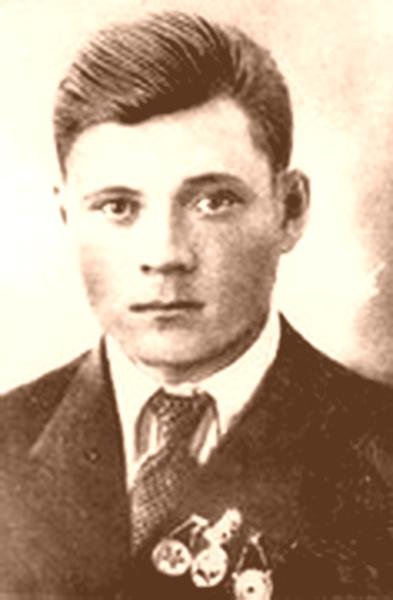



Baymurzin Gayaz Islametdinovich
Baymurzin Gayaz Islamametdinovich was born into a peasant family. He studied at the metallurgical technical school in Belorezk. He served in the Soviet Army since 1936. Graduated from Engel Military Aviation School 1940. On the fronts of the Great Patriotic War from June 1942. Deputy squadron commander of the 13th Guards Aviation Regiment (4th Guards Aviation Division, 4th Guards Aviation Corps, ADD), Guards Major Baimurzin by Oct. 1944 flew 220 sorties to bombard military-industrial facilities deep behind enemy lines and transport ammunition and weapons to partisans. In March 1942, a decree of the State Defense Committee removed long-range and heavy bomber aviation from the command of the Air Force Commander and transformed it into long-range aviation with direct subordination to the headquarters of the Supreme High Command. Additionally, parts and formations of the long-range aviation were formed. Major Baimurzin was seconded to one of the air units as deputy commander of the squadron. Gayaz Islamutdinov arrived at its destination in June. The training flights began. And news came from the front, one more disturbing than the other. After numerical superiority in tanks and airplanes the German-fascist troops rushed to Stalingrad, to North Caucasus. The combat training for Baimurzin was finished soon. The battle alarm sounded. The crews quickly took their places in the planes. The combat task is to destroy the enemy while crossing the Don River north of Stalingrad. Gayaz Baymurzin led a squadron of heavy bombers. The combat mission was successfully completed. The ferry is destroyed. And the situation in Stalingrad became more and more acute. The enemy came to the center of the city. Our air force has been ordered to attack close to its leading edge. Baimurzin's plane was used as a lead plane. It must move to the enemy's front line, drop flare bombs and create conditions for other crews to bomb the enemy troops. The crew acted clearly and smoothly. The navigator of the squadron, Major Evstafiev, brought the plane precisely to the target. Firebombs and signal bombs dropped by the crew of Baimurzin were precisely defined. After following his plane for an hour and a half, a hail of bombs of all calibers and purposes fell on the Nazis' heads - from a hundred kilograms to half-ton lighters. During these difficult days of the Battle of Stalingrad, the crew of Baimurzin carried out two or three missions a night. And then there was the joy of victory: the encirclement and defeat of the enemy. A green rocket took off over the airfield. The engines started, the planes rolled one after the other with glowing navigation lights to the start, took off and climbed to the set course. The destination is not far away: one hour and twenty minutes flight time. Major Baimurzin and the guard's second pilot, Junior Lieutenant Kozyrev, did not let their wingmen out of their sight. It is difficult for the wingmen to fly their planes, and Baimurzin tries to maintain the set speed and course as accurately as possible and avoid sudden maneuvers. But the commanders of the guided ships are experienced pilots and kept well in the ranks. Squadron on target. The sky and the ground are unusually calm. There are no blue searchlights or flares from anti-aircraft grenades. It was the busiest time of the flight. Squadron over the railway junction at Roslavl. It is not difficult to determine, guided by the characteristic interweaving of two railways and three motorways and the winding Oster river glittering in the night. "You cannot find better landmarks on a night flight," said Baimurzin. The squadron passes the city side. Navigator Major Evstafiev breaks away from the calculations. "Commander, combat course one-fifty, turning. In order not to lose the wing players, Baimurzin leads the squadron on a battle course with a left turn. Evstafiev bent over the scope. Baimurzin is confused: why are the anti-aircraft guns silent? Two flare bombs dropped for illumination flashed under the aircraft, and only then did several beams of anti-aircraft searchlights run towards the bombers, and the enemy anti-aircraft artillery opened intense fire. Around the aircraft, yellow and red lights from anti-aircraft shells began to flash. The aircraft trembled, 2 five-hundred kilogram bombs flew down, followed by eight more dropped by their wing crews. A few seconds passed, and in the night darkness fiery fountains of explosions flashed, the purple stain of a rapidly growing fire began to waver. Major Baimurzin takes away the power of the engines and brings the plane gently down. The squadron is now out of range of the anti-aircraft artillery. On the way back they were attacked by enemy night fighters. One of them was hit. In another battle a squadron under the command of Major Baimurzin hit an enemy airfield near Roslavl and destroyed many enemy planes. For the great contribution of the pilots of the 13th Guard Air Regiment to the liberation of the town of Roslavl, the regiment was given the honorary name - Roslavl. Major Baimurzin and its crew carried out numerous combat missions, including the destruction of military-industrial facilities in Helsinki and Budapest. Six times the crew flew in special operations to deliver ammunition and weapons to the partisans of Czechoslovakia. It carried out tasks to destroy enemy railway junctions and airfields in Lviv, Kishinev, Tallinn, Baranovichi, Brest and Sevastopol. During all combat flights, Gayaz Islamutdinov showed exceptional skill. Its crew was friendly and understood their business well. The hero title of Soviet Union was awarded on 5.11.1944. After the war he continued to serve in the Air Force service. On 07.05.1948 he died in a plane crash. An obelisk has been erected on the grave.
Baymurzin Gayaz Islametdinovich
Baymurzin Gayaz Islamametdinovich was born into a peasant family. He studied at the metallurgical technical school in Belorezk. He served in the Soviet Army since 1936. Graduated from Engel Military Aviation School 1940. On the fronts of the Great Patriotic War from June 1942. Deputy squadron commander of the 13th Guards Aviation Regiment (4th Guards Aviation Division, 4th Guards Aviation Corps, ADD), Guards Major Baimurzin by Oct. 1944 flew 220 sorties to bombard military-industrial facilities deep behind enemy lines and transport ammunition and weapons to partisans. In March 1942, a decree of the State Defense Committee removed long-range and heavy bomber aviation from the command of the Air Force Commander and transformed it into long-range aviation with direct subordination to the headquarters of the Supreme High Command. Additionally, parts and formations of the long-range aviation were formed. Major Baimurzin was seconded to one of the air units as deputy commander of the squadron. Gayaz Islamutdinov arrived at its destination in June. The training flights began. And news came from the front, one more disturbing than the other. After numerical superiority in tanks and airplanes the German-fascist troops rushed to Stalingrad, to North Caucasus. The combat training for Baimurzin was finished soon. The battle alarm sounded. The crews quickly took their places in the planes. The combat task is to destroy the enemy while crossing the Don River north of Stalingrad. Gayaz Baymurzin led a squadron of heavy bombers. The combat mission was successfully completed. The ferry is destroyed. And the situation in Stalingrad became more and more acute. The enemy came to the center of the city. Our air force has been ordered to attack close to its leading edge. Baimurzin's plane was used as a lead plane. It must move to the enemy's front line, drop flare bombs and create conditions for other crews to bomb the enemy troops. The crew acted clearly and smoothly. The navigator of the squadron, Major Evstafiev, brought the plane precisely to the target. Firebombs and signal bombs dropped by the crew of Baimurzin were precisely defined. After following his plane for an hour and a half, a hail of bombs of all calibers and purposes fell on the Nazis' heads - from a hundred kilograms to half-ton lighters. During these difficult days of the Battle of Stalingrad, the crew of Baimurzin carried out two or three missions a night. And then there was the joy of victory: the encirclement and defeat of the enemy. A green rocket took off over the airfield. The engines started, the planes rolled one after the other with glowing navigation lights to the start, took off and climbed to the set course. The destination is not far away: one hour and twenty minutes flight time. Major Baimurzin and the guard's second pilot, Junior Lieutenant Kozyrev, did not let their wingmen out of their sight. It is difficult for the wingmen to fly their planes, and Baimurzin tries to maintain the set speed and course as accurately as possible and avoid sudden maneuvers. But the commanders of the guided ships are experienced pilots and kept well in the ranks. Squadron on target. The sky and the ground are unusually calm. There are no blue searchlights or flares from anti-aircraft grenades. It was the busiest time of the flight. Squadron over the railway junction at Roslavl. It is not difficult to determine, guided by the characteristic interweaving of two railways and three motorways and the winding Oster river glittering in the night. "You cannot find better landmarks on a night flight," said Baimurzin. The squadron passes the city side. Navigator Major Evstafiev breaks away from the calculations. "Commander, combat course one-fifty, turning. In order not to lose the wing players, Baimurzin leads the squadron on a battle course with a left turn. Evstafiev bent over the scope. Baimurzin is confused: why are the anti-aircraft guns silent? Two flare bombs dropped for illumination flashed under the aircraft, and only then did several beams of anti-aircraft searchlights run towards the bombers, and the enemy anti-aircraft artillery opened intense fire. Around the aircraft, yellow and red lights from anti-aircraft shells began to flash. The aircraft trembled, 2 five-hundred kilogram bombs flew down, followed by eight more dropped by their wing crews. A few seconds passed, and in the night darkness fiery fountains of explosions flashed, the purple stain of a rapidly growing fire began to waver. Major Baimurzin takes away the power of the engines and brings the plane gently down. The squadron is now out of range of the anti-aircraft artillery. On the way back they were attacked by enemy night fighters. One of them was hit. In another battle a squadron under the command of Major Baimurzin hit an enemy airfield near Roslavl and destroyed many enemy planes. For the great contribution of the pilots of the 13th Guard Air Regiment to the liberation of the town of Roslavl, the regiment was given the honorary name - Roslavl. Major Baimurzin and its crew carried out numerous combat missions, including the destruction of military-industrial facilities in Helsinki and Budapest. Six times the crew flew in special operations to deliver ammunition and weapons to the partisans of Czechoslovakia. It carried out tasks to destroy enemy railway junctions and airfields in Lviv, Kishinev, Tallinn, Baranovichi, Brest and Sevastopol. During all combat flights, Gayaz Islamutdinov showed exceptional skill. Its crew was friendly and understood their business well. The hero title of Soviet Union was awarded on 5.11.1944. After the war he continued to serve in the Air Force service. On 07.05.1948 he died in a plane crash. An obelisk has been erected on the grave.
0 comment



2026 © Russian Military Historical Society Developed by Jetmix