


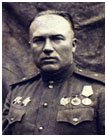


Bichexvost Fedor Ivanovich
Ordered to survive! Nikolay Bichehvost: “Lurked and lost among the steppes of Stalingrad’s vast expanses is my native village Novokiyevka founded a hundred years ago on the lands of a Don general by immigrants from Ukraine. The Ivanyuk family of grain growers, strong and grasping to work, also settled down here! The fate of Ivan Ivanyuk will lead them from the unsightly hut, which is perched at the dam of the pond of childhood, to the difficult path, across Russia, abroad. The barefoot kid will become a professional scout. He will give a quarter of a century to dangerous service in the state security agencies, which not that everyone can do. He was born in 1916 and his childhood and his youth will run here, in Novokiyevka. They were friends, used to drive blue pigeons, went to the same school and spent time with my father, Fyodor Bichehvost, who later also became a military officer and who in the 62nd army defended approaches to Stalingrad. And who also went abroad but not of his own free will. After school Ivan graduated from then prestigious Novoanninsky agricultural technical school and served in the Red Army, in the Belarusian military district. Not knowing that fate would return him to those lands in the hard times of the Great Patriotic War. "Where I was born, that's where I came in handy." And he returned just before the war to his father's land. An agronomist of the Novokievsky machine and tractor station, he used to plow, sow and cultivate the grain in the arid steppes. Here, on the farm, my father also worked as a peasant. The hard-working life in the fields and in the farmstead for a piece of bread forged men persistent, wiry and strong in spirit. Ivan Ivanyuk complained, a little envious, that his friend, the pigeon fancier Fedor Bichevost, oh, how far away, in snow-covered Finland, was fighting on the Finnish frozen front. In the fiery year of 1941 Ivanyuk became an employee of the inter-district department of the NKVD in Mikhailovka under the command of P.S. Tsygankov. Durng the battle of Stalingrad he used to deactivate fascist sabotage groups that were sent to explode the strategic railway Moscow – Stalingrad… On the 13th of August, 1942, a group of saboteurs was parachuted into the Mikhailovsky district with the task of destroying the protection of the railway bridge in Mikhaylovka, blowing up the bridge over the Medveditsa river and the railway track between Rakovka and Mikhaylovka stations. A task unit led by Ivaniuk identified and detained saboteurs with explosives, weapons and radio equipment. Their capture of a valuable saboteur allowed them to conduct a radio game with the enemy’s intelligence. It ended with the failure of an experienced German spy, specially thrown into the Mikhailovsky district to create an extensive residency. About 20 dangerous saboteurs were detained here by our countryman. His friend Fyodor survived the Finnish winter campaign. He managed to finish the Uryupinsk infantry school at an accelerated rate. In the Second World War, he commanded a platoon in the 33rd rifle division of the Stalingrad front. In fierce battles in the open don steppes from Kalach to Kletskaya, he fought off a massive onslaught of the Nazis with his fighters. From the 11th till the 15th of August, 1942, the enemy crushed and surrounded six of our divisions, including the 33rd rifle division, in the bend of the Don. It was not possible to break through to these divisions, break through the front and withdraw them from the encirclement ... The stubborn resistance of these divisions delayed the advance of the German troops for a long time and prevented them from capturing Stalingrad with one blow. Then came the tragedy and the crown of thorns for many thousands of Soviet prisoners of war, including my father. These victims learned in Germany the inhumanity of Nazi concentration camps, while others were burned in the flames of crematoria stoves... Other half-dead were thrown into the camps of Luxembourg. There, in Differdingen, my future father and mother, who had been forcibly removed as a minor from Ukraine, were among the prisoners and met. Tell me, why do I, born after the war, still dream of explosions and train bombings, haggard yellow faces of prisoners of war, skin and bones and other horrors of the Nazi camps that my parents went through? And I, who have been burned for 25 years in the investigative and prosecutorial work, wake up hard at night from these nightmares of war... And Ivan Ivanyuk then served on the 2nd Belorussian front, disappeared in the dense thickets as part of the SMERSH counterintelligence department. In Poland and Germany he was engaged in the liquidation of underground sabotage organizations "Werewolf". In the fighting his colleague in the Mikhailovsky district A. K. Redkin and many comrades will die. Ivanyuk in the post-war ten years acted as a security officer throughout Germany. He neutralized agents of the former German intelligence and secret terrorist groups of the SS, SD, SA, and detected espionage activities. He also participated in the liquidation of an extensive spy network on the territory of the GDR. My father escaped from the Nazi camp with the help of a Luxembourg worker, Dybenih Ivan, when the American troops were advancing, and hid with him until the arrival of the American allies. The Soviet military mission in Paris appointed him as a liaison officer for the repatriation — the return of our prisoners of war and stolen citizens to their homeland. In search of them and collecting them, he and my mother, with the assistance of the Americans and the British, traveled to many cities in Germany and France: Cologne, Hamburg, Dusseldorf, Paris... He saw and experienced a lot and we remember his stories from childhood. Both of them, Ivan and Fyodor, two officers, two friends, fellow villagers, served abroad almost side by side, but their paths did not intersect. After passing filtration camps and interrogations of SMERSH employees my parents ended up in Novokiyevka thanks to their repatriation work, not in Soviet labor camps or forced labor camps. A war veteran and a soldier, Fyodor Bichehvost was proud of the order of the Red Star and government awards for participation in the Great Patriotic War. Ivan Ivanyuk when he came home was happy to meet his father. He continued his service in the state security agencies in Moscow and Kaliningrad at the Center of space research. The Space Mission Control Center awarded him a commemorative medal for ensuring the flight of the Soyuz-Apollo spacecraft. In his memoirs of a chekist that were further transferred to the the regional museum of the Novokievsky school he wrote: "Work in the Committee for State Security is not easy, sometimes it is dangerous and involves a risk to life. I have had to look death in the eye more than once..." Even the death could not separate friends… a portrait of a military officer, Fyodor Bichehvost, still looks and looks from the hillock of the village cemetery from the monument to the nearby house of the parents of Ivan Ivanyuk, a chekist who finished his earthly journey in Moscow. And the same rural blond boys run to the same Novokievskaya school past us to the same dam… Life goes on... My story "From Stalingrad to Luxembourg" tells about the military life and the fate of my parents…
Bichexvost Fedor Ivanovich
Ordered to survive! Nikolay Bichehvost: “Lurked and lost among the steppes of Stalingrad’s vast expanses is my native village Novokiyevka founded a hundred years ago on the lands of a Don general by immigrants from Ukraine. The Ivanyuk family of grain growers, strong and grasping to work, also settled down here! The fate of Ivan Ivanyuk will lead them from the unsightly hut, which is perched at the dam of the pond of childhood, to the difficult path, across Russia, abroad. The barefoot kid will become a professional scout. He will give a quarter of a century to dangerous service in the state security agencies, which not that everyone can do. He was born in 1916 and his childhood and his youth will run here, in Novokiyevka. They were friends, used to drive blue pigeons, went to the same school and spent time with my father, Fyodor Bichehvost, who later also became a military officer and who in the 62nd army defended approaches to Stalingrad. And who also went abroad but not of his own free will. After school Ivan graduated from then prestigious Novoanninsky agricultural technical school and served in the Red Army, in the Belarusian military district. Not knowing that fate would return him to those lands in the hard times of the Great Patriotic War. "Where I was born, that's where I came in handy." And he returned just before the war to his father's land. An agronomist of the Novokievsky machine and tractor station, he used to plow, sow and cultivate the grain in the arid steppes. Here, on the farm, my father also worked as a peasant. The hard-working life in the fields and in the farmstead for a piece of bread forged men persistent, wiry and strong in spirit. Ivan Ivanyuk complained, a little envious, that his friend, the pigeon fancier Fedor Bichevost, oh, how far away, in snow-covered Finland, was fighting on the Finnish frozen front. In the fiery year of 1941 Ivanyuk became an employee of the inter-district department of the NKVD in Mikhailovka under the command of P.S. Tsygankov. Durng the battle of Stalingrad he used to deactivate fascist sabotage groups that were sent to explode the strategic railway Moscow – Stalingrad… On the 13th of August, 1942, a group of saboteurs was parachuted into the Mikhailovsky district with the task of destroying the protection of the railway bridge in Mikhaylovka, blowing up the bridge over the Medveditsa river and the railway track between Rakovka and Mikhaylovka stations. A task unit led by Ivaniuk identified and detained saboteurs with explosives, weapons and radio equipment. Their capture of a valuable saboteur allowed them to conduct a radio game with the enemy’s intelligence. It ended with the failure of an experienced German spy, specially thrown into the Mikhailovsky district to create an extensive residency. About 20 dangerous saboteurs were detained here by our countryman. His friend Fyodor survived the Finnish winter campaign. He managed to finish the Uryupinsk infantry school at an accelerated rate. In the Second World War, he commanded a platoon in the 33rd rifle division of the Stalingrad front. In fierce battles in the open don steppes from Kalach to Kletskaya, he fought off a massive onslaught of the Nazis with his fighters. From the 11th till the 15th of August, 1942, the enemy crushed and surrounded six of our divisions, including the 33rd rifle division, in the bend of the Don. It was not possible to break through to these divisions, break through the front and withdraw them from the encirclement ... The stubborn resistance of these divisions delayed the advance of the German troops for a long time and prevented them from capturing Stalingrad with one blow. Then came the tragedy and the crown of thorns for many thousands of Soviet prisoners of war, including my father. These victims learned in Germany the inhumanity of Nazi concentration camps, while others were burned in the flames of crematoria stoves... Other half-dead were thrown into the camps of Luxembourg. There, in Differdingen, my future father and mother, who had been forcibly removed as a minor from Ukraine, were among the prisoners and met. Tell me, why do I, born after the war, still dream of explosions and train bombings, haggard yellow faces of prisoners of war, skin and bones and other horrors of the Nazi camps that my parents went through? And I, who have been burned for 25 years in the investigative and prosecutorial work, wake up hard at night from these nightmares of war... And Ivan Ivanyuk then served on the 2nd Belorussian front, disappeared in the dense thickets as part of the SMERSH counterintelligence department. In Poland and Germany he was engaged in the liquidation of underground sabotage organizations "Werewolf". In the fighting his colleague in the Mikhailovsky district A. K. Redkin and many comrades will die. Ivanyuk in the post-war ten years acted as a security officer throughout Germany. He neutralized agents of the former German intelligence and secret terrorist groups of the SS, SD, SA, and detected espionage activities. He also participated in the liquidation of an extensive spy network on the territory of the GDR. My father escaped from the Nazi camp with the help of a Luxembourg worker, Dybenih Ivan, when the American troops were advancing, and hid with him until the arrival of the American allies. The Soviet military mission in Paris appointed him as a liaison officer for the repatriation — the return of our prisoners of war and stolen citizens to their homeland. In search of them and collecting them, he and my mother, with the assistance of the Americans and the British, traveled to many cities in Germany and France: Cologne, Hamburg, Dusseldorf, Paris... He saw and experienced a lot and we remember his stories from childhood. Both of them, Ivan and Fyodor, two officers, two friends, fellow villagers, served abroad almost side by side, but their paths did not intersect. After passing filtration camps and interrogations of SMERSH employees my parents ended up in Novokiyevka thanks to their repatriation work, not in Soviet labor camps or forced labor camps. A war veteran and a soldier, Fyodor Bichehvost was proud of the order of the Red Star and government awards for participation in the Great Patriotic War. Ivan Ivanyuk when he came home was happy to meet his father. He continued his service in the state security agencies in Moscow and Kaliningrad at the Center of space research. The Space Mission Control Center awarded him a commemorative medal for ensuring the flight of the Soyuz-Apollo spacecraft. In his memoirs of a chekist that were further transferred to the the regional museum of the Novokievsky school he wrote: "Work in the Committee for State Security is not easy, sometimes it is dangerous and involves a risk to life. I have had to look death in the eye more than once..." Even the death could not separate friends… a portrait of a military officer, Fyodor Bichehvost, still looks and looks from the hillock of the village cemetery from the monument to the nearby house of the parents of Ivan Ivanyuk, a chekist who finished his earthly journey in Moscow. And the same rural blond boys run to the same Novokievskaya school past us to the same dam… Life goes on... My story "From Stalingrad to Luxembourg" tells about the military life and the fate of my parents…
0 comment




2026 © Russian Military Historical Society Developed by Jetmix