


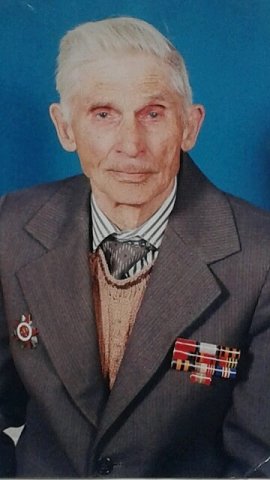


Victor Bezbozhnov
Rank: Red Army Soldier.
Branch of Service: Land Forces, Air Force (except for Naval Aviation), Coast Guard, NKVD troops, Border Guard.
Unit: 1st F. Dzerzhinsky Order of Lenin Red Banner Separate Motorized Special Task Rifle Division.
Victor Bessonov – a resident of Volgograd. He lived in the village of Verkhnyaya Sudoverf. Its fate was closely connected with the Great Patriotic War. He spent about 40 years teaching. Viktor was drafted into the army in 1939. He served in the 143rd Cavalry Regiment, and participated in the battles on Khalkhin-Gol.
The Japanese attacked the Mongolian People's Republic in the area of the Khalkhin-Gol River in May 1939, although they knew that a mutual assistance agreement had been concluded between the USSR and the MPR. Japanese hoped to capture Mongolia and create a springboard there for an attack on the Soviet Tans-Baikal territory. Fulfilling its obligations to Mongolia, the Soviet government ordered the Red Army units to defeat the invaders. Intense fighting took place in the Mongolian steppes from May to September 1939. Victor Bezbozhnov participated in those battles. Some of them were fighting Japanese suicide-fighters in the reeds. It was very difficult to get to them: as soon as they heard that someone appeared in the reeds, immediately the suicide-fighters opened a furious fire. Viktor and a group of soldiers developed a plan to get to him: they took out a rope, tied a heavy object to one end and began to throw it deep into the reeds; the second end was kept in a shelter. A Japanese fighter, hearing the noise of a falling object, started shooting at that direction. At the same time, our soldiers approached him from the other side and destroy him with a grenade. When they approached him they saw the following picture: the suicide-fighterhterwas lying, killed by a grenade, near him, 20-30 meters away, everything was littered with weapons. It looked like an Armory: there were grenades, machine guns, Soviet and Japanese weapons. Within a few months, private Bessonov together with other soldiers completed the operation to destroy the suicide-fighter. Commander Georgy Zhukov led the battles on Khalkhin Gol. A squadron of cavalry accompanied his commander from Khalkhin Gol to Bitumen. Bezbozhnov always remembered Zhukov with great respect. He remembered how Zhukov, along with the soldiers, sat by the fire and ate baked potatoes, listening with interest to the soldiers who told about their inventions during an important "operation". Bezbozhnov and his comrades received a commendation from comrade Zhukov. Soviet and Mongolian troops defeated the Japanese and expelled them from the Mongolian land. His unit was sent to summer camps in the Tambov Region in May 1941. Here they announced to the soldiers that the war with Germany had begun. Private Bezbozhnov became a soldier of fighting army.
The mechanized corps (340 Rifle Regiment), where now served the signalman Bezbozhnov, was sent to the Smolensk Region. Our troops were retreating along the entire front. German were equipped with planes and tanks, while ours had just carbines. He remembered well the first battle at Smolensk: in the air, the planes did not allow our troops to rise. Most of the soldiers were left on the battlefield. Then retreat. Dug trenches, dugouts, made and strengthened firing positions. Viktor remembered hearing the signal: "Alert!" The soldiers were given the task: to take our airfield from the Germans, which they captured. They placed their planes on it, and immediately felt like masters. The battle was heavy and bloody. But with available weapons, the task was not completed. Many young, energetic, but inexperienced soldiers died. Once again, the troops retreated to their previous positions. They had a task to help the troops encircled at Yelnya to break through the encirclement ring. At this time, Viktor saw chaos on the battlefield, incomprehensible orders from commanders, confusion in the troops. Bezbozhnov remembered a deadly battle for the bridge over which the Germans moved their troops and weapons. He was seriously wounded in this battle. Only a small group of soldiers remained alive. Victor lost consciousness. The fragment hit the right side and stayed there for a long time. He woke up in the woods, in a dugout. A refugee woman took care of him. Later he found out that he was in the Bryansk forest, and the refugees picked him up and saved him from death. He was in a hospital in Ufa for three months. Then he went to the reserve regiment. This regiment was located near Moscow. Here he was a clerk, a signalman, went to scout missions more than once, and participated in the battles for the city of Minsk as a mamber of the artillery battery. Crossed the Bug and Vistula Rivers. Participated in the liberation of Poland (city of Lodz, Warsaw). Ended the war on the outskirts of Berlin. Military awards always reminded Victor of his heroic youth: Order of the Patriotic War, medals For Bravery, For Military Merit, For the Victory over Germany and 20 anniversary medals. Having passed through the hell of the war years, through fear, loss of loved ones, Victor retained for many years the love of life.
Victor Bezbozhnov
Rank: Red Army Soldier.
Branch of Service: Land Forces, Air Force (except for Naval Aviation), Coast Guard, NKVD troops, Border Guard.
Unit: 1st F. Dzerzhinsky Order of Lenin Red Banner Separate Motorized Special Task Rifle Division.
Victor Bessonov – a resident of Volgograd. He lived in the village of Verkhnyaya Sudoverf. Its fate was closely connected with the Great Patriotic War. He spent about 40 years teaching. Viktor was drafted into the army in 1939. He served in the 143rd Cavalry Regiment, and participated in the battles on Khalkhin-Gol.
The Japanese attacked the Mongolian People's Republic in the area of the Khalkhin-Gol River in May 1939, although they knew that a mutual assistance agreement had been concluded between the USSR and the MPR. Japanese hoped to capture Mongolia and create a springboard there for an attack on the Soviet Tans-Baikal territory. Fulfilling its obligations to Mongolia, the Soviet government ordered the Red Army units to defeat the invaders. Intense fighting took place in the Mongolian steppes from May to September 1939. Victor Bezbozhnov participated in those battles. Some of them were fighting Japanese suicide-fighters in the reeds. It was very difficult to get to them: as soon as they heard that someone appeared in the reeds, immediately the suicide-fighters opened a furious fire. Viktor and a group of soldiers developed a plan to get to him: they took out a rope, tied a heavy object to one end and began to throw it deep into the reeds; the second end was kept in a shelter. A Japanese fighter, hearing the noise of a falling object, started shooting at that direction. At the same time, our soldiers approached him from the other side and destroy him with a grenade. When they approached him they saw the following picture: the suicide-fighterhterwas lying, killed by a grenade, near him, 20-30 meters away, everything was littered with weapons. It looked like an Armory: there were grenades, machine guns, Soviet and Japanese weapons. Within a few months, private Bessonov together with other soldiers completed the operation to destroy the suicide-fighter. Commander Georgy Zhukov led the battles on Khalkhin Gol. A squadron of cavalry accompanied his commander from Khalkhin Gol to Bitumen. Bezbozhnov always remembered Zhukov with great respect. He remembered how Zhukov, along with the soldiers, sat by the fire and ate baked potatoes, listening with interest to the soldiers who told about their inventions during an important "operation". Bezbozhnov and his comrades received a commendation from comrade Zhukov. Soviet and Mongolian troops defeated the Japanese and expelled them from the Mongolian land. His unit was sent to summer camps in the Tambov Region in May 1941. Here they announced to the soldiers that the war with Germany had begun. Private Bezbozhnov became a soldier of fighting army.
The mechanized corps (340 Rifle Regiment), where now served the signalman Bezbozhnov, was sent to the Smolensk Region. Our troops were retreating along the entire front. German were equipped with planes and tanks, while ours had just carbines. He remembered well the first battle at Smolensk: in the air, the planes did not allow our troops to rise. Most of the soldiers were left on the battlefield. Then retreat. Dug trenches, dugouts, made and strengthened firing positions. Viktor remembered hearing the signal: "Alert!" The soldiers were given the task: to take our airfield from the Germans, which they captured. They placed their planes on it, and immediately felt like masters. The battle was heavy and bloody. But with available weapons, the task was not completed. Many young, energetic, but inexperienced soldiers died. Once again, the troops retreated to their previous positions. They had a task to help the troops encircled at Yelnya to break through the encirclement ring. At this time, Viktor saw chaos on the battlefield, incomprehensible orders from commanders, confusion in the troops. Bezbozhnov remembered a deadly battle for the bridge over which the Germans moved their troops and weapons. He was seriously wounded in this battle. Only a small group of soldiers remained alive. Victor lost consciousness. The fragment hit the right side and stayed there for a long time. He woke up in the woods, in a dugout. A refugee woman took care of him. Later he found out that he was in the Bryansk forest, and the refugees picked him up and saved him from death. He was in a hospital in Ufa for three months. Then he went to the reserve regiment. This regiment was located near Moscow. Here he was a clerk, a signalman, went to scout missions more than once, and participated in the battles for the city of Minsk as a mamber of the artillery battery. Crossed the Bug and Vistula Rivers. Participated in the liberation of Poland (city of Lodz, Warsaw). Ended the war on the outskirts of Berlin. Military awards always reminded Victor of his heroic youth: Order of the Patriotic War, medals For Bravery, For Military Merit, For the Victory over Germany and 20 anniversary medals. Having passed through the hell of the war years, through fear, loss of loved ones, Victor retained for many years the love of life.
0 comment




2026 © Russian Military Historical Society Developed by Jetmix