


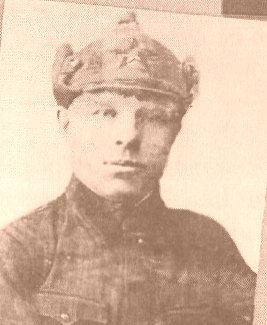

Sirotkin Yuri Nikolaevich
My great-grandfather's name is Yuri Sirotkin. He was born on July 18, 1926 in the village of Krapivki, Zavolzhsky district. In 1943, as a seventeen-year-old boy, he was drafted into the Red Army. He was sent to Gorokhovets camps in the Vladimir region to a sniper school. The service in these camps was difficult, especially because of poor nutrition. Rations at that time were very poor. Not having completed his studies at the school of snipers, great-grandfather was transferred to a tank school, where he learns to be a mechanic-driver of a KV tank. By the beginning of the summer of 1944, he finishes school, passes the driving test, and was sent to the active army. He was assigned to the 101st Tank Brigade, which wass part of the 43rd Army. This army was commanded by General A.P. Beloborodov, already famous after the battles near Moscow, who repeatedly mentioned the 101st Tank Brigade in his memoirs. This army was aimed from Vitebsk to the North, to Riga. At the end of June 1944, the famous operation Bagration began, and the 43rd Army launched an offensive on Riga. The fighting was very heavy. The Nazis resisted with frenzied fanaticism, and despite the huge losses, went into a furious counterattack. Especially heavy fighting was outside the city Ietsava. It was captured, lost and recaptured several times. Great-grandfather tree times on his tank broke into this city, and three times the Nazis recaptured it. Here, the great-grandfather and his crew were concussed by a nearby bomb. Once, while on one of the Baltic farms, the tank commander sent him to get needles in the forest. My great-grandfather went into the forest and began to see which tree to cut branches from. Then he heard the crunch of a dead branch. Great-grandfather turned and ran to the tank. He reported to the commander, who reported to the commander of the rifle battalion. The soldiers began to comb the forest and found six Germans. It was a recon group. A battle ensued, four Germans were destroyed, and two were taken as prisoners. Before reaching Riga 13 km, 101 Tank Brigade and the entire army were transferred to the Western direction, near the city of Shaulyay. There they liberated a concentration camp with women. As the women later said, the Germans already wanted to shoot them, but thanks to our tankers broke through to the camp, the Germans fled and the people remained alive. My great-grandfather also took part in the liberation of the camp. Later the 101 Tank Brigade was withdrawn from the 43rd Army and moved back to Riga. The fascists there resisted fiercely. In one of the attacks, the great-grandfather's tank and several other vehicles got into a swamp and got bogged down. A stationary tank is a great target for gunners. And the crew left their tank. But the command ordered them to return to the tank and guard it. And when it got dark, great-grandfather and the crew crawled to their tank. He was in no-man's-land. Before they reached the tank, they saw a light in the tank 50 meters away, then heard German speech. The Nazis got into the tank, they were drinking their schnapps, playing the harmonica and shouting songs. Then the fascists got out of the tank, and it was blown up. So great-grandfather was "horseless". So he became an infantryman. In one of the battles, their infantry could not stand the fascist pressure and began to retreat. The great-grandfather and the major began to stop the fighters sperring back, and then dragged them into the attack. After the battle, the major found my great-grandfather, wrote down his last name and said that he would introduce him to the order. But then the major died or the award list was lost in the headquarters, but there was no award. During the next battle, the commander sent my great-grandfather for ammunition. He began to make his way to the rear and running across the highway was wounded by a sniper. The bullet hit great-grandfather in the mouth and came out behind the ear. Most likely it was fired by a vlasovite who disguised himself in our rear. My great-grandfather rolled into a ditch, somehow made a bandage for himself, and crawled to the wooden building. There were many wounded soldiers. After the battle, everyone was loaded into cars and taken to the hospital. The wounded were transported in five trucks. Driving across the river on a bridge, the bridge was blown up. Two trucks with injured people fell into the river and all died. The truck in which the great-grandfather was traveling at the time of the explosion was on the shore. Then he ended up in the hospital, in Kazan. Here he met the long-awaited victory. After the hospital, my great-grandfather was sent to the Far East. The train was halfway there when they were told that Japan had been defeated and the war was over. The train went back to the West. And until 1950, my great-grandfather served in various units, after which he was demobilized. After the war, my great-grandfather worked all his life as a tractor driver in the village of Novlyanskoe, Zavolzhsky district, Ivanovo region. There are awards for military achievements. We remember our great-grandfather and are proud of him.
Sirotkin Yuri Nikolaevich
My great-grandfather's name is Yuri Sirotkin. He was born on July 18, 1926 in the village of Krapivki, Zavolzhsky district. In 1943, as a seventeen-year-old boy, he was drafted into the Red Army. He was sent to Gorokhovets camps in the Vladimir region to a sniper school. The service in these camps was difficult, especially because of poor nutrition. Rations at that time were very poor. Not having completed his studies at the school of snipers, great-grandfather was transferred to a tank school, where he learns to be a mechanic-driver of a KV tank. By the beginning of the summer of 1944, he finishes school, passes the driving test, and was sent to the active army. He was assigned to the 101st Tank Brigade, which wass part of the 43rd Army. This army was commanded by General A.P. Beloborodov, already famous after the battles near Moscow, who repeatedly mentioned the 101st Tank Brigade in his memoirs. This army was aimed from Vitebsk to the North, to Riga. At the end of June 1944, the famous operation Bagration began, and the 43rd Army launched an offensive on Riga. The fighting was very heavy. The Nazis resisted with frenzied fanaticism, and despite the huge losses, went into a furious counterattack. Especially heavy fighting was outside the city Ietsava. It was captured, lost and recaptured several times. Great-grandfather tree times on his tank broke into this city, and three times the Nazis recaptured it. Here, the great-grandfather and his crew were concussed by a nearby bomb. Once, while on one of the Baltic farms, the tank commander sent him to get needles in the forest. My great-grandfather went into the forest and began to see which tree to cut branches from. Then he heard the crunch of a dead branch. Great-grandfather turned and ran to the tank. He reported to the commander, who reported to the commander of the rifle battalion. The soldiers began to comb the forest and found six Germans. It was a recon group. A battle ensued, four Germans were destroyed, and two were taken as prisoners. Before reaching Riga 13 km, 101 Tank Brigade and the entire army were transferred to the Western direction, near the city of Shaulyay. There they liberated a concentration camp with women. As the women later said, the Germans already wanted to shoot them, but thanks to our tankers broke through to the camp, the Germans fled and the people remained alive. My great-grandfather also took part in the liberation of the camp. Later the 101 Tank Brigade was withdrawn from the 43rd Army and moved back to Riga. The fascists there resisted fiercely. In one of the attacks, the great-grandfather's tank and several other vehicles got into a swamp and got bogged down. A stationary tank is a great target for gunners. And the crew left their tank. But the command ordered them to return to the tank and guard it. And when it got dark, great-grandfather and the crew crawled to their tank. He was in no-man's-land. Before they reached the tank, they saw a light in the tank 50 meters away, then heard German speech. The Nazis got into the tank, they were drinking their schnapps, playing the harmonica and shouting songs. Then the fascists got out of the tank, and it was blown up. So great-grandfather was "horseless". So he became an infantryman. In one of the battles, their infantry could not stand the fascist pressure and began to retreat. The great-grandfather and the major began to stop the fighters sperring back, and then dragged them into the attack. After the battle, the major found my great-grandfather, wrote down his last name and said that he would introduce him to the order. But then the major died or the award list was lost in the headquarters, but there was no award. During the next battle, the commander sent my great-grandfather for ammunition. He began to make his way to the rear and running across the highway was wounded by a sniper. The bullet hit great-grandfather in the mouth and came out behind the ear. Most likely it was fired by a vlasovite who disguised himself in our rear. My great-grandfather rolled into a ditch, somehow made a bandage for himself, and crawled to the wooden building. There were many wounded soldiers. After the battle, everyone was loaded into cars and taken to the hospital. The wounded were transported in five trucks. Driving across the river on a bridge, the bridge was blown up. Two trucks with injured people fell into the river and all died. The truck in which the great-grandfather was traveling at the time of the explosion was on the shore. Then he ended up in the hospital, in Kazan. Here he met the long-awaited victory. After the hospital, my great-grandfather was sent to the Far East. The train was halfway there when they were told that Japan had been defeated and the war was over. The train went back to the West. And until 1950, my great-grandfather served in various units, after which he was demobilized. After the war, my great-grandfather worked all his life as a tractor driver in the village of Novlyanskoe, Zavolzhsky district, Ivanovo region. There are awards for military achievements. We remember our great-grandfather and are proud of him.
0 comment




2026 © Russian Military Historical Society Developed by Jetmix