


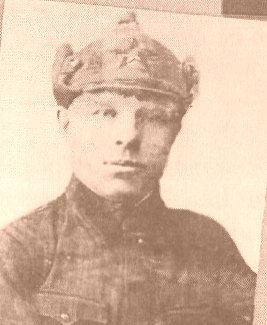


Simukov Petr Dmitrievich
I want to write about the front-line roads of my great-grandfather, a front-line driver, a man of an interesting fate, who passed the entire war and remained a Real Person. And also, I want to write about my great-grandmother Ulyana, who did not fight, but she had too many sorrows and losses. It is impossible to keep silent about it. For my generation, the Great Patriotic War is just a story from the distant past. I was born in peaceful time, when there was no war, no concentration camps. I learned about the events of the Great Patriotic War from the stories of my grandparents, and they hd learned from their parents. My sister and I, with a sinking heart, always listen to the stories about our relatives and beloved great-grandparents. My essay I'll start with my grandparents Simunkova Peter Dmitrievich. I've never seen my great-great-grandfather, I don't know what color his eyes and hair were, I've never heard his voice, but I can say for sure that I'm proud of my great-grandfather for what he had done years before I was born. He was born on September 6, 1921 in the village of Spasskoye, Sorochinsky district. He graduated from only 7 classes and learned to be a driver. In June of 1941, the Great Patriotic War began, and my great-grandfather was one of the first to go to the front. He was not even twenty years old. Every soldier in the war had their main weapon. An infantryman has a rifle or submachine gun, a pilot has an airplane, and my grandfather's main weapon was his car. He spent the entire war as a driver, bringing ammunition to artillery positions. At first, he drove domestic trucks - "polutorkas" GAZ-AA and ZIS-5, then the Soviet Army started receiving American "Studebakers", "Fords", "Dodges", later had to use captured German "Bussing". In the most difficult conditions, risking their lives, my great-grandfather and his fellow drivers made several trips a day, delivering ammunition and fuel to the Katyushas and tanks. Cars moved with trailers-travois, which allowed for one trip to transport more cargo. These trips were fraught with constant danger of death, because enemy bombers were hovering above, and shells were exploding all around. Sometimes I had to stay up for several days. My grandmother told me that exhausted and tired drivers were afraid to fall asleep, and my grandfather, in order not to fall asleep on the road, hung a pot from the wall of the cab, which rattled and beat on the head. In 1943, my great-grandfather was given an American Studebaker. He said it was a very good car. It was light and maneuverable. It worked quietly, as our cars do now. All six wheels were driven, with hydraulic brakes at the front and rear. In this car, he transported various loads: shells, wounded, food. There was a case when the grandfather in the car made his way through a barrage of fire and his car caught fire. My grandfather was badly burned, but everything ended well, he was still alive. And once, when transporting cargo to the front line, their column of several cars was surrounded. My grandfather skillfully led the column out of the encirclement. For this feat, he was awarded a government award-the medal"for bravery". I was filled with joy and pain when I listened to my grandmother's story about how my great-grandfather Peter took the wounded out of the battle under heavy artillery fire. In this battle, he himself was wounded and lay in the hospital. He saw the wounded without arms or legs. He saw death. Listening to my grandmother, I thought about what the Great Patriotic war brought to people? Nothing good except the lessons. Millions of our country's civilians were killed: they were shot, starved to death in concentration camps, and killed. In April 1945, grandfather Peter participated in the storming of Berlin. During the assault, the capital of Nazi Germany was captured. The assault on Berlin lasted from late April to early may. And in June 1945, my grandfather, along with his colleagues, entered Prague. Then the Germans fled in panic to the borders of Czechoslovakia. The red army was following in the footsteps of the German troops. By mid-may, the remnants of the army were destroyed. For participating in the "Prague operation", my grandfather received the medal "for the liberation of Prague". Then some of them were sent to the far East, to the Mongol - Chinese border on the island of Khasan, and there my great-grandfather fought for another year. He returned home to his native village of Spasskoye only in March 1946 with the rank of Senior Sergeant. In the post-war period, he worked at the kolkhoz named after Lenin as a tractor driver, helping the country rise from the ruins. His health was undermined and all the post-war years, my grandfather was often and seriously ill. He died at the age of 52. My great-grandfather was awarded the Order of the Red Star, medals – "For the Victory over Germany", "For bravery", "For military merit", "For the liberation of Prague", "For the capture of Berlin" and many commemorative medals. It is very difficult for me to express in words how much I respect my great-grandfather Petr and how proud I am to be his great-grandson. Every year on May 9, my father, mother and my sister and I go to the ranks of the "Immortal regiment". And my grandfather Petr is coming with us …
Simukov Petr Dmitrievich
I want to write about the front-line roads of my great-grandfather, a front-line driver, a man of an interesting fate, who passed the entire war and remained a Real Person. And also, I want to write about my great-grandmother Ulyana, who did not fight, but she had too many sorrows and losses. It is impossible to keep silent about it. For my generation, the Great Patriotic War is just a story from the distant past. I was born in peaceful time, when there was no war, no concentration camps. I learned about the events of the Great Patriotic War from the stories of my grandparents, and they hd learned from their parents. My sister and I, with a sinking heart, always listen to the stories about our relatives and beloved great-grandparents. My essay I'll start with my grandparents Simunkova Peter Dmitrievich. I've never seen my great-great-grandfather, I don't know what color his eyes and hair were, I've never heard his voice, but I can say for sure that I'm proud of my great-grandfather for what he had done years before I was born. He was born on September 6, 1921 in the village of Spasskoye, Sorochinsky district. He graduated from only 7 classes and learned to be a driver. In June of 1941, the Great Patriotic War began, and my great-grandfather was one of the first to go to the front. He was not even twenty years old. Every soldier in the war had their main weapon. An infantryman has a rifle or submachine gun, a pilot has an airplane, and my grandfather's main weapon was his car. He spent the entire war as a driver, bringing ammunition to artillery positions. At first, he drove domestic trucks - "polutorkas" GAZ-AA and ZIS-5, then the Soviet Army started receiving American "Studebakers", "Fords", "Dodges", later had to use captured German "Bussing". In the most difficult conditions, risking their lives, my great-grandfather and his fellow drivers made several trips a day, delivering ammunition and fuel to the Katyushas and tanks. Cars moved with trailers-travois, which allowed for one trip to transport more cargo. These trips were fraught with constant danger of death, because enemy bombers were hovering above, and shells were exploding all around. Sometimes I had to stay up for several days. My grandmother told me that exhausted and tired drivers were afraid to fall asleep, and my grandfather, in order not to fall asleep on the road, hung a pot from the wall of the cab, which rattled and beat on the head. In 1943, my great-grandfather was given an American Studebaker. He said it was a very good car. It was light and maneuverable. It worked quietly, as our cars do now. All six wheels were driven, with hydraulic brakes at the front and rear. In this car, he transported various loads: shells, wounded, food. There was a case when the grandfather in the car made his way through a barrage of fire and his car caught fire. My grandfather was badly burned, but everything ended well, he was still alive. And once, when transporting cargo to the front line, their column of several cars was surrounded. My grandfather skillfully led the column out of the encirclement. For this feat, he was awarded a government award-the medal"for bravery". I was filled with joy and pain when I listened to my grandmother's story about how my great-grandfather Peter took the wounded out of the battle under heavy artillery fire. In this battle, he himself was wounded and lay in the hospital. He saw the wounded without arms or legs. He saw death. Listening to my grandmother, I thought about what the Great Patriotic war brought to people? Nothing good except the lessons. Millions of our country's civilians were killed: they were shot, starved to death in concentration camps, and killed. In April 1945, grandfather Peter participated in the storming of Berlin. During the assault, the capital of Nazi Germany was captured. The assault on Berlin lasted from late April to early may. And in June 1945, my grandfather, along with his colleagues, entered Prague. Then the Germans fled in panic to the borders of Czechoslovakia. The red army was following in the footsteps of the German troops. By mid-may, the remnants of the army were destroyed. For participating in the "Prague operation", my grandfather received the medal "for the liberation of Prague". Then some of them were sent to the far East, to the Mongol - Chinese border on the island of Khasan, and there my great-grandfather fought for another year. He returned home to his native village of Spasskoye only in March 1946 with the rank of Senior Sergeant. In the post-war period, he worked at the kolkhoz named after Lenin as a tractor driver, helping the country rise from the ruins. His health was undermined and all the post-war years, my grandfather was often and seriously ill. He died at the age of 52. My great-grandfather was awarded the Order of the Red Star, medals – "For the Victory over Germany", "For bravery", "For military merit", "For the liberation of Prague", "For the capture of Berlin" and many commemorative medals. It is very difficult for me to express in words how much I respect my great-grandfather Petr and how proud I am to be his great-grandson. Every year on May 9, my father, mother and my sister and I go to the ranks of the "Immortal regiment". And my grandfather Petr is coming with us …
0 comment



2026 © Russian Military Historical Society Developed by Jetmix