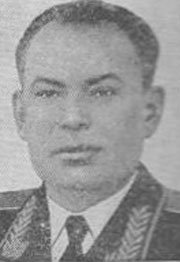


Sergienko Grigorii Andreevich
Rank: Red Army Soldier
Subdivision: 262nd Infantry Demidov-Khingan Red Banner Order of Suvorov Division
Sergienko Grigory Andreevich was an uncle and godfather of my dad Anatoly Semenovich Sergienko. The brother of my grandmother Maria Andreevna Sergienko. Born in 1925 in h. Kursk, Millerovsky district, Rostov region, in the family of Andrian Romanovich Sergienko and Kharitina Pavlovna. There is very little information. When he was drafted into the Red Army is not known yet. He fought as a Red Army Soldier in the 262nd Infantry Demidov Red Banner Order of Suvorov Division. The division was formed in the period from July 9 to July 20, 1941 in Vladimir by order of the Headquarters of the High Command of June 29, 1941 under No. 00100 "On the formation of Rifle and mechanized divisions from the personnel of the NKVD troops." In the active army during the Great Patriotic War - from July 30, 1941 to July 19, 1942, from September 30, 1942 to May 1, 1945 and from August 9, 1945 to September 3, 1945. He was repeatedly wounded.
From the information of the battles of the 262nd Rifle Division: Arrived on May 3, 1943 under Demidov. On the night of May 10, 1943, in the area of defense between Lake Baklanovskoye - Lake Rytoye, on the approaches to Demidov, it replaced units of the 9th Guards Rifle Division with the mission of firmly holding the defensive zone, preventing the breakthrough of enemy mechanized infantry and tanks in the northern and northeastern directions, and until September 16, 1943, it occupies positional defense there. From September 16, 1943, he moved in the army reserve behind the 306th Rifle Division along the route: Zaroevka, Khokhonskoye farm, Gorokhovo farm, Bedenki, Gonousovo.
On September 18, 1943, it entered the battle on the Zalnevo, Korevo, Mazurovka line, captured the Vorobyi farm, destroying up to two enemy companies and taking trophies. On September 19-20, 1943, continuing the fighting, it advanced 18-20 kilometers, occupying 20 settlements and came close to Demidov from the northeast and east. September 21, 1943 storms the city and by the end of the day occupies its eastern part along the Kaspla and Gobza rivers.
After the liberation of Demidov it continued the offensive, until the beginning of October 1943 it was conducting heavy battles in the Rudnyansky district (the villages of Zyatevka, Khozhan, Zubaki, Saptsy), reached the border of Belarus. After being wounded, he was in a hospital in Kazan since January 1, 1944. Hospital No. 2780 in Kazan: 1) House of the Red Army, Pushkin str., 24; 2) the hostel of the Kazan Financial and Economic Institute, Dzerzhinsky str., 22; 3) GIDUV dermatoveneric hospital 1.8.1941 - 20.5.1944 700 (9.1942) Levin; 2nd rank Military Doctor D.I. Gorshenin; Military Doctor of the 3rd rank, Borodin; Guard Leiutenant Colonel of the Medical Service, Silin.
A document was found , which indicated that a private of the 262th Rifle Division Sergienko Grigory Andreevich from October 20 to October 30, 1944 under ref. No. 01780 dated 01.11.1944 was included in the killed in aaction.
It turned out that Sergienko was not killed, but was seriously wounded and evacuated from the battlefield by a neighboring unit. (The document is attached). From the information of the battles of the 262nd Rifle Division: Since October 17, 1944, he again goes on the offensive, forcing the Sheshupe River, breaking through fortified positions. The troops of the 3rd Belorussian Front advanced 30 kilometers into the depths of East Prussia in a strip along the front of 140 kilometers, but with a powerful counterattack, the division as part of the front was thrown back to the original and even further. At the same time, on October 23, 1944, a salute was already fired in honor of the front troops.
Since October 27, 1944, the division has been defending approximately along the state border south of Jurbarkas. There is no information about what happened after the treatment of the Red Army Soldier GA Sergienko. His division again goes over to the offensive on January 13, 1945 during the East Prussian operation, advancing in the general front of Tilsit together (since January 18) with the 1st tank corps). On January 20, 1945, Tilsit was liberated by the forces of the 43rd Army, and the division, before reaching Tilsit, turned south-west, by January 26, 1945, having overcome a powerful defensive line on the Deime River, reached the approaches to Koenigsberg, and on January 27, 1945 years started fighting on the outskirts of the city, but had no success. In this regard, the division was sent to bypass Königsberg from the north-west and its surroundings with the mission of cutting the Königsberg-Pillau railway, crossing the water channel along the Frischess-Huff Bay.
In February 1945, Metgetten, a suburb of Königsberg, was stormed, having surrounded the city, and since February 19, 1945, it repels the enemy's offensive aimed at connecting with Pillau, developing in the general front of Seerappen. It turned out to be in the place of the main attack of the German troops in the 5th tank (more than 70 tanks), 561st and 548th infantry divisions and attached units in the Metgeten area. With the support of the 139th cannon brigade and the 1st anti-tank brigade, it leads the hardest battles, suffering very heavy losses, under pressure from the enemy, it left its positions in the suburbs, from February 21, 1945 it occupies a line in the Schuditten, Powayenne area.
On April 6, 1945, the division stormed Koenigsberg from the south-west, on April 9, 1945, the city was taken, and from April 13, 1945, the division went on the offensive during the Zemland operation, fought towards Fischhausen and on April 17, part of its forces participated in the capture of the city. after which she finished her combat path in the west. In June 1945 it was transferred to Mongolia, to Ulan Bator. It marched through the Gobi Desert, overcame the Big Khingan mountain range and fought into the Manchurian Valley. The first battle during the campaign leads for the Boltai station, then liberates the city of Tanan, passed Mukden and Harbin, at the end of the path, reaching Port Arthur, overcoming more than 2000 kilometers. The division was disbanded in 1947.
From the stories of my grandmother, it remains in my memory that, having come from the front, her brother Sergienko Grigory Andreevich was all wounded and sick, and was often treated in hospitals. He got married. His son Anatoly Grigorievich was born in 1945, who lived in Voroshilovgrad (Lugansk) with his wife and son Alexander. Grigory Andreevich died in his early thirties from wounds in the 1950s. (exact date unknown).
Sergienko Grigorii Andreevich
Rank: Red Army Soldier
Subdivision: 262nd Infantry Demidov-Khingan Red Banner Order of Suvorov Division
Sergienko Grigory Andreevich was an uncle and godfather of my dad Anatoly Semenovich Sergienko. The brother of my grandmother Maria Andreevna Sergienko. Born in 1925 in h. Kursk, Millerovsky district, Rostov region, in the family of Andrian Romanovich Sergienko and Kharitina Pavlovna. There is very little information. When he was drafted into the Red Army is not known yet. He fought as a Red Army Soldier in the 262nd Infantry Demidov Red Banner Order of Suvorov Division. The division was formed in the period from July 9 to July 20, 1941 in Vladimir by order of the Headquarters of the High Command of June 29, 1941 under No. 00100 "On the formation of Rifle and mechanized divisions from the personnel of the NKVD troops." In the active army during the Great Patriotic War - from July 30, 1941 to July 19, 1942, from September 30, 1942 to May 1, 1945 and from August 9, 1945 to September 3, 1945. He was repeatedly wounded.
From the information of the battles of the 262nd Rifle Division: Arrived on May 3, 1943 under Demidov. On the night of May 10, 1943, in the area of defense between Lake Baklanovskoye - Lake Rytoye, on the approaches to Demidov, it replaced units of the 9th Guards Rifle Division with the mission of firmly holding the defensive zone, preventing the breakthrough of enemy mechanized infantry and tanks in the northern and northeastern directions, and until September 16, 1943, it occupies positional defense there. From September 16, 1943, he moved in the army reserve behind the 306th Rifle Division along the route: Zaroevka, Khokhonskoye farm, Gorokhovo farm, Bedenki, Gonousovo.
On September 18, 1943, it entered the battle on the Zalnevo, Korevo, Mazurovka line, captured the Vorobyi farm, destroying up to two enemy companies and taking trophies. On September 19-20, 1943, continuing the fighting, it advanced 18-20 kilometers, occupying 20 settlements and came close to Demidov from the northeast and east. September 21, 1943 storms the city and by the end of the day occupies its eastern part along the Kaspla and Gobza rivers.
After the liberation of Demidov it continued the offensive, until the beginning of October 1943 it was conducting heavy battles in the Rudnyansky district (the villages of Zyatevka, Khozhan, Zubaki, Saptsy), reached the border of Belarus. After being wounded, he was in a hospital in Kazan since January 1, 1944. Hospital No. 2780 in Kazan: 1) House of the Red Army, Pushkin str., 24; 2) the hostel of the Kazan Financial and Economic Institute, Dzerzhinsky str., 22; 3) GIDUV dermatoveneric hospital 1.8.1941 - 20.5.1944 700 (9.1942) Levin; 2nd rank Military Doctor D.I. Gorshenin; Military Doctor of the 3rd rank, Borodin; Guard Leiutenant Colonel of the Medical Service, Silin.
A document was found , which indicated that a private of the 262th Rifle Division Sergienko Grigory Andreevich from October 20 to October 30, 1944 under ref. No. 01780 dated 01.11.1944 was included in the killed in aaction.
It turned out that Sergienko was not killed, but was seriously wounded and evacuated from the battlefield by a neighboring unit. (The document is attached). From the information of the battles of the 262nd Rifle Division: Since October 17, 1944, he again goes on the offensive, forcing the Sheshupe River, breaking through fortified positions. The troops of the 3rd Belorussian Front advanced 30 kilometers into the depths of East Prussia in a strip along the front of 140 kilometers, but with a powerful counterattack, the division as part of the front was thrown back to the original and even further. At the same time, on October 23, 1944, a salute was already fired in honor of the front troops.
Since October 27, 1944, the division has been defending approximately along the state border south of Jurbarkas. There is no information about what happened after the treatment of the Red Army Soldier GA Sergienko. His division again goes over to the offensive on January 13, 1945 during the East Prussian operation, advancing in the general front of Tilsit together (since January 18) with the 1st tank corps). On January 20, 1945, Tilsit was liberated by the forces of the 43rd Army, and the division, before reaching Tilsit, turned south-west, by January 26, 1945, having overcome a powerful defensive line on the Deime River, reached the approaches to Koenigsberg, and on January 27, 1945 years started fighting on the outskirts of the city, but had no success. In this regard, the division was sent to bypass Königsberg from the north-west and its surroundings with the mission of cutting the Königsberg-Pillau railway, crossing the water channel along the Frischess-Huff Bay.
In February 1945, Metgetten, a suburb of Königsberg, was stormed, having surrounded the city, and since February 19, 1945, it repels the enemy's offensive aimed at connecting with Pillau, developing in the general front of Seerappen. It turned out to be in the place of the main attack of the German troops in the 5th tank (more than 70 tanks), 561st and 548th infantry divisions and attached units in the Metgeten area. With the support of the 139th cannon brigade and the 1st anti-tank brigade, it leads the hardest battles, suffering very heavy losses, under pressure from the enemy, it left its positions in the suburbs, from February 21, 1945 it occupies a line in the Schuditten, Powayenne area.
On April 6, 1945, the division stormed Koenigsberg from the south-west, on April 9, 1945, the city was taken, and from April 13, 1945, the division went on the offensive during the Zemland operation, fought towards Fischhausen and on April 17, part of its forces participated in the capture of the city. after which she finished her combat path in the west. In June 1945 it was transferred to Mongolia, to Ulan Bator. It marched through the Gobi Desert, overcame the Big Khingan mountain range and fought into the Manchurian Valley. The first battle during the campaign leads for the Boltai station, then liberates the city of Tanan, passed Mukden and Harbin, at the end of the path, reaching Port Arthur, overcoming more than 2000 kilometers. The division was disbanded in 1947.
From the stories of my grandmother, it remains in my memory that, having come from the front, her brother Sergienko Grigory Andreevich was all wounded and sick, and was often treated in hospitals. He got married. His son Anatoly Grigorievich was born in 1945, who lived in Voroshilovgrad (Lugansk) with his wife and son Alexander. Grigory Andreevich died in his early thirties from wounds in the 1950s. (exact date unknown).
0 comment



2026 © Russian Military Historical Society Developed by Jetmix