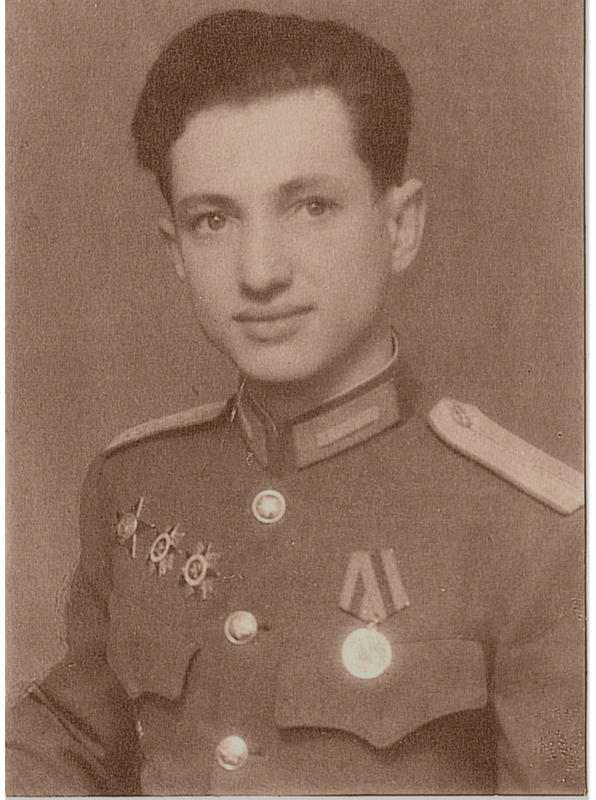
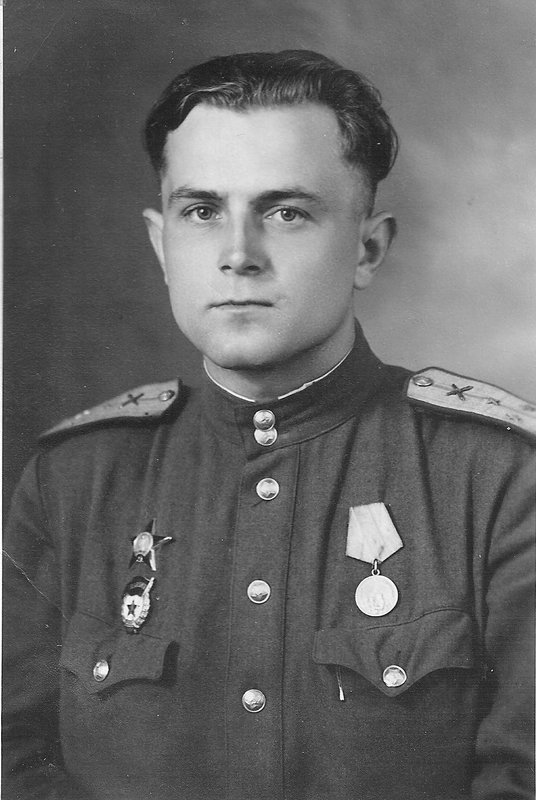
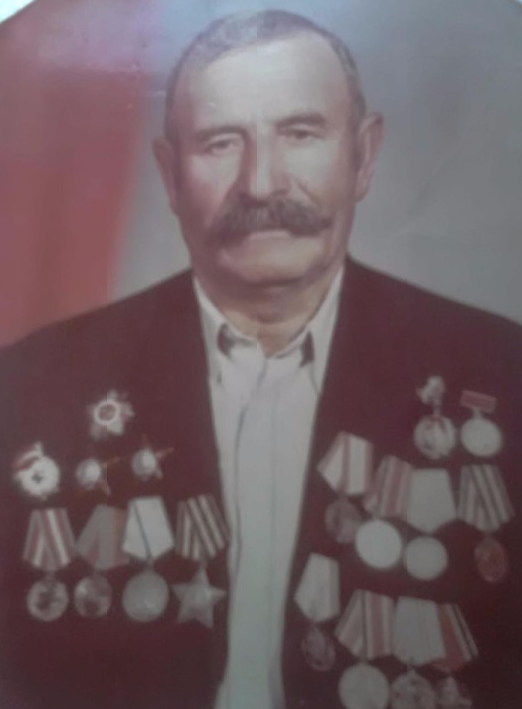
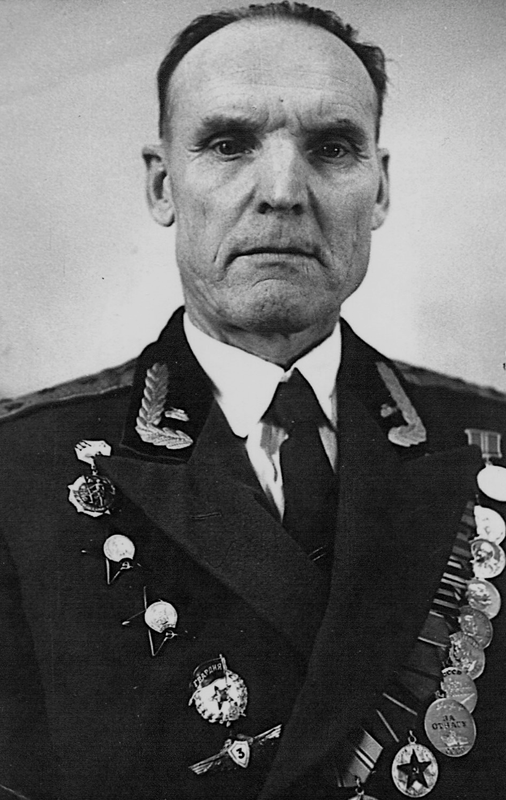
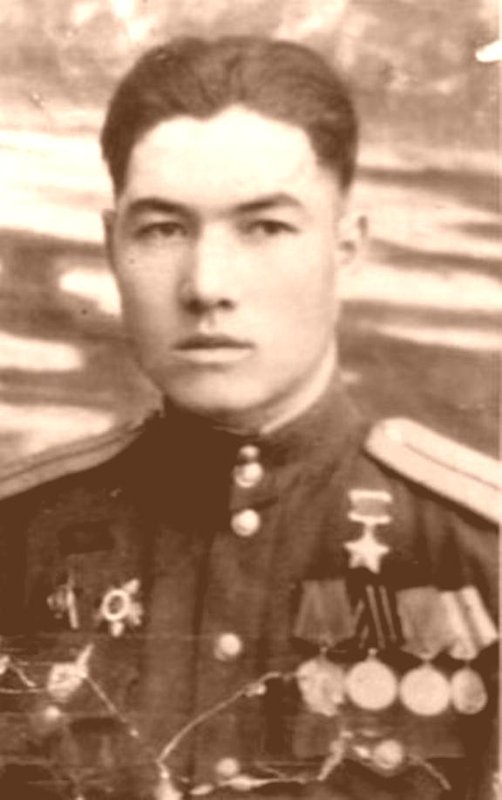
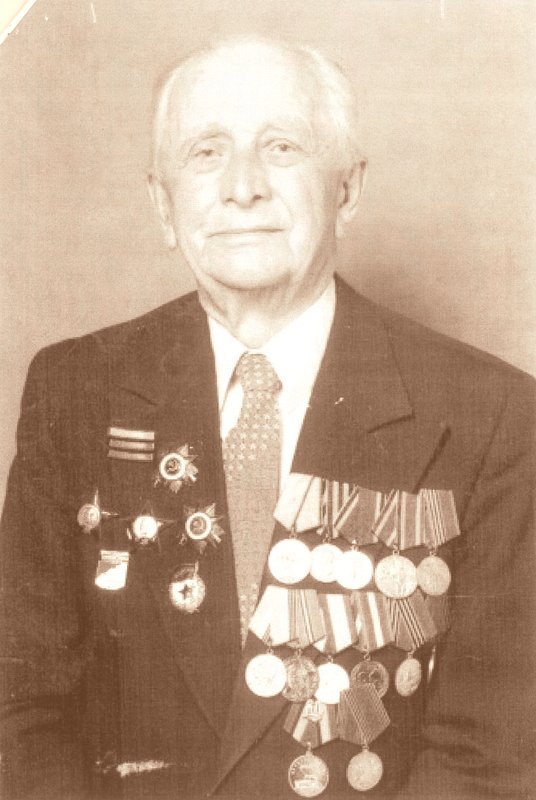
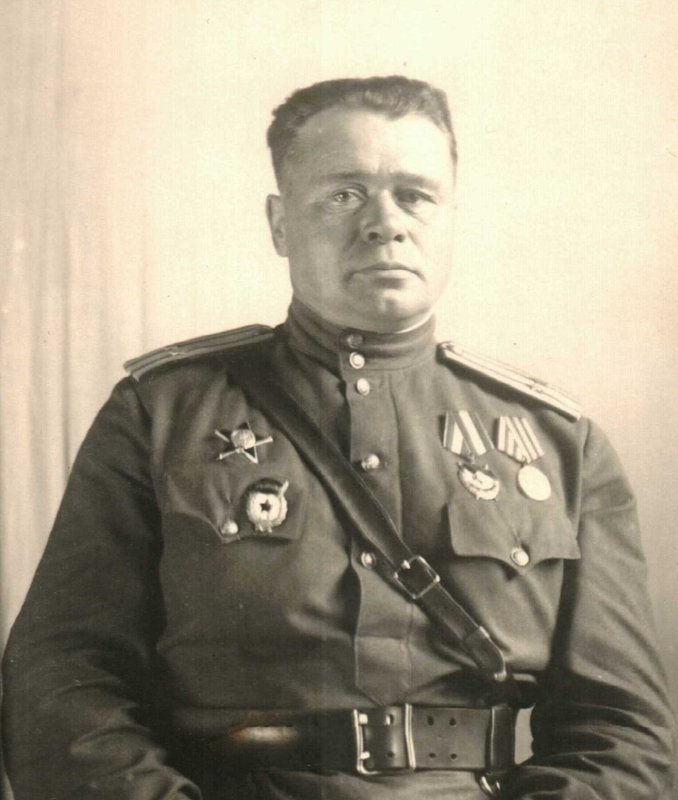
Alexander Savchenkov
Rank: Lieutenant Colonel_x000D_
Branch of Service: Military Veterinary Staff_x000D_
My great-grandfather Alexander Savchenkov was born on October 20, 1902 in a poor peasant family. At birth, he was given the name Artemiy, which his great-grandfather changed to Alexander in 1932. After graduating from Divasovskaya 4-year school, my grandfather realized that he did not want to wear bast shoes all his life and decided to master shoemaking. At first, the self-taught shoemaker's shoes were "laughter and sin". My grandfather learned the tricks of shoemaking in a Shoemaking workshop in the 69th Army._x000D_
In 1929, he passed the external exams for 9 classes and entered the Military Veterinary Paramedic School, then graduated from the Military Veterinary Faculty at the Moscow Veterinary Institute. He was sent to Khabarovsk as a veterinarian, and then as the Chief of the Medical Department of the Khabarovsk infirmary._x000D_
The war caught our great-grandfather in the Far East, in Blagoveshchensk, where he served on the border as the chief of the veterinary infirmary. Two weeks before the beginning of the war, great-grandfather received an urgent assignment in Bialystok (order of 07.06.1941 on the appointment of the Chief of the Bialystok Garrison Veterinary Infirmary), on the Polish border, where the invasion of Nazi troops began...where no one survived. By the will of fate, the family was delayed - it was necessary to collect things, sell the farm, because they were leaving forever. The whole family was "sitting on their suitcases" and was going to stop in Smolensk on the way to visit all their relatives. I'm afraid to think what would have happened if my great-grandfather and his family had reached Bialystok earlier than June 22._x000D_
To get a new appointment, great-grandfather and his family went to Moscow. The road was very difficult: the train constantly had to let go trains with troops going to the front. Somewhere in the Urals, people began to talk about the horrors that occur at the front._x000D_
In Moscow, my great-grandfather was assigned to Tula as the Chief of the Military Veterinary Infirmary. This was the beginning of the military path, and then there was the city of Skopin-Marshansk, Shilovo - again Tula-Rzhev-Bryansk-Poland-Narva (Estonia) - Berlin. He participated in the battles of the Western, Bryansk and 1st Belorussian Fronts._x000D_
Great-grandfather was born in the village and since childhood was engaged with horses, so he put his heart and soul into his work. He told our grandmother Zina (his daughter) that horses are very smart animals. When the fighting started, one could hear the roar of explosions, the horses were very nervous, even crying. I had to calm everyone down. There were few vehicles, so horses were the main means of transport in those years. They were the ones who transported heavy weapons and people._x000D_
Without a horse, you can't feed a soldier — after all that were the horses that delivered food carts and field kitchens to the positions. Every a rifle regiment was supposed to have three hundred and fifty horses. And how many wounded men owe their lives to these humble war workers! After all, most of the infirmaries and medical units were also "horse-drawn". It often happened that the infantry went to the positions not on trucks, but on horse carts. Well, the movement of partisan detachments without this type of transport is impossible to imagine._x000D_
Our great-grandfather Sasha was awarded the Order of the Red Star for saving the cavalry in the battles of the Bug and Vistula._x000D_
And the Order of the Patriotic War 2nd degree great-grandfather received for preparing the cavalry for the capture of Berlin!_x000D_
After the war, my great-grandfather lived with his family for some time in Narva (Estonia), and then received a transfer to the Moscow Region and retired. Unfortunately, he lived only 13 years after the war. My great-grandmother Asya, his wife, lived until the age of 96 (until 1998) and told us everything in detail._x000D_
Our family honors the memory of those who participated in the great Patriotic War. It is dear to our hearts! We remember our HEROES!!!
Alexander Savchenkov
Rank: Lieutenant Colonel_x000D_
Branch of Service: Military Veterinary Staff_x000D_
My great-grandfather Alexander Savchenkov was born on October 20, 1902 in a poor peasant family. At birth, he was given the name Artemiy, which his great-grandfather changed to Alexander in 1932. After graduating from Divasovskaya 4-year school, my grandfather realized that he did not want to wear bast shoes all his life and decided to master shoemaking. At first, the self-taught shoemaker's shoes were "laughter and sin". My grandfather learned the tricks of shoemaking in a Shoemaking workshop in the 69th Army._x000D_
In 1929, he passed the external exams for 9 classes and entered the Military Veterinary Paramedic School, then graduated from the Military Veterinary Faculty at the Moscow Veterinary Institute. He was sent to Khabarovsk as a veterinarian, and then as the Chief of the Medical Department of the Khabarovsk infirmary._x000D_
The war caught our great-grandfather in the Far East, in Blagoveshchensk, where he served on the border as the chief of the veterinary infirmary. Two weeks before the beginning of the war, great-grandfather received an urgent assignment in Bialystok (order of 07.06.1941 on the appointment of the Chief of the Bialystok Garrison Veterinary Infirmary), on the Polish border, where the invasion of Nazi troops began...where no one survived. By the will of fate, the family was delayed - it was necessary to collect things, sell the farm, because they were leaving forever. The whole family was "sitting on their suitcases" and was going to stop in Smolensk on the way to visit all their relatives. I'm afraid to think what would have happened if my great-grandfather and his family had reached Bialystok earlier than June 22._x000D_
To get a new appointment, great-grandfather and his family went to Moscow. The road was very difficult: the train constantly had to let go trains with troops going to the front. Somewhere in the Urals, people began to talk about the horrors that occur at the front._x000D_
In Moscow, my great-grandfather was assigned to Tula as the Chief of the Military Veterinary Infirmary. This was the beginning of the military path, and then there was the city of Skopin-Marshansk, Shilovo - again Tula-Rzhev-Bryansk-Poland-Narva (Estonia) - Berlin. He participated in the battles of the Western, Bryansk and 1st Belorussian Fronts._x000D_
Great-grandfather was born in the village and since childhood was engaged with horses, so he put his heart and soul into his work. He told our grandmother Zina (his daughter) that horses are very smart animals. When the fighting started, one could hear the roar of explosions, the horses were very nervous, even crying. I had to calm everyone down. There were few vehicles, so horses were the main means of transport in those years. They were the ones who transported heavy weapons and people._x000D_
Without a horse, you can't feed a soldier — after all that were the horses that delivered food carts and field kitchens to the positions. Every a rifle regiment was supposed to have three hundred and fifty horses. And how many wounded men owe their lives to these humble war workers! After all, most of the infirmaries and medical units were also "horse-drawn". It often happened that the infantry went to the positions not on trucks, but on horse carts. Well, the movement of partisan detachments without this type of transport is impossible to imagine._x000D_
Our great-grandfather Sasha was awarded the Order of the Red Star for saving the cavalry in the battles of the Bug and Vistula._x000D_
And the Order of the Patriotic War 2nd degree great-grandfather received for preparing the cavalry for the capture of Berlin!_x000D_
After the war, my great-grandfather lived with his family for some time in Narva (Estonia), and then received a transfer to the Moscow Region and retired. Unfortunately, he lived only 13 years after the war. My great-grandmother Asya, his wife, lived until the age of 96 (until 1998) and told us everything in detail._x000D_
Our family honors the memory of those who participated in the great Patriotic War. It is dear to our hearts! We remember our HEROES!!!
0 comment



2026 © Russian Military Historical Society Developed by Jetmix