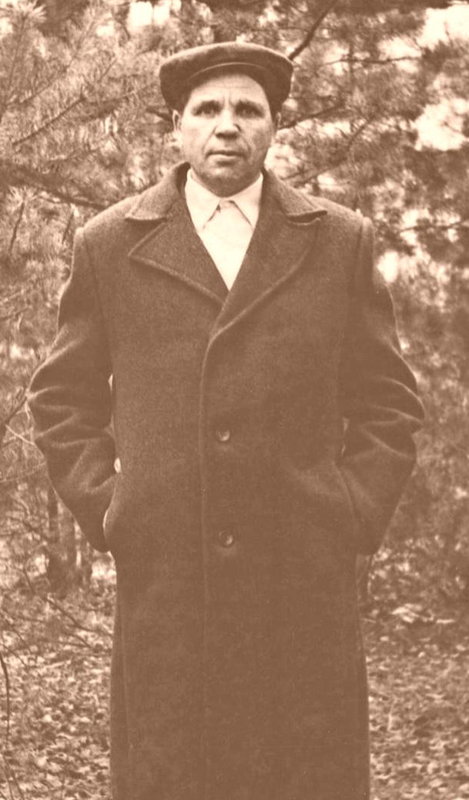
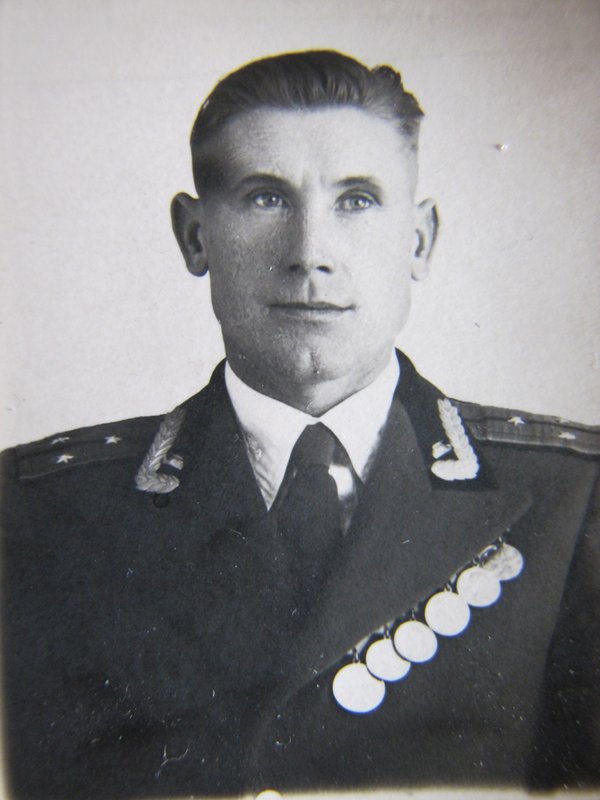
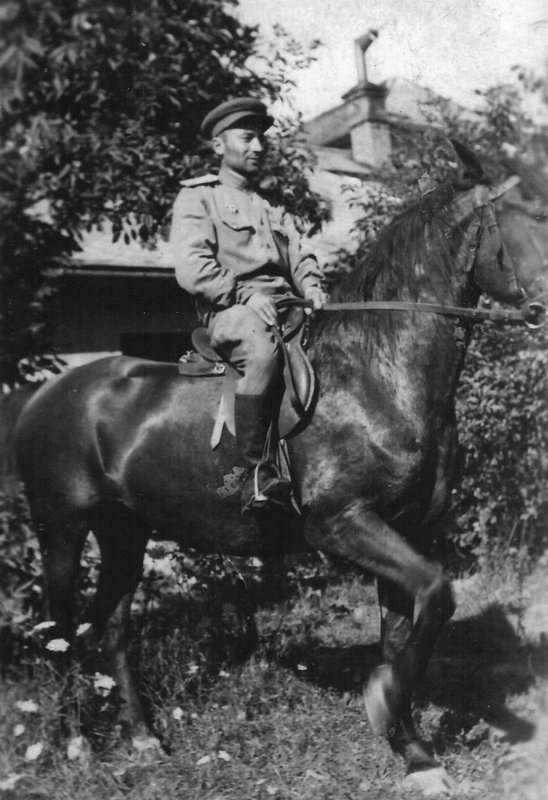
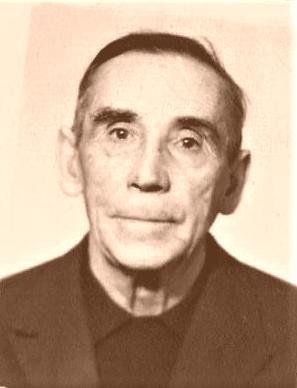
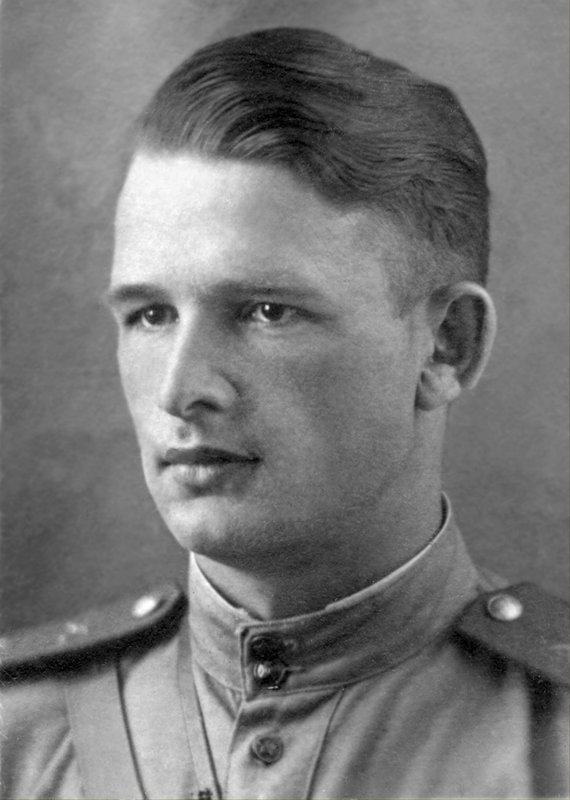
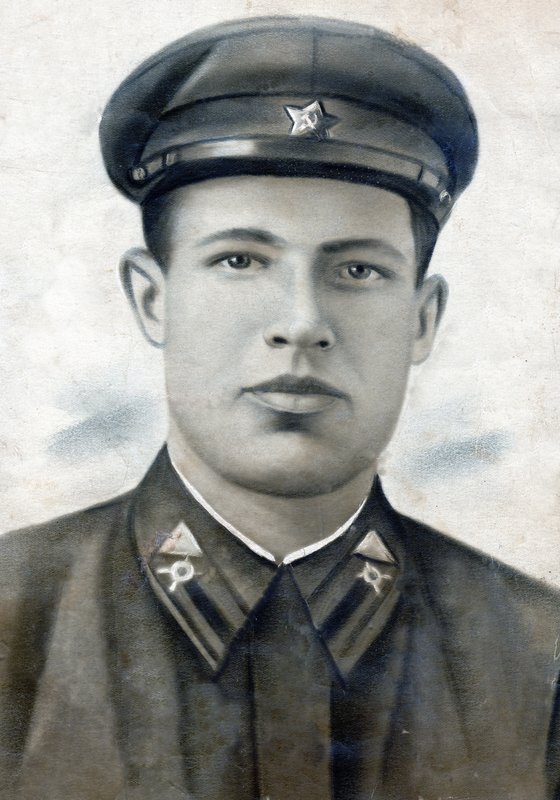
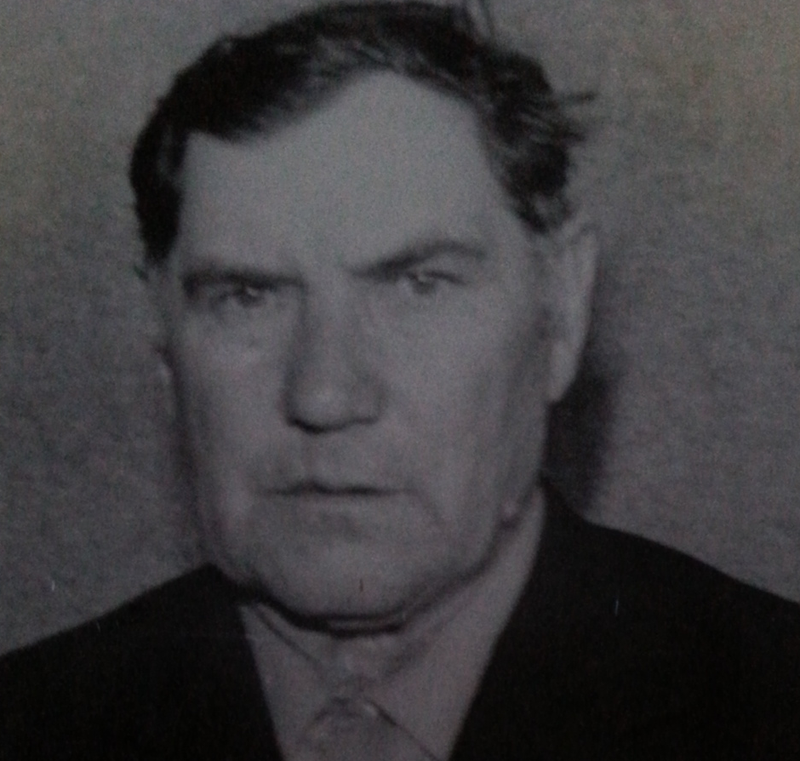
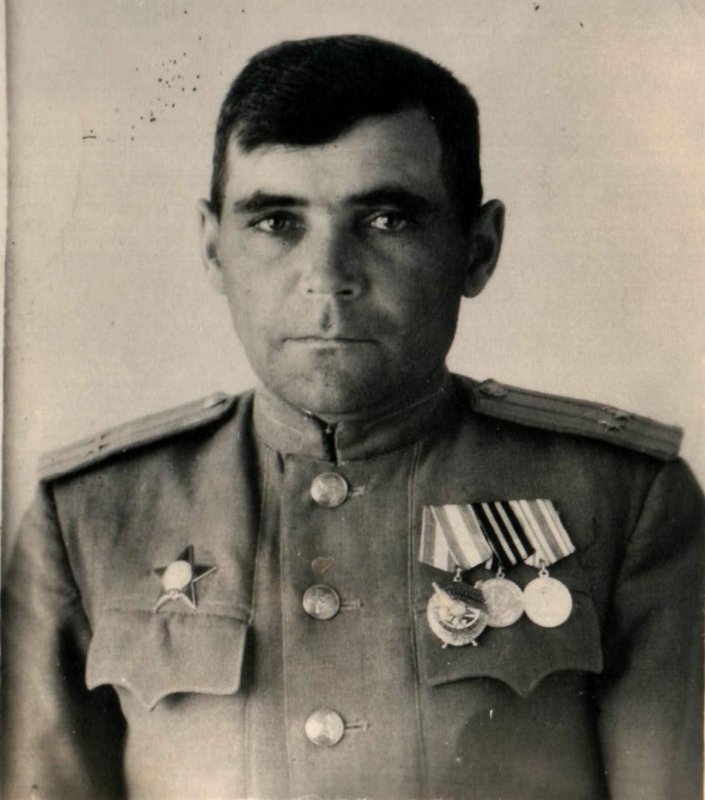
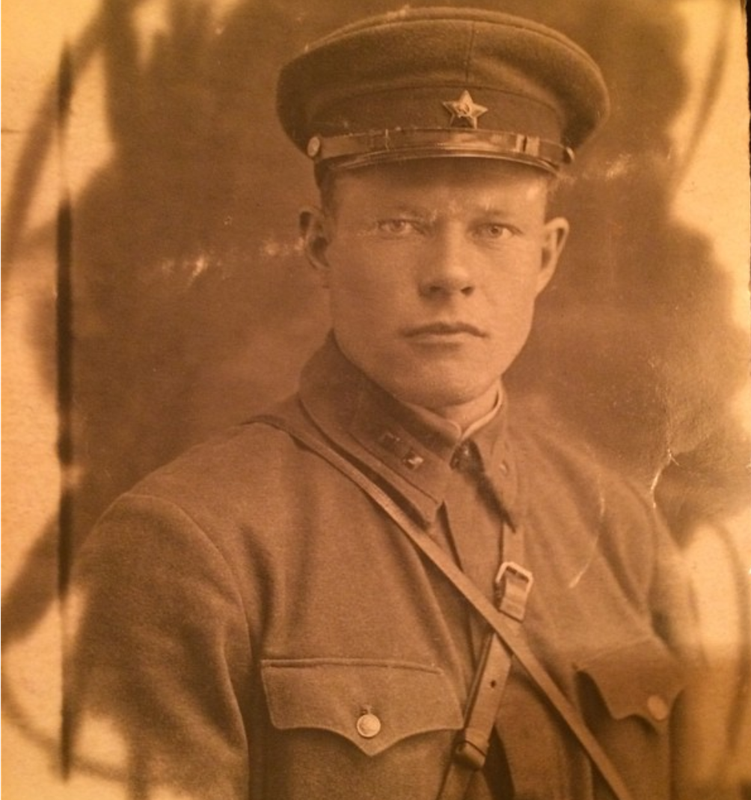
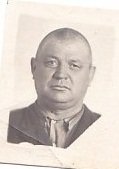
Kolbasin Deomid Ivanovich
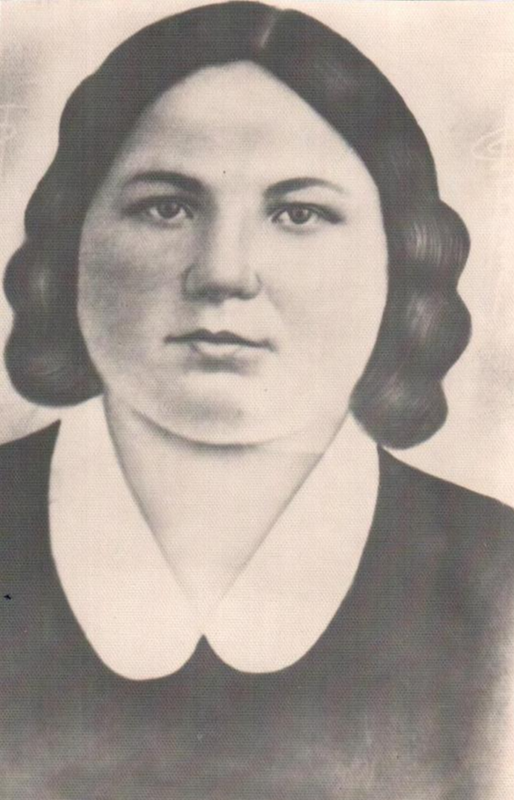
Title: Lieutenant Colonel. Troops: Army, Air Force (except marine aviation), Coast Guard, NKVD, Border Guard. The participation of my great-grandfather, Deomid Ivanovich Kolbasin, in the war with militaristic Japan. From the memories of my great-grandmother, grandmother, the stories of my father, as well as information stored in the Central Archive of the Ministry of Defense, I know that my great-grandfather, Kolbasin Deomid Ivanovich, was born on August 9, 1909 in the Dagestan city of Kizlyar, in a family of Terski Cossacks. He began serving in the Red Army in 1929. He became a member of the All-Union Communist Party of Bolsheviks in 1931. In 1932, he graduated from the Krasnodar Military Infantry School and went to serve as commander of the rifle platoon, then the crew in 239 Artyomovsk rifle regiment, located in Slavyansk Stalin (now Donetsk) region. In 1936, at the weekend in the Slavic Park of Culture and Leisure, he met my great-grandmother - Maria Vasilyevna Popova, born on August 4, 1915, a native of the village Popovka Krasnolimansky district, Kharkov province, whom he had to marry very quickly, as her, who graduated with honors from the paramedical school, military knitting school, OSOAVIACHIM's excellent student, was going to be sent to serve in the Pacific Fleet. Deomid Ivanovich and Maria Vasilyevna together raised and brought up three daughters: Nela (from the first marriage of the great-grandfather), born in 1933, Galina, born in 1941, and Valentina, born in 1944. According to my great-grandmother's memories, my great-grandfather shot very well with any small arms, but especially with a rifle. He loved gymnastics, dzhigitovka, ski marching. After graduating in 1938 from the accelerated courses of command staff "Shot" in Moscow, Deomid Ivanovich came to serve in the Far East. He served as deputy chief of the 23rd District School of Snipers of the Far Eastern Front, located near Shkotovo station of Primorsky Krai. What kind of officer he was, say the materials of the officer's record - service record of the representation of Kolbasin D.I. to the award for length of service, found by my father and sister in the 11th department of the Central Archive of the Ministry of Defense of Russia in 2004: "... Socialist homeland and the cause of the party of Lenin - Stalin is committed. He is politically and morally stable. He enjoys business and political authority. The overall political development is good. He works on himself, and can pass on his knowledge to his subordinates. Studies the experience of the Great Patriotic War and helps the officers. He pays sufficient attention to the methods of training officers. He is personally disciplined, demanding of himself and his subordinates. A bit closed. Energetic, calm and proactive. Military training is good. He knows the kinds of troops, and can organize interaction with them. The situation is assessed correctly, and decisions are made correctly in a training environment. He is able to lead the troops in a training environment. He is a good, accurate officer. Years of service in the Red Army on 7.11.1944 - 15 years 0 days. Worthy of being awarded the Order of the Red Star.” My grandmother, Valentina Deomidovna, told me everything she knew about Deomid Ivanovich's participation in the war with Japan from her mother, my great grandmother Maria Vasilyevna. Unfortunately, Maria Vasilyevna has not been alive for twelve years already... Some information, communicating on the Internet, I received from the older granddaughter of our Warrior - Petruhnenko Svetlana Valentinovna, currently living in Slavyansk, Donetsk region. Unfortunately, this information turned out to be rather scarce and fragmentary. Like all veterans, my grandfather was not very fond of remembering the war... Nevertheless, some episodes of my great-grandfather's combat biography have been preserved in my relatives' memory. Months before the start of battles with Japan were very busy for our fighters and commanders, because the Japanese constantly arranged various provocations. For example, along the border between China and the USSR, they battled their divisions, riding tanks and armored personnel carriers, breaking our barricades and firing cannons and mortars at our positions. However, with the "Do not Return Fire!" order, our troops suffered significant losses without engaging in combat. A separate story should be told about the Chinese bandits - the Hunhuzes, who often included former Russian White Guards, former Semyonovs. They crossed the border at night, looting warehouses, stores and cattle, often killing not only civilians and sentries, but also cutting out entire border outposts and barracks with soldiers. These gangs spared no one, including the elderly, women and children. The families of the officers were mocked in a particularly subtle way... My great-grandfather's duties included, among other things, to fight against these people. My great-grandmother remembered that usually "Hunhuzes" were not taken prisoner, and those captured by our fighters were silent as "fish on ice," and with inadequate control, like animals, bit through their veins with their theeth and died of blood loss. According to the memories of his great-grandmother, Deomid Ivanovich sometimes returned from special operations to destroy the bandits with traces of blood on his uniform. In early 1945, Major Kolbasin D.I. was appointed commander of 214 Amur Order of the Red Star Rifle Regiment 12 Amur Rifle Division named after the Siberian Revolutionary Committee, which was part of the 2nd Far Eastern Front. My great-grandfather spent the whole day on duty, preparing his soldiers and officers for the upcoming battles. On the penultimate page of his notebook were made records in pencil of the number of soldiers, equipment and weapons in his regiment: "Officers - 181, sergeants - 637, privates - 877, a total of 1695, 76 mm - 4, 57 - 6, 45 -12, 82 - 27, 120 - 6, P. Art. - 54, DP - 108, Rifles. - 811, PTR - 18, Radio Station. RB - 5, Radiost. A -7, Agr. зар. - 1, Machinegun. 12, 7 mm - 6. Rid. horses. - 10, Art. - 97, Oboz. - 154, Total - 261. Aut. lightweight. - 1, Cargo. - 26, Scooter. - 11, Cargo. -56, Dvukol. - 10, Cargo One. - – 27. Command. - 4 persons. - horse. 2. Staff - 9 people - horses. 1, scooters - 3. Party. political appar. - 3 persons. Club - 31. Head of services. - – 4. Hoz. part - 9 people. Charging and technical base. I was surprised by the fact that the regiment had no automatic rifles at all. On August 9, 1945, the Soviet offensive against the Japanese troops began. The troops of the 2nd Far Eastern Front, in cooperation with the Amur War Flotilla, forced the Amur and Ussuri Rivers, broke through the long-term Japanese defenses in the Heikhe and Fujin districts, crossed the Maly Hingan mountain range and, together with the troops of the 1st Far Eastern Front, seized Harbin. Headed by my great-grandfather 214 rifle regiment forced the Amur River, participated in the Sungari operation, the destruction of a major Maolantung Japanese resistance node, the liberation of Chinese cities and the defeat of the Kwantung Group. 27.08.1945, Major Kolbasin was awarded the Order of the Red Banner of Defense for the fact that "... in battles with the Japanese invaders, being with his 1st battalion in the vanguard of the division, his courage and skillful combat leadership of the regiment was the first to force the Amur River and entered the enemy territory, thundering the Japanese invaders ...". In the stories of the war Deomid Ivanovich often recalled the Japanese suicide bombers - "kamikaze", who, strapped with explosives or grenades, threw themselves under the Soviet tanks and cars, and blew themselves up along with the Red Army, trying to take them as prisoners. Unwilling to be captured, some Japanese, especially officers, made harakiri, i.e. ripped up their bellies with daggers and pierced themselves with sabers. In captivity, the Japanese soldiers behaved with dignity, unconditionally fulfilling the commands of their officers, when they were built in columns to be sent to the rear. The wounded, even seriously, endured pain and practically did not moan. My grandmother and aunt remembered the story of how my great-grandfather, who together with the Ordinarian was riding somewhere on horses along the forest road, a Japanese with a knife in his hand jumped off from a pine tree. How the great-grandfather managed to repel the blow and shoot the attacker, only God knows! The Chinese people, who lived in terrible poverty for the most part, were very happy to meet the Red Army, the savior from Japanese tyranny. The Chinese treated our soldiers with simple food and moonshine. However, later they continued crossing the border, robbing local population and attacking the Red Army. Soon after the end of World War II, Kolbasin D. I. received the title of "lieutenant colonel", almost went to serve on the Diomidov Islands, located near the Bering Strait, but due to health conditions (heartaches began) was appointed military commissar of Nanai district, Khabarovsk Krai. His great-grandfather's family lived in the back of the building of the district military commissariat, located in the center of Troitskoye village, always guarded by watchtowers armed with submachine guns. The building was wooden, very old and had to be overhauled. Immediately behind the ATM, my great-grandmother planted a vegetable garden, in which the whole family, including my great-grandfather, took part. These years my grandmother always remembers as the best in life. Deomid Ivanovich simply adored her, his youngest daughter, and took her everywhere - to the gym, to the shooting range and of course to fishing, which he loved very much. Deomid Ivanovich died in March 1952, from a heart attack suddenly, at night, and was buried in the cemetery of Troitskoe village, Nanai district, Khabarovsk region. After his death, the family moved to Slavyansk, Donetsk region. My great-grandmother never remarried. For his military services Deomid Ivanovich Kolbasin was awarded two Orders of the Red Banner, the Order of the Red Star, medals "For the Victory over Germany in the Great Patriotic War" 1941-1945", "For the Victory over Japan", "30 years of the Soviet Army and Navy. Personal belongings, photographs, awards and documents of Deomid Ivanovich were carefully kept in the family of the officer, and then were handed over by Maria Vasilyevna Kolbasina to her elder grandson, my father - Konstantin Mikhailovich Strakhov for eternal storage. In 2000, the sacred relics of the Strakhov family were handed over by my father - Konstantin Mikhailovich Strakhov - for temporary storage to the Museum of "Fighting Glory" of the Langepas Center for Sports and Military Patriotic Training of Children and Youth, where they are kept to this day. Among the exhibits presented in the exposition there are: Pad with medals: "For the Victory over Germany in the Great Patriotic War of 1941-1945", "For the Victory over Japan", "30 years of the Soviet Army and Navy". Unfortunately, after his grandfather's death, the orders were handed over to the military committee and sent to Moscow. The pocket silver watch of the Swiss company "Doxa", 1906, with engraving: "To Lieutenant Comrade D.I. Kolbasin for combat training. The USSR People's Commissar of Defense. 1. XI. 1936", which were awarded to my great-grandfather in Moscow for excellent shooting during the exercise by Marshal K.E. Voroshilov personally. Photo of Kolbasin D.I. made in 1939, on the back side of which there is an inscription "DVK, 1909-1939". The notebook in a cardboard cover of green color was purchased by my great-grandfather in Slavyansk and was with him constantly. The book of 100 sheets contains sayings of commanders, political leaders of the USSR and other great people, as well as proverbs. It is filled in almost completely. On the second page of the book there is a painting of the great-grandfather. On the penultimate page - the number of soldiers, equipment and weapons in his regiment. The binoculars of the Japanese company Yamato are in a leather case, which the great-grandfather took as a trophy from a Japanese prisoner officer. Also on display are the cover of the party ticket of a member of the All-Union Communist Party of Bolsheviks (b), the mandate of a member of the Nanai district of Khabarovsk Krai, a melchior cigarette case, a pouch with a tobacco bag (stitched together by my great-grandmother) and newspaper fragments, an automatic pencil, a razor, and a razor stone. In addition to these relics, we have at home six photos of our great-grandfather, made in different years and copies of award lists. My grandmother, Valentina Deomidovna Strakhova, who lives in Rostov-on-Don, has more than ten more photos. We have placed all available information about Kolbasin Deomid Ivanovich on the international site "Immortal Regiment". It should be noted that since childhood all his six grandchildren, brought up on the example of the grandfather, served or still serve in the ranks of the Armed Forces of the USSR and Russia, law enforcement agencies and the Customs Service, and three of them - Konstantin, Andrey and Mikhail became officers.