Back to
album
album
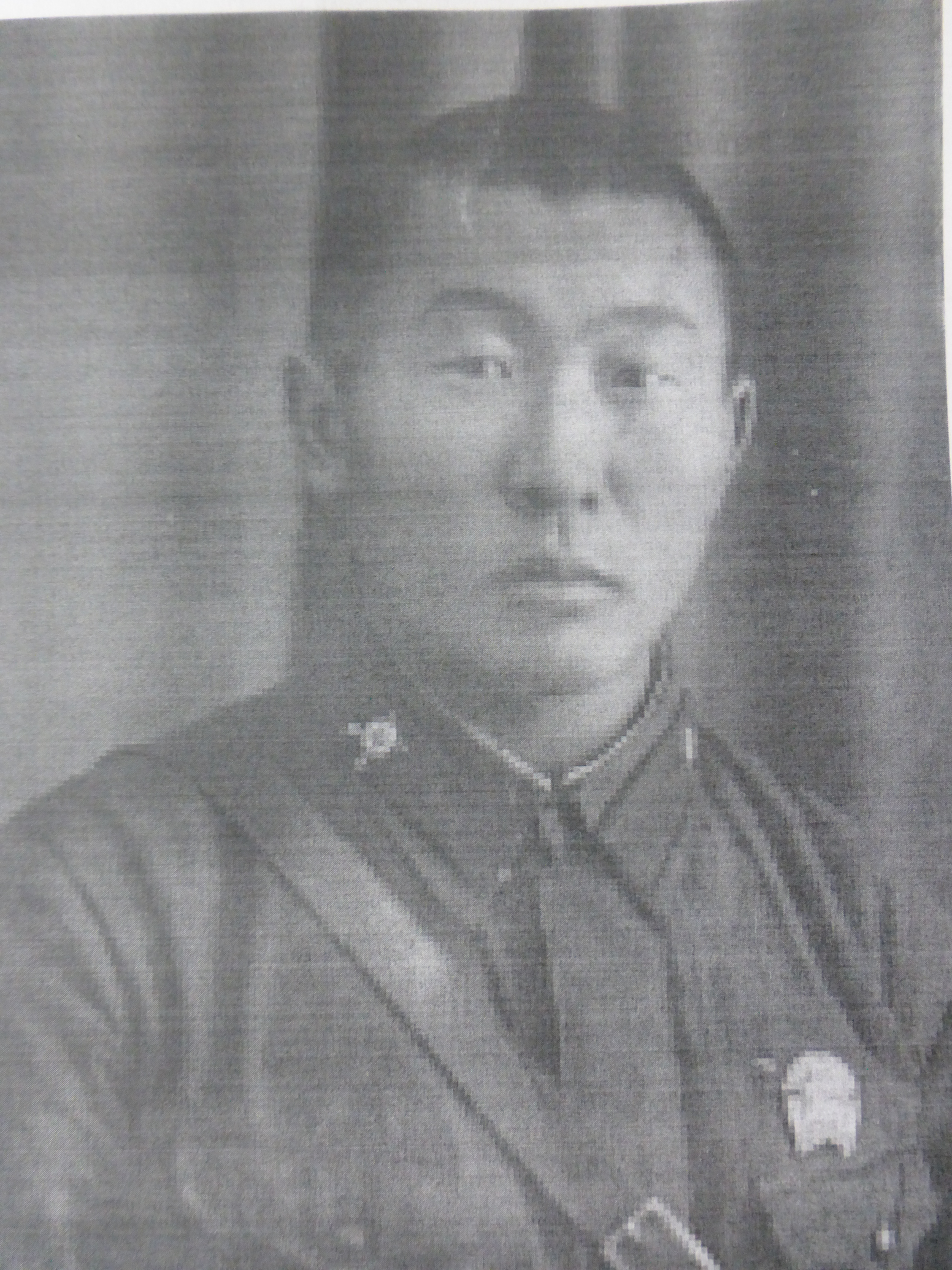
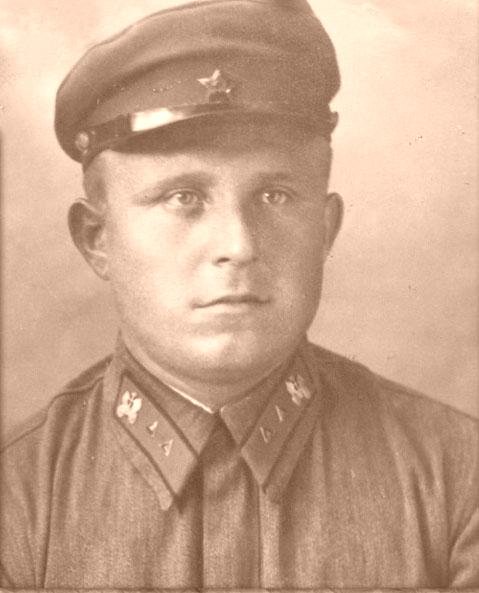
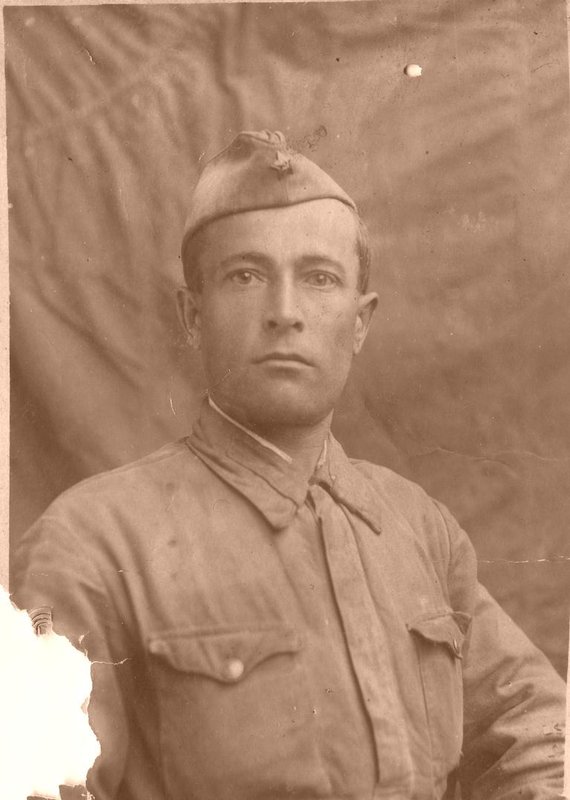
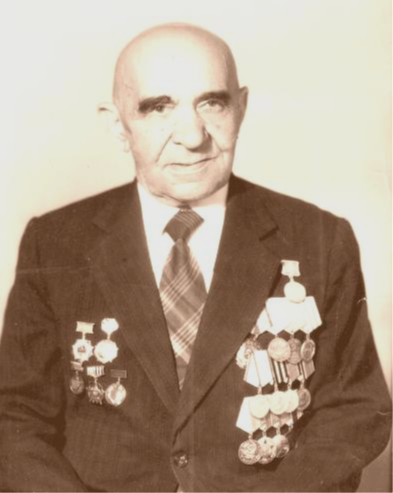

Androsov Nikolay Stepanovich
CITY: the village of Maryevka, Tambov region DATE OF BIRTH: 12/22/1913 DATE OF DEATH: 03/01/2004 HISTORY: Title: Red Army soldier Type of troops: Military medical personnel .My grandfather - Nikolai Stepanovich Androsov - Honored Doctor of the Russian Federation, Honorary Citizen of the Hero City of Murmansk is the title was awarded by the decision of the City Council in 1998. His work was awarded the Orders of Lenin, the October Revolution, the Second Degree of the Patriotic War and many medals. Nikolai Stepanovich Androsov was born on December 22, 1913 in the village of Maryevka, forty kilometers from the city of Tambov. His parents had nine children: two girls and seven boys. In addition, the family also brought up a nephew, Peter, whose parents died when he was six years old. His grandmother Marfa Ivanovna taught Kolya to read and write. She was not a relative of the Androsovs. The grandmother was brought from Tambov to save her from hunger during the Civil War. She made ink out of soot, and wrote with bird feathers. Nikolai graduated from four classes in Maryevka, and finished seven years in the village of Bolshaya Talinka. Then the family moved to Konstantinovka, Donetsk region, to uncle Mikhail Vasilyevich. Then he studied at the Factory and workshop educaion, work at the plant, where Nikolai Androsov had an industrial leg injury. After recovery - again work at the factory and study at the workers' faculty, at the medical department. After the workers' faculty in 1935 he entered the Donetsk Medical Institute, which he graduated in 1940. And in 1940, the young doctor Nikolai Androsov was called up for military service as an ordinary doctor of urgent service. His motorized rifle regiment was stationed in a forest near Libava (near Riga). Changes in the measured soldier's life began on June 19, 1941. On the territory of Lithuania they learned about the beginning of the war. Nikolai Stepanovich at that time was appointed acting head of the regiment's medical service. July 25 saw the first battle with the Germans. Their unit was deeply wedged into the enemy line. There was a threat of encirclement. Early the next morning, they were forced to retreat to new positions. This maneuver did not change the situation for the better. The battle continued until darkness. With its offensive, by order of the regiment commander, all the survivors went on the attack to break through the encirclement. After that, the survivors wandered through the forest in search of the living and some military unit. There were five of them, one wounded in the leg. He was carried on a makeshift stretcher. By the morning, the exhausted fighters made a halt at the edge of the forest to rest during the day, and after dark, move again to the east. Nikolai Androsov woke up from the command “Stand up” and saw the directional barrels of machine guns of the Lithuanian police, and then there was a meeting with the Nazis already as a prisoner. The Red Army soldier Androsov, a prisoner with personal number 11089, went through the horror and death of the fascist camps in Siauliai, Vilnius, Kolvariya, Furstenberg. Androsov tried to escape from one camp, and as a result - a cell in the Vilnius prison, then an officer's penalty camp, and then the Auschwitz concentration camp in Poland. Words cannot convey what I have seen there. If the prisoner was guilty of something, he was placed on a special machine, fixed and hit with a big stick on the buttocks and upper thighs from the full swing. He shouted in an inhuman voice throughout the camp. In October 1943, a group of prisoners of war, which included Nikolai Androsov, was taken to the Lamsdorf concentration camp (Upper Silesia). After a while they were transferred to the penalty block. Knowledgeable people explained: if a prisoner is taken out of the penalty block, then they make a note "dropped out." Late in the evening of December 10, 1943, a train with servicemen, including Androsov, arrived at the Auschwitz station. Six kilometers from the station, as they later learned, there was a large concentration camp. They were lined up in a column. They were ordered to take each other's arms, and the prisoners were driven along the slippery road. All were lightly dressed and shod with wooden stocks. It was very cold outside. Tired people fell. They were beaten with rifle butts. Whoever could get up and walk again. Then German guards with dogs appeared. The dogs tore at their clothes, bit the weakened people, and became angry at the smell of human blood. The camp lights appeared. Everyone was taken to a building with a tall chimney. The exhausted people breathed a sigh of relief. But the door to the building was closed. It was deep night in the yard. The guards knocked for a long time. Finally the door opened, and a German minister in a sleepy voice asked what was the matter. The guards answered: "Take the Russian partisans." The owner of the building demanded "paper" ("papier"). They answered him: “What’s your“ paper ”? It's night now. Tomorrow morning we will give you“ paper. ”So they argued for a long time. But the German still did not accept the group into the“ bathhouse. ”The angry guards drove the prisoners of war further. Then, when they settled in, they found out that due to the lack of "papyr" on that fateful night they were not admitted to the crematorium. Here in the camp Nikolai met Ivan Filippov. Both of them became members of the underground resistance group.They helped the weaker ones with a piece of bread, procured medicines for the sick, informed about the events at the front. The main activity of the initiative group was the organization of escapes. Dozens of prisoners of war managed to escape from the tenacious thorny paws of Auschwitz thanks to an underground group. "The Walking Death" was the name of the SS doctor Klauberg in the camp. He selected 400-500 healthy women and conducted his vile experiments on them. The "test subjects" were injected with phenol, poisons, and induced artificial gas gangrene. Nikolai and Ivan did not escape such experiments. On them, Klauberg decided to test the new anesthesia. The doctors (Androsov and Filippov) were tied to beds, and the SS man gave them intravenous anesthesia. This experiment cost Filippov a lot; he lost his right eye. It was hard and painful for Nikolai Stepanovich, a man of the most humane profession on earth, to remember the fascist atrocities. But how could you forget the four million people who died in Auschwitz? April 30, 1945 became the second birthday of Nikolai Androsov. On that day, a column of 25 thousand prisoners followed from the Auschwitz concentration camp and suddenly was left without protection. All prisoners immediately fled in all directions. A group of 7 people, which included Androsov and Filippov, after several hours of walking, made a halt in the forest in the late evening. And then on the first of May we met a column of Americans who threw chocolate and cigarettes to former prisoners. Nikolai and his comrades spent the night with a lonely German woman, changed into the civilian clothes of her son, and celebrated Victory Day in this village. After an appropriate check in October, Nikolai Stepanovich arrived home by train. And in November 1945, for health reasons, he was demobilized. In the winter of 1946, N.S. Androsov arrived in Murmansk, and since then, until he retired in April 1996, he practiced as a surgeon in the Murmansk regional hospital. Then there were two surgical departments in the Murmansk regional hospital. One of them provided planned, the other - emergency surgical care. Nikolay Androsov worked in the second department as a resident physician. This department was headed by a talented surgeon Pyotr Bayandin. And he, Androsov, was not always smart when he came here, to the regional hospital. Then, in 1946, he was 33 years old. For a surgeon, this is a lot. Pyotr Andreevich said: "You are two years old. If you do not master it, it means you do not have to do surgery. For now, forget about Sundays." And he forgot. And generally forgot about the rest. He read textbooks on surgery and operations . Operated and read special magazines. In two years he did as much as another could not have done in six. But wherever he was, no matter what he did, the accursed memory helpfully slipped gloomy pictures ... The haggard faces of his friends ... Dirty bunks ... A machine gun pointed at the prisoner. A wire rose in my memory ... The endless wire of the concentration camps. A scream was ready to break from Androsov's lips at that moment. Nikolai Stepanovich opened his eyes - he was sitting in the staff room, around the doctors. He relived the dark days of captivity again and again. I had to force myself to forget those dark days. And he could not overpower himself. It often seemed to him that doctors were suspicious of him. It seemed to him that he clearly read in their eyes: "Oh, you were in captivity? Well, well ... we know those who were in captivity ..." And how many forces were carried away by all sorts of "checks." "Vigilant" people called him up and started cunning, degrading questions of human dignity. I was never sure that he would return home from these inquiries. He really wanted to become a surgeon, such as Pyotr Andreevich Bayandin, and studied, studied. The memory of the hard days of captivity gradually faded. Friends helped. Androsov worked with the same tension. And he got his way. Became a surgeon. A real surgeon! Pyotr Andreevich Bayandin was not mistaken in his student, he considered him a good surgeon. And yet it was very difficult for the young residents to work with their head Androsov. After all, he almost never praised them. But he very often called them "bums". On the day of his 50th birthday, doctors presented Nikolai Stepanovich with a watch with a joking inscription: “To the dear chef from“ idlers. ”In the internship, they often talked about novelties in medicine, the latest monographs by scientists. He generalized it. And so that other surgeons could successfully cope with serious diseases, Nikolai Stepanovich passed on his experience and practice in 17 printed works published in the "Bulletin of surgery" named after II Grekov, medical journals of the country "Surgery". " Surgery named after II Pirogov ". All his studies are of great practical and scientific value. Nikolai Stepanovich Androsov is a doctor with vast experience in the diagnosis and treatment of surgical diseases, who owned the operational technique of large cavity surgery and intrathoracic operations. He had a broad outlook and erudition. , both in his specialty and in a number of related ones: traumatology, oncology, urology, anesthesiology.Fully ensured the performance of the volume of operations in the department in accordance with the modern level of highly qualified clinics. He showed non-standard thinking in the supervision of patients. Over the years of work, Nikolai Stepanovich has constantly developed a unified approach and continuity in the treatment of patients, returning them to active labor activity. For 50 years of his active surgical activity, Nikolai Stepanovich Androsov performed about 13 thousand operations, returned people to health, the ability to live and work. Nikolai Stepanovich always knew that in order to become a good surgeon, you must have one quality - to love your patients. Don't be sorry. And love. Nikolay Androsov grew rapidly as a practicing surgeon. Subscribed and read special journals on surgery and medicine. More than once he traveled to Moscow and Leningrad, got acquainted with the work of the country's leading surgical companies. He loved his job. By the end of the vacation, he began to miss the hospital. It happened that, having arrived from vacation, I went straight from the station to the department for an hour. Just say hello to the doctors. But the patient entered, and he stayed for a long time until he found out what happened to the patient. Androsov was strict, very strict. His blue eyes, always friendly, suddenly turned cold, angry. I did not tolerate sloppiness. I asked my residents for every, even the smallest, oversight so that I wanted to fall through the ground. And it began to seem - no, you will never be a good doctor. And Androsov, as if out of spite, at this time starts a conversation about how to have an operation - half the battle. Handicraft is even less than half the battle. The main thing is to leave the patient. And there are no trifles here. Because of the little things, you can lose the patient. Nikolai Stepanovich knew how to notice dark days in the life of young residents, as if he overheard their sad thoughts, heavy doubts. He will come up, speak and, as if by the way, drop: - Do not be upset that I am reprimanding you. It would be worse if he was silent. I am reprimanding, it means I believe in you, so I know that you will become a surgeon. Possessing vast experience in the diagnosis and treatment of diseases, the broadest outlook and erudition, Nikolai Stepanovich brought up a whole galaxy of talented specialists, generously passed on his knowledge and unique skills to them. Today, his students work independently, manage surgical departments both in our region and beyond. Androsov Nikolay Stepanovich - surgeon of the highest category. Has the title "Honored Doctor of the RSFSR", "Excellence in Health Care". For many years of impeccable work, he was awarded many government awards. Has 7 medals and 3 orders, including in 1971 he was awarded the Order of Lenin. In 1981 he was entered in the Book of Honor of the Murmansk region. Nikolai Stepanovich Androsov died in March 2004. But he will forever remain in the memory of many people. In the memory of his disciples, now outstanding surgeons, in the memory of those whom he helped, the relatives of those whom he saved ... In our memory - his children and grandchildren. We all loved grandpa very much.
Androsov Nikolay Stepanovich
CITY: the village of Maryevka, Tambov region DATE OF BIRTH: 12/22/1913 DATE OF DEATH: 03/01/2004 HISTORY: Title: Red Army soldier Type of troops: Military medical personnel .My grandfather - Nikolai Stepanovich Androsov - Honored Doctor of the Russian Federation, Honorary Citizen of the Hero City of Murmansk is the title was awarded by the decision of the City Council in 1998. His work was awarded the Orders of Lenin, the October Revolution, the Second Degree of the Patriotic War and many medals. Nikolai Stepanovich Androsov was born on December 22, 1913 in the village of Maryevka, forty kilometers from the city of Tambov. His parents had nine children: two girls and seven boys. In addition, the family also brought up a nephew, Peter, whose parents died when he was six years old. His grandmother Marfa Ivanovna taught Kolya to read and write. She was not a relative of the Androsovs. The grandmother was brought from Tambov to save her from hunger during the Civil War. She made ink out of soot, and wrote with bird feathers. Nikolai graduated from four classes in Maryevka, and finished seven years in the village of Bolshaya Talinka. Then the family moved to Konstantinovka, Donetsk region, to uncle Mikhail Vasilyevich. Then he studied at the Factory and workshop educaion, work at the plant, where Nikolai Androsov had an industrial leg injury. After recovery - again work at the factory and study at the workers' faculty, at the medical department. After the workers' faculty in 1935 he entered the Donetsk Medical Institute, which he graduated in 1940. And in 1940, the young doctor Nikolai Androsov was called up for military service as an ordinary doctor of urgent service. His motorized rifle regiment was stationed in a forest near Libava (near Riga). Changes in the measured soldier's life began on June 19, 1941. On the territory of Lithuania they learned about the beginning of the war. Nikolai Stepanovich at that time was appointed acting head of the regiment's medical service. July 25 saw the first battle with the Germans. Their unit was deeply wedged into the enemy line. There was a threat of encirclement. Early the next morning, they were forced to retreat to new positions. This maneuver did not change the situation for the better. The battle continued until darkness. With its offensive, by order of the regiment commander, all the survivors went on the attack to break through the encirclement. After that, the survivors wandered through the forest in search of the living and some military unit. There were five of them, one wounded in the leg. He was carried on a makeshift stretcher. By the morning, the exhausted fighters made a halt at the edge of the forest to rest during the day, and after dark, move again to the east. Nikolai Androsov woke up from the command “Stand up” and saw the directional barrels of machine guns of the Lithuanian police, and then there was a meeting with the Nazis already as a prisoner. The Red Army soldier Androsov, a prisoner with personal number 11089, went through the horror and death of the fascist camps in Siauliai, Vilnius, Kolvariya, Furstenberg. Androsov tried to escape from one camp, and as a result - a cell in the Vilnius prison, then an officer's penalty camp, and then the Auschwitz concentration camp in Poland. Words cannot convey what I have seen there. If the prisoner was guilty of something, he was placed on a special machine, fixed and hit with a big stick on the buttocks and upper thighs from the full swing. He shouted in an inhuman voice throughout the camp. In October 1943, a group of prisoners of war, which included Nikolai Androsov, was taken to the Lamsdorf concentration camp (Upper Silesia). After a while they were transferred to the penalty block. Knowledgeable people explained: if a prisoner is taken out of the penalty block, then they make a note "dropped out." Late in the evening of December 10, 1943, a train with servicemen, including Androsov, arrived at the Auschwitz station. Six kilometers from the station, as they later learned, there was a large concentration camp. They were lined up in a column. They were ordered to take each other's arms, and the prisoners were driven along the slippery road. All were lightly dressed and shod with wooden stocks. It was very cold outside. Tired people fell. They were beaten with rifle butts. Whoever could get up and walk again. Then German guards with dogs appeared. The dogs tore at their clothes, bit the weakened people, and became angry at the smell of human blood. The camp lights appeared. Everyone was taken to a building with a tall chimney. The exhausted people breathed a sigh of relief. But the door to the building was closed. It was deep night in the yard. The guards knocked for a long time. Finally the door opened, and a German minister in a sleepy voice asked what was the matter. The guards answered: "Take the Russian partisans." The owner of the building demanded "paper" ("papier"). They answered him: “What’s your“ paper ”? It's night now. Tomorrow morning we will give you“ paper. ”So they argued for a long time. But the German still did not accept the group into the“ bathhouse. ”The angry guards drove the prisoners of war further. Then, when they settled in, they found out that due to the lack of "papyr" on that fateful night they were not admitted to the crematorium. Here in the camp Nikolai met Ivan Filippov. Both of them became members of the underground resistance group.They helped the weaker ones with a piece of bread, procured medicines for the sick, informed about the events at the front. The main activity of the initiative group was the organization of escapes. Dozens of prisoners of war managed to escape from the tenacious thorny paws of Auschwitz thanks to an underground group. "The Walking Death" was the name of the SS doctor Klauberg in the camp. He selected 400-500 healthy women and conducted his vile experiments on them. The "test subjects" were injected with phenol, poisons, and induced artificial gas gangrene. Nikolai and Ivan did not escape such experiments. On them, Klauberg decided to test the new anesthesia. The doctors (Androsov and Filippov) were tied to beds, and the SS man gave them intravenous anesthesia. This experiment cost Filippov a lot; he lost his right eye. It was hard and painful for Nikolai Stepanovich, a man of the most humane profession on earth, to remember the fascist atrocities. But how could you forget the four million people who died in Auschwitz? April 30, 1945 became the second birthday of Nikolai Androsov. On that day, a column of 25 thousand prisoners followed from the Auschwitz concentration camp and suddenly was left without protection. All prisoners immediately fled in all directions. A group of 7 people, which included Androsov and Filippov, after several hours of walking, made a halt in the forest in the late evening. And then on the first of May we met a column of Americans who threw chocolate and cigarettes to former prisoners. Nikolai and his comrades spent the night with a lonely German woman, changed into the civilian clothes of her son, and celebrated Victory Day in this village. After an appropriate check in October, Nikolai Stepanovich arrived home by train. And in November 1945, for health reasons, he was demobilized. In the winter of 1946, N.S. Androsov arrived in Murmansk, and since then, until he retired in April 1996, he practiced as a surgeon in the Murmansk regional hospital. Then there were two surgical departments in the Murmansk regional hospital. One of them provided planned, the other - emergency surgical care. Nikolay Androsov worked in the second department as a resident physician. This department was headed by a talented surgeon Pyotr Bayandin. And he, Androsov, was not always smart when he came here, to the regional hospital. Then, in 1946, he was 33 years old. For a surgeon, this is a lot. Pyotr Andreevich said: "You are two years old. If you do not master it, it means you do not have to do surgery. For now, forget about Sundays." And he forgot. And generally forgot about the rest. He read textbooks on surgery and operations . Operated and read special magazines. In two years he did as much as another could not have done in six. But wherever he was, no matter what he did, the accursed memory helpfully slipped gloomy pictures ... The haggard faces of his friends ... Dirty bunks ... A machine gun pointed at the prisoner. A wire rose in my memory ... The endless wire of the concentration camps. A scream was ready to break from Androsov's lips at that moment. Nikolai Stepanovich opened his eyes - he was sitting in the staff room, around the doctors. He relived the dark days of captivity again and again. I had to force myself to forget those dark days. And he could not overpower himself. It often seemed to him that doctors were suspicious of him. It seemed to him that he clearly read in their eyes: "Oh, you were in captivity? Well, well ... we know those who were in captivity ..." And how many forces were carried away by all sorts of "checks." "Vigilant" people called him up and started cunning, degrading questions of human dignity. I was never sure that he would return home from these inquiries. He really wanted to become a surgeon, such as Pyotr Andreevich Bayandin, and studied, studied. The memory of the hard days of captivity gradually faded. Friends helped. Androsov worked with the same tension. And he got his way. Became a surgeon. A real surgeon! Pyotr Andreevich Bayandin was not mistaken in his student, he considered him a good surgeon. And yet it was very difficult for the young residents to work with their head Androsov. After all, he almost never praised them. But he very often called them "bums". On the day of his 50th birthday, doctors presented Nikolai Stepanovich with a watch with a joking inscription: “To the dear chef from“ idlers. ”In the internship, they often talked about novelties in medicine, the latest monographs by scientists. He generalized it. And so that other surgeons could successfully cope with serious diseases, Nikolai Stepanovich passed on his experience and practice in 17 printed works published in the "Bulletin of surgery" named after II Grekov, medical journals of the country "Surgery". " Surgery named after II Pirogov ". All his studies are of great practical and scientific value. Nikolai Stepanovich Androsov is a doctor with vast experience in the diagnosis and treatment of surgical diseases, who owned the operational technique of large cavity surgery and intrathoracic operations. He had a broad outlook and erudition. , both in his specialty and in a number of related ones: traumatology, oncology, urology, anesthesiology.Fully ensured the performance of the volume of operations in the department in accordance with the modern level of highly qualified clinics. He showed non-standard thinking in the supervision of patients. Over the years of work, Nikolai Stepanovich has constantly developed a unified approach and continuity in the treatment of patients, returning them to active labor activity. For 50 years of his active surgical activity, Nikolai Stepanovich Androsov performed about 13 thousand operations, returned people to health, the ability to live and work. Nikolai Stepanovich always knew that in order to become a good surgeon, you must have one quality - to love your patients. Don't be sorry. And love. Nikolay Androsov grew rapidly as a practicing surgeon. Subscribed and read special journals on surgery and medicine. More than once he traveled to Moscow and Leningrad, got acquainted with the work of the country's leading surgical companies. He loved his job. By the end of the vacation, he began to miss the hospital. It happened that, having arrived from vacation, I went straight from the station to the department for an hour. Just say hello to the doctors. But the patient entered, and he stayed for a long time until he found out what happened to the patient. Androsov was strict, very strict. His blue eyes, always friendly, suddenly turned cold, angry. I did not tolerate sloppiness. I asked my residents for every, even the smallest, oversight so that I wanted to fall through the ground. And it began to seem - no, you will never be a good doctor. And Androsov, as if out of spite, at this time starts a conversation about how to have an operation - half the battle. Handicraft is even less than half the battle. The main thing is to leave the patient. And there are no trifles here. Because of the little things, you can lose the patient. Nikolai Stepanovich knew how to notice dark days in the life of young residents, as if he overheard their sad thoughts, heavy doubts. He will come up, speak and, as if by the way, drop: - Do not be upset that I am reprimanding you. It would be worse if he was silent. I am reprimanding, it means I believe in you, so I know that you will become a surgeon. Possessing vast experience in the diagnosis and treatment of diseases, the broadest outlook and erudition, Nikolai Stepanovich brought up a whole galaxy of talented specialists, generously passed on his knowledge and unique skills to them. Today, his students work independently, manage surgical departments both in our region and beyond. Androsov Nikolay Stepanovich - surgeon of the highest category. Has the title "Honored Doctor of the RSFSR", "Excellence in Health Care". For many years of impeccable work, he was awarded many government awards. Has 7 medals and 3 orders, including in 1971 he was awarded the Order of Lenin. In 1981 he was entered in the Book of Honor of the Murmansk region. Nikolai Stepanovich Androsov died in March 2004. But he will forever remain in the memory of many people. In the memory of his disciples, now outstanding surgeons, in the memory of those whom he helped, the relatives of those whom he saved ... In our memory - his children and grandchildren. We all loved grandpa very much.
0 comment




2026 © Russian Military Historical Society Developed by Jetmix