Timoshenko, Semyon Konstantinovich
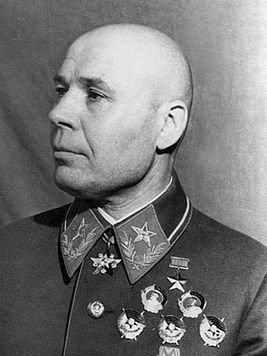
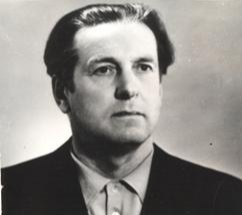
Semyon Konstantinovich Timoshenko is a Soviet military leader, Marshal of the Soviet Union (1940), twice Hero of the Soviet Union (1940, 1965), Chevalier of the Order "Victory" (1945), People's Commissar of Defense of the USSR (May 1940 - July 1941), member of the Presidium of the Supreme Soviet of the USSR (1938-1940), member of the Central Committee of the Communist Party (1939-1952), member of the Central Committee of the Communist Party (1938-1940), deputy of the Supreme Soviet of the Ukrainian SSR of 1st convocation (1938-1947), Candidate member of the Communist Central Committee (1952-1970). _x000D_
He was considered the most competent Commander and military theorist at the beginning of the Great Patriotic War and was the Chairman of the Headquarters of the High Command in Moscow from June 23 to July 19, 1941. _x000D_
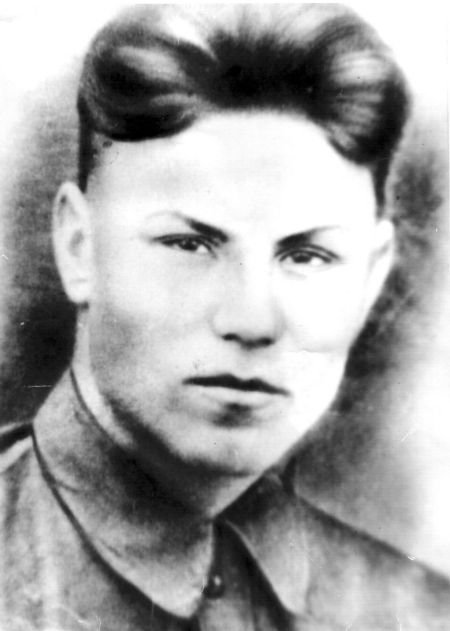
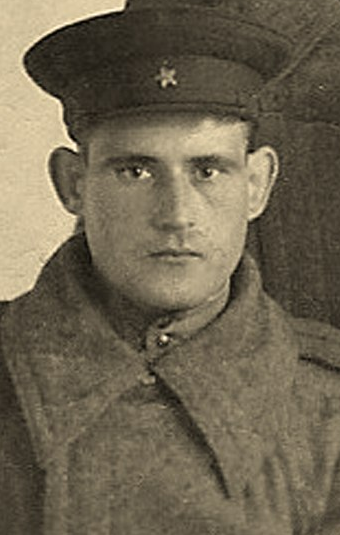
He was born on February 6 (18), 1895 in the village of Orman, Akkerman district, Bessarabian province (now Furmanovka, Kiliya district, Odessa region of Ukraine), in the family of a peasant Konstantin Gavrilovich Timoshenko (died in 1925). He is Ukrainian by nationality. He worked as a farm laborer. He graduated from a rural school. In December 1914 he was drafted into the army. In 1915 he graduated from the Regimental machine gun school and received the rank of Sergeant-Major. He participated in the First World War, was a machine gunner in 4th Cavalry Division on the Southwestern and Western Fronts. He was awarded for valor with St. George's Crosses of three degrees. He was arrested after hitting an officer and put on trial. He ended the war with the rank of ensign. _x000D_
He had been to the Red Army since 1918. He commanded a platoon since April 1918, a squadron since June 1918. In August 1918 he was the head of a Cavalry Regiment, he took part in the defense of the city of Tsaritsyn, where he met Joseph Stalin. _x000D_
Since November 1918 he was the Commander of a Cavalry Brigade, (since June 1919 he was in the corps of S.M.Budyonny). Member of the Communist Party since 1919. From November 1919 to August 1920 he is a Commander of 6th Cavalry Division, from August 1920 to October 1921 he was a Commander of 4thCavalry Division of 1st Cavalry Army. He was wounded five times, but did not leave the formation. _x000D_
For military exploits during the Civil War, he was awarded three Orders of the Red Banner and an Honorary Revolutionary Weapon. He received revolutionary weapons in November 1920 for combats on the Polish front, in particular, for withdrawing 1st Cavalry Army from the encirclement in Belarus. He graduated from the Higher Military Academic Courses in 1922 and 1927, and the courses for the one-man Commanders at the N.G. Tolmachev Military-Political Academy in 1930. He commanded 3rd and 6th cavalry corps. Since August 1933 he was a Deputy Commander of the Belorussian Military District, since September 1935 he was appointed to the Kiev Military District. From June 1937 he was Commander of the North Caucasian Military Districts, and from September 1937 worked in Kharkov Military Districts. On February 8, 1939, he was appointed Commander of the Kiev military district with the assignment of the military rank of Army Commander of 1st rank. _x000D_
During the Polish campaign of the Red Army in 1939, from September 17 to October 2, he commanded the Ukrainian Front, which was established on September 11, 1939. Successfully completed a combat mission to capture the city of Lvov. In the Soviet-Finnish war of 1939-1940, from January 7, 1940, he commanded the North-Western Front, whose troops carried out a breakthrough of the "Mannerheim Line". After the previous failure of this operation by the People's Commissar of Defense Kliment Voroshilov, who was removed from the post of Commander on the same January 7, Tymoshenko immediately set specific operational missions and their solution. As a result, from February 1940, when the preparation was completed, the assault on the line began and its breakthrough, the city of Vyborg was taken. Thanks to the successful command of Timoshenko, on March 13, 1940, the USSR signed peace with Finland on its own terms. _x000D_
The title of Hero of the Soviet Union (No. 241) with the award of the Order of Lenin and the Gold Star medal to Army Commander 1st Rank Semyon Konstantinovich Timoshenko was awarded on March 21, 1940 for "exemplary performance of command combat missions and displayed courage and heroism." On May 7, 1940 he was appointed to the post of People's Commissar of Defense of the USSR with the assignment of the highest military rank, Marshal of the Soviet Union. June 28 - July 2, after the occupation of Bessarabia by the troops of the Southern Front (Commander G.K. Zhukov) during the operation against Romania, in 1940, Tymoshenko for the first time since 1914 visited his small homeland, the village of Orman (now Furmanovka) in the Ukrainian Bessarabia, from where he was still a young man and went to the front of the First World War. In his native Furmanovka, the marshal received an enthusiastic welcome from fellow villagers. He had to speak at an impromptu meeting directly from the peasant cart. Tymoshenko spent the rest of the day and all night in contact with numerous relatives. _x000D_
In 1940-1941 Semyon Konstantinovich Timoshenko was People's Commissar of Defense of the USSR (replaced KE Voroshilov in this post). At the post of the People's Commissar of Defense, he carried out a lot of work to improve the combat training of troops, their reorganization, technical re-equipment, training new personnel (required due to a significant increase in the size of the army), which was not fully completed due to the beginning of the Great Patriotic War. Under his leadership, the combat experience of using the Armed Forces gained in the Soviet-Finnish war was generalized and began to be introduced into the practice of training troops and staffs. Decisions were made to form mechanized corps, replace outdated tank and artillery fleets, aviation equipment, mobilize resources, improve the organization and coherence in the work of headquarters, strengthen military discipline, and improve the combat training of troops. Immediately after the outbreak of the Great Patriotic War, on June 23, 1941, he was appointed Chairman of the Headquarters of the High Command. _x000D_
On July 2, 1941, in connection with the catastrophic development of events in the central sector of the Soviet-German front, Semyon Konstantinovich Timoshenko was appointed Commander of the Western Front. On July 10, 1941, he simultaneously headed the High Command of the Western Direction Forces (remained Commander-in-chief until the abolition of the High Command on September 10, 1941). During the combat for Kiev, on September 13, 1941, S. K. Timoshenko was appointed Commander-in-chief of the troops of the South-West direction. On September 30, 1941, Timoshenko headed the reconstituted Southwestern Front, which defended on the southern flank of the Soviet-German front. At the end of November 1941, Timoshenko commanded the Soviet counteroffensive near Rostov-on-Don. On November 28, the city was taken, which was one of the first victories of the Red Army in 1941. In May 1942, Timoshenko led the Kharkov operation, as a result of which a large group of the Red Army suffered a crushing defeat. As a result of the encirclement near Kharkov, more than 200 thousand soldiers and officers of the Red Army were taken prisoner, which was one of the reasons for the future difficult situation near Stalingrad and in the Caucasus. Tymoshenko himself survived and escaped captivity. In July 1942, Timoshenko was appointed Commander of the Stalingrad Front. Since October 1942 he commanded the troops of the North-Western Front. In this position, he conducted two offensive operations during the implementation of the "Polar Star" plan, the Demyansk offensive and the Old Russian operation. _x000D_
On March 13, Marshal Tymoshenko was removed from his post as Commander of the North-Western Front. From March 1943 until the end of the war, he was a representative of the Supreme Command Headquarters and coordinated the actions of a number of fronts, took part in the development and conduct of certain operations. During the operation to withdraw Romania from the war, as an ally of Germany and taking control of the Romanian oil (Yassko-Chisinau), Tymoshenko was the coordinator of the actions of 2nd and 3rd Ukrainian fronts. The Soviet offensive in Bessarabia and Romania began on August 20, 1944, and four days later the operational encirclement of the Kishinev group of Germans and Romanians was completed. On the night of August 24, 1944, when the pro-German government of Ion Antonescu was overthrown in Bucharest, Romania ceased to be an ally of Germany. _x000D_
After the liberation of Chisinau on August 25, Semyon Konstantinovich telegraphed to JV Stalin: “The first main combat mission you set for 2nd and 3rd Ukrainian fronts has been completed. The German-Romanian troops were defeated, their remnants flee in disarray across the Siret River. The main German Chisinau group is surrounded and destroyed. Observing the skillful leadership of troops on a large scale by Malinovsky and Tolbukhin, I consider it my duty to ask ... for the assignment of the military rank "Marshal of the Soviet Union" to Army Generals Malinovsky and Tolbukhin. " Soon this request from Tymoshenko was granted. _x000D_
At the same time, Tymoshenko visited his native village for the first time since the summer of 1940. Later, S. K. Timoshenko coordinated the actions of the fronts in Hungary and Austria. On the night of September 16, 1944, he received an order from the Supreme Command Headquarters to begin coordinating the actions of 2nd and 4th Ukrainian fronts during the combats for southern Hungary and, later, to the capture of the Hungarian capital Budapest. From July 1941 to February 1945 he was a member of the Headquarters of the Supreme High Command. On June 4, 1945, the Commander received the highest award in the Great Patriotic War, the Order of Victory for the planning of combat operations and coordination of front operations. _x000D_
After the war he commanded the troops of Baranovichi (from March 1946 - Belarusian), from June 1946 - South Ural, from March 1949 - Belarusian military districts. Since April 1960 he had been in the Group of Inspectors General of the USSR Ministry of Defense. Member of the Central Committee of the Communist Party (b) in 1939-1952, candidate member of the Central Committee of the Communist Party in 1952-1970. Deputy of the Supreme Soviet of the USSR of several convocations. Member of the Presidium of the Supreme Soviet of the USSR in 1938-1940. In 1962-1970 he was Chairman of the Soviet Committee of War Veterans. He refused to write his memoirs, stating that no one would publish the truth, and that there was someone to lie to without him. _x000D_
On February 18, 1965, in the year of the twentieth anniversary of the Victory over the German Nazism of the Soviet peoples, by the decree of the Supreme Presidium of the USSR S.K. Timoshenko was awarded the second Golden Star of the Hero of the Soviet Union (No. 46), on the day of his 70th birthday: before the Motherland and the Armed Forces of the USSR ". Died 31March 1970. He was buried on April 3 on Red Square in the Kremlin Wall. _x000D_
Awards of the Russian Empire: St. George Cross, 4th degree; No. 38346. Corporal of the 304th Infantry Novgorod-Seversky Regiment Semyon Timoshenko. Awarded in recognition of the merits of the lower ranks of the garrison of the Osovets fortress, who distinguished themselves during the bombing from 13th to 16.09.1914. 16 and 28 Art. 67 of the St. George Statute. St. George cross, 3rd degree; St. George cross, 2nd degree. _x000D_
USSR awards: Twice Hero of the Soviet Union (03/21/1940, 02/18/1965). Order "Victory" (No. 11, 4.06.1945), five Orders of Lenin (22.02.1938, 21.03.1940, 21.02.1945, 18.02.1965, 18.02.1970), Order of the October Revolution (22.02.1968), five Orders of the Red Banner (25.07 .1920, 05/11/1921, 02/22/1930, 11/3/1944, 11/6/1947), three orders of Suvorov 1st degree (10/9/1943, 09/12/1944, 04/27/1945), an honorary revolutionary weapon, a personal checker with the Order of the Red Banner ( 11/28/1920), honorary checker with a gold image of the State Emblem of the USSR (02/22/1968), _x000D_
Medal "For Defense of Leningrad", Medal "For Defense of Stalingrad", Medal "For Defense of Kiev", Medal "For Defense of the Caucasus", Medal "For Victory over Germany in the Great Patriotic War 1941-1945. " (1945) Jubilee medal "Twenty Years of Victory in the Great Patriotic War 1941-1945." (1965) medal “For the victory over Japan” (1945) medal “For Capture of Budapest” medal “For Capture of Vienna” medal “For Liberation of Belgrade”; jubilee medal "XX years of the Workers 'and Peasants' Red Army" (22.02. 1938) jubilee medal "30 years of the Soviet Army and Navy" (1948) jubilee medal "40 years of the Armed Forces of the USSR" (1958) jubilee medal "50 years of the Armed Forces of the USSR" (1968) medal "In Commemoration of 800th Anniversary of Moscow" (1947) Medal "In Commemoration of 250th Anniversary of Leningrad" _x000D_
Foreign awards: Order of Tudor Vladimirescu 1st degree (SRR) Order of the White Lion "For Victory" (Czechoslovakia) Gold Order of the Partisan Stars (SFRY) medal "30 years of Khalkhin-Golskaya Victory" (Mongolian People's Republic) Memory: A bronze bust was installed at home - in the village of Furmanovka, Odessa region. In 2017, a monument was unveiled on the territory of the Military Academy of Radiation, Chemical and Biological Defense Troops and Engineering Troops named after Marshal of the Soviet Union S.K. Timoshenko in Kostroma. _x000D_
A memorial plaque on the headquarters of the Belarusian Military District and streets in St. Petersburg, Voronezh, Kiev, Izmail, Minsk, Rostov-on-Don. _x000D_
Marshal Timoshenko Street in Moscow: Memorial plaques were installed on houses No. 4 and No. 40. _x000D_
At present, the board has been installed at house number 46. The anti-submarine ship was named after him. According to a report on the official website of the Colombian Air Force, FARC leader Rodrigo Londoño Echeverri uses the pseudonym Timochenko in honor of Tymoshenko. In the USSR and Kyrgyzstan, postage stamps dedicated to Tymoshenko were issued.