


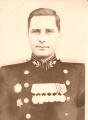
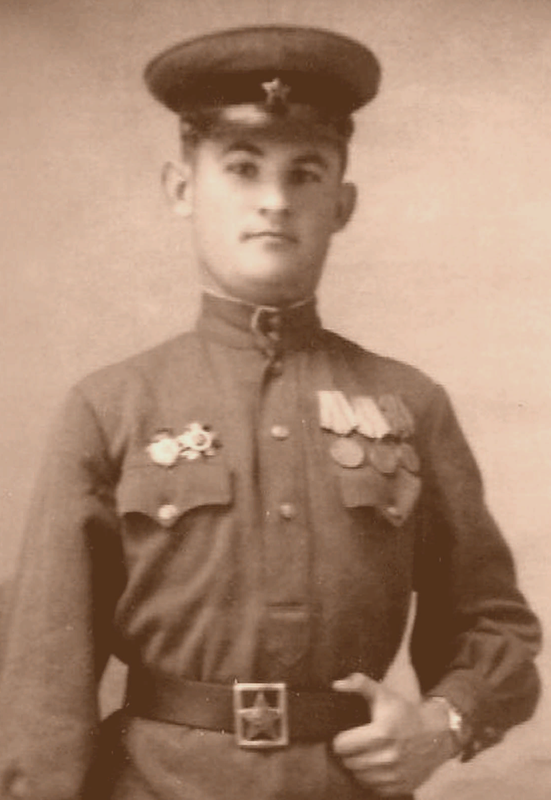


Andrey Tarasovich Golovko
Our father, Andrey Tarasovich Golovko, was born in 1925 in Bolshaya Dzhalga village, Stavropol area, in a peasant family. His father, our grandfather, worked on the land, and when the Civil war began, he fought on the side of the Reds. Having the skills of a medic, he helped the wounded and sick. During collectivization, he joined a kolkhoz, had authority among the villagers, was elected as Chairman of the audit Commission, but, despite this, was arrested as an enemy of people and sent to a camp. However, thanks to the efforts of fellow soldiers, former red partisans, and our grandmother Vasilisa Stepanovna, an illiterate woman who got an appointment with Kalinin, after 1.5 years he was acquitted and returned home. All this we know from my father, my father's parents died during the war. My father's family was large and friendly, but only four survived. Parents taught their children to work, instilled love of knowledge. Senior children received special education: senior sister worked as a teacher before the war, brother was a student in a College, but the war started and he went on to study in military school and fought as an officer and returned from the war disabled. Our father did not have time to get an education, the war prevented him, he went to the front in 1943 at the age of 18 and ended the war in 1945 on the Elbe. When we were children, my father did not like to talk about the war, obviously, it was hard to remember, we only knew that he fought for the cavalry as a mortar, was wounded, shell-shocked, awarded military awards: two medals "for Bravery", two medals "for Military Merit", "for the capture of Konigsberg", "for the Victory over Germany".
But today, when many years have passed and our father is 90 years old, there are problems with health and memory. He forgets many things, but he talks about the war as if it was yesterday. He remembers the name of the corps, division, regiment with all the regalia, which even I can't remember, but he remembers how his friend died before his eyes, how he himself was wounded and shell-shocked, how his horses died, and he carried boxes with mines on himself.
Most recently, on the website of the Ministry of defense, you can read "Andrey Tarasovich Golovko in the battle for the village of Tsyulen on 05.01.1945 continuously delivered mines to an open firing position under heavy rifle and machine gun fire of the enemy. When his horses were killed, he delivered mines on himself."
Then there was a meeting with the Americans on the Elbe, there was Victory. But my father returned home only in 1948, he had to serve conscription in Western Ukraine, to fight Bandera. After demobilization, he served in the anti-banditry unit in Grozny, at that time there were many more gangs in the mountains. Then he studied at the police school in the city of Kostroma and served in the police in Grozny, Achikulak, Zaterechny, Neftekumsk. At this time, we almost never saw my father at home, he was always missing at work, the family was constantly worried about his life. There was The development of the Ozekuat oil field, and various people came here, including those, who had shameful past and not always with good intentions. Our upbringing was mostly handled by my mother, but my father's invisible presence was constantly felt. If we did something wrong, my mother said, " I'll tell our dad, he'll be upset." But in the time, when our father was free, we went out into the country and had holidays.
Once we went on vacation, and my parents decided to arrange a trip along the Volga river. We went by train to Astrakhan, and then by steamer along the Volga. There were a lot of impressions, and then there was the city of Volgograd, Mamaev Kurgan, the hall of Military glory, the Motherland monument, Pavlov's house, etc. Then there was party work in the Neftekumsky state farm, then work in the NGDU (oil enterprise).
After retiring, he was constantly engaged in public work, was the Chairman of the Council of Veterans, and enjoyed authority among the population. He was a good father, we always felt his shoulder, we knew that dad would always come to the rescue at the right time, always can help us with advice, and if necessary, scolds. And what a wonderful grandfather he is! He has 7 grandchildren and one granddaughter. For grandchildren, he is an example. They love their grandfather, are proud of him. He also tried to pay more attention to them: he taught everyone, without exception, to drive a car, swim, play chess. And what is most important he formed core inside of them. All his grandchildren have grown up to be good people and try not to embarrass their grandfather. Today, a great-grandson, and then a granddaughter writes with pride "My grandfather is a soldier of Victory»
Andrey Tarasovich Golovko
Our father, Andrey Tarasovich Golovko, was born in 1925 in Bolshaya Dzhalga village, Stavropol area, in a peasant family. His father, our grandfather, worked on the land, and when the Civil war began, he fought on the side of the Reds. Having the skills of a medic, he helped the wounded and sick. During collectivization, he joined a kolkhoz, had authority among the villagers, was elected as Chairman of the audit Commission, but, despite this, was arrested as an enemy of people and sent to a camp. However, thanks to the efforts of fellow soldiers, former red partisans, and our grandmother Vasilisa Stepanovna, an illiterate woman who got an appointment with Kalinin, after 1.5 years he was acquitted and returned home. All this we know from my father, my father's parents died during the war. My father's family was large and friendly, but only four survived. Parents taught their children to work, instilled love of knowledge. Senior children received special education: senior sister worked as a teacher before the war, brother was a student in a College, but the war started and he went on to study in military school and fought as an officer and returned from the war disabled. Our father did not have time to get an education, the war prevented him, he went to the front in 1943 at the age of 18 and ended the war in 1945 on the Elbe. When we were children, my father did not like to talk about the war, obviously, it was hard to remember, we only knew that he fought for the cavalry as a mortar, was wounded, shell-shocked, awarded military awards: two medals "for Bravery", two medals "for Military Merit", "for the capture of Konigsberg", "for the Victory over Germany".
But today, when many years have passed and our father is 90 years old, there are problems with health and memory. He forgets many things, but he talks about the war as if it was yesterday. He remembers the name of the corps, division, regiment with all the regalia, which even I can't remember, but he remembers how his friend died before his eyes, how he himself was wounded and shell-shocked, how his horses died, and he carried boxes with mines on himself.
Most recently, on the website of the Ministry of defense, you can read "Andrey Tarasovich Golovko in the battle for the village of Tsyulen on 05.01.1945 continuously delivered mines to an open firing position under heavy rifle and machine gun fire of the enemy. When his horses were killed, he delivered mines on himself."
Then there was a meeting with the Americans on the Elbe, there was Victory. But my father returned home only in 1948, he had to serve conscription in Western Ukraine, to fight Bandera. After demobilization, he served in the anti-banditry unit in Grozny, at that time there were many more gangs in the mountains. Then he studied at the police school in the city of Kostroma and served in the police in Grozny, Achikulak, Zaterechny, Neftekumsk. At this time, we almost never saw my father at home, he was always missing at work, the family was constantly worried about his life. There was The development of the Ozekuat oil field, and various people came here, including those, who had shameful past and not always with good intentions. Our upbringing was mostly handled by my mother, but my father's invisible presence was constantly felt. If we did something wrong, my mother said, " I'll tell our dad, he'll be upset." But in the time, when our father was free, we went out into the country and had holidays.
Once we went on vacation, and my parents decided to arrange a trip along the Volga river. We went by train to Astrakhan, and then by steamer along the Volga. There were a lot of impressions, and then there was the city of Volgograd, Mamaev Kurgan, the hall of Military glory, the Motherland monument, Pavlov's house, etc. Then there was party work in the Neftekumsky state farm, then work in the NGDU (oil enterprise).
After retiring, he was constantly engaged in public work, was the Chairman of the Council of Veterans, and enjoyed authority among the population. He was a good father, we always felt his shoulder, we knew that dad would always come to the rescue at the right time, always can help us with advice, and if necessary, scolds. And what a wonderful grandfather he is! He has 7 grandchildren and one granddaughter. For grandchildren, he is an example. They love their grandfather, are proud of him. He also tried to pay more attention to them: he taught everyone, without exception, to drive a car, swim, play chess. And what is most important he formed core inside of them. All his grandchildren have grown up to be good people and try not to embarrass their grandfather. Today, a great-grandson, and then a granddaughter writes with pride "My grandfather is a soldier of Victory»
0 comment




2026 © Russian Military Historical Society Developed by Jetmix