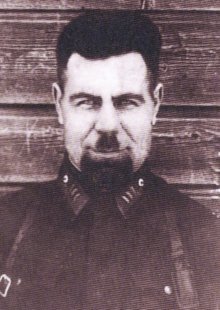
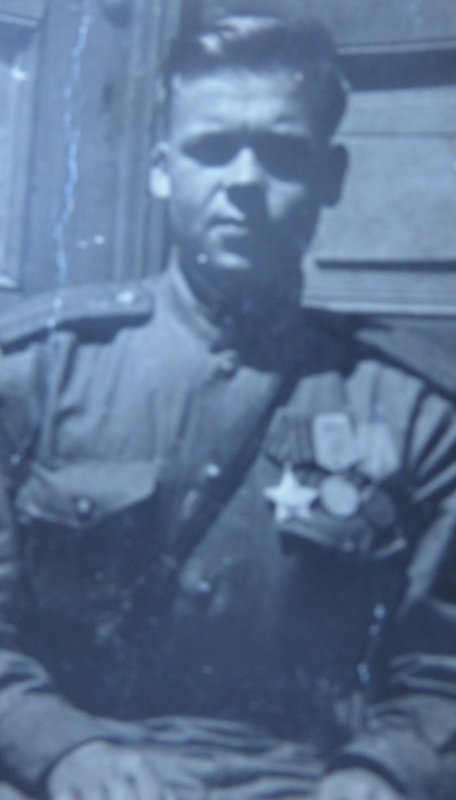
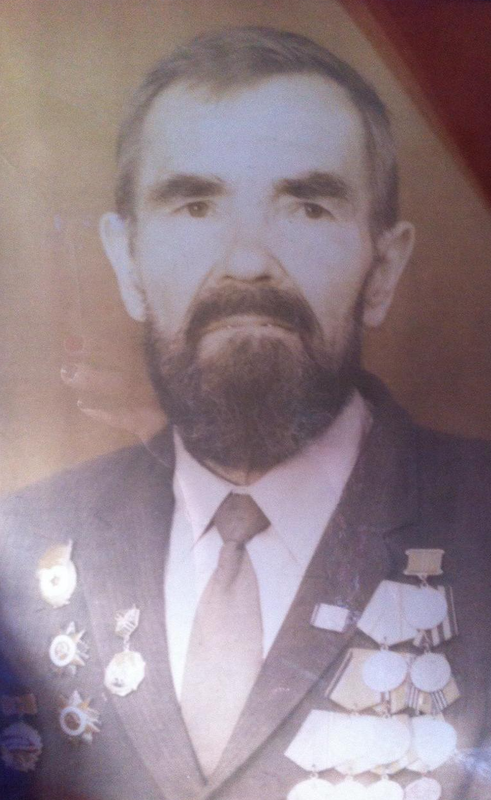


Kolmagorov Ivan Ivanovich
Rank: Foreman. Military branch: Artillery. Division: 79th Guard Rifle Zaporozhye Order of Lenin Red Banner Order of the Suvorov Division and Bogdan Khmelnitsky. In 1941, when he was 18 years old, he was called up for the Red Army and after the call he was sent to a training center in Tomsk. He served in the regiment of the 172nd Guard Artillery Berlin with red banner, which was part of the rifle division of the 79th Guard. He spent the whole war in this regiment. Therefore, in order to report on the chronology of his grandfather's life during the Great Patriotic War, I will refer to the actions of the division in which he served. It was formed in Tomsk in December 1941 as the 443rd Rifle Division. In January 1942 it was renamed the 284th Rifle Division. Until the middle of April 1942 it was active in combat training and coordination units and units in Siberia IN. 1st July 1942 near the Castorina station near Voronezh the division received its baptism of fire. For five days the division fought hard and delayed the advance of German troops. In the second half of September 1942 (17 September, by order of the NKO of USSR) the division was taken under the command of N. F. Batyuk, the division was transferred to Stalingrad and joined the 62nd Army of the Front South-Eastern. Since September 21, the units of the division fought fierce battles with selected Nazi units trying to capture Stalingrad and reach the Volga. In the fights for the factories "Red October" and "barricades", Mamayev Kurgan and other areas the Siberian soldiers showed courage, heroism and endurance. On February 8, 1943, the division received the Order of the Red Banner and was incorporated into the Rifle Division of the 79th Army. After the Battle of Stalingrad, the division participated in the 8th Guard Army (of which it was a part until the end of the war) of the front South-Western during the offensive Izyum-Barvenkov (July 17-27, 1943) at the bridgehead of Izyum in the Battle of the Dnieper. In November 1943-April 1944 he took part in the fights for the liberation of the right- Bank Ukraine On April 10, 1944 he took part in the liberation of Odessa. Participated in the liberation of the New Bug by Soviet troops and in the breakthrough of the enemy defenses on the Ingulets river. In June 1944 he was transferred to Belarus to the Kovel region together with other army units. During the offensive Lublin-Brest units of the division successfully crossed the western Bug River, invaded Polish territory and liberated in cooperation with other formations of the 8th Guard and the 2nd Guard. After 6 months of fighting on the Magnuszewsk bridgehead, from mid-January 1945 he took part in the operation Warsaw-Poznań, in which he crossed the Oder River and captured a bridgehead on the left bank of the river south of Kustrin. During the offensive in Berlin, he overcame the enemy resistance on the Seelow Heights and approached Berlin on April 23 and took part in its attack until May 2. In 1946 Ivan Ivanovich from Germany sent a photo to his parents and on the back the inscription: "to my parents from son Ivan. See how I have changed in 5 years of world travel". After the end of the war Ivan Ivanovich still served in Germany and returned home in 1947. After returning from military service he married and got a job. He was appointed head of the "Zolotorudnaya". Now he does not run weapons, in his subordination were shops, bakeries, canteens, warehouses. He was always a communist. My favorite holiday is May 9, and my favorite song is "Victory Day". He brought a trophy accordion from Germany and played this song very often on it. He died of chronic pyelonephritis on April 19, 1990. This disease was a consequence of the time he spent in the cold trenches.
Kolmagorov Ivan Ivanovich
Rank: Foreman. Military branch: Artillery. Division: 79th Guard Rifle Zaporozhye Order of Lenin Red Banner Order of the Suvorov Division and Bogdan Khmelnitsky. In 1941, when he was 18 years old, he was called up for the Red Army and after the call he was sent to a training center in Tomsk. He served in the regiment of the 172nd Guard Artillery Berlin with red banner, which was part of the rifle division of the 79th Guard. He spent the whole war in this regiment. Therefore, in order to report on the chronology of his grandfather's life during the Great Patriotic War, I will refer to the actions of the division in which he served. It was formed in Tomsk in December 1941 as the 443rd Rifle Division. In January 1942 it was renamed the 284th Rifle Division. Until the middle of April 1942 it was active in combat training and coordination units and units in Siberia IN. 1st July 1942 near the Castorina station near Voronezh the division received its baptism of fire. For five days the division fought hard and delayed the advance of German troops. In the second half of September 1942 (17 September, by order of the NKO of USSR) the division was taken under the command of N. F. Batyuk, the division was transferred to Stalingrad and joined the 62nd Army of the Front South-Eastern. Since September 21, the units of the division fought fierce battles with selected Nazi units trying to capture Stalingrad and reach the Volga. In the fights for the factories "Red October" and "barricades", Mamayev Kurgan and other areas the Siberian soldiers showed courage, heroism and endurance. On February 8, 1943, the division received the Order of the Red Banner and was incorporated into the Rifle Division of the 79th Army. After the Battle of Stalingrad, the division participated in the 8th Guard Army (of which it was a part until the end of the war) of the front South-Western during the offensive Izyum-Barvenkov (July 17-27, 1943) at the bridgehead of Izyum in the Battle of the Dnieper. In November 1943-April 1944 he took part in the fights for the liberation of the right- Bank Ukraine On April 10, 1944 he took part in the liberation of Odessa. Participated in the liberation of the New Bug by Soviet troops and in the breakthrough of the enemy defenses on the Ingulets river. In June 1944 he was transferred to Belarus to the Kovel region together with other army units. During the offensive Lublin-Brest units of the division successfully crossed the western Bug River, invaded Polish territory and liberated in cooperation with other formations of the 8th Guard and the 2nd Guard. After 6 months of fighting on the Magnuszewsk bridgehead, from mid-January 1945 he took part in the operation Warsaw-Poznań, in which he crossed the Oder River and captured a bridgehead on the left bank of the river south of Kustrin. During the offensive in Berlin, he overcame the enemy resistance on the Seelow Heights and approached Berlin on April 23 and took part in its attack until May 2. In 1946 Ivan Ivanovich from Germany sent a photo to his parents and on the back the inscription: "to my parents from son Ivan. See how I have changed in 5 years of world travel". After the end of the war Ivan Ivanovich still served in Germany and returned home in 1947. After returning from military service he married and got a job. He was appointed head of the "Zolotorudnaya". Now he does not run weapons, in his subordination were shops, bakeries, canteens, warehouses. He was always a communist. My favorite holiday is May 9, and my favorite song is "Victory Day". He brought a trophy accordion from Germany and played this song very often on it. He died of chronic pyelonephritis on April 19, 1990. This disease was a consequence of the time he spent in the cold trenches.
0 comment



2026 © Russian Military Historical Society Developed by Jetmix