
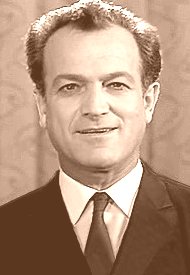

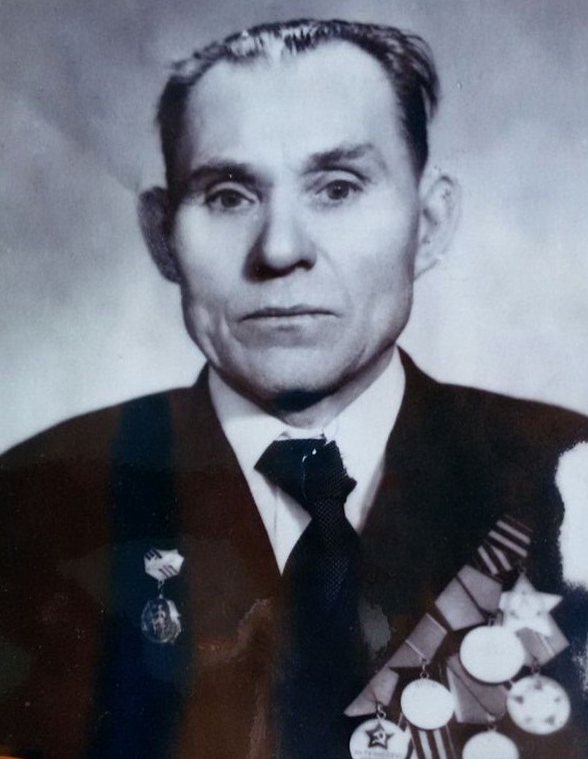
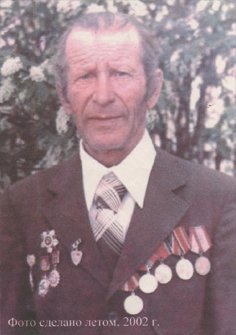
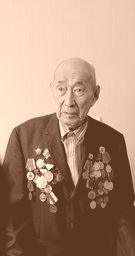
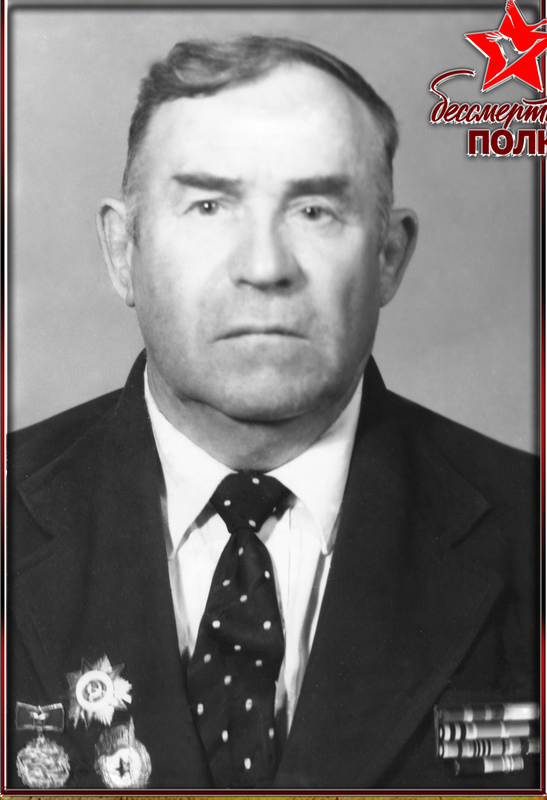
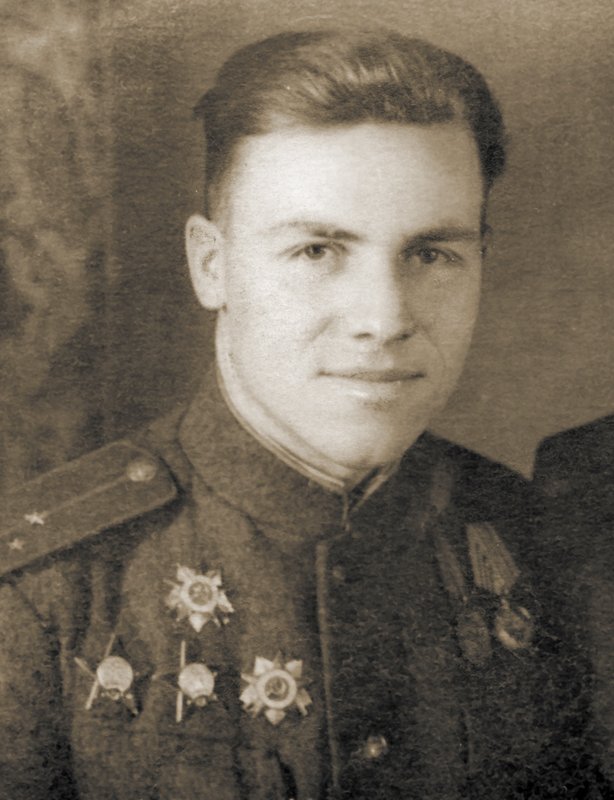
Kichtaty Mikhail Nikolaevich
My story is about my great-grandfather Mischa - Mikhail Nikolayevich. In the summer of 1941 my grandfather graduated from the Bogucharski Agricultural Technical School in the Voronezh region. In June the graduates wrote their diplomas and prepared for the final exams. And in the city of Boguchar, since ancient times, Sunday fairs have been held, where kolkhoz farmers from all villages offered their goods for sale. Parents often passed parcels through them: food, for their children - students.This is also the case on this Sunday. In the dormitory, three students got up early - they were hungry and went to the market: maybe someone received a parcel. But it was still early and they went to a friend who worked as a night watchman at the radio station. Because of the nature of his work, he could listen to all the radio stations. And he told them that all the radio waves were talking about the German attack on USSR and that there was a bombing attack on the whole border. You can imagine the condition of the students! They walk, talk excitedly, discuss about it. They did not notice that people were crowding around them and listening to their conversation. Suddenly, the police appeared behind them, arrested the students and took them to the police station to inquire. While they were there, they did not change their minds, and if a friend from the radio room made a joke and then students, Komsomol members, would be taken for provocateurs who sow panic. Mentally, they said goodbye both to their will and to their lives. After 2 hours they were picked up and brought to the office of the boss. He apologized and said that they had received information about the beginning of the war and that at noon there would be an official message on the radio for the population. So they were the first to know about the beginning of the war. From there, the boys immediately went to the military recruiting office to register for the front. When they arrived at the commissary, darkness was already over the people, they were taken in to be sent to the Borisoglebsk flying school (incidentally, 40 years later grandson Zhenya finished the school), but said that first you had to pass the exams and defend a diploma at college. In accelerated mode they finished their studies at the technical school. Interesting fact: After the exams the graduates were photographed in a group, but almost nobody had time to take a picture. Incredibly, this photo was found by chance on the internet in 2013. It was displayed as, presumably, graduates of some school. But because we recognized the grandfather, reliable information was obtained. At that time, our army was in retreat, and there was already a threat that Boguchar might surrender. It was no longer possible to wait for a call from the flying school, and then my grandfather volunteered to go to the front. The recruitment office gathered a group of conscripts, of which my grandfather was the youngest, and sent them to the southern front. Without training, without weapons, the recruits went on foot to Rostov. Since our units were in retreat and it was not clear where the front was, the group moved only at night and hid in haystacks during the day. They were accompanied by a wounded lieutenant who died soon after. No one knew where to go next. Then a map was found in the lieutenant's tablet. And here, the grandfather's knowledge acquired in the technical school was useful. They had a teacher, a former military man who was very demanding. He taught good orientation skills, taught the use and reading of topographic maps and taught practical survival techniques. Thanks to him the group was able to reach their units. This was the South-Western front. My grandfather was appointed commander of a platoon of machine-gunners. The retreat of our troops on this line continued. And many soldiers died crossing the Don River. This operation is shown very reliably in the film "They fought for the fatherland". The remaining soldiers were disbanded, and my grandfather was sent to the front North Caucasus. During this time my grandfather fought in the area of Elbrus, where the Germans threw their selected elite mountaineering units called "Edelweiss". They did not fight in open combat - they had a particularly important task, but that made them even more dangerous. Without showing their presence, at night, when the soldiers rested, they silently cut out the exposed posts. My grandfather also fought in the Novorossiysk region, Anapa, Kerch. Here he received his first award. Extract from the Order, literally: "for unprecedented bravery, courage and boldness to award the medal "for MILITARY MERIT" to the platoon leader of the Mountain Rifle Corps No. ... Kichaty Mikhail Nikolaevich, when he attacked the enemy, went into the attack before all other fighters and dragged other fighters along. In the region of Novorossiysk, circumstances developed in such a way that it was necessary to get a "language". They sent a group, but they did not return. The second group was also ambushed. My grandfather was also placed in the third group. They had three days to complete the task. They approached the German trenches and watched. They revealed the following: The Germans were shooting day and night without interruption. And only before dawn, even at dusk, they stopped all movement for an hour and rested. Taking advantage of this observation, they dared to approach the Germans, grabbed the sleeping German and hurried to their trenches. The Germans caught themselves and opened fire behind them. The scouts reached them, but one of them was wounded. The wound was not serious, but the soldier died of a broken heart: that is how tense it was. For this language my grandfather received the order of RED STAR. My grandfather was wounded here twice, the second time seriously - a shot through the lung, after which he was treated in a hospital in Tuapse for three months. The third award was the medal "for the defense of CAUCASUS". After the hospital, my grandfather went to the 3rd Ukrainian front, fought at the so-called "Malaya Zemlya". There was one such case. To cross the Kerch Strait to the Crimea, the soldiers were loaded into 6 boats, it was necessary to take out the Germans. But the boat on which my grandfather was stuck and overtaken by other boats. When they restarted the engine and went ashore, the Germans had already fired at the first boats that landed, and there were only a few people who could survive. The soldiers who had landed on shore, after pushing back the enemy, went on the offensive. In one of the battles the grandfather received a continuous wound in the shoulder, but remained in the unit. After some time his hand began to turn black and he had to go to hospital. The doctor examined him and said: "Gangrene, urgent amputation". But my grandfather, a young man, 22 years old, saw no point in living without a hand and refused. Since he was already a lieutenant, penicillin was used for officers. This and the salt water of the Black Sea, in which all the wounded healed their wounds, saved my grandfather's hand. After the hospital, my grandfather went to the 1st Belarusian Front, which invaded Poland after the liberation of Ukraine and Belarus. It was already 1944. Grandfather Misha received the medal "for the LIBERATION from WARSAW", and then the medal "for the CAPTURE from BERLIN". Interesting fact. In the same period my grandmother Zhenya was also in Poland with an air force regiment, where she served as a radio meteorologist. But they met later - in Germany. At the end of the war grandfather Mischa was in the rank of a captain, had 4 wounds and awards: 5 medals and 5 decorations.
Kichtaty Mikhail Nikolaevich
My story is about my great-grandfather Mischa - Mikhail Nikolayevich. In the summer of 1941 my grandfather graduated from the Bogucharski Agricultural Technical School in the Voronezh region. In June the graduates wrote their diplomas and prepared for the final exams. And in the city of Boguchar, since ancient times, Sunday fairs have been held, where kolkhoz farmers from all villages offered their goods for sale. Parents often passed parcels through them: food, for their children - students.This is also the case on this Sunday. In the dormitory, three students got up early - they were hungry and went to the market: maybe someone received a parcel. But it was still early and they went to a friend who worked as a night watchman at the radio station. Because of the nature of his work, he could listen to all the radio stations. And he told them that all the radio waves were talking about the German attack on USSR and that there was a bombing attack on the whole border. You can imagine the condition of the students! They walk, talk excitedly, discuss about it. They did not notice that people were crowding around them and listening to their conversation. Suddenly, the police appeared behind them, arrested the students and took them to the police station to inquire. While they were there, they did not change their minds, and if a friend from the radio room made a joke and then students, Komsomol members, would be taken for provocateurs who sow panic. Mentally, they said goodbye both to their will and to their lives. After 2 hours they were picked up and brought to the office of the boss. He apologized and said that they had received information about the beginning of the war and that at noon there would be an official message on the radio for the population. So they were the first to know about the beginning of the war. From there, the boys immediately went to the military recruiting office to register for the front. When they arrived at the commissary, darkness was already over the people, they were taken in to be sent to the Borisoglebsk flying school (incidentally, 40 years later grandson Zhenya finished the school), but said that first you had to pass the exams and defend a diploma at college. In accelerated mode they finished their studies at the technical school. Interesting fact: After the exams the graduates were photographed in a group, but almost nobody had time to take a picture. Incredibly, this photo was found by chance on the internet in 2013. It was displayed as, presumably, graduates of some school. But because we recognized the grandfather, reliable information was obtained. At that time, our army was in retreat, and there was already a threat that Boguchar might surrender. It was no longer possible to wait for a call from the flying school, and then my grandfather volunteered to go to the front. The recruitment office gathered a group of conscripts, of which my grandfather was the youngest, and sent them to the southern front. Without training, without weapons, the recruits went on foot to Rostov. Since our units were in retreat and it was not clear where the front was, the group moved only at night and hid in haystacks during the day. They were accompanied by a wounded lieutenant who died soon after. No one knew where to go next. Then a map was found in the lieutenant's tablet. And here, the grandfather's knowledge acquired in the technical school was useful. They had a teacher, a former military man who was very demanding. He taught good orientation skills, taught the use and reading of topographic maps and taught practical survival techniques. Thanks to him the group was able to reach their units. This was the South-Western front. My grandfather was appointed commander of a platoon of machine-gunners. The retreat of our troops on this line continued. And many soldiers died crossing the Don River. This operation is shown very reliably in the film "They fought for the fatherland". The remaining soldiers were disbanded, and my grandfather was sent to the front North Caucasus. During this time my grandfather fought in the area of Elbrus, where the Germans threw their selected elite mountaineering units called "Edelweiss". They did not fight in open combat - they had a particularly important task, but that made them even more dangerous. Without showing their presence, at night, when the soldiers rested, they silently cut out the exposed posts. My grandfather also fought in the Novorossiysk region, Anapa, Kerch. Here he received his first award. Extract from the Order, literally: "for unprecedented bravery, courage and boldness to award the medal "for MILITARY MERIT" to the platoon leader of the Mountain Rifle Corps No. ... Kichaty Mikhail Nikolaevich, when he attacked the enemy, went into the attack before all other fighters and dragged other fighters along. In the region of Novorossiysk, circumstances developed in such a way that it was necessary to get a "language". They sent a group, but they did not return. The second group was also ambushed. My grandfather was also placed in the third group. They had three days to complete the task. They approached the German trenches and watched. They revealed the following: The Germans were shooting day and night without interruption. And only before dawn, even at dusk, they stopped all movement for an hour and rested. Taking advantage of this observation, they dared to approach the Germans, grabbed the sleeping German and hurried to their trenches. The Germans caught themselves and opened fire behind them. The scouts reached them, but one of them was wounded. The wound was not serious, but the soldier died of a broken heart: that is how tense it was. For this language my grandfather received the order of RED STAR. My grandfather was wounded here twice, the second time seriously - a shot through the lung, after which he was treated in a hospital in Tuapse for three months. The third award was the medal "for the defense of CAUCASUS". After the hospital, my grandfather went to the 3rd Ukrainian front, fought at the so-called "Malaya Zemlya". There was one such case. To cross the Kerch Strait to the Crimea, the soldiers were loaded into 6 boats, it was necessary to take out the Germans. But the boat on which my grandfather was stuck and overtaken by other boats. When they restarted the engine and went ashore, the Germans had already fired at the first boats that landed, and there were only a few people who could survive. The soldiers who had landed on shore, after pushing back the enemy, went on the offensive. In one of the battles the grandfather received a continuous wound in the shoulder, but remained in the unit. After some time his hand began to turn black and he had to go to hospital. The doctor examined him and said: "Gangrene, urgent amputation". But my grandfather, a young man, 22 years old, saw no point in living without a hand and refused. Since he was already a lieutenant, penicillin was used for officers. This and the salt water of the Black Sea, in which all the wounded healed their wounds, saved my grandfather's hand. After the hospital, my grandfather went to the 1st Belarusian Front, which invaded Poland after the liberation of Ukraine and Belarus. It was already 1944. Grandfather Misha received the medal "for the LIBERATION from WARSAW", and then the medal "for the CAPTURE from BERLIN". Interesting fact. In the same period my grandmother Zhenya was also in Poland with an air force regiment, where she served as a radio meteorologist. But they met later - in Germany. At the end of the war grandfather Mischa was in the rank of a captain, had 4 wounds and awards: 5 medals and 5 decorations.
0 comment



2026 © Russian Military Historical Society Developed by Jetmix