


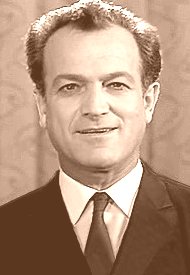

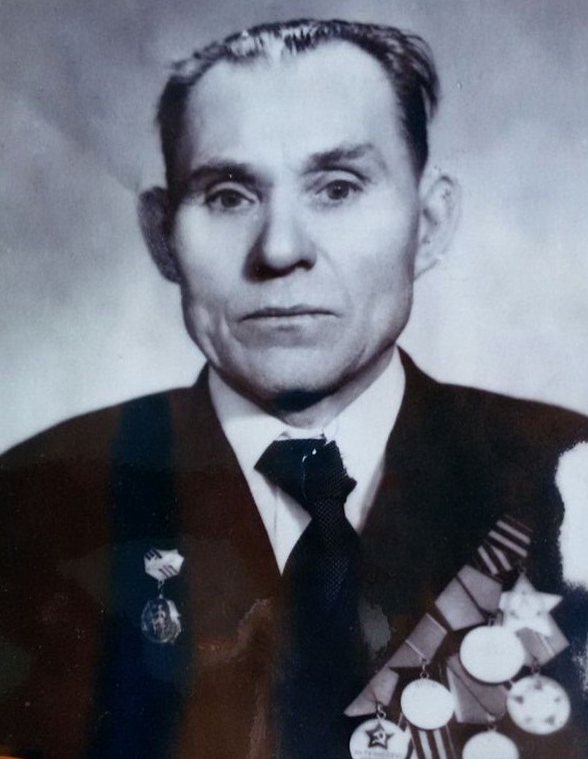
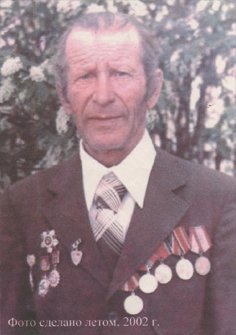
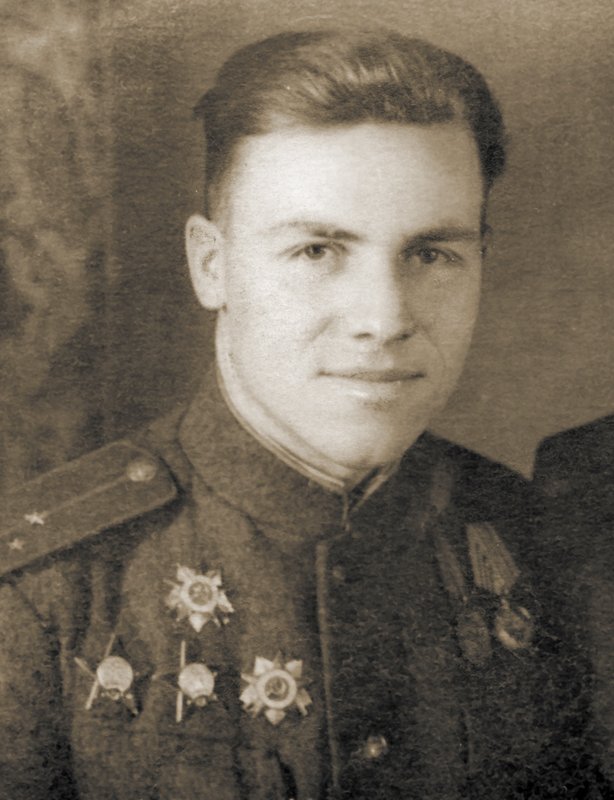

Belevich (Bilevich) Fyodor Nikolaevich
He was Born on May 21, 1923 at the Bada station, now the Khiloksky district of the Trans-Baikal Territory. From a large (12 children) family of a railway worker who came to Transbaikalia in 1910 during the Stolypin resettlement from Minsk province. He attended a school in the countryside and graduated the 3rd grade. After the death of his father in 1933 he was forced to stop studying and start working. He worked as a molder at the Badinsky brick factory. On January 1, 1942 he was drafted into Red Army by the military recruitment office of the Chiloksky district of the Chita region. He served in the 384th Rifle Regiment of the emerging 321st Rifle Division of the TRANS - Baikal Military District (Chita Region), graduated from the Regiment School for Junior Commanders and became the commander of the Rifle Division. Red Army soldier F.N. Bilevich - a participant of the Great Patriotic War since August 1, 1942. He was baptized by fire as part of the same regiment and division on the Stalingrad front. He did not need to fight long - he was wounded already on August 7, 1942, spent three months in hospitals. After his recovery in December 1942, he was commander of the machine-gun command in the 49th Rifle Brigade of the Western Front, fought in the direction of Gzhat and Rzhev and participated in the offensive operation Rzhev-Vyazma in 1943. He was slightly wounded in the battle of 25 April 1943. He was treated in a hospital at the Reutovo station in the Moscow region. From May 1943 the commander of the Regiment Intelligence Department of the 653rd Rifle Regiment of the 220th Rifle Division of the Western Front, took part in a raid behind enemy lines near the city of Yartsevo in the Smolensk region and in the destruction of the German headquarters. But on 26th June 1943 he was seriously wounded and treated in an evacuation hospital in Perm for almost six months. From December 1943 he spent his entire further fighting career as part of the 738th rifle regiment of the 134th Rifle Division on the 1st Belarusian Front. Participant of the Belarusian offensive operation, many months of battles for maintaining and expanding the Pulawski bridgehead on the Vistula, the Vistula-Oder offensive. For the last, fourth time, he was slightly wounded on June 12, 1944. The gunner of an easel machine gun of the 738th Rifle Regiment (134th Rifle Division, 61st Rifle Corps, 69th Army, 1st Belarusian Front), soldier of the Red Army Fyodor Bilevich, showed outstanding heroism and courage during the Berlin offensive operation. In a battle on April 18, 1945, during the breakthrough of a long-term deeply echeloned enemy defense in the area of the city of Frankfurt on the Oder, he moved with a heavy machine gun into the forward chain, took an advantageous position and suppressed 5 enemy machine-gun points with accurate fire, destroying up to 40 Nazis and contributed to the success of the attack. In the battle of April 23rd near the village of Wilhelmsdorf he took part in the defense against three German counterattacks and destroyed up to 50 Nazis. The next day, as part of an advancing rifle battalion near the town of Briesen (now in Brandenburg, Germany), he was subjected to a surprise counterattack by a German battalion supported by 3 assault guns. In a critical situation he showed amazing composure, prepared a machine gun for firing, let the attacking German chain grow to several tens of meters and opened dagger fire at close range. After suffering heavy losses, he forced the enemy infantry to lie down. Under the protection of his fire, the units of our battalion managed to take up defensive positions in an unprepared area and returned fire. The enemy opened mortar fire on the position of the Soviet machine-gunner, but F. N. Bilewitsch did not stop firing and did not allow the Germans to rise again to attack. Since the German assault guns remained without infantry support, they did not dare to continue the attack and withdrew. In this battle it killed about 40 German soldiers. The same day he set fire to 2 vehicles with ammunition under machine-gun fire. For the exemplary performance of command operations at the front against the Nazi invaders and showing courage and heroism by the decree of the Presidium of Supreme Soviet on 31 May 1945, the Red Army Bilevich Fedor Nikolaevich was awarded the heroic title of Soviet Union and the Order of Lenin and the medal "Gold Star". After the victory he continued to serve in the Soviet Army. In 1948 Oberfeldwebel F. N. Bilewitsch was demobilized. He lived in the Chita region, then in Belarus. He died on October 2, 2004. He was buried in Minsk.
Belevich (Bilevich) Fyodor Nikolaevich
He was Born on May 21, 1923 at the Bada station, now the Khiloksky district of the Trans-Baikal Territory. From a large (12 children) family of a railway worker who came to Transbaikalia in 1910 during the Stolypin resettlement from Minsk province. He attended a school in the countryside and graduated the 3rd grade. After the death of his father in 1933 he was forced to stop studying and start working. He worked as a molder at the Badinsky brick factory. On January 1, 1942 he was drafted into Red Army by the military recruitment office of the Chiloksky district of the Chita region. He served in the 384th Rifle Regiment of the emerging 321st Rifle Division of the TRANS - Baikal Military District (Chita Region), graduated from the Regiment School for Junior Commanders and became the commander of the Rifle Division. Red Army soldier F.N. Bilevich - a participant of the Great Patriotic War since August 1, 1942. He was baptized by fire as part of the same regiment and division on the Stalingrad front. He did not need to fight long - he was wounded already on August 7, 1942, spent three months in hospitals. After his recovery in December 1942, he was commander of the machine-gun command in the 49th Rifle Brigade of the Western Front, fought in the direction of Gzhat and Rzhev and participated in the offensive operation Rzhev-Vyazma in 1943. He was slightly wounded in the battle of 25 April 1943. He was treated in a hospital at the Reutovo station in the Moscow region. From May 1943 the commander of the Regiment Intelligence Department of the 653rd Rifle Regiment of the 220th Rifle Division of the Western Front, took part in a raid behind enemy lines near the city of Yartsevo in the Smolensk region and in the destruction of the German headquarters. But on 26th June 1943 he was seriously wounded and treated in an evacuation hospital in Perm for almost six months. From December 1943 he spent his entire further fighting career as part of the 738th rifle regiment of the 134th Rifle Division on the 1st Belarusian Front. Participant of the Belarusian offensive operation, many months of battles for maintaining and expanding the Pulawski bridgehead on the Vistula, the Vistula-Oder offensive. For the last, fourth time, he was slightly wounded on June 12, 1944. The gunner of an easel machine gun of the 738th Rifle Regiment (134th Rifle Division, 61st Rifle Corps, 69th Army, 1st Belarusian Front), soldier of the Red Army Fyodor Bilevich, showed outstanding heroism and courage during the Berlin offensive operation. In a battle on April 18, 1945, during the breakthrough of a long-term deeply echeloned enemy defense in the area of the city of Frankfurt on the Oder, he moved with a heavy machine gun into the forward chain, took an advantageous position and suppressed 5 enemy machine-gun points with accurate fire, destroying up to 40 Nazis and contributed to the success of the attack. In the battle of April 23rd near the village of Wilhelmsdorf he took part in the defense against three German counterattacks and destroyed up to 50 Nazis. The next day, as part of an advancing rifle battalion near the town of Briesen (now in Brandenburg, Germany), he was subjected to a surprise counterattack by a German battalion supported by 3 assault guns. In a critical situation he showed amazing composure, prepared a machine gun for firing, let the attacking German chain grow to several tens of meters and opened dagger fire at close range. After suffering heavy losses, he forced the enemy infantry to lie down. Under the protection of his fire, the units of our battalion managed to take up defensive positions in an unprepared area and returned fire. The enemy opened mortar fire on the position of the Soviet machine-gunner, but F. N. Bilewitsch did not stop firing and did not allow the Germans to rise again to attack. Since the German assault guns remained without infantry support, they did not dare to continue the attack and withdrew. In this battle it killed about 40 German soldiers. The same day he set fire to 2 vehicles with ammunition under machine-gun fire. For the exemplary performance of command operations at the front against the Nazi invaders and showing courage and heroism by the decree of the Presidium of Supreme Soviet on 31 May 1945, the Red Army Bilevich Fedor Nikolaevich was awarded the heroic title of Soviet Union and the Order of Lenin and the medal "Gold Star". After the victory he continued to serve in the Soviet Army. In 1948 Oberfeldwebel F. N. Bilewitsch was demobilized. He lived in the Chita region, then in Belarus. He died on October 2, 2004. He was buried in Minsk.
0 comment



2026 © Russian Military Historical Society Developed by Jetmix