


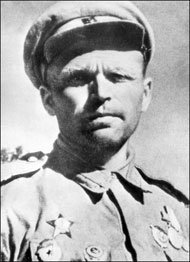


Gulyaev Ivan Fomich
Rank: Red Army Common Soldier Branch of troops: Land forces, air forces (except for naval aviation), coastal service, NKVD troops, border guards. Gulyaev Ivan Fedotovich (1908-1995) was mobilized into the ranks of the Workers and Peasants Red Army on September 17, 1941. For the first six months, great-grandfather Ivan was in training near Smolensk, then served near the city of Orel, where the front line was at that time. There, for the first time, he felt the reality of war. His wife and three children were waiting for him at home… Great-great-grandfather Ivan served in the infantry and was the second number of the machine gun: he held the machine gun belt during the attack and refilled the cartridges. He understood that not only his life, but also the lives of his comrades, depended on his accuracy and quick response. Before his injury, Ivan Fomich was in battle several times, steadfastly resisting the enemy. From his certificate of exemption from military service (white ticket) I learned that Ivan Fomich served in the 110th rifle regiment. In July 1942, during the battle, the Nazis identified the machine-gun point of Ivan's great-great-grandfather and dropped a shell on it. As a result, Ivan Fomich legs were severely broken, spine and an arm were injured, a stray bullet knocked out 2 teeth. Red Army troops were retreating in this area. All those who remained lying on the battlefield were considered dead or missing - reports on the the losses were sent to relatives. That's when our family got a "funeral" letter. However, great-grandfather Ivan was alive. Seriously wounded, he was left lying on the battlefield. On the first night he heard how the nazi soldiers finished off the wounded and Ivan Fomich was trying hard to lie as quietly as possible. For seven days my great-grandfather was lying in no man's land periodically falling into oblivion from pain and hunger. At one of these moments, he saw the Oka river and his family. He regained consciousness and decided to leave the battle field. Having determined the location of the Soviet troops by the sounds of artillery, he, overcoming the pain, rolled from his back to the chest and crawled to his fellow country men. He was found by Soviet scouts and transported to the rear. Ivan Fomich was brought from the hospital in a cart, his legs were not walking because of a broken spine. Gulyaev I. F. overcame his illness, and after a while returned to a full life.
Gulyaev Ivan Fomich
Rank: Red Army Common Soldier Branch of troops: Land forces, air forces (except for naval aviation), coastal service, NKVD troops, border guards. Gulyaev Ivan Fedotovich (1908-1995) was mobilized into the ranks of the Workers and Peasants Red Army on September 17, 1941. For the first six months, great-grandfather Ivan was in training near Smolensk, then served near the city of Orel, where the front line was at that time. There, for the first time, he felt the reality of war. His wife and three children were waiting for him at home… Great-great-grandfather Ivan served in the infantry and was the second number of the machine gun: he held the machine gun belt during the attack and refilled the cartridges. He understood that not only his life, but also the lives of his comrades, depended on his accuracy and quick response. Before his injury, Ivan Fomich was in battle several times, steadfastly resisting the enemy. From his certificate of exemption from military service (white ticket) I learned that Ivan Fomich served in the 110th rifle regiment. In July 1942, during the battle, the Nazis identified the machine-gun point of Ivan's great-great-grandfather and dropped a shell on it. As a result, Ivan Fomich legs were severely broken, spine and an arm were injured, a stray bullet knocked out 2 teeth. Red Army troops were retreating in this area. All those who remained lying on the battlefield were considered dead or missing - reports on the the losses were sent to relatives. That's when our family got a "funeral" letter. However, great-grandfather Ivan was alive. Seriously wounded, he was left lying on the battlefield. On the first night he heard how the nazi soldiers finished off the wounded and Ivan Fomich was trying hard to lie as quietly as possible. For seven days my great-grandfather was lying in no man's land periodically falling into oblivion from pain and hunger. At one of these moments, he saw the Oka river and his family. He regained consciousness and decided to leave the battle field. Having determined the location of the Soviet troops by the sounds of artillery, he, overcoming the pain, rolled from his back to the chest and crawled to his fellow country men. He was found by Soviet scouts and transported to the rear. Ivan Fomich was brought from the hospital in a cart, his legs were not walking because of a broken spine. Gulyaev I. F. overcame his illness, and after a while returned to a full life.
0 comment



2026 © Russian Military Historical Society Developed by Jetmix