


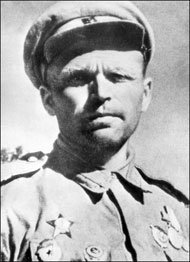


Gabdrashitov Gabdrakhim Gabdelhalikovich
Gabdrashitov Gabdrakhim Gabdelhalikovich was born in 1924 in the village Karan. He was cheerful and honest, told people directly what he was thinking about, and he also drew well, enjoyed reading books. He always had a book in his pocket. Before the war, after graduating from Karan high school, he worked on the collective farm "Commune". In 1941, together with his friend Gaisa Ramazanovich Arslanov, he was sent to the FZO No. 7 (factory training facility) in Nizhny Tagil, Sverdlovsk region. Then he studied at the RU (handycraft school), later at PTO and PTU vocational schools. When the war started, students were sent home. On August 12, 1942, 18 people were drafted into the army by the Buzdyak district military Commissariat and sent to the Chkalovsk machine-gun school for six-month courses for Junior commanders. But they did not have time to complete their studies, since it became "too hot" at Stalingrad. Here is what his friend and colleague, the late Galimzyan Farkhutdinov, a native of the village of Uran, said: "Once they lined up the entire school and informed us on current situation at the front line, especially at Stalingrad, and requested those who wanted to fight at the Western front take a step forward. Gabdrakhim said to his friend Galimzyan: "Dustym, yazmyshtan uzmysh bulmas" - "No one is going to escape from his fate, my Friend", and took a step forward. G. G. Gabdrashitov and his fellow soldiers served within the 147th guards rifle regiment of the 49th guards division of the 2nd guards Army under the command of then Army General, later Marshal of the Soviet Union Radion Yakovlevich Malinovsky. Their platoon commander was Junior Lieutenant Mukhametshin, a Tatar from the city of Kazan. The train took the cadets from school to the front line. Uncle Gabdrakhim sent his last letter from there. All in all, since August 12, 1942, three letters have come from him. But while they were on march, they could not write letters, since it was prohibitied due to the "silence" mode. Such a violation could be punished by a tribunal or if you were lucky - to a penal battalion. Actually, the "criminals" were just shot down on the spot for disclosing military secrets. They took the cadets to the village of Krugloe, there they were engaged in making dugouts which serve as a humble dwellings to cadets. Once the alarm signal was given and they were moved into the woods. And again they had to work on construction of dugouts. Ten days passed just like this. Then the alarm sounded again they were taken back to the station and loaded into the train. It all happened at night. From time to time, nazi air force bombed us sometime, which was then strong and "dominated" the skies. The soldiers marched forward without stopping. The detachment reached the border of the Myshkov river, entered the battle and stopped nazi tanks that were going to unlock the encirclement in Stalingrad for the army of Paulus and the 4th Panzer army. Thus the backbone of the fascist beast was broken. In Stalingrad itself, the fighting went on until February 3, 1943. Gabdrashitov G.G. together with his fellow soldiers went further. He fought for Rostov and reached the Miuse river on the eastern border of Germany. Gabdrashitov G. G fought side to side with Z. M. Masalimov, 1924, from the village Cartomac Buzdyaksky district, F. V. Khismatullin, 1924 from the settlement Akhunovskoye of Blagovarsky district, who worked as a senior accountant. A. E. Kobzev, 1924, a native of the village Sergeevka, Buzdyaksky district, who lived in Tuymazy. Dremin N.E. from Buzdyaksky district, who studied together with him at Factory Training Facility (FTF). In 1979, all of them were well and alive but my uncle Gabdrakhim. While at the front, his mother received a funeral that he went missing, it was in March of 1943. I am much grateful to my grandfather for collecting information about uncle Gabdrakhim.
Gabdrashitov Gabdrakhim Gabdelhalikovich
Gabdrashitov Gabdrakhim Gabdelhalikovich was born in 1924 in the village Karan. He was cheerful and honest, told people directly what he was thinking about, and he also drew well, enjoyed reading books. He always had a book in his pocket. Before the war, after graduating from Karan high school, he worked on the collective farm "Commune". In 1941, together with his friend Gaisa Ramazanovich Arslanov, he was sent to the FZO No. 7 (factory training facility) in Nizhny Tagil, Sverdlovsk region. Then he studied at the RU (handycraft school), later at PTO and PTU vocational schools. When the war started, students were sent home. On August 12, 1942, 18 people were drafted into the army by the Buzdyak district military Commissariat and sent to the Chkalovsk machine-gun school for six-month courses for Junior commanders. But they did not have time to complete their studies, since it became "too hot" at Stalingrad. Here is what his friend and colleague, the late Galimzyan Farkhutdinov, a native of the village of Uran, said: "Once they lined up the entire school and informed us on current situation at the front line, especially at Stalingrad, and requested those who wanted to fight at the Western front take a step forward. Gabdrakhim said to his friend Galimzyan: "Dustym, yazmyshtan uzmysh bulmas" - "No one is going to escape from his fate, my Friend", and took a step forward. G. G. Gabdrashitov and his fellow soldiers served within the 147th guards rifle regiment of the 49th guards division of the 2nd guards Army under the command of then Army General, later Marshal of the Soviet Union Radion Yakovlevich Malinovsky. Their platoon commander was Junior Lieutenant Mukhametshin, a Tatar from the city of Kazan. The train took the cadets from school to the front line. Uncle Gabdrakhim sent his last letter from there. All in all, since August 12, 1942, three letters have come from him. But while they were on march, they could not write letters, since it was prohibitied due to the "silence" mode. Such a violation could be punished by a tribunal or if you were lucky - to a penal battalion. Actually, the "criminals" were just shot down on the spot for disclosing military secrets. They took the cadets to the village of Krugloe, there they were engaged in making dugouts which serve as a humble dwellings to cadets. Once the alarm signal was given and they were moved into the woods. And again they had to work on construction of dugouts. Ten days passed just like this. Then the alarm sounded again they were taken back to the station and loaded into the train. It all happened at night. From time to time, nazi air force bombed us sometime, which was then strong and "dominated" the skies. The soldiers marched forward without stopping. The detachment reached the border of the Myshkov river, entered the battle and stopped nazi tanks that were going to unlock the encirclement in Stalingrad for the army of Paulus and the 4th Panzer army. Thus the backbone of the fascist beast was broken. In Stalingrad itself, the fighting went on until February 3, 1943. Gabdrashitov G.G. together with his fellow soldiers went further. He fought for Rostov and reached the Miuse river on the eastern border of Germany. Gabdrashitov G. G fought side to side with Z. M. Masalimov, 1924, from the village Cartomac Buzdyaksky district, F. V. Khismatullin, 1924 from the settlement Akhunovskoye of Blagovarsky district, who worked as a senior accountant. A. E. Kobzev, 1924, a native of the village Sergeevka, Buzdyaksky district, who lived in Tuymazy. Dremin N.E. from Buzdyaksky district, who studied together with him at Factory Training Facility (FTF). In 1979, all of them were well and alive but my uncle Gabdrakhim. While at the front, his mother received a funeral that he went missing, it was in March of 1943. I am much grateful to my grandfather for collecting information about uncle Gabdrakhim.
0 comment



2026 © Russian Military Historical Society Developed by Jetmix