


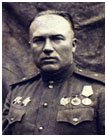


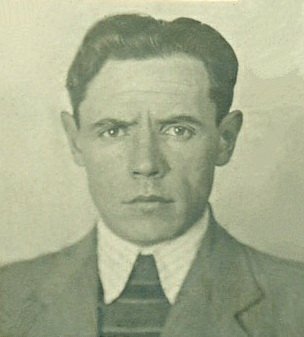


Blokhin Innokenty Pavlovich
Grade title: a Red army soldier. Blokhin Inokenty Pavlovich was born on the 9th of December, 1918, in the village of Kamenka, the Vologda region. He was called up into the army in early 1941 at the age of 22. He served in Lithuania on the border near Belarus. On the 22nd of June, 1941, he was relieved of his post. At around 4 am the outpost was shelled by the German artillery. Our soldiers immediately were engaged in battle with the Germans. They put on everything. My great-grandfather was wearing a helmet that didn't fit. He grabbed the first rifle he saw. After the battle they were forced to retreat. Gradually retreating, he reached almost Leningrad with his unit. In August 1941 he took part in the battles in the vicinity of Staraya Russa (the Novgorod region). He was wounded in those battles. He was surrounded and captured. After being captured by the Germans he was first sent to a concentration camp in Kaunas (Lithuania). Later from Kaunas the great-grandfather was sent to Germany ("Flossenbürg", near Jungfern-Breschan). Twice he miraculously survived. The first time they were led past fields that belonged to local residents. Hungry and exhausted, the prisoners rushed to eat peas from a nearby field. The son of the owner of the field hit my great-grandfather twice on the head with a lead-tipped whip. The scars remain for life. The owner of the field showed mercy to him, he drove away his son and took the whip from him. The second time he was saved from death in the camp by meeting a man who could roll felt boots. The Germans gathered all the masters in the shop, and my great-grandfather also got there. The German looking after them quickly realized that his great-grandfather did not know how to make valenki, but did not give him up for execution and began to use him for auxiliary work until he learned to make valenki. Towards the end of the war my great-grandfather was sent to work in the Ruhr mines. In 1945 when American troops approached the camp where he was the prisoners rose in revolt. They caught the commandant and wanted to lynch him. There were several hundred prisoners, but they were so exhausted that they could not even beat him. After their release the Americans immediately offered the prisoners to emigrate to the United States or Canada. Since in the USSR in those years prisoners released by the Americans were declared traitors. But my great-grandfather and 13 others refused and returned to their homeland. After that he was moved to Magnitogorsk. He worked in the coke-chemical industry. Later he took his family with him. At that time he was already married and had a son of 5 years. After the war a daughter was born. My great-grandfather has awards - medals, the order of the Second World War of the 2nd degree. He died at the age of 81 (on the 23rd of July, 1999). Currently his family consists of two children, four grandchildren and ten great-grandchildren. His name is inscribed in the Book of Memory of participants of the Great Patriotic War of 1941-1945 - residents of the the Chelyabinsk region.
Blokhin Innokenty Pavlovich
Grade title: a Red army soldier. Blokhin Inokenty Pavlovich was born on the 9th of December, 1918, in the village of Kamenka, the Vologda region. He was called up into the army in early 1941 at the age of 22. He served in Lithuania on the border near Belarus. On the 22nd of June, 1941, he was relieved of his post. At around 4 am the outpost was shelled by the German artillery. Our soldiers immediately were engaged in battle with the Germans. They put on everything. My great-grandfather was wearing a helmet that didn't fit. He grabbed the first rifle he saw. After the battle they were forced to retreat. Gradually retreating, he reached almost Leningrad with his unit. In August 1941 he took part in the battles in the vicinity of Staraya Russa (the Novgorod region). He was wounded in those battles. He was surrounded and captured. After being captured by the Germans he was first sent to a concentration camp in Kaunas (Lithuania). Later from Kaunas the great-grandfather was sent to Germany ("Flossenbürg", near Jungfern-Breschan). Twice he miraculously survived. The first time they were led past fields that belonged to local residents. Hungry and exhausted, the prisoners rushed to eat peas from a nearby field. The son of the owner of the field hit my great-grandfather twice on the head with a lead-tipped whip. The scars remain for life. The owner of the field showed mercy to him, he drove away his son and took the whip from him. The second time he was saved from death in the camp by meeting a man who could roll felt boots. The Germans gathered all the masters in the shop, and my great-grandfather also got there. The German looking after them quickly realized that his great-grandfather did not know how to make valenki, but did not give him up for execution and began to use him for auxiliary work until he learned to make valenki. Towards the end of the war my great-grandfather was sent to work in the Ruhr mines. In 1945 when American troops approached the camp where he was the prisoners rose in revolt. They caught the commandant and wanted to lynch him. There were several hundred prisoners, but they were so exhausted that they could not even beat him. After their release the Americans immediately offered the prisoners to emigrate to the United States or Canada. Since in the USSR in those years prisoners released by the Americans were declared traitors. But my great-grandfather and 13 others refused and returned to their homeland. After that he was moved to Magnitogorsk. He worked in the coke-chemical industry. Later he took his family with him. At that time he was already married and had a son of 5 years. After the war a daughter was born. My great-grandfather has awards - medals, the order of the Second World War of the 2nd degree. He died at the age of 81 (on the 23rd of July, 1999). Currently his family consists of two children, four grandchildren and ten great-grandchildren. His name is inscribed in the Book of Memory of participants of the Great Patriotic War of 1941-1945 - residents of the the Chelyabinsk region.
0 comment




2026 © Russian Military Historical Society Developed by Jetmix