
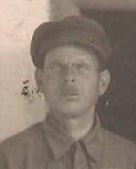

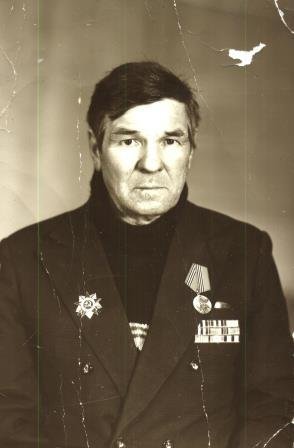



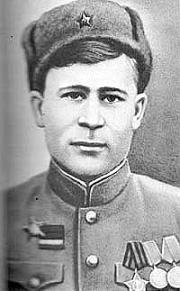

Ivan Berezhnov
Rank: Petty Officer
Branch of Service: Land Forces, Air Force (except for Naval Aviation), Coast Guard, NKVD troops, Border Guard
Unit: 6th Guards Grodno Order of Lenin Red Banner Order of Suvorov, Kutuzov and the Red Star Cavalry Division named after A. Parkhomenko
Berezhnoy Ivan was drafted into the Red Army in 1939 and was demobilized in 1945. He went from Stalingrad to Berlin with valor performing his duty to the Motherland. After returning home from the front, he married and raised three daughters and six grandchildren. He was a decent and respected man.
Four of his brothers went to the front, three returned, Ivan (my grandfather), Vasily and Grigory. The eldest, Lavrenty, went missing in July 1941. His family had been waiting to hear from him all through the war... the place of death and burial is not known. As a kid of 7-8 years, I often asked my grandfather about the war. He did not tell it willingly, and everything I heard from my grandfather remained in my memory for the rest of my life.
...July 1941. The Nazis are advancing on all fronts. The Red Army is in dire need of manpower. Mass mobilization. There is no time to train new recruits. They were loaded into echelons and sent to the front line. My grandfather was in one of these trains.
…Airstrike. German pilots iron our echelon over and over again. There is a clear field around, no place to hide. Train and people at a glance. Horror, panic, everyone is running somewhere, shouting, not listening to commands.In this meat grinder, the echelon was completely broken, not many were left alive. My grandfather told me about it with great bitterness and regret. People died in vain, at the very beginning of the war because of unpreparedness and inexperience. There were many similar cases in the first months of the war...
November 1942. Right (West Bank of the Don River), 70 km behind are Stalingrad and the Volga River. The fighting was heavy, the enemy launched a counteroffensive, heavy bombing, confusion, and my grandfather's regiment was retreating. Under the fire of tanks and infantry, my grandfather. a coachman of a staff cart, managed to save the secret documents of the headquarters. Making his way between the exploding shells, he sent the horses to the bridge over the river and as soon as his cart reached the opposite Bank, the bridge shattered into splinters from a direct hit by an enemy shell. For this feat, he was awarded the first medal For Bravery.
In another episode… For official business, Sergeant Berezhnov was ordered to arrive at the division headquarters. He needed to ride a horse. My grandfather was a good rider, and he planned the route the day before. To shorten the path, he decided to drive through an open field. One could only go through the field in the dark. He left early in the morning, before dawn. He thought of passing, but did not count on it, the first glimmer of dawn found him galloping across the field. The Germans noticed the brave horseman and hit him with a mortar... the sound of a falling mine... explosion... He woke up on the ground, it was already dawn. He felt myself - not a scratch, the mine hit right under the horse. By the blast wave, grandfather, was thrown out of the saddle far ahead, the explosion concussed. Remembering, he said: "it's good to put the toes of your boots in the stirrups not too deep, as they taught, otherwise, when the legs were thrown out of the saddle by an explosion, they would have been torn off..." He crawled out of the field. At night he returned and took the saddle off the dead horse - one can't throw away any equipment. Then it was worth its weight in gold...
My grandfather was always a kind, fair and respected person, helped his fellow villagers with business and advice, and did not refuse to help anyone. Once, once again asking about the war, I asked him a question - "Grandfather, did you shoot from a machine gun in the war... and killed fascists with it...? My question confused him. He did not answer it immediately, thought for a while and said: "In the war, I served as a Sergeant, my job was to cook porridge in time and feed the soldiers, there was no time to shoot." I never bothered my grandfather with such a question again. I felt with my childish instinct that my grandfather did not like such questions. Many years have passed, and my grandfather is no longer alive. I was reading found on the Internet, on the website the Memory of the people, the scan of the order on awarding my grandfather's order of Glory 3rd degree and suddenly find a complete answer to my old child's question.... From the order about rewarding: " Ivan Berezhnov, Guards Petty Officer of the 1st squadron of the heave machine-guns of the 41th Guards Air Defense Battalion, 6th Grodno Cavalry Division. He is presented to the third Degree of Glory... During the battles of 28.04.45 to 03.05.45, the squadron was in continuous battles with the retreating enemy. During this time, the squadron was never left without hot food. Under the fire of enemy machine gunners, the squadron Petty Officer brought hot food in due time, which gave strength to the combat units. And, during the offensive on 29.04.45, the kitchen brought a hot dinner, in the head of the platoon going. At this time, the lead group was fired at by the Germans from the forest, then Guards Petty Officer Berezhnov himself personally killed 5 Germans with a machine gun, knocked out 1 machine gun and captured 6 German prisoners. For his courage and sensitive attitude to the soldiers of the Guards, Petty Officer deserved the government award of the Order of Glory of the 3rd degree. Commander of the 25th Guards Cavalry Regiment Guards Lieutenant Colonel Lyalin. Chief of Staff of the 25th Guards Cavalry Regiment Guards Major Istibaev. May 7, 1945."
Ivan Berezhnov
Rank: Petty Officer
Branch of Service: Land Forces, Air Force (except for Naval Aviation), Coast Guard, NKVD troops, Border Guard
Unit: 6th Guards Grodno Order of Lenin Red Banner Order of Suvorov, Kutuzov and the Red Star Cavalry Division named after A. Parkhomenko
Berezhnoy Ivan was drafted into the Red Army in 1939 and was demobilized in 1945. He went from Stalingrad to Berlin with valor performing his duty to the Motherland. After returning home from the front, he married and raised three daughters and six grandchildren. He was a decent and respected man.
Four of his brothers went to the front, three returned, Ivan (my grandfather), Vasily and Grigory. The eldest, Lavrenty, went missing in July 1941. His family had been waiting to hear from him all through the war... the place of death and burial is not known. As a kid of 7-8 years, I often asked my grandfather about the war. He did not tell it willingly, and everything I heard from my grandfather remained in my memory for the rest of my life.
...July 1941. The Nazis are advancing on all fronts. The Red Army is in dire need of manpower. Mass mobilization. There is no time to train new recruits. They were loaded into echelons and sent to the front line. My grandfather was in one of these trains.
…Airstrike. German pilots iron our echelon over and over again. There is a clear field around, no place to hide. Train and people at a glance. Horror, panic, everyone is running somewhere, shouting, not listening to commands.In this meat grinder, the echelon was completely broken, not many were left alive. My grandfather told me about it with great bitterness and regret. People died in vain, at the very beginning of the war because of unpreparedness and inexperience. There were many similar cases in the first months of the war...
November 1942. Right (West Bank of the Don River), 70 km behind are Stalingrad and the Volga River. The fighting was heavy, the enemy launched a counteroffensive, heavy bombing, confusion, and my grandfather's regiment was retreating. Under the fire of tanks and infantry, my grandfather. a coachman of a staff cart, managed to save the secret documents of the headquarters. Making his way between the exploding shells, he sent the horses to the bridge over the river and as soon as his cart reached the opposite Bank, the bridge shattered into splinters from a direct hit by an enemy shell. For this feat, he was awarded the first medal For Bravery.
In another episode… For official business, Sergeant Berezhnov was ordered to arrive at the division headquarters. He needed to ride a horse. My grandfather was a good rider, and he planned the route the day before. To shorten the path, he decided to drive through an open field. One could only go through the field in the dark. He left early in the morning, before dawn. He thought of passing, but did not count on it, the first glimmer of dawn found him galloping across the field. The Germans noticed the brave horseman and hit him with a mortar... the sound of a falling mine... explosion... He woke up on the ground, it was already dawn. He felt myself - not a scratch, the mine hit right under the horse. By the blast wave, grandfather, was thrown out of the saddle far ahead, the explosion concussed. Remembering, he said: "it's good to put the toes of your boots in the stirrups not too deep, as they taught, otherwise, when the legs were thrown out of the saddle by an explosion, they would have been torn off..." He crawled out of the field. At night he returned and took the saddle off the dead horse - one can't throw away any equipment. Then it was worth its weight in gold...
My grandfather was always a kind, fair and respected person, helped his fellow villagers with business and advice, and did not refuse to help anyone. Once, once again asking about the war, I asked him a question - "Grandfather, did you shoot from a machine gun in the war... and killed fascists with it...? My question confused him. He did not answer it immediately, thought for a while and said: "In the war, I served as a Sergeant, my job was to cook porridge in time and feed the soldiers, there was no time to shoot." I never bothered my grandfather with such a question again. I felt with my childish instinct that my grandfather did not like such questions. Many years have passed, and my grandfather is no longer alive. I was reading found on the Internet, on the website the Memory of the people, the scan of the order on awarding my grandfather's order of Glory 3rd degree and suddenly find a complete answer to my old child's question.... From the order about rewarding: " Ivan Berezhnov, Guards Petty Officer of the 1st squadron of the heave machine-guns of the 41th Guards Air Defense Battalion, 6th Grodno Cavalry Division. He is presented to the third Degree of Glory... During the battles of 28.04.45 to 03.05.45, the squadron was in continuous battles with the retreating enemy. During this time, the squadron was never left without hot food. Under the fire of enemy machine gunners, the squadron Petty Officer brought hot food in due time, which gave strength to the combat units. And, during the offensive on 29.04.45, the kitchen brought a hot dinner, in the head of the platoon going. At this time, the lead group was fired at by the Germans from the forest, then Guards Petty Officer Berezhnov himself personally killed 5 Germans with a machine gun, knocked out 1 machine gun and captured 6 German prisoners. For his courage and sensitive attitude to the soldiers of the Guards, Petty Officer deserved the government award of the Order of Glory of the 3rd degree. Commander of the 25th Guards Cavalry Regiment Guards Lieutenant Colonel Lyalin. Chief of Staff of the 25th Guards Cavalry Regiment Guards Major Istibaev. May 7, 1945."
0 comment



2026 © Russian Military Historical Society Developed by Jetmix