





Ivan Baranov
Rank: Sergeant
Branch of Service: Artillery.
He was born and lived in the village of Dmitrievka Lamskiy District of the Tambov Region. Graduated from the factory school in Michurinsk as mechanic-repairman of rolling stock. He worked for the Kochetovka station in the Michurinsky District of the Tambov Region. They lived very hard and starved. He didn't see anything for two months - he got chicken blindness from malnutrition. The war began and in December there was a general mobilization. Ivan also went to the military enlistment office, adding a year to his age, asked to volunteer for the front, but, exposed, was expelled back to the village. He worked for the collective farm for another year.
He was drafted into the army in 1942, trained for a Sergeant in the Surkov camps of the Mari ASSR. Served as a mortar gunner in a mechanized cavalry division: horses pulled carts with 122mm mortars. Fought on the Ukrainian Front, reached the territory of Poland. Liberated cities: Sumy, Rovno, Kovel.
There was a particularly heavy battle in 194, - almost all were killed, but the survivors continued to fight. Ivan was concussed, wounded in the head: the entire occipital bone was shattered – 7 months in the hospital. While in the hospital, he was hit by a Nazi air raid, and miraculously survived.
In 1945, he was sent to study at the Morshansk Infantry School in the Tambov Region, and then transferred to Rylsk in the Kursk Region, then to Kaluga, where he became a driver. He preferred the civil profession to the military craft and, without completing his military studies, as soon as the opportunity arose, in 1946 he returned to his mother (who was left alone, since her husband, Ivan's father, and son, Ivan's brother, died in the war) in his native village of Dmitrievka in the Tambov Region. Where he started to work as a driver.
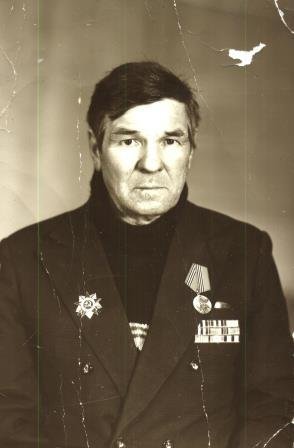
Awarded the Order of the Patriotic War 2nd degree. Labor Veteran. Udarnik of Communist Labor. Anniversary medals.
After the war, he married in 1947 and had three sons.
He worked for the Frunze collective farm in the Sosnovsky District of the Tambov Region. In 1969, the family moved to the city of Uzlovaya in the Tula Region due to the reorganization/consolidation of collective farms. He worked as a bus driver for the Plastic chemical plant. Died 02.04.1998. Five grandchildren, five great-grandchildren.
Ivan Baranov
Rank: Sergeant
Branch of Service: Artillery.
He was born and lived in the village of Dmitrievka Lamskiy District of the Tambov Region. Graduated from the factory school in Michurinsk as mechanic-repairman of rolling stock. He worked for the Kochetovka station in the Michurinsky District of the Tambov Region. They lived very hard and starved. He didn't see anything for two months - he got chicken blindness from malnutrition. The war began and in December there was a general mobilization. Ivan also went to the military enlistment office, adding a year to his age, asked to volunteer for the front, but, exposed, was expelled back to the village. He worked for the collective farm for another year.
He was drafted into the army in 1942, trained for a Sergeant in the Surkov camps of the Mari ASSR. Served as a mortar gunner in a mechanized cavalry division: horses pulled carts with 122mm mortars. Fought on the Ukrainian Front, reached the territory of Poland. Liberated cities: Sumy, Rovno, Kovel.
There was a particularly heavy battle in 194, - almost all were killed, but the survivors continued to fight. Ivan was concussed, wounded in the head: the entire occipital bone was shattered – 7 months in the hospital. While in the hospital, he was hit by a Nazi air raid, and miraculously survived.
In 1945, he was sent to study at the Morshansk Infantry School in the Tambov Region, and then transferred to Rylsk in the Kursk Region, then to Kaluga, where he became a driver. He preferred the civil profession to the military craft and, without completing his military studies, as soon as the opportunity arose, in 1946 he returned to his mother (who was left alone, since her husband, Ivan's father, and son, Ivan's brother, died in the war) in his native village of Dmitrievka in the Tambov Region. Where he started to work as a driver.
Awarded the Order of the Patriotic War 2nd degree. Labor Veteran. Udarnik of Communist Labor. Anniversary medals.
After the war, he married in 1947 and had three sons.
He worked for the Frunze collective farm in the Sosnovsky District of the Tambov Region. In 1969, the family moved to the city of Uzlovaya in the Tula Region due to the reorganization/consolidation of collective farms. He worked as a bus driver for the Plastic chemical plant. Died 02.04.1998. Five grandchildren, five great-grandchildren.
0 comment




2026 © Russian Military Historical Society Developed by Jetmix