Back to
album
album
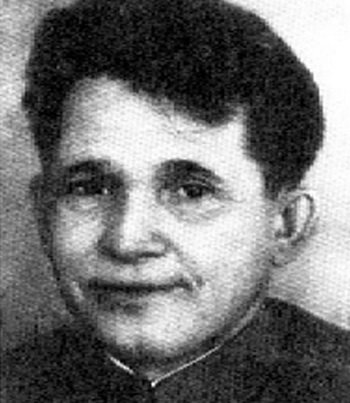
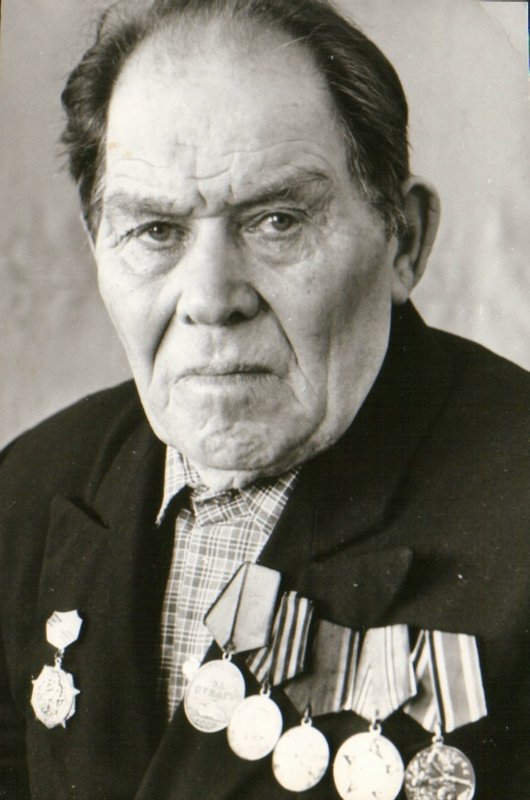
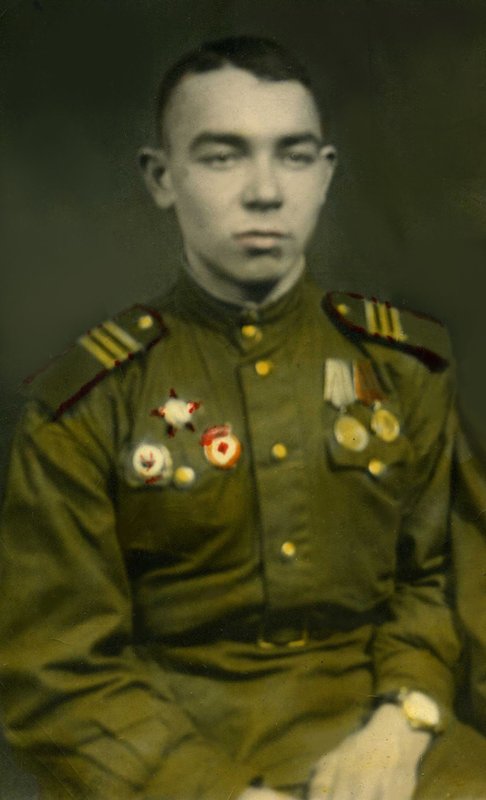
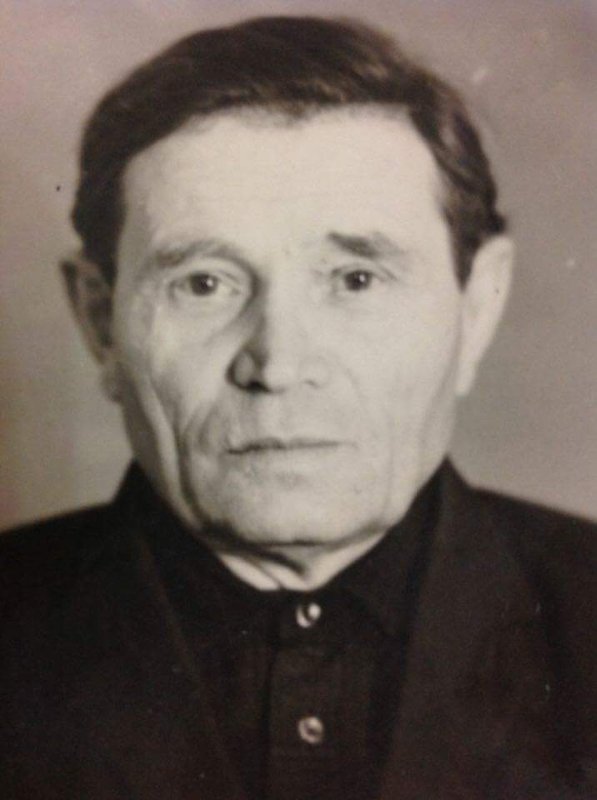
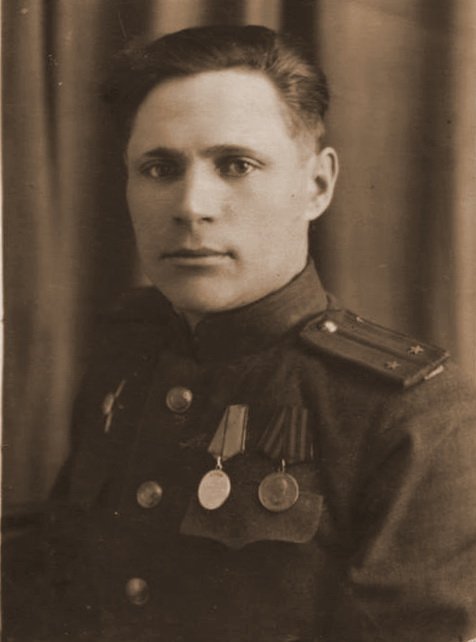
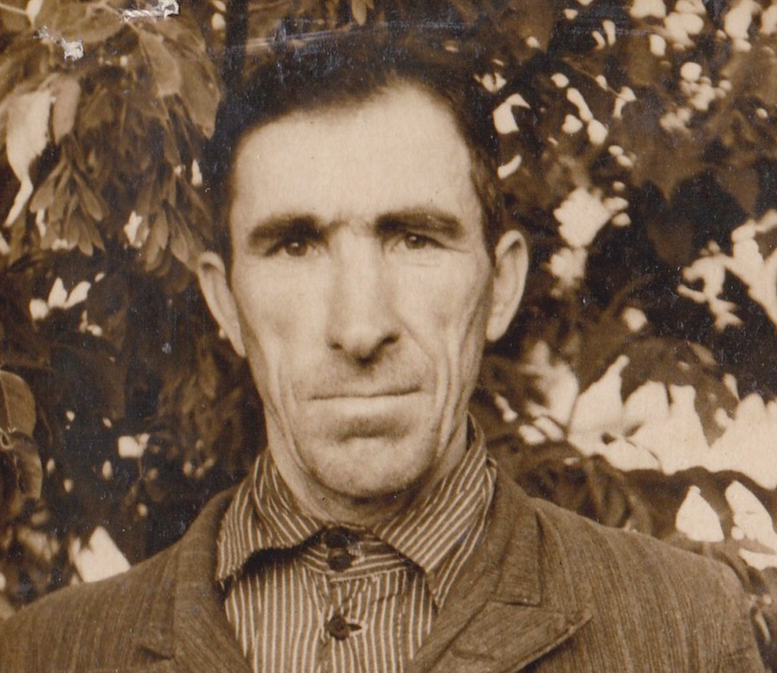

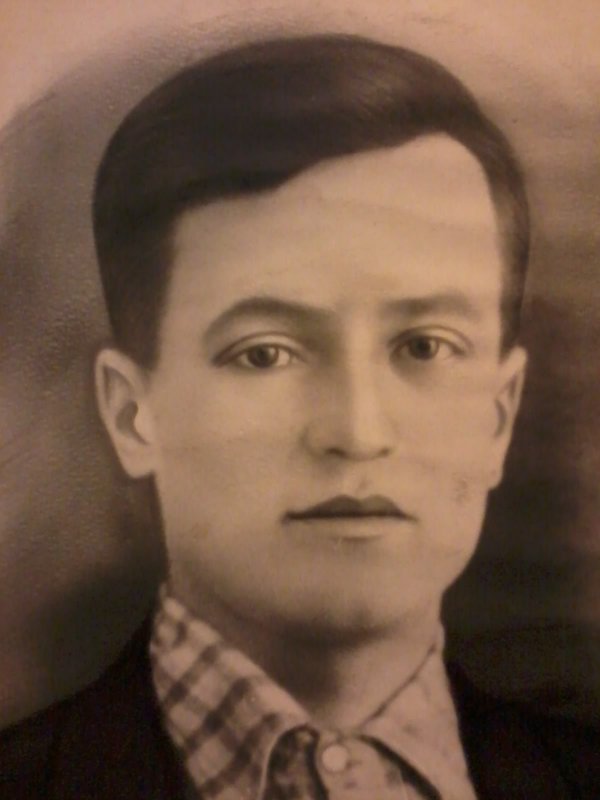
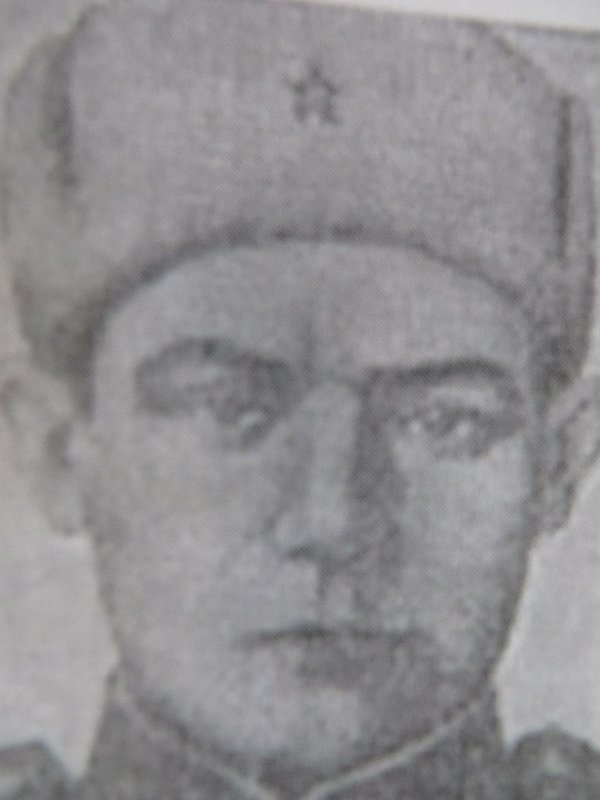
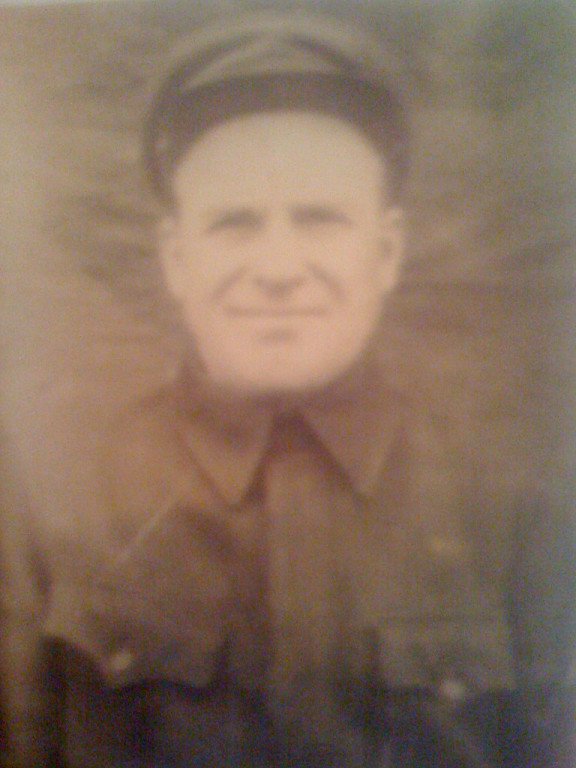
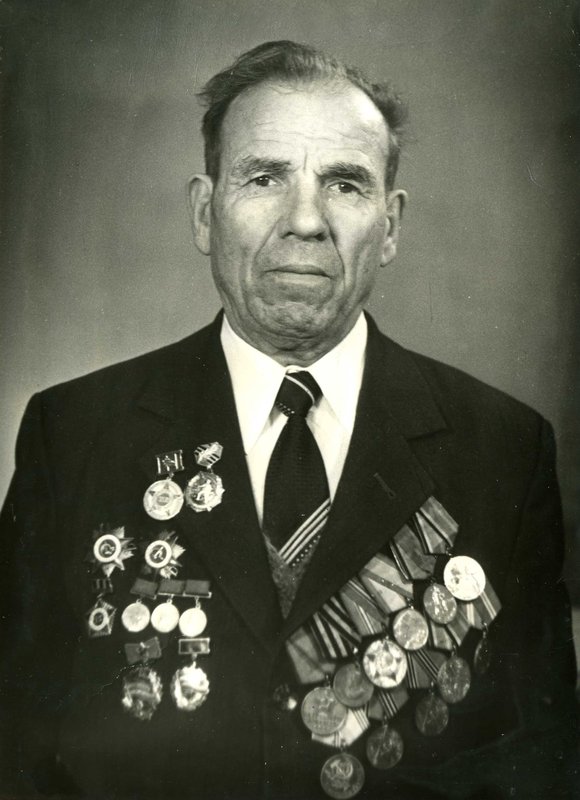
Ivan Iosifovich Zoloch
At the age of 37, Ivan Iosifovich was called up for military service and deployed to the Southwestern Front.
He was mobilized on March 13, 1942, by Shevchenkovsky Recruitment Office of Kharkov region, Ukrainian SSR.
From March 14, 1942, until June 14, 1942, he served in the 35th Infantry Regiment of the 30th Infantry Division.
As of April 1, 1942, he was assigned to the Southern Front, 56th Army, holding the position of rifleman.
The Kharkov Operation of 1942, also known as the Second Battle of Kharkov, was a battle where Soviet forces attempting to encircle the Germans found themselves surrounded instead.
In late April 1942, the ground slowly thawed following an unusually harsh winter of 1941-1942. Ice melted on the Seversky Donets River. Active combat operations by Soviet troops on the southern wing of the Soviet-German front essentially ceased. Several offensive operations conducted by armies of the Southwestern and Southern Fronts in February-March 1942, particularly aimed at liberating Kharkov, yielded no significant results. Through exhausting battles, only a foothold was established on the western bank of the Seversky Donets River near Star Saltov, improving the situation for the 6th, 57th, and 9th Armies on the Barvenkovo bridgehead. Armies of the Southwestern (21st, 38th, and 6th Armies) and Southern (57th and 9th Armies) Fronts consolidated their positions along the line Marino-Star Saltov-Balakliya-Nizhnyy Russkiy Bishkin-Tseredarovka-Krasnyy Liman. North of Marino, covering Orel-Tula and Voronezh directions, the Bryansk Front defended itself. South of Krasnyy Liman, the 37th, 12th, 18th, and 56th Armies of the Southern Front held defensive positions. During spring engagements, the enemy strengthened its defenses approaching Kharkov, Kramatorsk, and Slavyansk. On snow-free hillsides, outskirts of settlements, riverbanks, dark embankments of trenches marked the forward edge of their main defensive belt. It included two or three positions, reaching depths of 8-12 km. All settlements within this strip were prepared for all-round defense. From Murom southward to Balakliya, about 10-15 km behind the forward edge of the main defensive zone, lay the second defensive belt. About 20-25 km from the front line, mainly using local population efforts, a third defensive strip was being created. The most solid defense was located on the Chuguev bridgehead and north of it. The Kharkov operation of 1942, or the Second Battle of Kharkov, was a major engagement lasting from May 12 to May 30, 1942. The Red Army’s offensive began as an attempt at strategic advance but ended with encirclement and nearly complete annihilation of advancing Soviet units (losses amounted to 270 thousand men, including 170 thousand irretrievable losses). Due to the catastrophe at Kharkov, rapid German advances became possible on the southern sector of the front towards Voronezh and Rostov-on-Don, followed by advance toward Volga and movement toward Caucasus. Desperate attempts by encircled parts of the Red Army to break out of encirclement started on May 25. General Huber Lanz (Hubert Lanz), commanding officer of the 1st Mountain Division, recalled monstrous attacks by massive infantry formations. By May 26, encircled Red Army units were confined to a small area approximately 15 square kilometers around Barvenkovo. Breakout attempts from the east were blocked by determined German resistance supported by aviation. On May 28, Marshal S.K. Timoshenko issued orders terminating the offensive operation, yet efforts to escape continued until May 31. Remaining elements of the 6th and 57th Armies, backed by composite tank group under Major General Kuzmin composed of remnants of 5th Guards Tank Brigade, 7th, 37th, 38th, and 43rd Tank Brigades, plus remains of 21st and 23rd Tank Corps, managed to break through with heavy casualties to reach friendly lines near Lozovenka Village. On June 10, German forces initiated Operation Wilhelm. Breaching defenses between the 21st and 28th Armies, they advanced toward Volchansk.
Simultaneously, the main strike force consisting of seven infantry divisions, two tank divisions, and two motorized divisions struck the juncture between the 28th and 38th Armies. After breaking through here too, enemy tanks expanded their attack toward Kupiansk and Veliky Burluk.
Ground troops’ actions were supported by large-scale air support. Only on June 10 alone, aircraft made up to 1,800 sorties. The enemy was halted only on June 14 due to active actions by the left-wing units of the 21st Army, steadfastness of the 28th Army troops, and strong counterattacks by the 38th Army units. Thus, over 17 days in June, Southwest Front troops had to retreat 45-100 km beyond the Oskol River, abandoning Volchansk and Kupiansk. This concluded the battle south of Kharkov, where Soviet troops trying to encircle the Germans ended up being encircled themselves. Despite all efforts of our troops, less than one tenth of those trapped succeeded in escaping the "Barvenkovo trap." Soviet losses totaled 270,000 personnel, including 171,000 irrecoverable losses. Among those killed or missing in action were Deputy Commander-in-Chief of the Southwest Front Lieutenant General F.Ya. Kostenko, Commander of the 6th Army Lieutenant General A.M. Horodnianskii, Commander of the 57th Army Lieutenant General K.P. Podlas, Commander of the Army Group Major General L.V. Bobkin, and several generals leading the besieged divisions. My grandfather, private Zoloch Ivan Iosifovich, was among those captured. From March 27, 1945, to May 1, 1945, he served in the 951st Infantry Regiment of the 265th Infantry Division, which belonged to the 1st Belorussian Front, 3rd Shock Army, 7th Rifle Corps, and held the position of rifleman. Berlin Offensive Operation Quote: "After completing the battles in East Prussia, our 3rd Shock Army was relocated to the main direction—the Berlin axis—in late March 1945. Within two days we marched 100 km southwestwards and reached the Oder River, not far from Küstrin's bridgehead on the right bank. Our 265th ID occupied the second echelon in the Berlin offensive operation. Soon Zhukov ordered all artillery and mortars of the 1st BF to concentrate on the front line to deliver a powerful artillery blow against German fortifications. On the night of April 15, our company crossed the Oder and took fire positions on the front line next to the mortar company, just 150 meters away from German trenches. Behind us, at a distance of 100m, stood a battery of 120-mm mortars. All divisional artillery was positioned for direct-fire shooting. The German High Command sought to hold onto Berlin at any cost while simultaneously negotiating separate peace agreements with Americans and British. Hitler ordered the capital of the Reich to be defended down to the last man. Around Berlin there were concentrated some 1 million elite German soldiers and officers, of whom 200,000 were inside the city limits. Additionally, there were 10,400 guns and mortars, 1,500 tanks, 3,300 planes, and 3 million Panzerfaust anti-tank weapons. From the Oder to Berlin was 60km. However, these kilometers had been transformed by the Germans into continuous defensive fortifications. Three defensive rings were constructed: outer, inner, and urban. Berlin itself was divided into nine sectors, including the central one, which contained more than 400 reinforced concrete defensive structures. Early morning on April 16, when it was still dark, intense artillery preparation commenced. Some 22,000 artillery pieces and mortars opened fire simultaneously, including hundreds of Katyusha rocket launchers. It was truly an unforgettable spectacle. The earth trembled like during a severe earthquake. There was constant roaring, individual shots and explosions could not be heard. The artillery commander of the 171st SD, 3rd UD, wrote in his memoirs that during this artillery preparation, 1,236 shells and mines were fired. People temporarily lost hearing because of the noise. As soon as the artillery preparation ended, dozens of searchlights lit up, blinding the enemy, and our troops—infantry and tanks—advanced in attack, breached the first line of defense, and moved forward. About three hours later, columns of prisoners passed by us. They walked concussed, blood flowing from many ears due to ruptured eardrums.
Many repeated: ‘Hitler kaput.’ Soon enough, the fascists resumed fierce resistance. Their artillery and tanks survived in the second and third echelons of defense. Particularly fierce battles occurred at the Seelow Heights.
Only by evening on April 17 did it become possible to capture these heights and move towards Berlin, overcoming continuous defensive barriers: rivers, lakes, forests, barbed wire entanglements, buried tanks, armoured turrets, etc. Overcoming enemy resistance, our troops advanced on Berlin. Our company progressed street by street, house by house, alongside mortar companies of the 951st Infantry Regiment. At 1 p.m. on April 30, the assault on the Reichstag began. Not until 6 p.m. did battalions of the 150th and 171st Divisions storm into the Reichstag. On walls, pillars, window openings, Soviet soldiers raised red flags. That evening, at 10 p.m., Sergeants Mikhail Yegorov and Meliton Kantaria from the 150th Division of the 3rd Shock Army, led by Lieutenant Alexei Berest and Senior Sergeant Syanov, hoisted the Victory Banner atop the dome of the Reichstag. The entire government quarter was a considerable piece of territory according to that era's Berlin standards. It encompassed the Reichstag district, extending from Friedrichstraße, then along the Spree Riverbank, the Reichstag itself, a substantial portion of Tiergarten Park, and then the entire Wilhelmstraße. Being Berlin's governmental street, it wasn't borderline; rather, it was akin to the heart of this administrative quarter. Further down, towards Prinz-Albrecht-Straße where Gestapo headquarters and the Air Ministry were situated. Throughout May 1, we fired upon German fire points and Hitlerian infantry attempting to break through to the Reichstag via Brandenburg Gate. On that day, Ivan Zoloch sustained serious leg wounds (blind fragmentation wound to the left foot causing bone damage). June 6, 1945 - July 30, 1945: hospitalized at evacuation hospital No. 1727 for treatment of blind fragmentation wound to the left foot with bone injury.
August 20, 1945: discharged based on Law of the Supreme Council of the USSR dated June 23, 1945. August 29, 1945: Award Name: Medal "For Victory over Germany in the Great Patriotic War of 1941-1945." Combat Path:
- 35th Infantry Regiment, 30th Infantry Division, Southern Front, 56th Army (April 1, 1942)
- 951st Infantry Regiment, 265th Infantry Division, 1st Belorussian Front, 3rd Shock Army, 7th Rifle Corps (April 1, 1945) - 11th Reserve Infantry Regiment, 10th Reserve Infantry Division, Unit 31991
Ivan Iosifovich Zoloch
At the age of 37, Ivan Iosifovich was called up for military service and deployed to the Southwestern Front.
He was mobilized on March 13, 1942, by Shevchenkovsky Recruitment Office of Kharkov region, Ukrainian SSR.
From March 14, 1942, until June 14, 1942, he served in the 35th Infantry Regiment of the 30th Infantry Division.
As of April 1, 1942, he was assigned to the Southern Front, 56th Army, holding the position of rifleman.
The Kharkov Operation of 1942, also known as the Second Battle of Kharkov, was a battle where Soviet forces attempting to encircle the Germans found themselves surrounded instead.
In late April 1942, the ground slowly thawed following an unusually harsh winter of 1941-1942. Ice melted on the Seversky Donets River. Active combat operations by Soviet troops on the southern wing of the Soviet-German front essentially ceased. Several offensive operations conducted by armies of the Southwestern and Southern Fronts in February-March 1942, particularly aimed at liberating Kharkov, yielded no significant results. Through exhausting battles, only a foothold was established on the western bank of the Seversky Donets River near Star Saltov, improving the situation for the 6th, 57th, and 9th Armies on the Barvenkovo bridgehead. Armies of the Southwestern (21st, 38th, and 6th Armies) and Southern (57th and 9th Armies) Fronts consolidated their positions along the line Marino-Star Saltov-Balakliya-Nizhnyy Russkiy Bishkin-Tseredarovka-Krasnyy Liman. North of Marino, covering Orel-Tula and Voronezh directions, the Bryansk Front defended itself. South of Krasnyy Liman, the 37th, 12th, 18th, and 56th Armies of the Southern Front held defensive positions. During spring engagements, the enemy strengthened its defenses approaching Kharkov, Kramatorsk, and Slavyansk. On snow-free hillsides, outskirts of settlements, riverbanks, dark embankments of trenches marked the forward edge of their main defensive belt. It included two or three positions, reaching depths of 8-12 km. All settlements within this strip were prepared for all-round defense. From Murom southward to Balakliya, about 10-15 km behind the forward edge of the main defensive zone, lay the second defensive belt. About 20-25 km from the front line, mainly using local population efforts, a third defensive strip was being created. The most solid defense was located on the Chuguev bridgehead and north of it. The Kharkov operation of 1942, or the Second Battle of Kharkov, was a major engagement lasting from May 12 to May 30, 1942. The Red Army’s offensive began as an attempt at strategic advance but ended with encirclement and nearly complete annihilation of advancing Soviet units (losses amounted to 270 thousand men, including 170 thousand irretrievable losses). Due to the catastrophe at Kharkov, rapid German advances became possible on the southern sector of the front towards Voronezh and Rostov-on-Don, followed by advance toward Volga and movement toward Caucasus. Desperate attempts by encircled parts of the Red Army to break out of encirclement started on May 25. General Huber Lanz (Hubert Lanz), commanding officer of the 1st Mountain Division, recalled monstrous attacks by massive infantry formations. By May 26, encircled Red Army units were confined to a small area approximately 15 square kilometers around Barvenkovo. Breakout attempts from the east were blocked by determined German resistance supported by aviation. On May 28, Marshal S.K. Timoshenko issued orders terminating the offensive operation, yet efforts to escape continued until May 31. Remaining elements of the 6th and 57th Armies, backed by composite tank group under Major General Kuzmin composed of remnants of 5th Guards Tank Brigade, 7th, 37th, 38th, and 43rd Tank Brigades, plus remains of 21st and 23rd Tank Corps, managed to break through with heavy casualties to reach friendly lines near Lozovenka Village. On June 10, German forces initiated Operation Wilhelm. Breaching defenses between the 21st and 28th Armies, they advanced toward Volchansk.
Simultaneously, the main strike force consisting of seven infantry divisions, two tank divisions, and two motorized divisions struck the juncture between the 28th and 38th Armies. After breaking through here too, enemy tanks expanded their attack toward Kupiansk and Veliky Burluk.
Ground troops’ actions were supported by large-scale air support. Only on June 10 alone, aircraft made up to 1,800 sorties. The enemy was halted only on June 14 due to active actions by the left-wing units of the 21st Army, steadfastness of the 28th Army troops, and strong counterattacks by the 38th Army units. Thus, over 17 days in June, Southwest Front troops had to retreat 45-100 km beyond the Oskol River, abandoning Volchansk and Kupiansk. This concluded the battle south of Kharkov, where Soviet troops trying to encircle the Germans ended up being encircled themselves. Despite all efforts of our troops, less than one tenth of those trapped succeeded in escaping the "Barvenkovo trap." Soviet losses totaled 270,000 personnel, including 171,000 irrecoverable losses. Among those killed or missing in action were Deputy Commander-in-Chief of the Southwest Front Lieutenant General F.Ya. Kostenko, Commander of the 6th Army Lieutenant General A.M. Horodnianskii, Commander of the 57th Army Lieutenant General K.P. Podlas, Commander of the Army Group Major General L.V. Bobkin, and several generals leading the besieged divisions. My grandfather, private Zoloch Ivan Iosifovich, was among those captured. From March 27, 1945, to May 1, 1945, he served in the 951st Infantry Regiment of the 265th Infantry Division, which belonged to the 1st Belorussian Front, 3rd Shock Army, 7th Rifle Corps, and held the position of rifleman. Berlin Offensive Operation Quote: "After completing the battles in East Prussia, our 3rd Shock Army was relocated to the main direction—the Berlin axis—in late March 1945. Within two days we marched 100 km southwestwards and reached the Oder River, not far from Küstrin's bridgehead on the right bank. Our 265th ID occupied the second echelon in the Berlin offensive operation. Soon Zhukov ordered all artillery and mortars of the 1st BF to concentrate on the front line to deliver a powerful artillery blow against German fortifications. On the night of April 15, our company crossed the Oder and took fire positions on the front line next to the mortar company, just 150 meters away from German trenches. Behind us, at a distance of 100m, stood a battery of 120-mm mortars. All divisional artillery was positioned for direct-fire shooting. The German High Command sought to hold onto Berlin at any cost while simultaneously negotiating separate peace agreements with Americans and British. Hitler ordered the capital of the Reich to be defended down to the last man. Around Berlin there were concentrated some 1 million elite German soldiers and officers, of whom 200,000 were inside the city limits. Additionally, there were 10,400 guns and mortars, 1,500 tanks, 3,300 planes, and 3 million Panzerfaust anti-tank weapons. From the Oder to Berlin was 60km. However, these kilometers had been transformed by the Germans into continuous defensive fortifications. Three defensive rings were constructed: outer, inner, and urban. Berlin itself was divided into nine sectors, including the central one, which contained more than 400 reinforced concrete defensive structures. Early morning on April 16, when it was still dark, intense artillery preparation commenced. Some 22,000 artillery pieces and mortars opened fire simultaneously, including hundreds of Katyusha rocket launchers. It was truly an unforgettable spectacle. The earth trembled like during a severe earthquake. There was constant roaring, individual shots and explosions could not be heard. The artillery commander of the 171st SD, 3rd UD, wrote in his memoirs that during this artillery preparation, 1,236 shells and mines were fired. People temporarily lost hearing because of the noise. As soon as the artillery preparation ended, dozens of searchlights lit up, blinding the enemy, and our troops—infantry and tanks—advanced in attack, breached the first line of defense, and moved forward. About three hours later, columns of prisoners passed by us. They walked concussed, blood flowing from many ears due to ruptured eardrums.
Many repeated: ‘Hitler kaput.’ Soon enough, the fascists resumed fierce resistance. Their artillery and tanks survived in the second and third echelons of defense. Particularly fierce battles occurred at the Seelow Heights.
Only by evening on April 17 did it become possible to capture these heights and move towards Berlin, overcoming continuous defensive barriers: rivers, lakes, forests, barbed wire entanglements, buried tanks, armoured turrets, etc. Overcoming enemy resistance, our troops advanced on Berlin. Our company progressed street by street, house by house, alongside mortar companies of the 951st Infantry Regiment. At 1 p.m. on April 30, the assault on the Reichstag began. Not until 6 p.m. did battalions of the 150th and 171st Divisions storm into the Reichstag. On walls, pillars, window openings, Soviet soldiers raised red flags. That evening, at 10 p.m., Sergeants Mikhail Yegorov and Meliton Kantaria from the 150th Division of the 3rd Shock Army, led by Lieutenant Alexei Berest and Senior Sergeant Syanov, hoisted the Victory Banner atop the dome of the Reichstag. The entire government quarter was a considerable piece of territory according to that era's Berlin standards. It encompassed the Reichstag district, extending from Friedrichstraße, then along the Spree Riverbank, the Reichstag itself, a substantial portion of Tiergarten Park, and then the entire Wilhelmstraße. Being Berlin's governmental street, it wasn't borderline; rather, it was akin to the heart of this administrative quarter. Further down, towards Prinz-Albrecht-Straße where Gestapo headquarters and the Air Ministry were situated. Throughout May 1, we fired upon German fire points and Hitlerian infantry attempting to break through to the Reichstag via Brandenburg Gate. On that day, Ivan Zoloch sustained serious leg wounds (blind fragmentation wound to the left foot causing bone damage). June 6, 1945 - July 30, 1945: hospitalized at evacuation hospital No. 1727 for treatment of blind fragmentation wound to the left foot with bone injury.
August 20, 1945: discharged based on Law of the Supreme Council of the USSR dated June 23, 1945. August 29, 1945: Award Name: Medal "For Victory over Germany in the Great Patriotic War of 1941-1945." Combat Path:
- 35th Infantry Regiment, 30th Infantry Division, Southern Front, 56th Army (April 1, 1942)
- 951st Infantry Regiment, 265th Infantry Division, 1st Belorussian Front, 3rd Shock Army, 7th Rifle Corps (April 1, 1945) - 11th Reserve Infantry Regiment, 10th Reserve Infantry Division, Unit 31991
0 comment




2026 © Russian Military Historical Society Developed by Jetmix