Back to
album
album
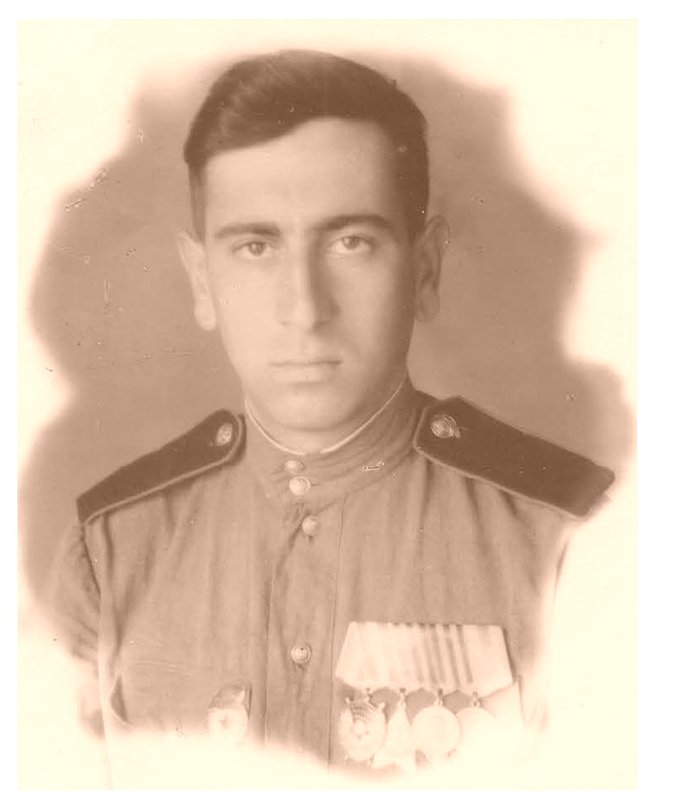
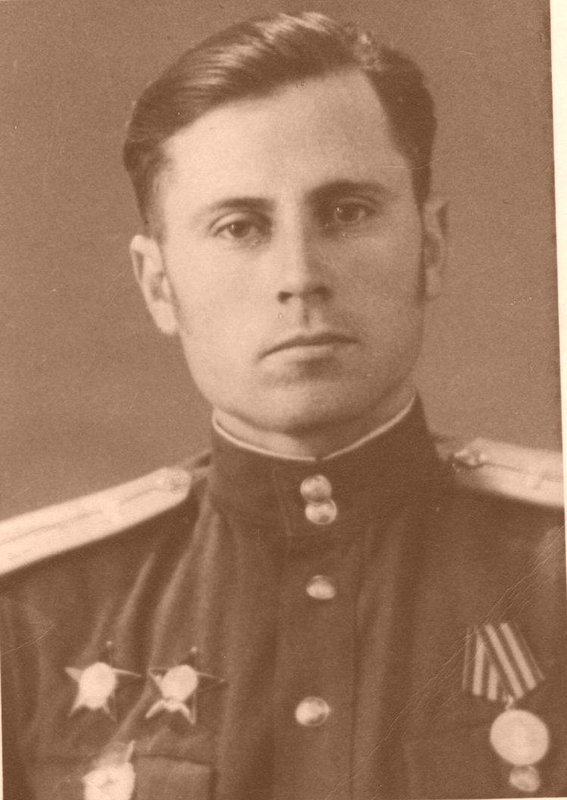
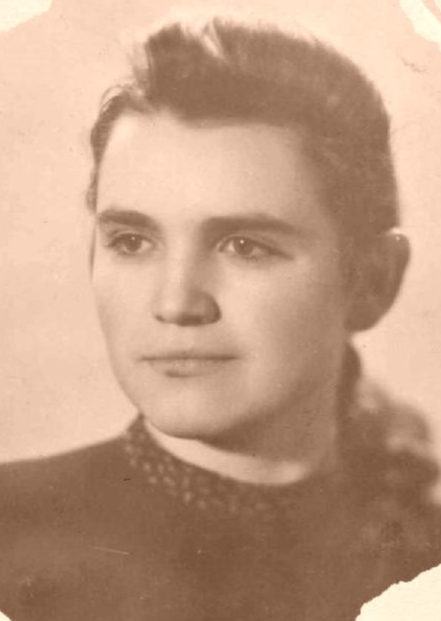
Vasilyeva Valentina Aleksandrovna
Vasilyeva Valentina Aleksandrovna_x000D_
_x000D_
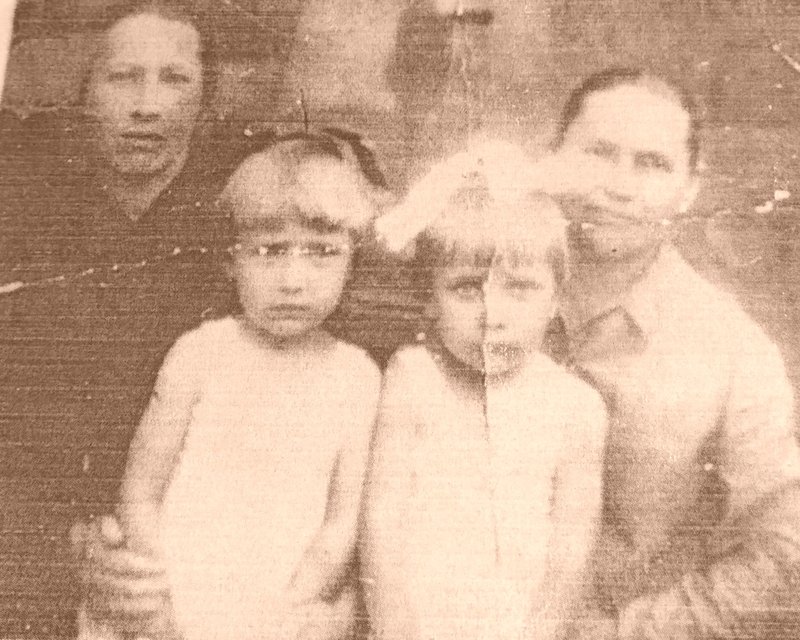
From the memoirs of Valentina Alexandrovna: "I ran home as fast as I could, when I ran into the dacha room, I shouted - "mom, you can't see the sun in the sky, only planes". Nothing could be heard over the hum. It was scary. So, the Patriotic war began. Something infinitely terrible she brought to our house. We learned about the war at the dacha, before the Declaration of war. Dad went to the front on the first day of the war without even having time to say goodbye to us. He called us on the phone for a long time, but my mother did not listen to anything and did not answer him. Tears made it difficult to speak, and she opened her mouth, but there was no sound. I just thought, "We won't see you again." His last words were addressed to me, the daughter he loved dearly. His work made it difficult for us to be together often. He was an officer and was constantly on business trips. I lived with my aunt Katya and her two children, my sister Nadya and my brother George. In the photo, my mother, me, Nadya, aunt Katya and George. The Germans were approaching the city, and we moved to a dugout. In the morning, the dacha room was not there, boards and bricks were sticking out in its place, and the dugout was filled up. Passing soldiers opened us up. According to rumors, it became difficult with food in Leningrad. They said there was a famine and they started giving out cards. Every morning, Nadya and I would go to the soldiers' kitchen with our kettles, where the cook would pour hot food into them for us and the Leningrad children, remembering his daughters who had stayed in Leningrad. One morning they told everyone to pack up immediately and go to Leningrad. The enemy was approaching the city limits, having already taken Gatchina. We loaded food on the sled: cabbage, potatoes, cucumbers. Everything that my mother and Georgy got from the collective farm fields with difficulty under artillery fire. Heavy fire killed many of the citizens of Leningrad. Someone went out of the city to the fields left by the collective farmers for potatoes. With fiercely hungry eyes, they reclined to harvest. Famine in the city. I was afraid to think what would happen to us. Two sledges were loaded with food. Things were left in the dugout. Many refugees were bombed by the Nazis, leaving mutilated human bodies and sledges on the road. I remember heart-rending moans and children crying. We walked for a long time to the city... The tram was still running, but they looked disabled. City, dear Leningrad, how scary and painful it was to look at you. Destroyed houses, roads with craters, and people how they lost weight. Even with the cards, bread was hard to get. During the first months of the war, we did not feel hungry, as we brought food from the dacha. By winter, there was a famine. The five of us shared a room: my mother, me, and aunt Katya with their two children. One night, we woke up to a roar and cold. One wall collapsed during the bombing. We were in the open air. With difficulty, they collected things and food - a barrel of cabbage, a bag of potatoes, a bag of beets, several kilograms of carpenter's glue. We were given an apartment on Bogie street, near Nevsky Prospekt and the Alexander Nevsky Lavra. My mother worked at the factory; my aunt was ill. In December, my mother fell ill. My fifteen-year-old cousin and I went to buy bread. It was a problem to get down from the fifth floor. We stood in the cold in the queue until the evening. We had numbers written in chemical ink on our hands. They brought home a piece of bread for five people. At 125 grams each. Sometimes there was paper inside a piece of bread. We children ate our 125 grams on the way. Once we stood in line with my brother until the evening, in the evening we got two slices, and on the way back two guys took away my bread. My mother was crying, the remaining bread was divided into 5 pieces. We lived on the fifth floor. From the fifth floor to go down the whole problem. They went up to the fifth floor like dogs on their hands and feet. My mother would wake me up at 8:00 in the morning and get me out of bed. I dressed, drank boiling water, cleaned the room. My brother went to take the bread line. The others were lying down. Then my sister couldn't walk either. My legs were weak. Then I realized the wisdom of my mother, which made me move. Later, my mother and Katya could not walk. We didn't wash or wash our clothes. I didn't have the energy or the water to do it. What could 125 grams of bread give? We haven't cooked anything for a month. There is nothing to cook. 6 potatoes left. We used carpenter's glue to make a delicious jelly. Soup was made from sawdust mixed with herbs and potato peels that neighbors threw away. My legs are swollen and my stomach hurts. Children lost weight; adults lay more. My mother chased me away because she knew I might get stale. I cried, but I got up. I was afraid of my mother. My father was kind and kind. Mom is strict and demanding. I would eat my 125 grams and sit in a corner and write in my diary... This year I had to go to the first class. In the spring, they bought me a uniform and a briefcase. But I didn't have to go to school, it was bombed. Teachers were killed. Hunger and disease were in Leningrad. My dad taught me to read and write. I began to write down some events from our lives in a notebook. Here they are: January 4, 1942. Today Gotya brought bread, bitter and stale. January 8, 1942. A neighbor came over with a sled - they have a dead daughter. January 20, 1942. My mother and Nadya got sick. January 25, 1942. A neighbor died. February 2, 1942. My mother stays in bed, crying and looking at me. February 5, 1942. Aunt Katya got sick. Mother says she is going mad with hunger; March 4, 1942. Mom felt bad. There are neighbors in the next room, and someone is playing a waltz. My memory began to wane. In the evening, my mother said to me: "I will die tomorrow, don't forget me. I put photos in your notebook. Fill in your last name. Can you find a father?" I cried; how could I believe my mother's delirium. On March 5, 1942, Gotya and I brought bread. It was added a little, up to 200 grams. Aunt Katya, having learned about the increase in rations, went crazy. Her eyes were burning, and she screamed and shook the sick Nadya. My mother did not speak, she turned her tongue, but the words were no longer audible. I stood there, my eyes wide with horror. She looked at her mother. There were no tears. They were starved. Something burned in my chest. What does mom want to say? At this time, aunt Katya pulled out the bread and brandishing a knife, began to cut it with a cry. Suddenly my aunt rushed us. My brother and I ran out of the room, closing the door behind us. We heard Nadya's screams. Suddenly there was silence. We opened the door and the terrible picture stopped before my eyes - aunt Katya was lying on the floor, my mother on the bed, Nadya was crying under the covers. Everyone rushed to their mother. We didn't hear anything, we shook the lifeless bodies of our parents and screamed. And in the next room, someone was playing Tchaikovsky's waltz again. There were dead mothers and deaf children in the room. Gotya asked me to help him lift his mother to the bed. We stood by the bed all day, hoping that our mothers would be resurrected. The waltz was heartbreaking. For three days we lived like this, my sister and brother and I on the beds, mothers under the beds. Until my brother got a sled and we took our parents to a warehouse. I cried so much when I said goodbye to my mother. We were told that they would be burned and buried in a third grave when there was a cemetery. Now I, at the Piskarevskoye cemetery, always sit at the third grave of 1942, when I am in Leningrad. A day later, the funeral service for my father came. Dad never came back. We received two postcards and a funeral card from him during this time. Where it was reported about his heroic death on the Leningrad front at the city walls. We had a good March. On 5 cards received a whole loaf of bread, 100 grams of semolina, 200 grams of cereals. My brother got a job, and Nadya and I spent the whole day together. We didn't think about anything in the first few days. But one evening, when we were lying down and didn't want to sleep, someone started playing Tchaikovsky's waltz again behind the wall. It was like a bolt from the blue. It all came back to me. Waltz again tore the soul and wanted to scream. I kept saying, " Mom, mom, why can't you hear me?". I knew that my words were in vain. Then I grew up. And the waltz called somewhere and besides melancholy, gave hope for something. Life forced to grow up in 8 incomplete years. March was coming to an end. We are dirty, emaciated and lousy. How to live further? On March 30, 1942, we first thought about the future. Gotya sat on the floor and said nothing. He had to decide the fate of his sisters. He's the oldest, 16. Nadya and I were crying and begging them not to give us away. We swore to comply with all his demands and never tease him. He was angry, emaciated, got up and said in a rough voice: "I will go to the front! I'll take Nadya to the hospital, and you, Valya, to the shelter." When you hear the word shelter, we began to cry. We imagined that we would be held there like dogs, beaten. After all, always before naughty children were frightened by the shelter. And now... Gotya, without a moment's delay, exchanged a sledge somewhere for bread. And took Nadya to the hospital. At about five o'clock, tired and exhausted, he returned. Gotya said that he had traveled all over Leningrad, but Nadya was not taken to the hospital. He handed it over to the receiver at the Alexander Nevsky Lavra. He told me that he would take me there tomorrow and go to the front. I began to cry bitterly and desperately. But Gotya did not want to listen to anything, ate a crust of bread and went to bed dressed. In the morning, he woke me up and cut the bread he brought. For the first time in all the months of the blockade, I saw so much bread on my hands. My brother gave me his portion and didn't even blink. I took the bread and began to eat it greedily, then put it down and gave it to him. I said I couldn't eat that much. The last time I looked around the room, taking photos and documents, I stood there and couldn't move. I was an orphan in this room, and I was leaving it forever. "Mother, mother, good-bye!" - Each thought of his own... I was in the receiver for three months. At night it was scary, someone was dying in the ward. You can't look out the window, it's a cemetery. I was waiting for Nadya to recover. But she didn't get better. Then she was moved to the basement. And I was trained in an orphanage. When I went to say goodbye to Nadya, I was amazed. She was collecting pieces of bread under her pillow. She wasn't hungry anymore. The same indifferent children lay nearby. Nothing could save them. We kissed and said goodbye. She died two days later. I was moved to an orphanage on Kalashnikova (now Sinopskaya) embankment. Here I fully felt the state's concern for children. We were well fed. They always gave me a piece of glucose. They strictly observed the daily routine. With the beginning of spring, we collected medicinal herbs and planted vegetables in the garden. When we were treated, we started studying at the beginning of the summer. I started first grade in May. In June 1942, we began to prepare for export to the mainland. On June 8, 1942, they put us on a train, saw us off cheerfully, and believed in us. The train was well fed, for the first time given bread, at one time half a kilogram. We drove for three hours with stops. Then we boarded a steamer and a barge. The first steamer was carrying preschoolers. Next was a barge on which children up to 12 years old were traveling, we. On the boat next, high school students. In the middle of Ladoga, we were bombed by the Nazis. It was a terrible dream. I would never forget. We all went through hunger, cold, death of relatives, but this... Several shells fell on the first steamer, and it caught fire. There were preschoolers there. The steamer sank before our eyes. How the children screamed! The Tutors swam to our barge. They and some of the children were saved. They caught it with hooks. Bloodstains, floating children's bodies. In about fifteen minutes, several planes had already flown in. Above in the sky battle. I laid on the barge and saw everything with my own eyes. Several bombs were dropped near our barge. Water column. We've seen it all! We were sure that salvation had come! We went from Leningrad! This brutal match was the only survivors of our barge. The steamer with the older guys also sank. Although, many guys and girls were saved. They lay on the deck, shaking, their eyes wide with horror. The sailors covered them with fur coats and greatcoats. This, one of the terrible scenes, will never leave my memory! It took us exactly a month to get to the orphanage. At each big stop we were fed thoroughly, first, second and third. Women with bags of tomatoes, cucumbers, apples, potatoes, berries. Of course, there were overeating and fainting. From Leningrad, mostly everyone took the train on their own, but when they arrived, more than half of the children could not go on their own. They cried. Women carried them out in their arms. We were taken on horseback to the orphanage. We were quarantined for two weeks. Come to himself. We were examined and treated. Then a sad and funny story happened at the same time. We, who were able, were taken to the field. We forgot that we are urban. Each was measured out to weed a hundred acres of wheat and rye. They told us how to do it. We arrived two hours later. Many lay in the furrow. Some of them fainted. We couldn't work. I didn't faint, but I had a headache. I roared "Beluga". We were put like logs on a cart and taken to an orphanage. Then they were treated for something. From that day on, weeding rates were reasonable. We got to the Ulyanovsk children's home in 1945, when we gathered all the Leningrad children. This orphanage has played a special role in our lives. It was a fun and happy childhood. Holidays, gifts, toys, holiday outfits and evenings. Our wonderful caregivers were here to replace our mothers. Olga Vladimirovna, an inventor and sorceress. It was for us a symbol of purity, faith and nobility. Everyone wanted to be like her. She made our childhood happy, our untroubled youth. Olga Vladimirovna gave us faith in dreams. I remember a lot from my life in the orphanage. First of all, the first festive dress for the ball. Cotton, with red trim. We sewed it ourselves, with the help of adults. I remember new year's evenings with performances, fairy-tale programs and costumes. Everyone participated. I remember the orphanage choir, with a dedicated music worker. I remember our first trip to the dacha in the grove. Everything in the fresh air, dacha, exercise, giant swings, Volga, productions, the fairy tale "Geese-swans", productions of various operas. I couldn't think of a better experience than rehearsals. Not everything was easy for us. But still, everyone gathered and learned the roles. I liked evenings and concerts. I wasn't very brave, of course. But I always did. She knew dancing and poetry. I remembered working days working in the field, watering cucumbers, tomatoes and trips to the hay field. These were fields of grass that reached the height of a man. Such herbs and flowers. Ah, what a fragrance... In the morning, we would Wake up to the sound of birds singing and a gramophone singing - "Say girls, girlfriends". We had a gramophone for three years, the same song every morning. I remember the hours of preparing lessons. I remember our trips to the Goncharov cliff and trips to different cities to factories, factories, schools. It was very interesting to discuss excursions for a long time. I remember when Zoya Kosmodemyanskaya's mother came to our orphanage. She was a strict, strong-willed woman. I remember the hospital. We went there quite often. We read books to the wounded, pasted and drew something, and gave concerts. I remember how one wounded man treated us to sweets and said: "Children, come again!" For every holiday, and in the following years, we went to the hospital. I was infinitely grateful to th_x000D_
orphanage for the joy, purity and happy childhood, loyalty, kindness and hope that it gave us!”
Vasilyeva Valentina Aleksandrovna
Vasilyeva Valentina Aleksandrovna_x000D_
_x000D_
From the memoirs of Valentina Alexandrovna: "I ran home as fast as I could, when I ran into the dacha room, I shouted - "mom, you can't see the sun in the sky, only planes". Nothing could be heard over the hum. It was scary. So, the Patriotic war began. Something infinitely terrible she brought to our house. We learned about the war at the dacha, before the Declaration of war. Dad went to the front on the first day of the war without even having time to say goodbye to us. He called us on the phone for a long time, but my mother did not listen to anything and did not answer him. Tears made it difficult to speak, and she opened her mouth, but there was no sound. I just thought, "We won't see you again." His last words were addressed to me, the daughter he loved dearly. His work made it difficult for us to be together often. He was an officer and was constantly on business trips. I lived with my aunt Katya and her two children, my sister Nadya and my brother George. In the photo, my mother, me, Nadya, aunt Katya and George. The Germans were approaching the city, and we moved to a dugout. In the morning, the dacha room was not there, boards and bricks were sticking out in its place, and the dugout was filled up. Passing soldiers opened us up. According to rumors, it became difficult with food in Leningrad. They said there was a famine and they started giving out cards. Every morning, Nadya and I would go to the soldiers' kitchen with our kettles, where the cook would pour hot food into them for us and the Leningrad children, remembering his daughters who had stayed in Leningrad. One morning they told everyone to pack up immediately and go to Leningrad. The enemy was approaching the city limits, having already taken Gatchina. We loaded food on the sled: cabbage, potatoes, cucumbers. Everything that my mother and Georgy got from the collective farm fields with difficulty under artillery fire. Heavy fire killed many of the citizens of Leningrad. Someone went out of the city to the fields left by the collective farmers for potatoes. With fiercely hungry eyes, they reclined to harvest. Famine in the city. I was afraid to think what would happen to us. Two sledges were loaded with food. Things were left in the dugout. Many refugees were bombed by the Nazis, leaving mutilated human bodies and sledges on the road. I remember heart-rending moans and children crying. We walked for a long time to the city... The tram was still running, but they looked disabled. City, dear Leningrad, how scary and painful it was to look at you. Destroyed houses, roads with craters, and people how they lost weight. Even with the cards, bread was hard to get. During the first months of the war, we did not feel hungry, as we brought food from the dacha. By winter, there was a famine. The five of us shared a room: my mother, me, and aunt Katya with their two children. One night, we woke up to a roar and cold. One wall collapsed during the bombing. We were in the open air. With difficulty, they collected things and food - a barrel of cabbage, a bag of potatoes, a bag of beets, several kilograms of carpenter's glue. We were given an apartment on Bogie street, near Nevsky Prospekt and the Alexander Nevsky Lavra. My mother worked at the factory; my aunt was ill. In December, my mother fell ill. My fifteen-year-old cousin and I went to buy bread. It was a problem to get down from the fifth floor. We stood in the cold in the queue until the evening. We had numbers written in chemical ink on our hands. They brought home a piece of bread for five people. At 125 grams each. Sometimes there was paper inside a piece of bread. We children ate our 125 grams on the way. Once we stood in line with my brother until the evening, in the evening we got two slices, and on the way back two guys took away my bread. My mother was crying, the remaining bread was divided into 5 pieces. We lived on the fifth floor. From the fifth floor to go down the whole problem. They went up to the fifth floor like dogs on their hands and feet. My mother would wake me up at 8:00 in the morning and get me out of bed. I dressed, drank boiling water, cleaned the room. My brother went to take the bread line. The others were lying down. Then my sister couldn't walk either. My legs were weak. Then I realized the wisdom of my mother, which made me move. Later, my mother and Katya could not walk. We didn't wash or wash our clothes. I didn't have the energy or the water to do it. What could 125 grams of bread give? We haven't cooked anything for a month. There is nothing to cook. 6 potatoes left. We used carpenter's glue to make a delicious jelly. Soup was made from sawdust mixed with herbs and potato peels that neighbors threw away. My legs are swollen and my stomach hurts. Children lost weight; adults lay more. My mother chased me away because she knew I might get stale. I cried, but I got up. I was afraid of my mother. My father was kind and kind. Mom is strict and demanding. I would eat my 125 grams and sit in a corner and write in my diary... This year I had to go to the first class. In the spring, they bought me a uniform and a briefcase. But I didn't have to go to school, it was bombed. Teachers were killed. Hunger and disease were in Leningrad. My dad taught me to read and write. I began to write down some events from our lives in a notebook. Here they are: January 4, 1942. Today Gotya brought bread, bitter and stale. January 8, 1942. A neighbor came over with a sled - they have a dead daughter. January 20, 1942. My mother and Nadya got sick. January 25, 1942. A neighbor died. February 2, 1942. My mother stays in bed, crying and looking at me. February 5, 1942. Aunt Katya got sick. Mother says she is going mad with hunger; March 4, 1942. Mom felt bad. There are neighbors in the next room, and someone is playing a waltz. My memory began to wane. In the evening, my mother said to me: "I will die tomorrow, don't forget me. I put photos in your notebook. Fill in your last name. Can you find a father?" I cried; how could I believe my mother's delirium. On March 5, 1942, Gotya and I brought bread. It was added a little, up to 200 grams. Aunt Katya, having learned about the increase in rations, went crazy. Her eyes were burning, and she screamed and shook the sick Nadya. My mother did not speak, she turned her tongue, but the words were no longer audible. I stood there, my eyes wide with horror. She looked at her mother. There were no tears. They were starved. Something burned in my chest. What does mom want to say? At this time, aunt Katya pulled out the bread and brandishing a knife, began to cut it with a cry. Suddenly my aunt rushed us. My brother and I ran out of the room, closing the door behind us. We heard Nadya's screams. Suddenly there was silence. We opened the door and the terrible picture stopped before my eyes - aunt Katya was lying on the floor, my mother on the bed, Nadya was crying under the covers. Everyone rushed to their mother. We didn't hear anything, we shook the lifeless bodies of our parents and screamed. And in the next room, someone was playing Tchaikovsky's waltz again. There were dead mothers and deaf children in the room. Gotya asked me to help him lift his mother to the bed. We stood by the bed all day, hoping that our mothers would be resurrected. The waltz was heartbreaking. For three days we lived like this, my sister and brother and I on the beds, mothers under the beds. Until my brother got a sled and we took our parents to a warehouse. I cried so much when I said goodbye to my mother. We were told that they would be burned and buried in a third grave when there was a cemetery. Now I, at the Piskarevskoye cemetery, always sit at the third grave of 1942, when I am in Leningrad. A day later, the funeral service for my father came. Dad never came back. We received two postcards and a funeral card from him during this time. Where it was reported about his heroic death on the Leningrad front at the city walls. We had a good March. On 5 cards received a whole loaf of bread, 100 grams of semolina, 200 grams of cereals. My brother got a job, and Nadya and I spent the whole day together. We didn't think about anything in the first few days. But one evening, when we were lying down and didn't want to sleep, someone started playing Tchaikovsky's waltz again behind the wall. It was like a bolt from the blue. It all came back to me. Waltz again tore the soul and wanted to scream. I kept saying, " Mom, mom, why can't you hear me?". I knew that my words were in vain. Then I grew up. And the waltz called somewhere and besides melancholy, gave hope for something. Life forced to grow up in 8 incomplete years. March was coming to an end. We are dirty, emaciated and lousy. How to live further? On March 30, 1942, we first thought about the future. Gotya sat on the floor and said nothing. He had to decide the fate of his sisters. He's the oldest, 16. Nadya and I were crying and begging them not to give us away. We swore to comply with all his demands and never tease him. He was angry, emaciated, got up and said in a rough voice: "I will go to the front! I'll take Nadya to the hospital, and you, Valya, to the shelter." When you hear the word shelter, we began to cry. We imagined that we would be held there like dogs, beaten. After all, always before naughty children were frightened by the shelter. And now... Gotya, without a moment's delay, exchanged a sledge somewhere for bread. And took Nadya to the hospital. At about five o'clock, tired and exhausted, he returned. Gotya said that he had traveled all over Leningrad, but Nadya was not taken to the hospital. He handed it over to the receiver at the Alexander Nevsky Lavra. He told me that he would take me there tomorrow and go to the front. I began to cry bitterly and desperately. But Gotya did not want to listen to anything, ate a crust of bread and went to bed dressed. In the morning, he woke me up and cut the bread he brought. For the first time in all the months of the blockade, I saw so much bread on my hands. My brother gave me his portion and didn't even blink. I took the bread and began to eat it greedily, then put it down and gave it to him. I said I couldn't eat that much. The last time I looked around the room, taking photos and documents, I stood there and couldn't move. I was an orphan in this room, and I was leaving it forever. "Mother, mother, good-bye!" - Each thought of his own... I was in the receiver for three months. At night it was scary, someone was dying in the ward. You can't look out the window, it's a cemetery. I was waiting for Nadya to recover. But she didn't get better. Then she was moved to the basement. And I was trained in an orphanage. When I went to say goodbye to Nadya, I was amazed. She was collecting pieces of bread under her pillow. She wasn't hungry anymore. The same indifferent children lay nearby. Nothing could save them. We kissed and said goodbye. She died two days later. I was moved to an orphanage on Kalashnikova (now Sinopskaya) embankment. Here I fully felt the state's concern for children. We were well fed. They always gave me a piece of glucose. They strictly observed the daily routine. With the beginning of spring, we collected medicinal herbs and planted vegetables in the garden. When we were treated, we started studying at the beginning of the summer. I started first grade in May. In June 1942, we began to prepare for export to the mainland. On June 8, 1942, they put us on a train, saw us off cheerfully, and believed in us. The train was well fed, for the first time given bread, at one time half a kilogram. We drove for three hours with stops. Then we boarded a steamer and a barge. The first steamer was carrying preschoolers. Next was a barge on which children up to 12 years old were traveling, we. On the boat next, high school students. In the middle of Ladoga, we were bombed by the Nazis. It was a terrible dream. I would never forget. We all went through hunger, cold, death of relatives, but this... Several shells fell on the first steamer, and it caught fire. There were preschoolers there. The steamer sank before our eyes. How the children screamed! The Tutors swam to our barge. They and some of the children were saved. They caught it with hooks. Bloodstains, floating children's bodies. In about fifteen minutes, several planes had already flown in. Above in the sky battle. I laid on the barge and saw everything with my own eyes. Several bombs were dropped near our barge. Water column. We've seen it all! We were sure that salvation had come! We went from Leningrad! This brutal match was the only survivors of our barge. The steamer with the older guys also sank. Although, many guys and girls were saved. They lay on the deck, shaking, their eyes wide with horror. The sailors covered them with fur coats and greatcoats. This, one of the terrible scenes, will never leave my memory! It took us exactly a month to get to the orphanage. At each big stop we were fed thoroughly, first, second and third. Women with bags of tomatoes, cucumbers, apples, potatoes, berries. Of course, there were overeating and fainting. From Leningrad, mostly everyone took the train on their own, but when they arrived, more than half of the children could not go on their own. They cried. Women carried them out in their arms. We were taken on horseback to the orphanage. We were quarantined for two weeks. Come to himself. We were examined and treated. Then a sad and funny story happened at the same time. We, who were able, were taken to the field. We forgot that we are urban. Each was measured out to weed a hundred acres of wheat and rye. They told us how to do it. We arrived two hours later. Many lay in the furrow. Some of them fainted. We couldn't work. I didn't faint, but I had a headache. I roared "Beluga". We were put like logs on a cart and taken to an orphanage. Then they were treated for something. From that day on, weeding rates were reasonable. We got to the Ulyanovsk children's home in 1945, when we gathered all the Leningrad children. This orphanage has played a special role in our lives. It was a fun and happy childhood. Holidays, gifts, toys, holiday outfits and evenings. Our wonderful caregivers were here to replace our mothers. Olga Vladimirovna, an inventor and sorceress. It was for us a symbol of purity, faith and nobility. Everyone wanted to be like her. She made our childhood happy, our untroubled youth. Olga Vladimirovna gave us faith in dreams. I remember a lot from my life in the orphanage. First of all, the first festive dress for the ball. Cotton, with red trim. We sewed it ourselves, with the help of adults. I remember new year's evenings with performances, fairy-tale programs and costumes. Everyone participated. I remember the orphanage choir, with a dedicated music worker. I remember our first trip to the dacha in the grove. Everything in the fresh air, dacha, exercise, giant swings, Volga, productions, the fairy tale "Geese-swans", productions of various operas. I couldn't think of a better experience than rehearsals. Not everything was easy for us. But still, everyone gathered and learned the roles. I liked evenings and concerts. I wasn't very brave, of course. But I always did. She knew dancing and poetry. I remembered working days working in the field, watering cucumbers, tomatoes and trips to the hay field. These were fields of grass that reached the height of a man. Such herbs and flowers. Ah, what a fragrance... In the morning, we would Wake up to the sound of birds singing and a gramophone singing - "Say girls, girlfriends". We had a gramophone for three years, the same song every morning. I remember the hours of preparing lessons. I remember our trips to the Goncharov cliff and trips to different cities to factories, factories, schools. It was very interesting to discuss excursions for a long time. I remember when Zoya Kosmodemyanskaya's mother came to our orphanage. She was a strict, strong-willed woman. I remember the hospital. We went there quite often. We read books to the wounded, pasted and drew something, and gave concerts. I remember how one wounded man treated us to sweets and said: "Children, come again!" For every holiday, and in the following years, we went to the hospital. I was infinitely grateful to th_x000D_
orphanage for the joy, purity and happy childhood, loyalty, kindness and hope that it gave us!”
0 comment




2026 © Russian Military Historical Society Developed by Jetmix