Back to
album
album
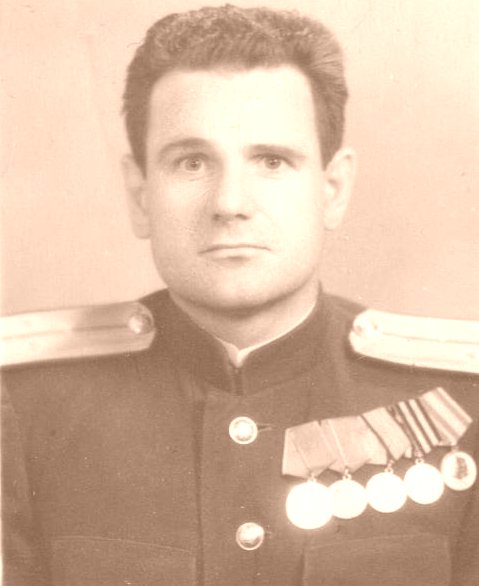
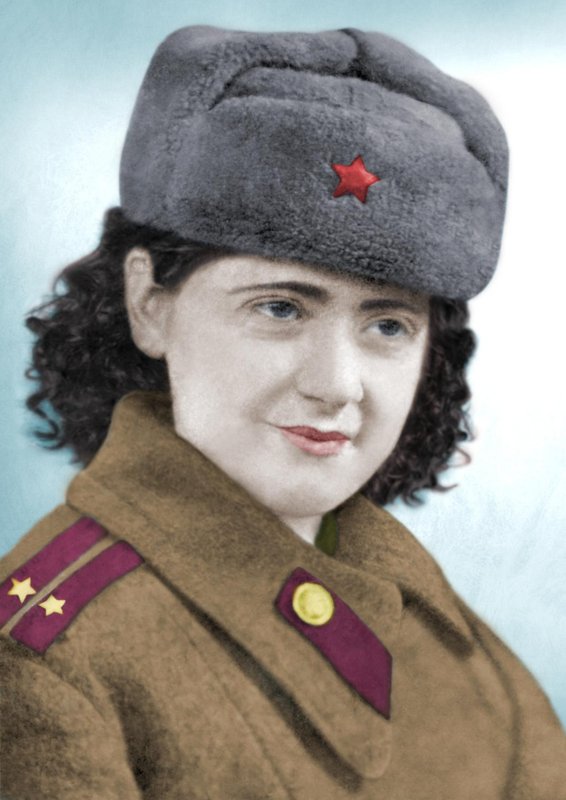
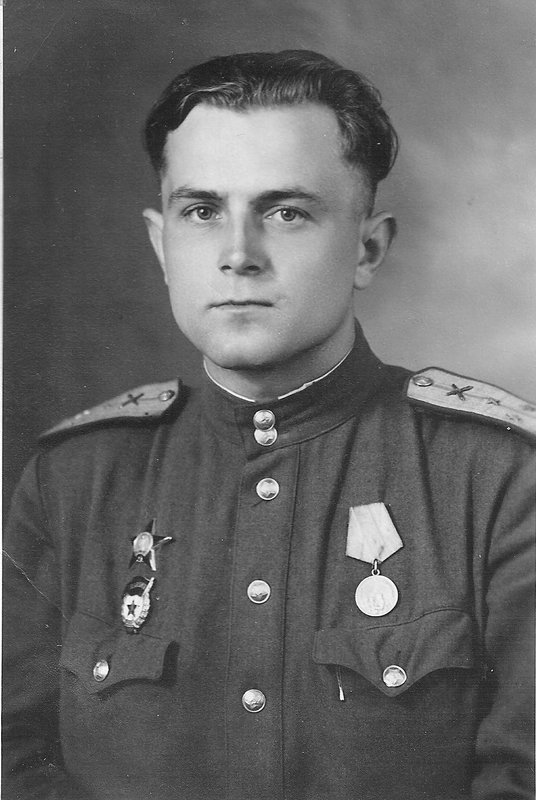
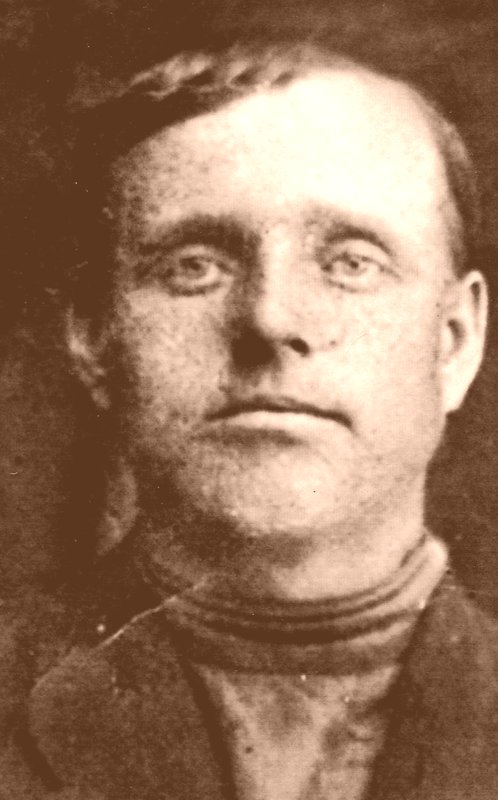
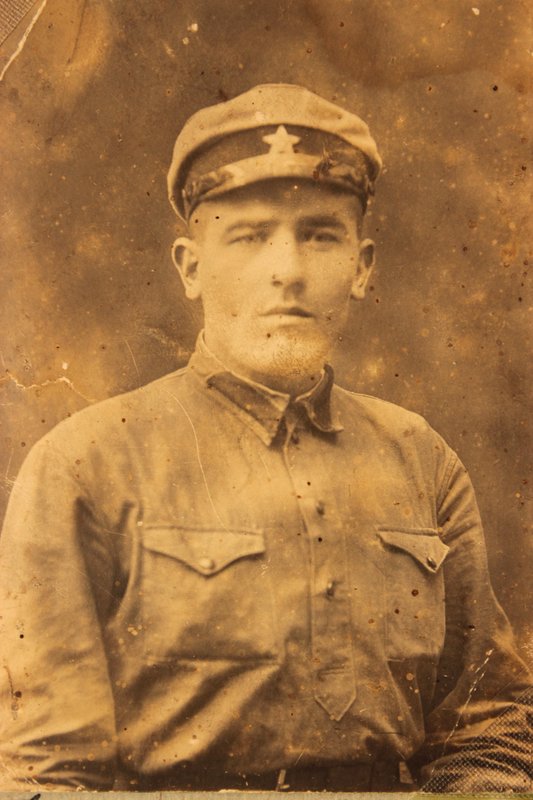
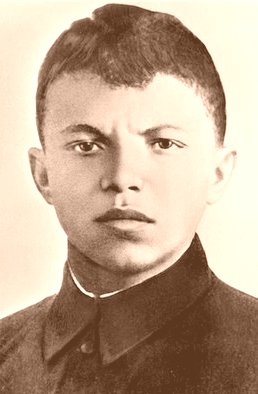
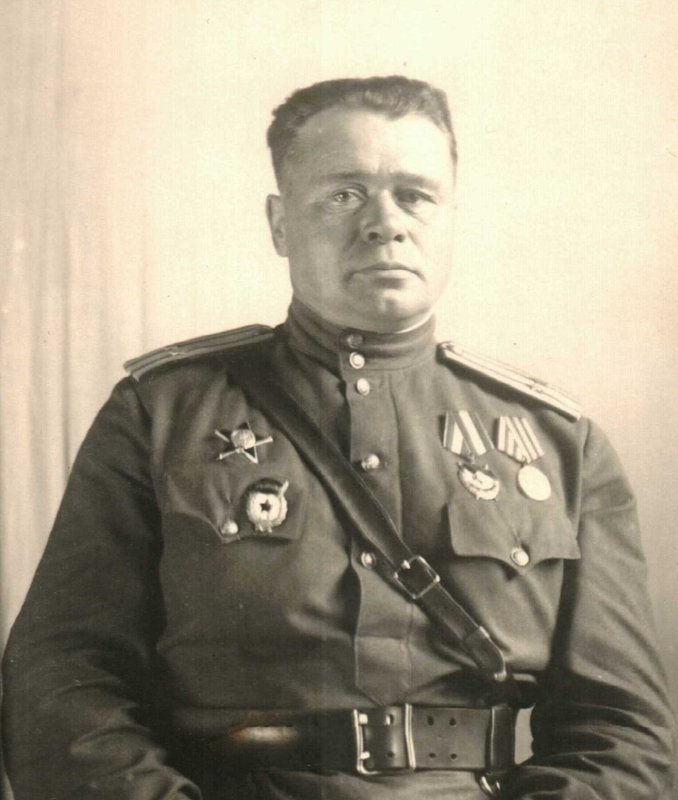
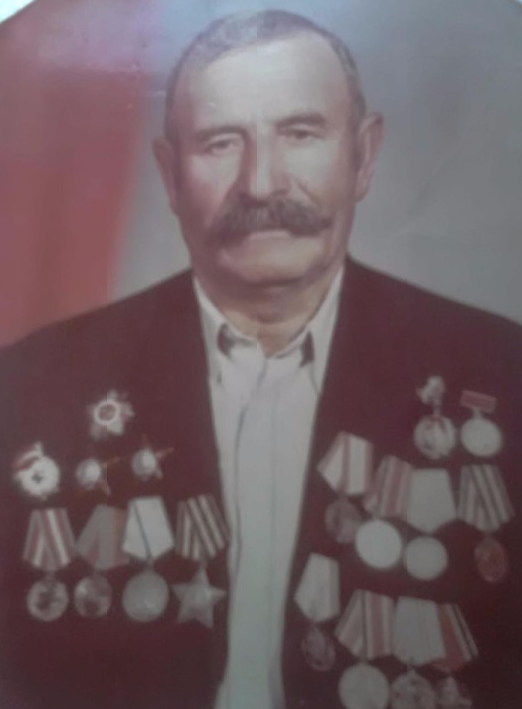
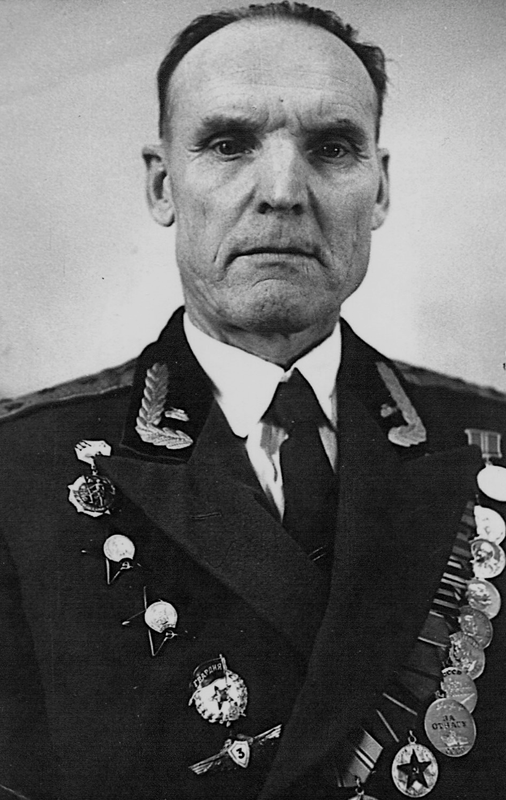
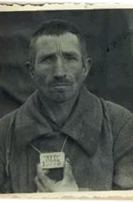
Alexander Matrosov
History:_x000D_
Alexander Matrosov (February 5, 1924 – February 27, 1943) — Hhero of the Soviet Union (19 June 1943), soldier, machine-gunner of the 2nd Rifle Battalion of the 91st Separate Siberian Volunteer Brigade named after Joseph Stalin, the 6th Stalin Siberian Volunteer Rifle Corps of Operational Group of General Gerasimov of the Kalinin Front, a member of the Komsomol. He died at the age of 19, closing the embrasure of the German bunker with his chest, allowing the soldiers of his platoon to attack the stronghold. His feat was widely covered in Newspapers, magazines, literature, and movies and became a stable expression in Russian ("Matrosov's feat")._x000D_
According to the official version, Alexander Matrosov was born on February 5, 1924 in the city of Ekaterinoslav in the Ekaterinoslav province of the Ukrainian SSR (later - Dnepropetrovsk; now the city of Dnipro, the administrative center of the Dnepropetrovsk Region of Ukraine)._x000D_
According to another version, Matrosov's real name is Shakiryan Yunusovich Mukhamedyanov, and his birthplace is the village of Kunakbaevo in the Tamyan — Katai Canton of the Bashkir ASSR (now Uchalinsky District of the Republic of Bashkortostan). According to this version, he took the surname of Matrosov when he was a street child (when he run away from home after his father's new marriage) and registered under it when he was assigned to an orphanage. _x000D_
There is also a version that Alexander Matrosov was born in the village of Vysokiy Kolok in the Stavropol District of the Samara province (now the territory of the Novomalyklinsky District of the Ulyanovsk Region). Sasha's mother, left with three children without a husband, in 1935 gave him to the Melekess children's home to save him from starvation. From there, he was transferred to the Ivanovo children's home in the Mainsky District of the Ulyanovsk region._x000D_
The official response from the internal Affairs bodies of Ukraine indicates that in 1924, none of the Dnepropetrovsk registry Offices registered the birth of Alexander Matrosov._x000D_
Alexander Matrosov was convicted under article 162 of the criminal code of the RSFSR "Secret theft of other people's property (theft)". The teenager was taken to the regime colony in the village of Ivanovka in the Mainsky District of the Ulyanovsk Region on February 7, 1938. After finishing school in the Ivanovo orphanage, in 1939 Matrosov was sent to the city of Kuibyshev to work as a shaper at plant #9 (motor vehicle repair plant), but soon he escaped from there._x000D_
On October 8, 1940, the people's court of the 3rd District of the Frunzenskiy District of Saratov convicted Matrosov under part 2 of article 192 "a" of the criminal code of the RSFSR and sentenced him to two years in prison. He was found guilty of continuing to stay in the city despite being given a subscription to leave Saratov at 24 hours. Matrosov was sent to the Ufa children's labor colony #2 under the NKVD of the USSR, where he arrived on April 21, 1941. At the end of April 1941, a large group of juvenile inmates was discovered to prepare an escape (about 50 people, including Matrosov — but only the organizer was convicted). He worked as an apprentice locksmith until March 5, 1942. After the beginning of the Great Patriotic War, the colony factory began producing defense products (special capping). On March 15, 1942, he was appointed assistant educator and elected Chairman of the Central conflict Commission of the colony._x000D_
On May 5, 1967, the Judicial Board of the Supreme court of the USSR overturned the verdict of October 8, 1940._x000D_
After the beginning of the Great Patriotic War, Matrosov repeatedly made written requests to send him to the front. In September 1942, he was drafted by the Kirov District Military Commissariat of Ufa into the Workers'and Peasants' Red Army and began his training at the Krasnokholm Rifle School, stationed in the Chkalovskiy (now Orenburg) Region — from September 30, as a cadet of the 5th company. In November 1942, he joined the Komsomol. In December 1942, together with the cadets of the school, he was sent to the assembly point in the city of Astrakhan (or to the village of Kharabali in the Astrakhan Region) for training._x000D_
On January 18, 1943, from Platovka station in the Chkalov region, together with cadets of the school, as a volunteer in the marching company went to the Kalinin front. On February 12, 1943, Matrosov arrived at the unit, served in the 2nd Separate Rifle Battalion (according to other sources, in the 1st Company of the 3rd Battalion) of the 91st Separate Siberian Volunteer Brigade named after I. Stalin (later the 254th Guards Rifle Regiment of the 56th Guards Rifle Division, Kalinin Front), was elected a group commander and appointed a platoon agitator. On February 15, 1943, at 18:00, the 91st Brigade marched from Zemtsy station in the direction of Loknya. Since February 25, 1943 at the front._x000D_
On February 25, 1943, the 91st Brigade conducted offensive with two battalions of battles for the settlements of Chernoe and Brutovo. On February 26, 1943, the 91st Brigade, part of the forces of the 2nd Battalion, went to the area of the village of Pleten (Severnye), with the task to destroy the enemy defending the villages of Chernushki and Chernaya, and capture them by hitting its flank. The 4th Battalion was advancing on Chernushki from the front._x000D_
On February 27, 1943, Alexander Matrosov died heroically in a battle near the village of Chernushki in the Loknyanskiy District of the Kalinin Region (from October 2, 1957 — Pskov region)._x000D_
On February 27, 1943, the 2nd Battalion was ordered to attack a strongpoint near the village of Chernushki. As soon as the Soviet soldiers came to the forest and reached its edge, they came under heavy enemy fire — three machine guns in bunkers blocked the approaches to the village. Two-man assault teams were sent to suppress the firing points. One machine gun was suppressed by an assault group of submachine gunners and armor-breakers; the second bunker was destroyed by another group of armor-breakers, but the machine gun from the third bunker continued to fire through the entire valley in front of the village. Attempts to suppress it were unsuccessful. Then the Red Army soldiers Peter Ogurtsov (born 1920, Balakovo, Saratov Region) and Alexander Matrosov crawled towards the bunker. On the approaches to the bunker, Ogurtsov was seriously wounded, and Matrosov decided to complete the operation alone. He approached the embrasure from the flank and threw in two grenades. The machine gun fell silent. But as soon as the soldiers rose to the attack, fire from the bunker was opened again. Then Matrosov stood up and abruptly rushed to the bunker and his body covered embrasure. At the cost of his life, he contributed to the unit's combat mission._x000D_
Alexander Matrosov was buried there in the village, and in 1948 his ashes were reburied in the city of Velikiye Luki (from October 2, 1957 — Pskov region)._x000D_
First Lieutenant Peter Volkov (1906 - February 27, 1943), instructor of the Political Department of the 91st Separate Rifle Brigade, reported to the Political Department about the feat of Alexander Matrosov._x000D_
As a result of persistent fighting on February 27, 1943, parts of the 91st brigade occupied three localities: Chernushka Severnaya, Chernushka Yuzhnaya, Chernoye Severnoye and Vysota with the mark "85.4". On February 28, there were battles for Chernoye, Yuzhnoye and Brutovo. Losses of the brigade for February 27, 1943: 1327 people, of them killed: command staff - 18, Junior command staff - 80, enlisted personnel - 313. By the end of the day on February 28, 1943, the offensive at Loknya was stopped. Loknya was libirated a year later on February 26, 1944._x000D_
By the Decree of the Presidium of the Supreme Soviet on 19 June 1943 the Red Army soldier Alexander Matrosov was posthumously awarded the title of Hero of the Soviet Union "For exemplary performance of command assignments at the front against the Nazi invaders and displaying courage and heroism"._x000D_
In the order of the People's Commissariat of defense of the USSR #162 of September 8, 1943, it was written: "the Great feat of comrade Matrosov should serve as an example of military valor and heroism for all soldiers of the Red Army." By the same order, the name of Alexander Matrosov was assigned to the 254th Guards Rifle Regiment, and he was permanently enrolled in the lists of the 1st Company of this regiment._x000D_
Alexander Matrosov became the first Soviet soldier to be permanently enlisted in the military unit._x000D_
Rewards: Hero of the Soviet Union (posthumously) - awarded on June 19, 1943. Gold Star Medal. Order of Lenin._x000D_
Memory:_x000D_
Enlisted in the lists of military detachment #53129 MPK-332 Petropavlovsk-Kamchatskiy._x000D_
Matrosov's name was assigned to the 254th Guards Rifle Regiment of the 56th Gguards Rifle Division on September 8, 1943, and he was permanently enlisted in the lists of the 1st Company of this unit. After the end of the Great Patriotic War, the regiment was stationed in Tallinn. In 1994, the 254th Gguards Rifle Regiment named after Hero of the Soviet Union Alexander Matrosov was transferred to the city of Yelnya in the Smolensk Region and disbanded until 2000. On February 23, 2004, the 752nd Motorized Rifle Regiment of the 3rd Motorized Rifle Division of constant readiness in Nizhniy Novgorod was renamed the 254th Guards Motorized Rifle Regiment named after Alexander Matrosov, then transformed into the 9th Separate Motorized Rifle Brigade, which was disbanded by 2010. Formed in 2019, the Guards Motorized Rrifle Regiment of the Western Military District, announced as the successor of the 254th Guards Rifle Regiment, was awarded the honorary name "Alexander Matrosov" in 2020._x000D_
A memorial complex has been erected at the site of Alexander Matrosov's death._x000D_
Monuments to Alexander Matrosov are installed in the following cities and localities:_x000D_
Anzhero-Sudzhensk, Barnaul, Velikiye Luki, Dnepropetrovsk, Dyurtyuli, Isheevka - in one of the village parks, Ishimbay - In the Central Park of Culture and Recreation named after A. Matrosov (the third version of the monument), Koryazhma, Krasnodar - at school No. 14, which bears his name, Krasnoyarsk - Kurgan - at the former Matrosov cinema (now Toyota technical center), monument (1987, sculptor G. Levitskaya), Oktyabrsky - monument to Alexander Matrosov in the village of Naryshevo, a street in the city is named in his honor, Salavat - bust of Matrosov (1961), sculptor Eidlin L. Yu., Saint Petersburg (in Moscow's Victory Park and Alexander Matrosov Street), Sibay, Republic of Bashkortostan, bust, Sevastopol (monument in Balaklava), Tolyatti, Ulyanovsk.
Alexander Matrosov
History:_x000D_
Alexander Matrosov (February 5, 1924 – February 27, 1943) — Hhero of the Soviet Union (19 June 1943), soldier, machine-gunner of the 2nd Rifle Battalion of the 91st Separate Siberian Volunteer Brigade named after Joseph Stalin, the 6th Stalin Siberian Volunteer Rifle Corps of Operational Group of General Gerasimov of the Kalinin Front, a member of the Komsomol. He died at the age of 19, closing the embrasure of the German bunker with his chest, allowing the soldiers of his platoon to attack the stronghold. His feat was widely covered in Newspapers, magazines, literature, and movies and became a stable expression in Russian ("Matrosov's feat")._x000D_
According to the official version, Alexander Matrosov was born on February 5, 1924 in the city of Ekaterinoslav in the Ekaterinoslav province of the Ukrainian SSR (later - Dnepropetrovsk; now the city of Dnipro, the administrative center of the Dnepropetrovsk Region of Ukraine)._x000D_
According to another version, Matrosov's real name is Shakiryan Yunusovich Mukhamedyanov, and his birthplace is the village of Kunakbaevo in the Tamyan — Katai Canton of the Bashkir ASSR (now Uchalinsky District of the Republic of Bashkortostan). According to this version, he took the surname of Matrosov when he was a street child (when he run away from home after his father's new marriage) and registered under it when he was assigned to an orphanage. _x000D_
There is also a version that Alexander Matrosov was born in the village of Vysokiy Kolok in the Stavropol District of the Samara province (now the territory of the Novomalyklinsky District of the Ulyanovsk Region). Sasha's mother, left with three children without a husband, in 1935 gave him to the Melekess children's home to save him from starvation. From there, he was transferred to the Ivanovo children's home in the Mainsky District of the Ulyanovsk region._x000D_
The official response from the internal Affairs bodies of Ukraine indicates that in 1924, none of the Dnepropetrovsk registry Offices registered the birth of Alexander Matrosov._x000D_
Alexander Matrosov was convicted under article 162 of the criminal code of the RSFSR "Secret theft of other people's property (theft)". The teenager was taken to the regime colony in the village of Ivanovka in the Mainsky District of the Ulyanovsk Region on February 7, 1938. After finishing school in the Ivanovo orphanage, in 1939 Matrosov was sent to the city of Kuibyshev to work as a shaper at plant #9 (motor vehicle repair plant), but soon he escaped from there._x000D_
On October 8, 1940, the people's court of the 3rd District of the Frunzenskiy District of Saratov convicted Matrosov under part 2 of article 192 "a" of the criminal code of the RSFSR and sentenced him to two years in prison. He was found guilty of continuing to stay in the city despite being given a subscription to leave Saratov at 24 hours. Matrosov was sent to the Ufa children's labor colony #2 under the NKVD of the USSR, where he arrived on April 21, 1941. At the end of April 1941, a large group of juvenile inmates was discovered to prepare an escape (about 50 people, including Matrosov — but only the organizer was convicted). He worked as an apprentice locksmith until March 5, 1942. After the beginning of the Great Patriotic War, the colony factory began producing defense products (special capping). On March 15, 1942, he was appointed assistant educator and elected Chairman of the Central conflict Commission of the colony._x000D_
On May 5, 1967, the Judicial Board of the Supreme court of the USSR overturned the verdict of October 8, 1940._x000D_
After the beginning of the Great Patriotic War, Matrosov repeatedly made written requests to send him to the front. In September 1942, he was drafted by the Kirov District Military Commissariat of Ufa into the Workers'and Peasants' Red Army and began his training at the Krasnokholm Rifle School, stationed in the Chkalovskiy (now Orenburg) Region — from September 30, as a cadet of the 5th company. In November 1942, he joined the Komsomol. In December 1942, together with the cadets of the school, he was sent to the assembly point in the city of Astrakhan (or to the village of Kharabali in the Astrakhan Region) for training._x000D_
On January 18, 1943, from Platovka station in the Chkalov region, together with cadets of the school, as a volunteer in the marching company went to the Kalinin front. On February 12, 1943, Matrosov arrived at the unit, served in the 2nd Separate Rifle Battalion (according to other sources, in the 1st Company of the 3rd Battalion) of the 91st Separate Siberian Volunteer Brigade named after I. Stalin (later the 254th Guards Rifle Regiment of the 56th Guards Rifle Division, Kalinin Front), was elected a group commander and appointed a platoon agitator. On February 15, 1943, at 18:00, the 91st Brigade marched from Zemtsy station in the direction of Loknya. Since February 25, 1943 at the front._x000D_
On February 25, 1943, the 91st Brigade conducted offensive with two battalions of battles for the settlements of Chernoe and Brutovo. On February 26, 1943, the 91st Brigade, part of the forces of the 2nd Battalion, went to the area of the village of Pleten (Severnye), with the task to destroy the enemy defending the villages of Chernushki and Chernaya, and capture them by hitting its flank. The 4th Battalion was advancing on Chernushki from the front._x000D_
On February 27, 1943, Alexander Matrosov died heroically in a battle near the village of Chernushki in the Loknyanskiy District of the Kalinin Region (from October 2, 1957 — Pskov region)._x000D_
On February 27, 1943, the 2nd Battalion was ordered to attack a strongpoint near the village of Chernushki. As soon as the Soviet soldiers came to the forest and reached its edge, they came under heavy enemy fire — three machine guns in bunkers blocked the approaches to the village. Two-man assault teams were sent to suppress the firing points. One machine gun was suppressed by an assault group of submachine gunners and armor-breakers; the second bunker was destroyed by another group of armor-breakers, but the machine gun from the third bunker continued to fire through the entire valley in front of the village. Attempts to suppress it were unsuccessful. Then the Red Army soldiers Peter Ogurtsov (born 1920, Balakovo, Saratov Region) and Alexander Matrosov crawled towards the bunker. On the approaches to the bunker, Ogurtsov was seriously wounded, and Matrosov decided to complete the operation alone. He approached the embrasure from the flank and threw in two grenades. The machine gun fell silent. But as soon as the soldiers rose to the attack, fire from the bunker was opened again. Then Matrosov stood up and abruptly rushed to the bunker and his body covered embrasure. At the cost of his life, he contributed to the unit's combat mission._x000D_
Alexander Matrosov was buried there in the village, and in 1948 his ashes were reburied in the city of Velikiye Luki (from October 2, 1957 — Pskov region)._x000D_
First Lieutenant Peter Volkov (1906 - February 27, 1943), instructor of the Political Department of the 91st Separate Rifle Brigade, reported to the Political Department about the feat of Alexander Matrosov._x000D_
As a result of persistent fighting on February 27, 1943, parts of the 91st brigade occupied three localities: Chernushka Severnaya, Chernushka Yuzhnaya, Chernoye Severnoye and Vysota with the mark "85.4". On February 28, there were battles for Chernoye, Yuzhnoye and Brutovo. Losses of the brigade for February 27, 1943: 1327 people, of them killed: command staff - 18, Junior command staff - 80, enlisted personnel - 313. By the end of the day on February 28, 1943, the offensive at Loknya was stopped. Loknya was libirated a year later on February 26, 1944._x000D_
By the Decree of the Presidium of the Supreme Soviet on 19 June 1943 the Red Army soldier Alexander Matrosov was posthumously awarded the title of Hero of the Soviet Union "For exemplary performance of command assignments at the front against the Nazi invaders and displaying courage and heroism"._x000D_
In the order of the People's Commissariat of defense of the USSR #162 of September 8, 1943, it was written: "the Great feat of comrade Matrosov should serve as an example of military valor and heroism for all soldiers of the Red Army." By the same order, the name of Alexander Matrosov was assigned to the 254th Guards Rifle Regiment, and he was permanently enrolled in the lists of the 1st Company of this regiment._x000D_
Alexander Matrosov became the first Soviet soldier to be permanently enlisted in the military unit._x000D_
Rewards: Hero of the Soviet Union (posthumously) - awarded on June 19, 1943. Gold Star Medal. Order of Lenin._x000D_
Memory:_x000D_
Enlisted in the lists of military detachment #53129 MPK-332 Petropavlovsk-Kamchatskiy._x000D_
Matrosov's name was assigned to the 254th Guards Rifle Regiment of the 56th Gguards Rifle Division on September 8, 1943, and he was permanently enlisted in the lists of the 1st Company of this unit. After the end of the Great Patriotic War, the regiment was stationed in Tallinn. In 1994, the 254th Gguards Rifle Regiment named after Hero of the Soviet Union Alexander Matrosov was transferred to the city of Yelnya in the Smolensk Region and disbanded until 2000. On February 23, 2004, the 752nd Motorized Rifle Regiment of the 3rd Motorized Rifle Division of constant readiness in Nizhniy Novgorod was renamed the 254th Guards Motorized Rifle Regiment named after Alexander Matrosov, then transformed into the 9th Separate Motorized Rifle Brigade, which was disbanded by 2010. Formed in 2019, the Guards Motorized Rrifle Regiment of the Western Military District, announced as the successor of the 254th Guards Rifle Regiment, was awarded the honorary name "Alexander Matrosov" in 2020._x000D_
A memorial complex has been erected at the site of Alexander Matrosov's death._x000D_
Monuments to Alexander Matrosov are installed in the following cities and localities:_x000D_
Anzhero-Sudzhensk, Barnaul, Velikiye Luki, Dnepropetrovsk, Dyurtyuli, Isheevka - in one of the village parks, Ishimbay - In the Central Park of Culture and Recreation named after A. Matrosov (the third version of the monument), Koryazhma, Krasnodar - at school No. 14, which bears his name, Krasnoyarsk - Kurgan - at the former Matrosov cinema (now Toyota technical center), monument (1987, sculptor G. Levitskaya), Oktyabrsky - monument to Alexander Matrosov in the village of Naryshevo, a street in the city is named in his honor, Salavat - bust of Matrosov (1961), sculptor Eidlin L. Yu., Saint Petersburg (in Moscow's Victory Park and Alexander Matrosov Street), Sibay, Republic of Bashkortostan, bust, Sevastopol (monument in Balaklava), Tolyatti, Ulyanovsk.
0 comment



2026 © Russian Military Historical Society Developed by Jetmix