


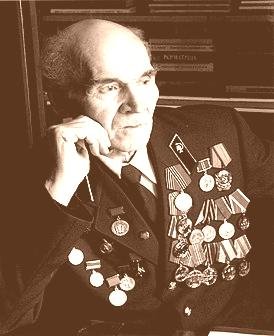
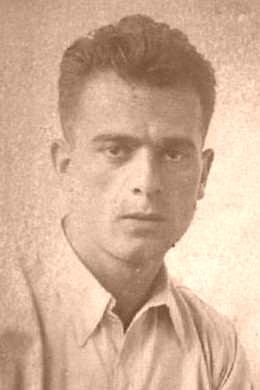
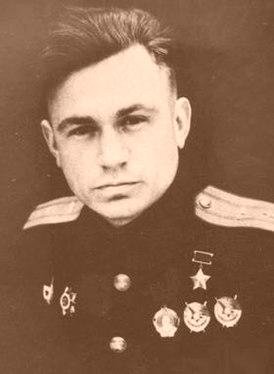

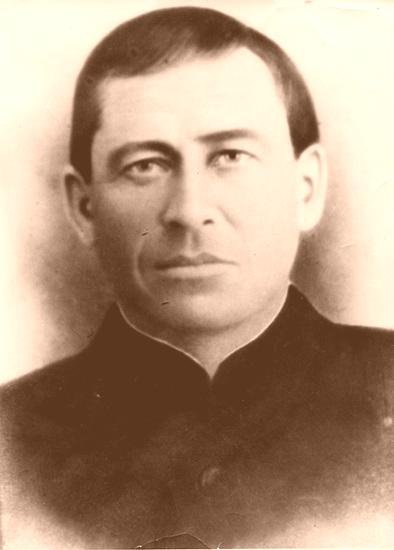


Efrem Kovalev
Veteran remembered:
- I was born in Buryat-Mongolia, in the village of Bolshoy Kunaley, Tarbagatay area, Verkhneudinsky District, Irkutsk Province. It was a hard time, half-starved, and there was only one brother left alive besides me, and all my brothers and sisters died in infancy.
Our parents were simple peasants. My father fought in the First World War and the Civil War, and had many awards. My maternal uncle Afanasy was a full knight of St. George Order - he had all four crosses. At the time of collectivization, like everyone else, our family, with the hope of a better life, joined the collective farm.
That was why we, children, have learned from childhood what hard peasant labor was. My brother and I had no time to study, but of course we had a great desire.
In the early 1930s, when a steam locomotive and wagon factory was being built in Ulan-Ude, formerly Verkhneudinsk, I was sent to the city. I remember they put me up with an old woman, and I went to the factory to work, making nails out of wire.
And then they started to recruit students to the Postyshev Technical School, to train specialists. There I gradually learned to write and count. After graduation, I became a turner of the fourth class, and when the factory was launched in 1934, I got a job there as a turner. The work then was not what it is now: everything is automatic, but then the machines were simple. There was no ventilation in the workshops, the rooms were tightly closed. It was especially stuffy where the locomotives were being dismantled.
- How did you get into the war?
- One day a friend of mine called me to the garage and set me up as a greaser. Over time, my older comrades "coached" me, taught me to carefully handle equipment, and I became a locksmith of the fifth category. Ie graduated from the driver's course in 1938, and got behind the wheel of a brand-new "lorry".
Then the war broke out on Khalkhin-Gol! By that time I was considered an experienced driver. Although I was a pre-conscript, I had already gained experience,. Therefore, I was taken to the front without further ado: all the trucks were registered.
As soon as the fighting in the East was over, I returned home and was left among the civilian specialists- "until further notice." The summons came in the winter of 1939 to report urgently to the military enlistment office. The next morning I said a hasty goodbye to my parents, kissed my old mother, and my brother brought me to the military enlistment office. We, trucks and tractors drivers, about twenty people, were put in a military train and brought to Leningrad in fifteen days. From there, we were sent to the city of Pushkin, to Tsarskoe Selo, right near the Catherine Palace.
War…
We, new recruits, were enlisted in the training battalion for accelerated training of tank drivers of the 49th Tank Regiment. Everything was strictly according to the regulations, an army is an army. After passing the "course of the young soldier" I was transferred to a summer camp a kilometer from the Catherine Palace. We ran to its gates while trainings. Even in difficult field conditions, we were not discouraged, we were young, cheerful... (sighs)
- Do you remember when you heard about the beginning of the war?
- I remember it was Saturday, some of us got leave to go to the city, some were going to Leningrad for an excursion… Before the morning - alarm! What was it? The war had begun! I could not believe it… In the morning on Sunday, instead of rest - "Crews, to the machins."
And, let's go. We reached the positions determined by the commanders-near the village of Luga by the evening of the 22nd. So I joined the defense of Leningrad.
Our tank was hit in a skirmish with the Germans, already on September 5, the tank caught fire, but the guys, fortunately, managed to jump out. There was a hole in the ground filled with water nearby, and we rushed there to extinguish the burning suits. However, my face was a little burned...
A little later, we received a new BT-5 tank, the most popular one then, but not too reliable.
- Tell us how were you captured?
What was there to tell? We took up the defense, dug in and waited for the attack. The order came - soon the offensive. Ther were impassable swamps on one side of the positions. From there the enemy was not expected. Nevertheless, the Fritzes set up a crossing there and hit us right in the rear. In this battle, our tank was hit. A shell exploded inside it… Our tanks burned like candles in a Church, because BT-5 worked on aviation kerosene. How little - and flashed! Burned just terribly! I came to my senses already at the Germans, and I don't remember how, what, where I am....
The main thing was to survive…
As it turned out later, the shrapnel hit my head, smashed my face, lips, and teeth… But the Fritz did not stand on ceremony with prisoners - they treated them worse than cattle, they killed, not counting. More or less strong people were driven to mine clearance: accompanied by a submachine gunner, they were driven to the mines. An explosion means you found a mine, destroyed it. Twenty were taken away, and a dozen were brought in. They took a lot of prisoners, so they didn't count them.
Much later, I learned that our regiment was completely destroyed by the end of September 1941. Almost immediately, the prisoners were taken to Lithuania, to the rear. Once the peasants began to recruit laborers from prisoners. First of all, more or less healthy and hardy were selected. I was already on the verge of death… But a fellow countryman from Irkutsk helped me. He wrote me down as one of those who went to work as farm labourers. Otherwise, a death camp...
Then I and a few friends were suddenly taken away and taken to the West German city of Essen, to the coal mines. They gave us 500 grams of white bread made from sawdust, and one and a half liters of Balanda - a spoonful of flour mixed with water. Imagine what it's like to work on such a ration, to extract coal?! The mine was 715 meters deep, and over a meter of rock layer… People were dying right there…
- When did liberation come?
- On the eighth of April 1945. This was the day I would remember until the day I die, this was my second birthday. We were liberated by the allied forces. Only by a miracle the prisoners were not sent to the crematorium.
Soon we, the survivors, were handed over to the Soviet side, and they were sent, as it was supposed to be, to the filtration camp. The screen of verification was tough – at the slightest doubt, the special forces did not hesitate to send guys to camps for "enemies of the people" and traitors. Things have happened. I was lucky. They gave me the conclusion "Has the right to continue service".
According to the law of conscience
I served as a driver in Berlin, since I was able to keep my driver's license in captivity. After being discharged in 1946, I returned to my homeland and got a job as a driver in the regional party Committee of Buryatia.
Over the years, I have driven high-ranking officials and dozens of party leaders. I vividly remember the faces of the guests of the capital of the Republic. I was a driver for Chinese Defense Minister Jude, Mongolian leader Tsedenbal, triple Hero of the Soviet Union Alexander Pokryshkin, and famous cosmonaut Herman Titov.
Efrem Kovalev
Veteran remembered:
- I was born in Buryat-Mongolia, in the village of Bolshoy Kunaley, Tarbagatay area, Verkhneudinsky District, Irkutsk Province. It was a hard time, half-starved, and there was only one brother left alive besides me, and all my brothers and sisters died in infancy.
Our parents were simple peasants. My father fought in the First World War and the Civil War, and had many awards. My maternal uncle Afanasy was a full knight of St. George Order - he had all four crosses. At the time of collectivization, like everyone else, our family, with the hope of a better life, joined the collective farm.
That was why we, children, have learned from childhood what hard peasant labor was. My brother and I had no time to study, but of course we had a great desire.
In the early 1930s, when a steam locomotive and wagon factory was being built in Ulan-Ude, formerly Verkhneudinsk, I was sent to the city. I remember they put me up with an old woman, and I went to the factory to work, making nails out of wire.
And then they started to recruit students to the Postyshev Technical School, to train specialists. There I gradually learned to write and count. After graduation, I became a turner of the fourth class, and when the factory was launched in 1934, I got a job there as a turner. The work then was not what it is now: everything is automatic, but then the machines were simple. There was no ventilation in the workshops, the rooms were tightly closed. It was especially stuffy where the locomotives were being dismantled.
- How did you get into the war?
- One day a friend of mine called me to the garage and set me up as a greaser. Over time, my older comrades "coached" me, taught me to carefully handle equipment, and I became a locksmith of the fifth category. Ie graduated from the driver's course in 1938, and got behind the wheel of a brand-new "lorry".
Then the war broke out on Khalkhin-Gol! By that time I was considered an experienced driver. Although I was a pre-conscript, I had already gained experience,. Therefore, I was taken to the front without further ado: all the trucks were registered.
As soon as the fighting in the East was over, I returned home and was left among the civilian specialists- "until further notice." The summons came in the winter of 1939 to report urgently to the military enlistment office. The next morning I said a hasty goodbye to my parents, kissed my old mother, and my brother brought me to the military enlistment office. We, trucks and tractors drivers, about twenty people, were put in a military train and brought to Leningrad in fifteen days. From there, we were sent to the city of Pushkin, to Tsarskoe Selo, right near the Catherine Palace.
War…
We, new recruits, were enlisted in the training battalion for accelerated training of tank drivers of the 49th Tank Regiment. Everything was strictly according to the regulations, an army is an army. After passing the "course of the young soldier" I was transferred to a summer camp a kilometer from the Catherine Palace. We ran to its gates while trainings. Even in difficult field conditions, we were not discouraged, we were young, cheerful... (sighs)
- Do you remember when you heard about the beginning of the war?
- I remember it was Saturday, some of us got leave to go to the city, some were going to Leningrad for an excursion… Before the morning - alarm! What was it? The war had begun! I could not believe it… In the morning on Sunday, instead of rest - "Crews, to the machins."
And, let's go. We reached the positions determined by the commanders-near the village of Luga by the evening of the 22nd. So I joined the defense of Leningrad.
Our tank was hit in a skirmish with the Germans, already on September 5, the tank caught fire, but the guys, fortunately, managed to jump out. There was a hole in the ground filled with water nearby, and we rushed there to extinguish the burning suits. However, my face was a little burned...
A little later, we received a new BT-5 tank, the most popular one then, but not too reliable.
- Tell us how were you captured?
What was there to tell? We took up the defense, dug in and waited for the attack. The order came - soon the offensive. Ther were impassable swamps on one side of the positions. From there the enemy was not expected. Nevertheless, the Fritzes set up a crossing there and hit us right in the rear. In this battle, our tank was hit. A shell exploded inside it… Our tanks burned like candles in a Church, because BT-5 worked on aviation kerosene. How little - and flashed! Burned just terribly! I came to my senses already at the Germans, and I don't remember how, what, where I am....
The main thing was to survive…
As it turned out later, the shrapnel hit my head, smashed my face, lips, and teeth… But the Fritz did not stand on ceremony with prisoners - they treated them worse than cattle, they killed, not counting. More or less strong people were driven to mine clearance: accompanied by a submachine gunner, they were driven to the mines. An explosion means you found a mine, destroyed it. Twenty were taken away, and a dozen were brought in. They took a lot of prisoners, so they didn't count them.
Much later, I learned that our regiment was completely destroyed by the end of September 1941. Almost immediately, the prisoners were taken to Lithuania, to the rear. Once the peasants began to recruit laborers from prisoners. First of all, more or less healthy and hardy were selected. I was already on the verge of death… But a fellow countryman from Irkutsk helped me. He wrote me down as one of those who went to work as farm labourers. Otherwise, a death camp...
Then I and a few friends were suddenly taken away and taken to the West German city of Essen, to the coal mines. They gave us 500 grams of white bread made from sawdust, and one and a half liters of Balanda - a spoonful of flour mixed with water. Imagine what it's like to work on such a ration, to extract coal?! The mine was 715 meters deep, and over a meter of rock layer… People were dying right there…
- When did liberation come?
- On the eighth of April 1945. This was the day I would remember until the day I die, this was my second birthday. We were liberated by the allied forces. Only by a miracle the prisoners were not sent to the crematorium.
Soon we, the survivors, were handed over to the Soviet side, and they were sent, as it was supposed to be, to the filtration camp. The screen of verification was tough – at the slightest doubt, the special forces did not hesitate to send guys to camps for "enemies of the people" and traitors. Things have happened. I was lucky. They gave me the conclusion "Has the right to continue service".
According to the law of conscience
I served as a driver in Berlin, since I was able to keep my driver's license in captivity. After being discharged in 1946, I returned to my homeland and got a job as a driver in the regional party Committee of Buryatia.
Over the years, I have driven high-ranking officials and dozens of party leaders. I vividly remember the faces of the guests of the capital of the Republic. I was a driver for Chinese Defense Minister Jude, Mongolian leader Tsedenbal, triple Hero of the Soviet Union Alexander Pokryshkin, and famous cosmonaut Herman Titov.
0 comment




2026 © Russian Military Historical Society Developed by Jetmix