

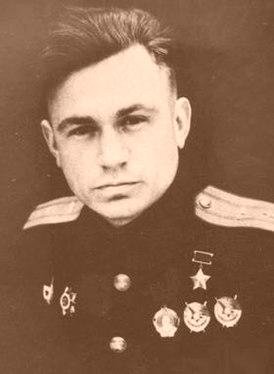


Karelin Peter Grigorievich
""He was born on March 29, 1922 in the village Sretensk Transbaikal Province (now the city of Transbaikal region), in a family of workers. As a child he moved with his family to Kazakhstan. He graduated from high school in the village of Charsk (now the city of Semipalatinsk region). After school, Karelin graduated from the Kustanai Civil Air Fleet School. He was going to become a pilot.
In the Red Army he was since 1941. He studied at the Omsk Aviation School. But in 1942, the whole course was sent to the front in the infantry, and Karelin got into the courses of junior lieutenants, which he graduated from in the same year of 1942. He participated in the battles of the Great Patriotic War since November 1942.
Karelin's fighting way began at Stalingrad. After the encirclement of Stalingrad group of Hitlerites from the area of Kotelnikovo, group of armies ""Don"" Field Marshal Manstein began a deblocking offensive in the direction of Stalingrad. Soviet soldiers of two armies stood there to die, including the 3rd Guards Rifle Division, in the ranks of which fought a platoon leader, Junior Lieutenant Karelin. In the area of the village of Nizhne-Kumsky December 20, 1942 in a bloody battle, he was seriously injured and was hospitalized for several months.
Karelin returned to his native regiment in spring 1943, when troops were standing on the Mius River. In August-September 1943, Lieutenant Karelin of the Guards participated in the Donbas Strategic Offensive Operation. He distinguished himself in the battles for the city of Volnovakh, Donetsk region - the platoon under his command was one of the first to break into the city and took a number of important strongholds of the enemy's defense. Karelin was awarded the Order of the Red Star, and the division became known as Volnovakhskoy division.
At the end of September 1943, Karelin took part in battles in the lower reaches of the Dnieper and went to the Black Sea coast. In December 1943, he fought hard to eliminate the enemy's bridgehead on the left bank of the Dnieper near the city of Kherson. Karelin received the second Order of the Red Star and was appointed commander of the rifle company.
In February 1944, the 2nd Guards Army was redeployed to the Perekop Isthmus region. The enemy command created powerful fortifications in the northern part of Crimea. On the Perekop Isthmus, the fascist defense consisted of 2 lanes with trenches, passages, dzots, minefields and wire fence.
The offensive began on April 8, 1944. The attack of Soviet troops was preceded by powerful artillery and aviation training. In the first hours of the attack, units of the 3rd Guards Rifle Division broke through the enemy's first line of defense and reached the outskirts of Armyansk village (now the city of Krasnoperekopsk City Council of the Crimea). The Nazis desperately tried to delay the Soviet offensive and threw their reserves into the battle.
Soldiers from the 2nd Rifle Company, led by Guard Lieutenant Karelin's, were among the first to break into the front line of the Nazi defense and engage in hand-to-hand combat. On the outskirts of Armyansk, a Nazi machine gun, carefully disguised in ruins, unexpectedly opened fire on the attacking guards. The company lay down and the offensive was stopped. Karelin, trying to ease the situation, with several soldiers crawled up to the dzot from the left flank. The enemy machine gun continued to fire. Soldiers threw grenades at the dzot. The grenade explosions raised the whole company to attack, but before the attackers could take a few steps, the fascist machine gun came back to life. And then Peter Karelin rushed to the dzot and closed the embrasure with his body, ensuring at the cost of his life the successful completion of the combat mission.
By the end of April 8, 1944 the Guards completely liberated Armyansk.
By the decree of the Presidium of the Supreme Soviet of the USSR of May 16, 1944, Lieutenant Peter Grigorievich Karelin was awarded the title Hero of the Soviet Union (posthumously) for the exemplary performance of combat missions of the command at the front of the fight against the Nazi invaders and the exceptional sacrifice and heroism.
"
Karelin Peter Grigorievich
""He was born on March 29, 1922 in the village Sretensk Transbaikal Province (now the city of Transbaikal region), in a family of workers. As a child he moved with his family to Kazakhstan. He graduated from high school in the village of Charsk (now the city of Semipalatinsk region). After school, Karelin graduated from the Kustanai Civil Air Fleet School. He was going to become a pilot.
In the Red Army he was since 1941. He studied at the Omsk Aviation School. But in 1942, the whole course was sent to the front in the infantry, and Karelin got into the courses of junior lieutenants, which he graduated from in the same year of 1942. He participated in the battles of the Great Patriotic War since November 1942.
Karelin's fighting way began at Stalingrad. After the encirclement of Stalingrad group of Hitlerites from the area of Kotelnikovo, group of armies ""Don"" Field Marshal Manstein began a deblocking offensive in the direction of Stalingrad. Soviet soldiers of two armies stood there to die, including the 3rd Guards Rifle Division, in the ranks of which fought a platoon leader, Junior Lieutenant Karelin. In the area of the village of Nizhne-Kumsky December 20, 1942 in a bloody battle, he was seriously injured and was hospitalized for several months.
Karelin returned to his native regiment in spring 1943, when troops were standing on the Mius River. In August-September 1943, Lieutenant Karelin of the Guards participated in the Donbas Strategic Offensive Operation. He distinguished himself in the battles for the city of Volnovakh, Donetsk region - the platoon under his command was one of the first to break into the city and took a number of important strongholds of the enemy's defense. Karelin was awarded the Order of the Red Star, and the division became known as Volnovakhskoy division.
At the end of September 1943, Karelin took part in battles in the lower reaches of the Dnieper and went to the Black Sea coast. In December 1943, he fought hard to eliminate the enemy's bridgehead on the left bank of the Dnieper near the city of Kherson. Karelin received the second Order of the Red Star and was appointed commander of the rifle company.
In February 1944, the 2nd Guards Army was redeployed to the Perekop Isthmus region. The enemy command created powerful fortifications in the northern part of Crimea. On the Perekop Isthmus, the fascist defense consisted of 2 lanes with trenches, passages, dzots, minefields and wire fence.
The offensive began on April 8, 1944. The attack of Soviet troops was preceded by powerful artillery and aviation training. In the first hours of the attack, units of the 3rd Guards Rifle Division broke through the enemy's first line of defense and reached the outskirts of Armyansk village (now the city of Krasnoperekopsk City Council of the Crimea). The Nazis desperately tried to delay the Soviet offensive and threw their reserves into the battle.
Soldiers from the 2nd Rifle Company, led by Guard Lieutenant Karelin's, were among the first to break into the front line of the Nazi defense and engage in hand-to-hand combat. On the outskirts of Armyansk, a Nazi machine gun, carefully disguised in ruins, unexpectedly opened fire on the attacking guards. The company lay down and the offensive was stopped. Karelin, trying to ease the situation, with several soldiers crawled up to the dzot from the left flank. The enemy machine gun continued to fire. Soldiers threw grenades at the dzot. The grenade explosions raised the whole company to attack, but before the attackers could take a few steps, the fascist machine gun came back to life. And then Peter Karelin rushed to the dzot and closed the embrasure with his body, ensuring at the cost of his life the successful completion of the combat mission.
By the end of April 8, 1944 the Guards completely liberated Armyansk.
By the decree of the Presidium of the Supreme Soviet of the USSR of May 16, 1944, Lieutenant Peter Grigorievich Karelin was awarded the title Hero of the Soviet Union (posthumously) for the exemplary performance of combat missions of the command at the front of the fight against the Nazi invaders and the exceptional sacrifice and heroism.
"
0 comment



2026 © Russian Military Historical Society Developed by Jetmix