

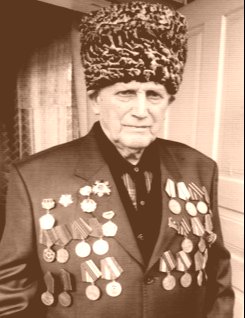
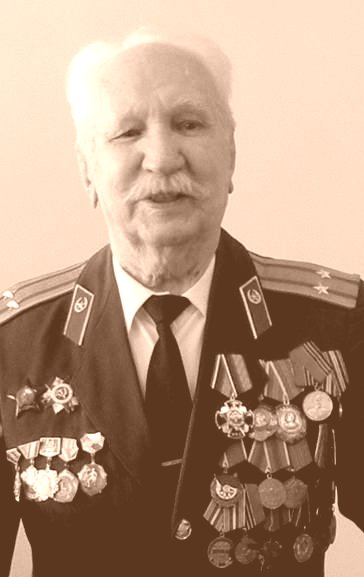


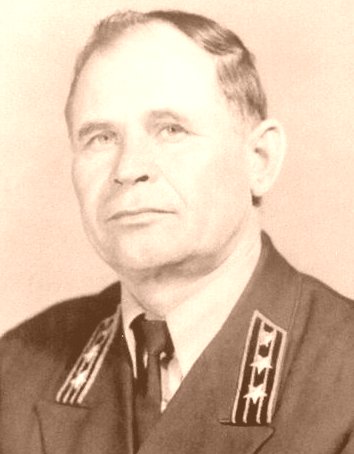
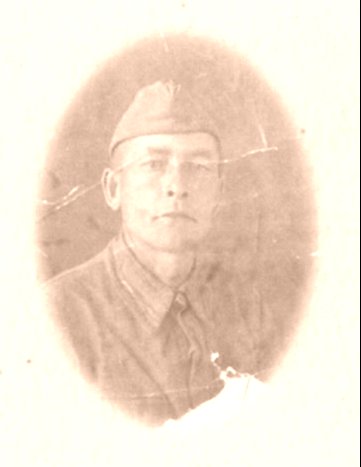


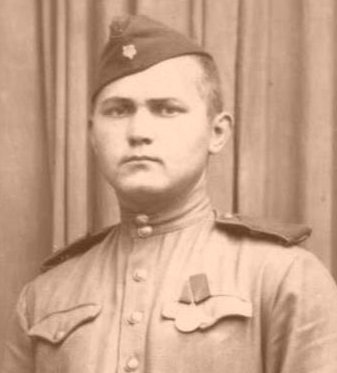
Kafanov Vladimir Andreyevich
""Vladimir Andreevich Kafanov was born in 1924 in Tashkent.
With the beginning of the Patriotic War of 1941-1945 Vladimir went to the front and in 1944 on October 14 he received the medal ""For Courage"".
Throughout the Great Patriotic War my great-grandfather kept a diary in which he described all hardships and joys of those unforgettable events.
Thus, according to his diary entries: ""3.03.43 I received a summons to appear at the Raivoencomat. At that time I was working at ""Taşselmash"" plant as a milling operator.....
4.03.43. I went to military registration and enlistment office with my belongings and was sent to radio school (5 km from Tashkent). I was in quarantine for three days. Forty people were sent to reserve regiments. I and one more comrade were given a task to go to the 368 ZSP in Samarkand. It took us a long time to get on the train......
14.03.43. my comrade left, I was left alone. I was not allowed to go into the city, because the patrols were checking documents at every corner. I had to stay at home. Every morning I went to the station but there were no tickets. I started to get desperate. After all, I could have been called a deserter. And finally on 21.03.43 I managed to seize one footstep of the restaurant car. During the road I had to suffer. I drove on the footstep (during heavy rain and wind), in the vestibule, and in the restaurant car. At 11 o'clock Samarkand time, I arrived in the city of Samarkand. I spent the night at the station and in the morning 22.03.43 went to the regiment. I did not have a chance to look at the city, because it was raining heavily, and I was in a hurry to get to the regiment. When I came to the regiment, they immediately wanted to prosecute me, because I was seven days late, but everything ended well.
23.03.43 We were taken to the bathhouse. The following uniforms were given out: torn pants, a soldier’s shirt, boots without soles and a sweatshirt. And from that day on we began to be accustomed to military service and discipline. How hard it was to get used to it! Every day for four hours we were in combat training. The rest of the time we were engaged in tactics and other disciplines. But the most attention was paid to combat training. We were taught to walk 10 people in a row accompanied by a brass band. We were preparing for the parade on May 1. The feeding was very bad. Borscht with beet leaves was cooked for lunch. We were very hungry and that is why we all wanted to get out to the front as soon as possible. And at this time I was appointed the commander of branch when I did not understand anything in military business. And it was very difficult for me. But finally, the day has come when we learned the joyful news for us at that time.
15.04.43. our company was taken to the bathhouse. There we were given new uniforms (I got an English overcoat, belt and boots, and the rest was of our local production), and reported that we were going to the front. Our company became a marching one. There was no limit to the soldiers' joy.
16.04.43 we plunged into the echelon and at night, to the sound of the march, moved. We drove long. We passed through Tashkent, Arys, Aktobe, Iletskaya Zaschita, Engels, Saratov, Lisky, Valushki, Kupensk. At these three stations, our echelon was bombed, but everything ended well.
8.05.43. we came to Starobelsk. And from here we walked to Novo - Aidar. We walked day and night for five days, across the sands, without rest. We stopped only for lunch, it was a very hard way. Here I began to understand a little bit what a soldier's life is. In five days we walked over 200 km. Finally 12.05.43 we came to Novo - Aidar. We rested for one day and moved on.
14.05.43 we came to Kremennaya (on the left bank of the North Donets River) - it is all in ruins. At night we were ferried to the bridgehead. And immediately we were made to build dugouts for the regiment control. We worked all night and only at 6 am, tired, we immediately fell asleep near the dugouts. But we did not have to sleep long.
15.05.43. Here I first saw the victims (bodies of killed and wounded). I was shocked by what I saw that morning. I was scared and very sad at heart.
19.05.43. At two o'clock in the afternoon we finished all the work and paused to have a smoke. The day was wonderful. The sun was shining brightly, the nightingale was whistling in the forest. It was quiet around, not a single shot was heard, as if we were not at the front, but in the Gorky city park in Tashkent. I was sitting on a log with my back to the frontline. I had some coarse tobacco, but no newspaper. I turned my head to my comrade and asked him for paper. At that moment, a mine exploded to my right, about ten meters away. I was also pushed off a log. Falling, I noticed blood on my comrade's shirt. ""Probably he got hit"" - I thought. After a few seconds, we were already in the dugout. But the German did not shoot anymore. ""Who is wounded?"" asked the platoon commander. I pointed at a comrade, on whom I had noticed blood. He felt himself, but no wound was found. Then the guys noticed blood on my cheek. It turned out that I was wounded. A shard of the mine tore pff some skin just near my right eye. It is so good that I turned my head at this time. If I was sitting straight, I would have remained without an eye. While I was being bandaged, I felt that my right half of the ""treasury part"" was burning very badly. I grabbed the pants with my hand - they were wet and stuck to my body. I began to take off my pants and blood poured from the right pant. There was another wound. The shard hit the soft tissue of the right buttock and remained there. In the fever, I did not notice anything. Blood continued to flow. I was very afraid that, having lost a lot of blood, I could die... And, I wanted to live very much!
20.11.43 I sat down and we went. I was very reluctant to leave hat place. For three months I lived like in paradise. Yes! I will remember this hospital for a long time.
21.11.43. I came to Vasilyevka village, Zaporozhye region, in 196 ZSP. There at once I was attacked by ""buyers"". Some agitated for the ATR, some – for the infantry, others – for the mortars. And everyone praised their part. I wanted to go to the ATR for two-month courses. After all, I will be in the rear for 2 months. Suddenly, one lieutenant comes to me and calls me to his unit. I ask, what is the unit? Laughing, he says - you will not miss. And I was very afraid not to get into the machine gun unit. I started to ask him again,"" he did not say. Well, I thought, ""The risk is a noble cause,"" Suvorov once said, ""and went with the lieutenant. He had already recruited 12 people.
Here we were fed, given warm uniforms and in the evening we went to the unit. It was not far to go, 7 km. An hour and a half later we entered the village of Burchak. And here I immediately understood what kind of unit it was. When we entered the village, there was such a barking of dogs in all yards that I had never heard. Dog breeders were standing here. We were accommodated in one broken hut. We lit the stove, brought straw, made a bed on the floor and went to sleep.
This is how my great-grandfather got into the sapper platoon.
Not having reached Berlin 10 km. they were sent to Prague. Prague asked for help, as the city's population raised an armed uprising. There was an appeal for help from the Americans, but it was denied. The rebels appealed to Moscow and it responded. Their group turned to Prague (on May 3, our troops entered Berlin and hoisted the victory banner over the Reichstag - this my great-grandfather heard on the radio). At lunchtime, they stormed into Prague and went straight into battle. By evening, Prague was cleared of the Germans. What was the rejoicing of the Praguers, how they met them! In the city center, they hung a slogan across the street: ""Prague welcomes its liberators, the Red Army soldiers. They were given flowers, dragged off cars, hugged, kissed, and treated with wine, chocolate, and candy. By 23.06.1945 they passed another 300 km, stopped in the city of Korneburg (Austria, 5 km from Vienna) and they were enrolled in the SCMDD (a separate company of mine detecting dogs). 27.06.1945, led by a platoon commander, they began to clear a minefield in Tulia on the Dunai bank, generally walking on the left bank and right bank of the Dunai looking for mines. On 31.10.1945 they left the city for Krems and stayed there until 5. 11. During this time they detonated 2 bombs of 500 kg and 7 bombs of 200 kg each and 2 more carriages of tear gas in bottles. 6.11.1945. They were removed from the Krems and left for the city of Tully and on December 20 went to Vienna to protect the bridges from the ice drift.
"
Kafanov Vladimir Andreyevich
""Vladimir Andreevich Kafanov was born in 1924 in Tashkent.
With the beginning of the Patriotic War of 1941-1945 Vladimir went to the front and in 1944 on October 14 he received the medal ""For Courage"".
Throughout the Great Patriotic War my great-grandfather kept a diary in which he described all hardships and joys of those unforgettable events.
Thus, according to his diary entries: ""3.03.43 I received a summons to appear at the Raivoencomat. At that time I was working at ""Taşselmash"" plant as a milling operator.....
4.03.43. I went to military registration and enlistment office with my belongings and was sent to radio school (5 km from Tashkent). I was in quarantine for three days. Forty people were sent to reserve regiments. I and one more comrade were given a task to go to the 368 ZSP in Samarkand. It took us a long time to get on the train......
14.03.43. my comrade left, I was left alone. I was not allowed to go into the city, because the patrols were checking documents at every corner. I had to stay at home. Every morning I went to the station but there were no tickets. I started to get desperate. After all, I could have been called a deserter. And finally on 21.03.43 I managed to seize one footstep of the restaurant car. During the road I had to suffer. I drove on the footstep (during heavy rain and wind), in the vestibule, and in the restaurant car. At 11 o'clock Samarkand time, I arrived in the city of Samarkand. I spent the night at the station and in the morning 22.03.43 went to the regiment. I did not have a chance to look at the city, because it was raining heavily, and I was in a hurry to get to the regiment. When I came to the regiment, they immediately wanted to prosecute me, because I was seven days late, but everything ended well.
23.03.43 We were taken to the bathhouse. The following uniforms were given out: torn pants, a soldier’s shirt, boots without soles and a sweatshirt. And from that day on we began to be accustomed to military service and discipline. How hard it was to get used to it! Every day for four hours we were in combat training. The rest of the time we were engaged in tactics and other disciplines. But the most attention was paid to combat training. We were taught to walk 10 people in a row accompanied by a brass band. We were preparing for the parade on May 1. The feeding was very bad. Borscht with beet leaves was cooked for lunch. We were very hungry and that is why we all wanted to get out to the front as soon as possible. And at this time I was appointed the commander of branch when I did not understand anything in military business. And it was very difficult for me. But finally, the day has come when we learned the joyful news for us at that time.
15.04.43. our company was taken to the bathhouse. There we were given new uniforms (I got an English overcoat, belt and boots, and the rest was of our local production), and reported that we were going to the front. Our company became a marching one. There was no limit to the soldiers' joy.
16.04.43 we plunged into the echelon and at night, to the sound of the march, moved. We drove long. We passed through Tashkent, Arys, Aktobe, Iletskaya Zaschita, Engels, Saratov, Lisky, Valushki, Kupensk. At these three stations, our echelon was bombed, but everything ended well.
8.05.43. we came to Starobelsk. And from here we walked to Novo - Aidar. We walked day and night for five days, across the sands, without rest. We stopped only for lunch, it was a very hard way. Here I began to understand a little bit what a soldier's life is. In five days we walked over 200 km. Finally 12.05.43 we came to Novo - Aidar. We rested for one day and moved on.
14.05.43 we came to Kremennaya (on the left bank of the North Donets River) - it is all in ruins. At night we were ferried to the bridgehead. And immediately we were made to build dugouts for the regiment control. We worked all night and only at 6 am, tired, we immediately fell asleep near the dugouts. But we did not have to sleep long.
15.05.43. Here I first saw the victims (bodies of killed and wounded). I was shocked by what I saw that morning. I was scared and very sad at heart.
19.05.43. At two o'clock in the afternoon we finished all the work and paused to have a smoke. The day was wonderful. The sun was shining brightly, the nightingale was whistling in the forest. It was quiet around, not a single shot was heard, as if we were not at the front, but in the Gorky city park in Tashkent. I was sitting on a log with my back to the frontline. I had some coarse tobacco, but no newspaper. I turned my head to my comrade and asked him for paper. At that moment, a mine exploded to my right, about ten meters away. I was also pushed off a log. Falling, I noticed blood on my comrade's shirt. ""Probably he got hit"" - I thought. After a few seconds, we were already in the dugout. But the German did not shoot anymore. ""Who is wounded?"" asked the platoon commander. I pointed at a comrade, on whom I had noticed blood. He felt himself, but no wound was found. Then the guys noticed blood on my cheek. It turned out that I was wounded. A shard of the mine tore pff some skin just near my right eye. It is so good that I turned my head at this time. If I was sitting straight, I would have remained without an eye. While I was being bandaged, I felt that my right half of the ""treasury part"" was burning very badly. I grabbed the pants with my hand - they were wet and stuck to my body. I began to take off my pants and blood poured from the right pant. There was another wound. The shard hit the soft tissue of the right buttock and remained there. In the fever, I did not notice anything. Blood continued to flow. I was very afraid that, having lost a lot of blood, I could die... And, I wanted to live very much!
20.11.43 I sat down and we went. I was very reluctant to leave hat place. For three months I lived like in paradise. Yes! I will remember this hospital for a long time.
21.11.43. I came to Vasilyevka village, Zaporozhye region, in 196 ZSP. There at once I was attacked by ""buyers"". Some agitated for the ATR, some – for the infantry, others – for the mortars. And everyone praised their part. I wanted to go to the ATR for two-month courses. After all, I will be in the rear for 2 months. Suddenly, one lieutenant comes to me and calls me to his unit. I ask, what is the unit? Laughing, he says - you will not miss. And I was very afraid not to get into the machine gun unit. I started to ask him again,"" he did not say. Well, I thought, ""The risk is a noble cause,"" Suvorov once said, ""and went with the lieutenant. He had already recruited 12 people.
Here we were fed, given warm uniforms and in the evening we went to the unit. It was not far to go, 7 km. An hour and a half later we entered the village of Burchak. And here I immediately understood what kind of unit it was. When we entered the village, there was such a barking of dogs in all yards that I had never heard. Dog breeders were standing here. We were accommodated in one broken hut. We lit the stove, brought straw, made a bed on the floor and went to sleep.
This is how my great-grandfather got into the sapper platoon.
Not having reached Berlin 10 km. they were sent to Prague. Prague asked for help, as the city's population raised an armed uprising. There was an appeal for help from the Americans, but it was denied. The rebels appealed to Moscow and it responded. Their group turned to Prague (on May 3, our troops entered Berlin and hoisted the victory banner over the Reichstag - this my great-grandfather heard on the radio). At lunchtime, they stormed into Prague and went straight into battle. By evening, Prague was cleared of the Germans. What was the rejoicing of the Praguers, how they met them! In the city center, they hung a slogan across the street: ""Prague welcomes its liberators, the Red Army soldiers. They were given flowers, dragged off cars, hugged, kissed, and treated with wine, chocolate, and candy. By 23.06.1945 they passed another 300 km, stopped in the city of Korneburg (Austria, 5 km from Vienna) and they were enrolled in the SCMDD (a separate company of mine detecting dogs). 27.06.1945, led by a platoon commander, they began to clear a minefield in Tulia on the Dunai bank, generally walking on the left bank and right bank of the Dunai looking for mines. On 31.10.1945 they left the city for Krems and stayed there until 5. 11. During this time they detonated 2 bombs of 500 kg and 7 bombs of 200 kg each and 2 more carriages of tear gas in bottles. 6.11.1945. They were removed from the Krems and left for the city of Tully and on December 20 went to Vienna to protect the bridges from the ice drift.
"
0 comment



2026 © Russian Military Historical Society Developed by Jetmix