
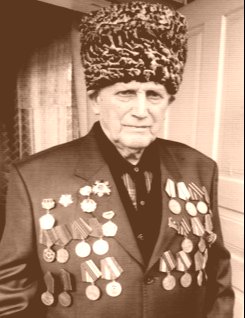
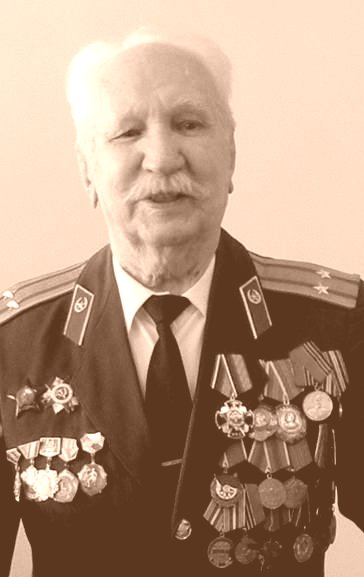

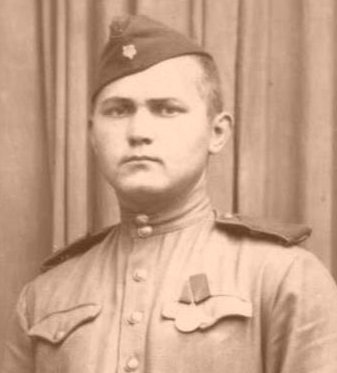
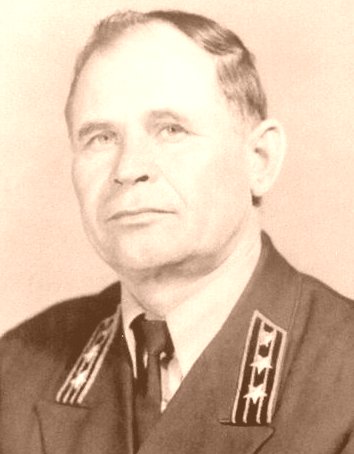
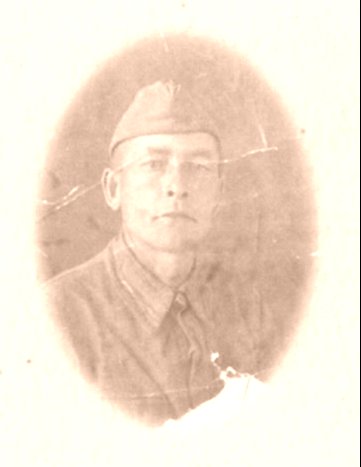


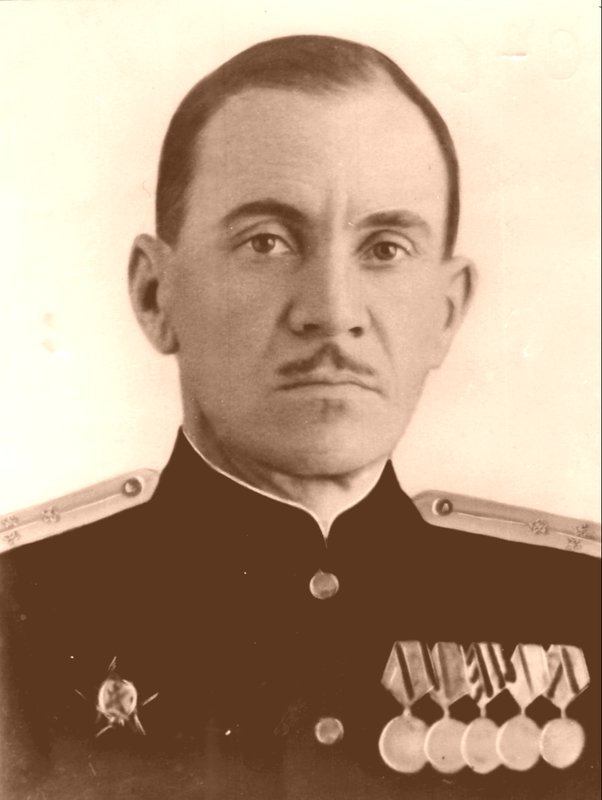

Klinov Filipp Yakovlevich
""Philipp Yakovlevich Klinov was born in 1915 in the village of Voronikha, Altai Territory.
In the autumn of 1937 he was drafted into the army: Philip got into the Far Eastern Navy, in naval aviation, where he served for three years. All this time in the Altai, his bride was waiting for him. After demobilization, the young men got married and went to Barnaul, but their happiness was not long - the Great Patriotic War began.
To the east of the country went trains with plantsʼ dismantled equipment from the European territory occupied by the enemy. They began arriving in Barnaul in August 1941. The Soviet leadership, assuming that the war was inevitable, was preparing industrial sites to locate production facilities in Siberia, but did not manage to do everything. Nevertheless, the foundations that were laid in the pre-war period for the factory premises were a good help to speed up the launch of the plants, which had been repurposed to meet the needs of the front. Work was carried out around the clock, day and night, in the light of fires. In total, 14 enterprises, mainly of mechanical engineering and metalworking profile, were evacuated to Barnaul. Already in November 1941 Plant No. 17 sent the first batch of live ammunition to the front, and by November 1942 the first tank engine B-2 was created and tested at Plant No. 77.
Throughout 1941 and the first half of 1942 Philip Klinov worked in Barnaul repair shops, where Soviet tanks were restored. Of course, he aspired to go the front - to beat the enemy, but the reservation was not removed from him.
In early July 1942, the Altai Regional Communist Party (Bolsheviks) appealed to the People's Commissar of Defense I.V. Stalin for permission to create a volunteer brigade of the Siberian Altai people. The very next day, a telegram was received approving the initiative, and an order from the Siberian Military District to form the 74th Independent Siberian Volunteer Rifle Brigade followed. Filipp Yakovlevich was also sent to its ranks.
On September 9, 1942 Filipp Yakovlevich had his first child. He saw his son Gennadiy just a couple of hours before being sent to the front - his wife showed the newborn through the window of the maternity hospital. This was followed by years of heavy separation.
The train of Siberians was sent to Moscow. On the station platform they were met by the Supreme Commander-in-Chief himself - Joseph Stalin. The fighters of the 74th Rifle Brigade had to accomplish a very difficult task - to make a 170 kilometer walking march from the landing sites in the Moscow region, break through a powerful German defense southwest of the city of Bely in Smolensk (now Tver) region and destroy the main enemy group west of the river Nacha.
In military history, the Rzhevsko-Vyazemsky offensive was codenamed ""Mars"". The fascist command attached great importance to this bridgehead - the capital of the USSR is only 120 kilometers away, the bridgehead was intended to be used for a new ""jump to Moscow"".
The Siberians were opposed by the Selected SS Divisions “Great Germany” and “Dead Head”, the Wehrmacht Infantry Divisions, the Aviation Field Division, the Independent SS Regiment, “the Eastern Battalion”, and artillery and sapper units. The enemy pulled two field and two tank armies under the city of Beliy. But the Siberians did not flinch! In the first week of the offensive in November 1942, they liberated 72 settlements, causing significant damage to one of the main German armies ""Center"", and marched with the battles up to 30 kilometers deep. Unfortunately, the neighboring formations of the 41st Army were unable to move further, which gave the enemy the opportunity to cut off the Siberians from the main forces of the Red Army. The Siberian Brigade could still walk down a narrow corridor to their people, but the front command had to keep its positions at all costs. Even when surrounded, the Siberians repeatedly attacked the German troops. They managed to break through the enemy ring only in the middle of December.
According to military historians, only four out of fifteen thousand people managed to return to the 41st Army. The 74th Altai Volunteer Rifle Brigade was almost completely killed, but it fulfilled its task of breaking through the enemy's defenses and holding its position at any cost! Operation “Mars” contributed to the withdrawal of the main German forces from Stalingrad; the Army “Center”, which was considered the main striking force at the battle of Kursk, suffered heavy losses and by the beginning of the tank battle near Prokhorovka had not recovered.
Philip Klinov, who was wounded in the chest in autumn 1942, was evacuated to hospital. He did not catch up with the few surviving comrades and was sent to the 61st Rifle Regiment of the 19th Guards Rifle Division.
Private Klinov had many more battles, including the liberation of Velikie Luki, Smolensk, Belgorod - the city in honor of which in August 1943 in Moscow was given the first Victory Salute.
In September 1943, Philip Klinov was wounded again, but after lying in hospital for only two months - until November – he requested to go to the front line.
Filipp Yakovlevich told little about the war to his grandchildren, only when the kids started to ask him questions. He did not say whether it was terrible during the war. Rather, on the contrary, he gave examples from the life of the soldiers in the minutes of respite.
""We were sitting in a trench, having lunch right there from the bowls, talking, joking. There was no fight, but the bullets were flying around. Suddenly, one of them hit the neighbor's cauldron, and the other hit my finger. The blood was dropping in the cauldron in a thin stream ... I bandaged my finger and picked up the spoon again – who knows when I will have time to have lunch again ....
That's how, with rare moments of rest in a series of endless battles, in which comrades were lost, but without losing heart, without despondency, the soldiers went forward, and among them was Philip Klinov - to the Baltic and East Prussia, to the very den of the enemy.
The grandchildren remembered how Philip Yakovlevich told about the capture of Koenigsberg. The operation began in January 1945. The fortress seemed unapproachable: the Germans created three defense lines. The first one - 6-8 kilometers from the city center - consisted of trenches, an anti-tank moat, wire fences and minefields. Forts with garrisons and guns were also located there. The second boundary passed through the city's outskirts: there were well fortified stone buildings, barricades, firing points at the intersections, and minefields. The third boundary was organized in the center - it consisted of nine bastions, towers and ravelins. The Koenigsberg garrison, as is now known, had four fully staffed infantry divisions, several regiments, serfs and security formations, as well as battalions of the Volkssturm. The total number of German troops defending the city, by various estimates, ranged from 70 to 100 thousand people.
The assault of Koenigsberg began on April 6 with a powerful art training, then, under the cover of a firing rampart, infantry and tanks went on the offensive. The main forces of our troops bypassed the fortified forts, blocking them with rifle battalions, reinforced with self-propelled guns, units of sappers and flamethrowers.
Mobile assault squads played a decisive role in capturing the city. They consisted of rifle units, several artillery pieces, one or two tanks, a heavy machine gun platoon, a mortar platoon, a bomb squad and flamethrower units.
Only on the fourth day of the assault, the resistance of the Germans was broken. In the evening of April 9, the commandant of the fortress, realizing the futility of further struggle, gave the order to surrender the garrison of Koenigsberg. For that Hitler, considering the decision to surrender the fortress as premature, sentenced the general to death by hanging in absentia.
The end of Koenigsberg's storming was marked by a salute of the highest category - 24 artillery volleys from 324 guns. The medal ""For capture of Koenigsberg"" which was received by all participants of battle, including Phillip Klinov was established.
The victorious May 1945 the Siberian met in German capital and even put his signature on the Reichstag wall.
Filipp Yakovlevich said: Berlin was taken at night, all the spotlights were gathered around and switched on at the same time - it was as bright as day! The capture of the city was not easy for our troops, and in the last days of the war everyone could take a bullet, but we wanted to go home - to our family and children, to restore the ruined country.
But Philip Klinov returned home only in September 45th. His wife Fedosya, after her husband left for the front, went to her parents' house in the village, was raising their son, worked at a collective farm - on a grain stream, weeding beet. The day when her husband came to the front, she remembered in the smallest details. Fedosya was doing something around the house, and her three-year-old son Gena was running around the hut. He, who had never seen his father, somehow intuitively felt his native blood in the man in the overcoat, who he saw through the window, and shouted loudly: ""Daddy's coming!"" Fedosya looked out the window, and it was true - Philipp was back home!""
"
Klinov Filipp Yakovlevich
""Philipp Yakovlevich Klinov was born in 1915 in the village of Voronikha, Altai Territory.
In the autumn of 1937 he was drafted into the army: Philip got into the Far Eastern Navy, in naval aviation, where he served for three years. All this time in the Altai, his bride was waiting for him. After demobilization, the young men got married and went to Barnaul, but their happiness was not long - the Great Patriotic War began.
To the east of the country went trains with plantsʼ dismantled equipment from the European territory occupied by the enemy. They began arriving in Barnaul in August 1941. The Soviet leadership, assuming that the war was inevitable, was preparing industrial sites to locate production facilities in Siberia, but did not manage to do everything. Nevertheless, the foundations that were laid in the pre-war period for the factory premises were a good help to speed up the launch of the plants, which had been repurposed to meet the needs of the front. Work was carried out around the clock, day and night, in the light of fires. In total, 14 enterprises, mainly of mechanical engineering and metalworking profile, were evacuated to Barnaul. Already in November 1941 Plant No. 17 sent the first batch of live ammunition to the front, and by November 1942 the first tank engine B-2 was created and tested at Plant No. 77.
Throughout 1941 and the first half of 1942 Philip Klinov worked in Barnaul repair shops, where Soviet tanks were restored. Of course, he aspired to go the front - to beat the enemy, but the reservation was not removed from him.
In early July 1942, the Altai Regional Communist Party (Bolsheviks) appealed to the People's Commissar of Defense I.V. Stalin for permission to create a volunteer brigade of the Siberian Altai people. The very next day, a telegram was received approving the initiative, and an order from the Siberian Military District to form the 74th Independent Siberian Volunteer Rifle Brigade followed. Filipp Yakovlevich was also sent to its ranks.
On September 9, 1942 Filipp Yakovlevich had his first child. He saw his son Gennadiy just a couple of hours before being sent to the front - his wife showed the newborn through the window of the maternity hospital. This was followed by years of heavy separation.
The train of Siberians was sent to Moscow. On the station platform they were met by the Supreme Commander-in-Chief himself - Joseph Stalin. The fighters of the 74th Rifle Brigade had to accomplish a very difficult task - to make a 170 kilometer walking march from the landing sites in the Moscow region, break through a powerful German defense southwest of the city of Bely in Smolensk (now Tver) region and destroy the main enemy group west of the river Nacha.
In military history, the Rzhevsko-Vyazemsky offensive was codenamed ""Mars"". The fascist command attached great importance to this bridgehead - the capital of the USSR is only 120 kilometers away, the bridgehead was intended to be used for a new ""jump to Moscow"".
The Siberians were opposed by the Selected SS Divisions “Great Germany” and “Dead Head”, the Wehrmacht Infantry Divisions, the Aviation Field Division, the Independent SS Regiment, “the Eastern Battalion”, and artillery and sapper units. The enemy pulled two field and two tank armies under the city of Beliy. But the Siberians did not flinch! In the first week of the offensive in November 1942, they liberated 72 settlements, causing significant damage to one of the main German armies ""Center"", and marched with the battles up to 30 kilometers deep. Unfortunately, the neighboring formations of the 41st Army were unable to move further, which gave the enemy the opportunity to cut off the Siberians from the main forces of the Red Army. The Siberian Brigade could still walk down a narrow corridor to their people, but the front command had to keep its positions at all costs. Even when surrounded, the Siberians repeatedly attacked the German troops. They managed to break through the enemy ring only in the middle of December.
According to military historians, only four out of fifteen thousand people managed to return to the 41st Army. The 74th Altai Volunteer Rifle Brigade was almost completely killed, but it fulfilled its task of breaking through the enemy's defenses and holding its position at any cost! Operation “Mars” contributed to the withdrawal of the main German forces from Stalingrad; the Army “Center”, which was considered the main striking force at the battle of Kursk, suffered heavy losses and by the beginning of the tank battle near Prokhorovka had not recovered.
Philip Klinov, who was wounded in the chest in autumn 1942, was evacuated to hospital. He did not catch up with the few surviving comrades and was sent to the 61st Rifle Regiment of the 19th Guards Rifle Division.
Private Klinov had many more battles, including the liberation of Velikie Luki, Smolensk, Belgorod - the city in honor of which in August 1943 in Moscow was given the first Victory Salute.
In September 1943, Philip Klinov was wounded again, but after lying in hospital for only two months - until November – he requested to go to the front line.
Filipp Yakovlevich told little about the war to his grandchildren, only when the kids started to ask him questions. He did not say whether it was terrible during the war. Rather, on the contrary, he gave examples from the life of the soldiers in the minutes of respite.
""We were sitting in a trench, having lunch right there from the bowls, talking, joking. There was no fight, but the bullets were flying around. Suddenly, one of them hit the neighbor's cauldron, and the other hit my finger. The blood was dropping in the cauldron in a thin stream ... I bandaged my finger and picked up the spoon again – who knows when I will have time to have lunch again ....
That's how, with rare moments of rest in a series of endless battles, in which comrades were lost, but without losing heart, without despondency, the soldiers went forward, and among them was Philip Klinov - to the Baltic and East Prussia, to the very den of the enemy.
The grandchildren remembered how Philip Yakovlevich told about the capture of Koenigsberg. The operation began in January 1945. The fortress seemed unapproachable: the Germans created three defense lines. The first one - 6-8 kilometers from the city center - consisted of trenches, an anti-tank moat, wire fences and minefields. Forts with garrisons and guns were also located there. The second boundary passed through the city's outskirts: there were well fortified stone buildings, barricades, firing points at the intersections, and minefields. The third boundary was organized in the center - it consisted of nine bastions, towers and ravelins. The Koenigsberg garrison, as is now known, had four fully staffed infantry divisions, several regiments, serfs and security formations, as well as battalions of the Volkssturm. The total number of German troops defending the city, by various estimates, ranged from 70 to 100 thousand people.
The assault of Koenigsberg began on April 6 with a powerful art training, then, under the cover of a firing rampart, infantry and tanks went on the offensive. The main forces of our troops bypassed the fortified forts, blocking them with rifle battalions, reinforced with self-propelled guns, units of sappers and flamethrowers.
Mobile assault squads played a decisive role in capturing the city. They consisted of rifle units, several artillery pieces, one or two tanks, a heavy machine gun platoon, a mortar platoon, a bomb squad and flamethrower units.
Only on the fourth day of the assault, the resistance of the Germans was broken. In the evening of April 9, the commandant of the fortress, realizing the futility of further struggle, gave the order to surrender the garrison of Koenigsberg. For that Hitler, considering the decision to surrender the fortress as premature, sentenced the general to death by hanging in absentia.
The end of Koenigsberg's storming was marked by a salute of the highest category - 24 artillery volleys from 324 guns. The medal ""For capture of Koenigsberg"" which was received by all participants of battle, including Phillip Klinov was established.
The victorious May 1945 the Siberian met in German capital and even put his signature on the Reichstag wall.
Filipp Yakovlevich said: Berlin was taken at night, all the spotlights were gathered around and switched on at the same time - it was as bright as day! The capture of the city was not easy for our troops, and in the last days of the war everyone could take a bullet, but we wanted to go home - to our family and children, to restore the ruined country.
But Philip Klinov returned home only in September 45th. His wife Fedosya, after her husband left for the front, went to her parents' house in the village, was raising their son, worked at a collective farm - on a grain stream, weeding beet. The day when her husband came to the front, she remembered in the smallest details. Fedosya was doing something around the house, and her three-year-old son Gena was running around the hut. He, who had never seen his father, somehow intuitively felt his native blood in the man in the overcoat, who he saw through the window, and shouted loudly: ""Daddy's coming!"" Fedosya looked out the window, and it was true - Philipp was back home!""
"
0 comment




2026 © Russian Military Historical Society Developed by Jetmix