


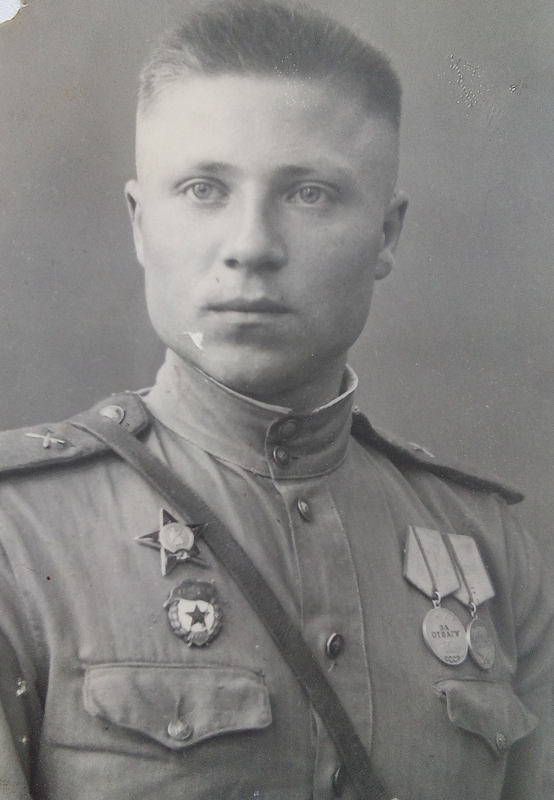

Garifullin Ismagil Garifullovich
Type of Army: Army, Air Force (except marine aviation), the Coast Guard, the NKVD troops, Border troops. My great-grandfather was born on January 26, 1917 in Tartaria, in a small village called Bolshoy Bulgayar. He grew up in a large and poor family. The family had totally 7 children. He studied hard at school. From early childhood, he loved work and played sports, went skiing a lot, was engaged in hand-to-hand combat. After graduation, he was offered a job as a physical education teacher. Before enlisting in the army he married my great-grandmother Minirui. But peaceful life was interrupted, and the war began. At the age of twenty-three, he went to the front. In the same year, his first daughter Nadezhda was born. During the war years, he was a racon. I know from my grandmother's stories that my great-grandfather was very brave. He fought mercilessly against the Germans, fought for his family and friends, for the entire nation. My great-grandfather liberated the territory of today's Ukraine and Belarus, Russian cities and villages. In one of the Tatar Newspapers in 2005, dedicated to the sixtieth anniversary of the Great Patriotic war, an article about my great-grandfather ""ETIEM TALLARY""was published.It told about the combat episodes of the brave racon: ""Once a young racon Ismagil was sent to a small Belarusian village to find out if there were any Germans there. When he got to the first inconspicuous hut, the owner of the house told him about the Germans. There were no Germans in the village, and Ismagil had to return to the unit. But suddenly a German attacked him the back. A duel began between them. But the agile racon was much stronger. He tied up the German and brought him to headquarters. This German turned out to be a very important ""informer"", so Ismagil later was awarded another Medal ""For bravery"". During the war, my great-grandfather had many medals and orders for his valor and bravery: Order of the ""Red Star"" , Order of Lenin, Order of the ""Patriotic War"", Order of ""Glory of the 1st class"", Order of ""Glory of the 2nd class"", Order of ""Glory of 3d class"", Order ""Victory"", the Medal ""For military merit"", the Medal ""For defence of Odessa"", the Medal ""For bravery"", the Medal ""For the victory over Germanyin the Great Patriotic War of 1941-1945"", the Medal ""For valiant labour during Great Patriotic War of 1941-1945"". He didn't die in the war. And the name of his first and at that time only daughter Nadezhda gave him strength, faith and hope to survive. My brave great-grandfather went all the way to Dresden. He was shot many times. During the war, one of his brothers was killed, and the other hardly stayed alive.Exhausted, he returned home from the war and soon died. One of the combat episodes, about which my grandmother Ramzia Ismagilovna told me a lot, I remember well. Our troops took the city of Dresden in heavy, grueling battles. The red flag of Victory had to be erected on the main square. One by one, 2 fighters tried to do this, but were killed. My great – grandfather managed to raise the red flag - the symbol of Victory-only on the third attempt. He was badly wounded in the arm. For his bravery, my great-grandfather was awarded the Order of the ""Red Star"". After the war, he came home with many injuries, shell-shocked, and without one arm. After the war, he worked as a firefighter. A few years later, my great-grandfather and great-grandmother had six more children. Great-grandfather did not like to talk much about the hard years when he had to starve and to kill people. My grandmother remembers from her father's stingy stories how during the reconnaisance service he had to hide from the Germans in swamps and reeds, the soldiers sat for days in cold water in the hope that the dogs would not smell them. My great-grandfather Ismagil died 20 years ago. I'm very sorry that I didn't see him alive, that I couldn't talk to him and know his life better. I believe that my great-grandfather was a real man. A man must do three things in his life: build a house, plant a tree, and raise a son. My great-grandfather did all three things. He built a house for the family without a hand, raised seven children with his wife - three sons and four daughters - and planted his own garden of trees."
Garifullin Ismagil Garifullovich
Type of Army: Army, Air Force (except marine aviation), the Coast Guard, the NKVD troops, Border troops. My great-grandfather was born on January 26, 1917 in Tartaria, in a small village called Bolshoy Bulgayar. He grew up in a large and poor family. The family had totally 7 children. He studied hard at school. From early childhood, he loved work and played sports, went skiing a lot, was engaged in hand-to-hand combat. After graduation, he was offered a job as a physical education teacher. Before enlisting in the army he married my great-grandmother Minirui. But peaceful life was interrupted, and the war began. At the age of twenty-three, he went to the front. In the same year, his first daughter Nadezhda was born. During the war years, he was a racon. I know from my grandmother's stories that my great-grandfather was very brave. He fought mercilessly against the Germans, fought for his family and friends, for the entire nation. My great-grandfather liberated the territory of today's Ukraine and Belarus, Russian cities and villages. In one of the Tatar Newspapers in 2005, dedicated to the sixtieth anniversary of the Great Patriotic war, an article about my great-grandfather ""ETIEM TALLARY""was published.It told about the combat episodes of the brave racon: ""Once a young racon Ismagil was sent to a small Belarusian village to find out if there were any Germans there. When he got to the first inconspicuous hut, the owner of the house told him about the Germans. There were no Germans in the village, and Ismagil had to return to the unit. But suddenly a German attacked him the back. A duel began between them. But the agile racon was much stronger. He tied up the German and brought him to headquarters. This German turned out to be a very important ""informer"", so Ismagil later was awarded another Medal ""For bravery"". During the war, my great-grandfather had many medals and orders for his valor and bravery: Order of the ""Red Star"" , Order of Lenin, Order of the ""Patriotic War"", Order of ""Glory of the 1st class"", Order of ""Glory of the 2nd class"", Order of ""Glory of 3d class"", Order ""Victory"", the Medal ""For military merit"", the Medal ""For defence of Odessa"", the Medal ""For bravery"", the Medal ""For the victory over Germanyin the Great Patriotic War of 1941-1945"", the Medal ""For valiant labour during Great Patriotic War of 1941-1945"". He didn't die in the war. And the name of his first and at that time only daughter Nadezhda gave him strength, faith and hope to survive. My brave great-grandfather went all the way to Dresden. He was shot many times. During the war, one of his brothers was killed, and the other hardly stayed alive.Exhausted, he returned home from the war and soon died. One of the combat episodes, about which my grandmother Ramzia Ismagilovna told me a lot, I remember well. Our troops took the city of Dresden in heavy, grueling battles. The red flag of Victory had to be erected on the main square. One by one, 2 fighters tried to do this, but were killed. My great – grandfather managed to raise the red flag - the symbol of Victory-only on the third attempt. He was badly wounded in the arm. For his bravery, my great-grandfather was awarded the Order of the ""Red Star"". After the war, he came home with many injuries, shell-shocked, and without one arm. After the war, he worked as a firefighter. A few years later, my great-grandfather and great-grandmother had six more children. Great-grandfather did not like to talk much about the hard years when he had to starve and to kill people. My grandmother remembers from her father's stingy stories how during the reconnaisance service he had to hide from the Germans in swamps and reeds, the soldiers sat for days in cold water in the hope that the dogs would not smell them. My great-grandfather Ismagil died 20 years ago. I'm very sorry that I didn't see him alive, that I couldn't talk to him and know his life better. I believe that my great-grandfather was a real man. A man must do three things in his life: build a house, plant a tree, and raise a son. My great-grandfather did all three things. He built a house for the family without a hand, raised seven children with his wife - three sons and four daughters - and planted his own garden of trees."
0 comment




2026 © Russian Military Historical Society Developed by Jetmix