


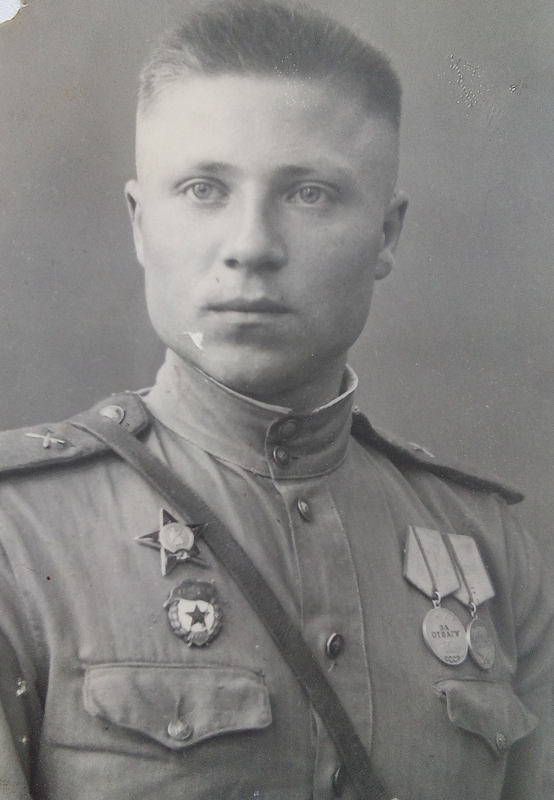
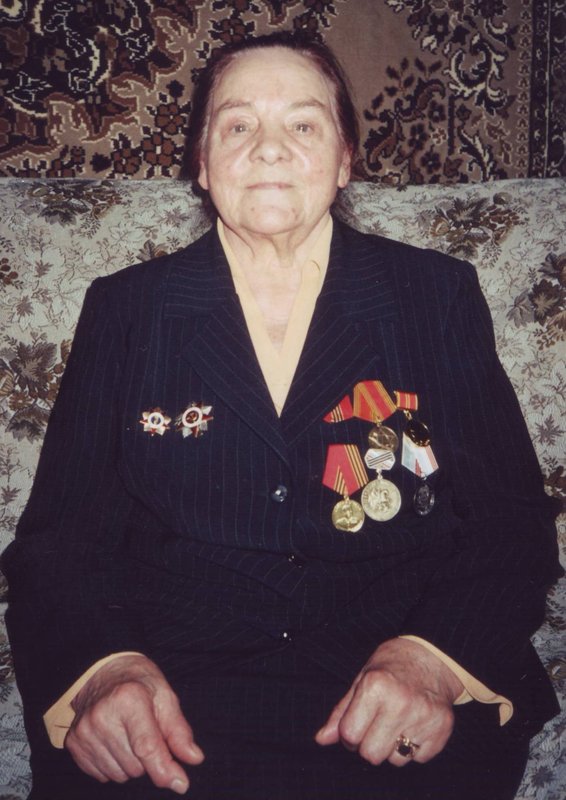

Galli Alexander Petrovich
Rank: Lieutenant-colonel. On August 17, 1942, by order of the people's Commissar of defense, Separate Guard battalions of miners and a Separate Guards brigade of miners were created in the engineering troops of each front at the Headquarters of the VGK ""for mining and destroying communications in the enemy's rear"". So, the 9th Separate Guards battalion of miners of the North-Western front commanded by Lieutenant Colonel A. Galli (period 1942-1944) derailed 108 echelons, blew up 47 bridges and undermined 30 km of rail track on the Luga–Pskov–DNO sections. It was the only unit of the guards minelayers that lasted until the end of the war at the North-Western front. On November 20, 1943 it was placed in the Stavka reserve and relocated to the territory of the Moscow military district in Jelyabino village. The battalion became a training center and a kind of reserve for the preparation of reconnaisance and sabotage groups of the General staff Department, acting in the interests of reconnaisance departments of various fronts. The battalion's training ground was located in the vicinity of Teykovo, Ivanovo region. Here is the personnel, replenished from the 14th battalion of the miners, trained together with Polish, Baltic, and German anti-fascists. Reconnaissance and sabotage groups from the battalion successfully operated during the Belarusian, Baltic, East Prussian, Vistula-Oder and Berlin operations. In essence, the guards minelayers were military partisans during the war, but their formation and combat use marked the beginning of the creation of the Soviet army special forces. And it is no accident that Marshal Vasilevsky, who signed the order to create that Division in 1942, was already in the rank of Minister of Defence on October 25, 1950. He ordered to create separate special forces companies under the leadership of the Main Reconnaisance Directorate of the General staff."
Galli Alexander Petrovich
Rank: Lieutenant-colonel. On August 17, 1942, by order of the people's Commissar of defense, Separate Guard battalions of miners and a Separate Guards brigade of miners were created in the engineering troops of each front at the Headquarters of the VGK ""for mining and destroying communications in the enemy's rear"". So, the 9th Separate Guards battalion of miners of the North-Western front commanded by Lieutenant Colonel A. Galli (period 1942-1944) derailed 108 echelons, blew up 47 bridges and undermined 30 km of rail track on the Luga–Pskov–DNO sections. It was the only unit of the guards minelayers that lasted until the end of the war at the North-Western front. On November 20, 1943 it was placed in the Stavka reserve and relocated to the territory of the Moscow military district in Jelyabino village. The battalion became a training center and a kind of reserve for the preparation of reconnaisance and sabotage groups of the General staff Department, acting in the interests of reconnaisance departments of various fronts. The battalion's training ground was located in the vicinity of Teykovo, Ivanovo region. Here is the personnel, replenished from the 14th battalion of the miners, trained together with Polish, Baltic, and German anti-fascists. Reconnaissance and sabotage groups from the battalion successfully operated during the Belarusian, Baltic, East Prussian, Vistula-Oder and Berlin operations. In essence, the guards minelayers were military partisans during the war, but their formation and combat use marked the beginning of the creation of the Soviet army special forces. And it is no accident that Marshal Vasilevsky, who signed the order to create that Division in 1942, was already in the rank of Minister of Defence on October 25, 1950. He ordered to create separate special forces companies under the leadership of the Main Reconnaisance Directorate of the General staff."
0 comment



2026 © Russian Military Historical Society Developed by Jetmix