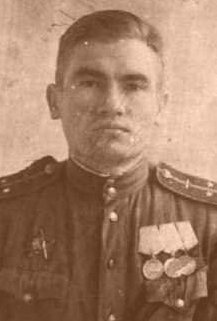


Bagulin Nikander Vasilyevich
Grade title: a corporal. Bagulin Nikander Vasilyevich was born in 1905 in the village of Kortinskaya in the Nizovsky village of the Kharovsky district of the Vologda region. He was married to Alexandra Shmakova and had three daughters: Pavla, Maria and Lydia. He worked as a plowman in a collective farm. He sewed well and therefore often received orders for sewing gloves, caps and other products for collective farm workers. On the 6th of July, 1941, he was called up to the front by the Kharovsky regional military commissariat of the Vologda region as a red army soldier. Subsequently he was awarded the rank of a corporal. From the beginning of the war he served in a fighter-anti-tank artillery regiment. He often wrote letters home, the mail service worked smoothly. During his service he was hospitalized twice and also had multiple shrapnel wounds. He went through the entire war and reached Berlin with his detachment imprinting his name on the wall of the Reichstag. During his service he received several awards. Currently only the information on these awards is preserved. From the award list to the medal “For military merits”: “From the 5th of October, 1944, till the 8th of October, 1944, in the battles for the bridgehead on the west bank of the Narev river near the village of Dzerzhenin comrade Bagulin eliminated 8 gusts of lines under heavy machine-gun and artillery fire of the enemy...” From the award list for the medal “For Bravery”: “From the first days on the fronts of the Great Patriotic War comrade Bagulin has 2 injuries. In the offensive battles from the Kustrin bridgehead to Berlin he showed courage and bravery. On the 27th of April, 1945, in the battle for the city of Potsdam, acting as part of the crew of the infecting gun, he provided its rapid work uninterrupted firing from the gun at the enemy, which ensured the fulfillment of the combat task.” He was also awarded the medal “For the Victory over Germany in the Great Patriotic War of 1941-1945”. He returned to his native village of Kortinskaya in August 1945. According to my grandmother's stories he was the soul of the company in his regiment, always with a positive attitude. He was a lively, cheerful, smiling person and loved to take pictures. He danced very well for which he received the nickname "Kazachok" among his colleagues. After the war he continued to work in the collective farm as a milk truck driver. In 1946 the fourth daughter Valentina was born. During the last year of life the battle wounds constantly reminded of themselves, shrapnel constantly came out. In 1947 Nikander Vasilyevich died leaving his wife with four children, the youngest of whom was just starting to walk. Tatyana Maltseva, a great-granddaughter.
Bagulin Nikander Vasilyevich
Grade title: a corporal. Bagulin Nikander Vasilyevich was born in 1905 in the village of Kortinskaya in the Nizovsky village of the Kharovsky district of the Vologda region. He was married to Alexandra Shmakova and had three daughters: Pavla, Maria and Lydia. He worked as a plowman in a collective farm. He sewed well and therefore often received orders for sewing gloves, caps and other products for collective farm workers. On the 6th of July, 1941, he was called up to the front by the Kharovsky regional military commissariat of the Vologda region as a red army soldier. Subsequently he was awarded the rank of a corporal. From the beginning of the war he served in a fighter-anti-tank artillery regiment. He often wrote letters home, the mail service worked smoothly. During his service he was hospitalized twice and also had multiple shrapnel wounds. He went through the entire war and reached Berlin with his detachment imprinting his name on the wall of the Reichstag. During his service he received several awards. Currently only the information on these awards is preserved. From the award list to the medal “For military merits”: “From the 5th of October, 1944, till the 8th of October, 1944, in the battles for the bridgehead on the west bank of the Narev river near the village of Dzerzhenin comrade Bagulin eliminated 8 gusts of lines under heavy machine-gun and artillery fire of the enemy...” From the award list for the medal “For Bravery”: “From the first days on the fronts of the Great Patriotic War comrade Bagulin has 2 injuries. In the offensive battles from the Kustrin bridgehead to Berlin he showed courage and bravery. On the 27th of April, 1945, in the battle for the city of Potsdam, acting as part of the crew of the infecting gun, he provided its rapid work uninterrupted firing from the gun at the enemy, which ensured the fulfillment of the combat task.” He was also awarded the medal “For the Victory over Germany in the Great Patriotic War of 1941-1945”. He returned to his native village of Kortinskaya in August 1945. According to my grandmother's stories he was the soul of the company in his regiment, always with a positive attitude. He was a lively, cheerful, smiling person and loved to take pictures. He danced very well for which he received the nickname "Kazachok" among his colleagues. After the war he continued to work in the collective farm as a milk truck driver. In 1946 the fourth daughter Valentina was born. During the last year of life the battle wounds constantly reminded of themselves, shrapnel constantly came out. In 1947 Nikander Vasilyevich died leaving his wife with four children, the youngest of whom was just starting to walk. Tatyana Maltseva, a great-granddaughter.
0 comment




2026 © Russian Military Historical Society Developed by Jetmix