


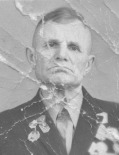


Bessonova Alexandra Feodorovna
Rank: paramedic. Branch of the armed forces: military medical staff. Unit: 1st guards artillery Glukhovskaya order of Lenin red banner order of Suvorov, Kutuzov and Bogdan Khmelnitsky breakthrough division of the RGC. In our family there was a legendary woman who participated in the great Patriotic war: Alexandra Feodorovna Bessonova, senior Lieutenant of the medical service of the 362nd art regiment of the 106th Dnieper-TRANS-Baikal red banner order of Suvorov rifle division. During the great Patriotic war, she worked in a medical unit and gave all the warmth of her soul, knowledge to preserve and restore the health of soldiers. She was able to quickly and expertly make a dressing, an injection, bring a person to consciousness, and provide the necessary medical care. She was always resolute and bold in her actions. Many medical professionals were surprised by her abilities. Even at home, she had to do all the work that men usually do. As soon as the war began, Shura (as her family called her) came to the military enlistment office and asked to be sent to the front, to the front line as a paramedic of the medical service, to provide first aid to the wounded on the battlefield. The family received letters from her from the front and knew what an impossible job for a woman she does, saving the lives of soldiers and commanders, being herself brave and physically strong. Shura's dad in a circle of friends said: "She was born a girl by mistake." The military unit in which Shura was enlisted left the city of Bogotol, Krasnoyarsk territory, for the front on July 15, 1941. In 8 days their part already participated in fights. The fighting was heavy, with heavy losses. The nurses had no experience in a combat situation. My aunt taught them how to evacuate the seriously wounded from the battlefield with less blood loss and painlessly. She often had to crawl to the front and provide first aid to save a fighter's life, risking her own. While constantly on the front line, my aunt herself was wounded three times. She lay in hospitals near Moscow and Leningrad, and again returned to the front! After the third serious wound in August 1942, Alexandra Bessonova was sent to the rear military hospital in the Sverdlovsk region and was treated in Shadrinsk, where the 106th Dnieper-TRANS-Baikal red banner order of Suvorov rifle division was formed. Immediately after discharge from the hospital she was enrolled in the artillery regiment of this division, which went to the front on the Kursk-Orel area, occupied the territory on the front line of 24.5 kilometers, the village Cheren, Upper Galley, New lighting in Kursk region. The 362nd artillery regiment participated in the crossing of the Desna, Dnieper, bug, Vistula, Oder, Neisse and spree, and in the liberation of cities: Loev, Lutsk, Torchin, territories of Poland and Czechoslovakia. Senior Lieutenant of the medical service Alexandra Bessonova was always on the front line. The commanders and soldiers admired the girl's courage and skill. She often received commendations from commanders, soldiers, and parents of fighters. In the orders of the Supreme commander-in-Chief, the soldiers of this division were thanked 19 times. Victory salutes thundered in their honor in Moscow! Thousands of soldiers and officers of the division were awarded orders and medals of the Soviet Union. Among them, senior Lieutenant of the medical service Alexandra Feodorovna Bessonova received the order of the red Star and the medal. In 1943, an elderly man came from Achinsk to visit Shura's father, Fyodor Illarionovich. After verifying his identity, he said: "Allow me to kneel before You and thank You for raising such a daughter, Alexandra Feodorovna, who carried my only son seriously wounded from the battlefield. A mile and a half she dragged him on her fragile shoulders to the medical unit. She gave him life and us a son!" After being discharged from the army in 1948, Shura returned to the city of Bogotol, where she worked in medical institutions. While retired, she took an active part in working with veterans of the great Patriotic war. Despite the disability of group II, she annually went to meetings with war veterans of the 362nd art regiment in Moscow, and conducted an active correspondence. She met with young people, performed on television.
Bessonova Alexandra Feodorovna
Rank: paramedic. Branch of the armed forces: military medical staff. Unit: 1st guards artillery Glukhovskaya order of Lenin red banner order of Suvorov, Kutuzov and Bogdan Khmelnitsky breakthrough division of the RGC. In our family there was a legendary woman who participated in the great Patriotic war: Alexandra Feodorovna Bessonova, senior Lieutenant of the medical service of the 362nd art regiment of the 106th Dnieper-TRANS-Baikal red banner order of Suvorov rifle division. During the great Patriotic war, she worked in a medical unit and gave all the warmth of her soul, knowledge to preserve and restore the health of soldiers. She was able to quickly and expertly make a dressing, an injection, bring a person to consciousness, and provide the necessary medical care. She was always resolute and bold in her actions. Many medical professionals were surprised by her abilities. Even at home, she had to do all the work that men usually do. As soon as the war began, Shura (as her family called her) came to the military enlistment office and asked to be sent to the front, to the front line as a paramedic of the medical service, to provide first aid to the wounded on the battlefield. The family received letters from her from the front and knew what an impossible job for a woman she does, saving the lives of soldiers and commanders, being herself brave and physically strong. Shura's dad in a circle of friends said: "She was born a girl by mistake." The military unit in which Shura was enlisted left the city of Bogotol, Krasnoyarsk territory, for the front on July 15, 1941. In 8 days their part already participated in fights. The fighting was heavy, with heavy losses. The nurses had no experience in a combat situation. My aunt taught them how to evacuate the seriously wounded from the battlefield with less blood loss and painlessly. She often had to crawl to the front and provide first aid to save a fighter's life, risking her own. While constantly on the front line, my aunt herself was wounded three times. She lay in hospitals near Moscow and Leningrad, and again returned to the front! After the third serious wound in August 1942, Alexandra Bessonova was sent to the rear military hospital in the Sverdlovsk region and was treated in Shadrinsk, where the 106th Dnieper-TRANS-Baikal red banner order of Suvorov rifle division was formed. Immediately after discharge from the hospital she was enrolled in the artillery regiment of this division, which went to the front on the Kursk-Orel area, occupied the territory on the front line of 24.5 kilometers, the village Cheren, Upper Galley, New lighting in Kursk region. The 362nd artillery regiment participated in the crossing of the Desna, Dnieper, bug, Vistula, Oder, Neisse and spree, and in the liberation of cities: Loev, Lutsk, Torchin, territories of Poland and Czechoslovakia. Senior Lieutenant of the medical service Alexandra Bessonova was always on the front line. The commanders and soldiers admired the girl's courage and skill. She often received commendations from commanders, soldiers, and parents of fighters. In the orders of the Supreme commander-in-Chief, the soldiers of this division were thanked 19 times. Victory salutes thundered in their honor in Moscow! Thousands of soldiers and officers of the division were awarded orders and medals of the Soviet Union. Among them, senior Lieutenant of the medical service Alexandra Feodorovna Bessonova received the order of the red Star and the medal. In 1943, an elderly man came from Achinsk to visit Shura's father, Fyodor Illarionovich. After verifying his identity, he said: "Allow me to kneel before You and thank You for raising such a daughter, Alexandra Feodorovna, who carried my only son seriously wounded from the battlefield. A mile and a half she dragged him on her fragile shoulders to the medical unit. She gave him life and us a son!" After being discharged from the army in 1948, Shura returned to the city of Bogotol, where she worked in medical institutions. While retired, she took an active part in working with veterans of the great Patriotic war. Despite the disability of group II, she annually went to meetings with war veterans of the 362nd art regiment in Moscow, and conducted an active correspondence. She met with young people, performed on television.
0 comment




2026 © Russian Military Historical Society Developed by Jetmix