

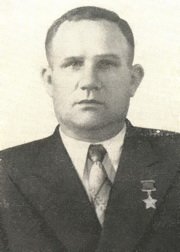


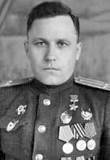

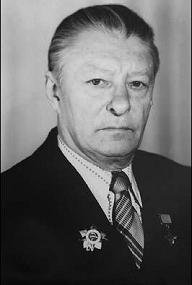

Fyodor Belov
Rank: Lieutenant.
Unit: 302nd Ternopil Red Banner Order of Kutuzov Rifle Division.
Fyodor Belov was born in 1908 in the village of Ishbulatovo of the Ufa Province, in the family of Belovs Ipat and Maria. He studied at Tynbaevskaya School, which now bears the name of Belov Brothers. He served as a cadre officer from 1930-1932. 1941-1943 - at the front. On June 22, 1941, without a call, he appeared in the Stalinskiy District Military Commissariat of the city of Chelyabinsk with a request to immediately send him to the front.
He fought at Odessa (from August 1941), Sevastopol, Stalingrad, and on the Southern Front. He commanded the reconnaissance and sabotage group of the Stepnoy Orel partisan detachment, and was the Chief of Staff of the Chapaev Partisan Detachment. Lieutenant. A letter came to his parents in the autumn of 1942 in which Fyodor reported on his participation in the battles near Odessa and Sevastopol, about being wounded in the arm and being in the hospital.
According to archival data from Kiev, after the hospital Fyodor served in the 825th Rifle Regiment of the 302nd Rifle Division. Participated in heavy defensive battles in the Salsk steppes. Then he was in one of the groups under the command of officer Grigory Popov, which later received the official name Stepnye Orly (July 1942). He commanded the reconnaissance and sabotage group of the partisan detachment Stepnye Orly. Archival materials indicate that the actions of the group and the entire detachment were distinguished by extraordinary audacity. During the offensive stage of the Battle of Stalingrad, the Stepnye Orly detachment numbered up to 70 people. Fyodor was presented for the award in April 1943. The submission note indicated that as the commander of the reconnaissance group, he showed himself decisive in actions.
He personally destroyed twenty seven soldiers and two German officers from September 1942 to January 1943. Operating in the enemy's rear, he identified its vulnerabilities, and successfully organized the transfer of important intelligence data across the front line. By decree of the Presidium of the Supreme Soviet of the USSR, he was awarded the Order of the Red Star. (CGAOR of the Ukrainian SSR. F. 1. Op. 24. D. 192. L. 31). The troops of the Southern Front began to prepare for an offensive from April 1943 to liberate the Donbass and break through to the Dnieper River. To strengthen the combat work in the enemy rear in the area of Dnepropetrovsk, the command of the Southern Front formed a select partisan detachment consisting of 14 volunteers, giving it the name of V. Chapaev. Fyodor Belov became its Chief of Staff.
The Chapaev detachment was air lifted by "Douglas" airplane and landed on parachutes near the river Samara, a tributary of the Dnieper River on the night of May 14-15, 1943,
The unit deployed its main base in the forests along Samara River South-East of Novomoskovsk. Having established control over the Zaporozhye - Pavlograd - Kharkov railway line, it began to disable it in one place or another, derailed the enemy train with ammunition and equipment. The front's aviation, having received intelligence data from the detachment, successfully attacked on June 2nd a sanatorium located at Samara River near the village of Orlovschina, where up to three hundred German officers were stationed, disabling more than a hundred of them. A number of objects were destroyed at Sinelnikovo and Pavlograd stations. Partisans on June 3, suddenly attacked the German commandant's office in the area of the State Farm #2 near Khoshchevoe. Up to ten enemy soldiers and two vehicles were destroyed, and a significant amount of food was captured.
Fyodor Belov, together with his partner on June 7, 1943, went out with reconnaissance mission to the Panychevo area 5.5 km North of the village of Vasilyevka, apparently intending to observe the movement of the Zaporozhye - Pavlograd - Lozovaya - Kharkov railway from hidden places. They spent the night in the attic of the gatehouse located here, not assuming that their fateful day was waiting for them. How it all happened was found out only 47 years later from the surviving eyewitnesses, residents of the village of Vasilyevka. An unwitting witness of the Fyodor’s death Galina Patyk and other villagers knew about what happened.
In the early morning of June 8, 1943 from Vasilyevka to the shed two police officers dressed in the usual peasant dress arrived on carts. Yaloza, the caretaker who met them, pointed mysteriously to the attic of the Lodge. They took a closer look, as if they were unharnessing their horses. One rode quietly along the gully, the other went through the woods on foot, into the bushes, and then up the hill. Not expecting much trouble, but still on the alert, Fyodor and his partner descended from the attic of the gatehouse and secretly, as they hoped, moved up the gully about a kilometer from there. And, just in case, they took shelter in a fairly wide spillway of the lake dam. Meanwhile, the riding policeman has already informed the headman of Vasilyevka Savely Shepel about the identified partisans.
Savka Shepel as the villagers called him contemptuously was the first to ride there with a detachment of police on carts. He immediately sent out sentries and tried to approach the scouts' hiding place. Fyodor and his partner, who were armed only with revolvers and a grenade, were trapped and had to open fire. Savka with the policemen hid, but then a large group of punishers from Pereshchepino arrived to help him. In total, up to eighty people gathered against two of them. The policemen started moving towards the spillway in two directions. The partisans realized that they wanted to take them alive and, standing tall, openly began fire at them with revolvers. Several of the policemen were struck. The others layed low. There were no people willing to go under the shots. Then the chief policeman of Vasilyevka ordered to collect up to a hundred children and women working in the field. Galina Patyk was among them.
Several boys were placed in an observation cordon: "If you miss them, you'll get shot in the head!" Savka warned each of the teenagers. From the most of the children and women they created a human chain and drove it before them to the partisans. Hiding behind them, the policemen advanced, tightening the ring around scouts. The emboldened Shepel himself began to make his way behind the living barrier to the spillway pipe. Met with fire, stretched out on the ground. Seeing that there were no policemen close behind him, he threw a grenade at the partisans, but, intercepted in the air, it flew back. The shards pierced his arm and head. Children and women, who saw all this, raised loud cries, began to resist, but the policemen pushed them in the back with their butts, and shot over their shoulders. The situation of the scouts was hopeless. Appearing at full height, Fyodor Belov shouted: "Live happily!.. Goodbye!..” He held the revolver to his temple and fired, his partner following him…
Lieutenant Fyodor Belov fell in battle on 08.06.1943 near the village of Vasilyevka, Novomoskovsky District, Dnipropetrovsk Region. He was buried in a mass grave in the village of Vasilyevka. Awarded the Order of the Red Star, the medal Partisan of the Patriotic War 1st degree.
A memorial granite slab with the names of those who fell near the village and were buried at the grave was opened on May 9, 1990 - on the 45th Anniversary of the Victory: the chief of staff of the Chapaev Partisan Detachment Fedor Belov, scout Olga Shepelenko, underground workers Pavel Chabanenko and his son Nikolay, pilot Chepuryan. Eternal memory to the victims of the Great Patriotic War! Eternal glory to the heroes!
Fyodor Belov
Rank: Lieutenant.
Unit: 302nd Ternopil Red Banner Order of Kutuzov Rifle Division.
Fyodor Belov was born in 1908 in the village of Ishbulatovo of the Ufa Province, in the family of Belovs Ipat and Maria. He studied at Tynbaevskaya School, which now bears the name of Belov Brothers. He served as a cadre officer from 1930-1932. 1941-1943 - at the front. On June 22, 1941, without a call, he appeared in the Stalinskiy District Military Commissariat of the city of Chelyabinsk with a request to immediately send him to the front.
He fought at Odessa (from August 1941), Sevastopol, Stalingrad, and on the Southern Front. He commanded the reconnaissance and sabotage group of the Stepnoy Orel partisan detachment, and was the Chief of Staff of the Chapaev Partisan Detachment. Lieutenant. A letter came to his parents in the autumn of 1942 in which Fyodor reported on his participation in the battles near Odessa and Sevastopol, about being wounded in the arm and being in the hospital.
According to archival data from Kiev, after the hospital Fyodor served in the 825th Rifle Regiment of the 302nd Rifle Division. Participated in heavy defensive battles in the Salsk steppes. Then he was in one of the groups under the command of officer Grigory Popov, which later received the official name Stepnye Orly (July 1942). He commanded the reconnaissance and sabotage group of the partisan detachment Stepnye Orly. Archival materials indicate that the actions of the group and the entire detachment were distinguished by extraordinary audacity. During the offensive stage of the Battle of Stalingrad, the Stepnye Orly detachment numbered up to 70 people. Fyodor was presented for the award in April 1943. The submission note indicated that as the commander of the reconnaissance group, he showed himself decisive in actions.
He personally destroyed twenty seven soldiers and two German officers from September 1942 to January 1943. Operating in the enemy's rear, he identified its vulnerabilities, and successfully organized the transfer of important intelligence data across the front line. By decree of the Presidium of the Supreme Soviet of the USSR, he was awarded the Order of the Red Star. (CGAOR of the Ukrainian SSR. F. 1. Op. 24. D. 192. L. 31). The troops of the Southern Front began to prepare for an offensive from April 1943 to liberate the Donbass and break through to the Dnieper River. To strengthen the combat work in the enemy rear in the area of Dnepropetrovsk, the command of the Southern Front formed a select partisan detachment consisting of 14 volunteers, giving it the name of V. Chapaev. Fyodor Belov became its Chief of Staff.
The Chapaev detachment was air lifted by "Douglas" airplane and landed on parachutes near the river Samara, a tributary of the Dnieper River on the night of May 14-15, 1943,
The unit deployed its main base in the forests along Samara River South-East of Novomoskovsk. Having established control over the Zaporozhye - Pavlograd - Kharkov railway line, it began to disable it in one place or another, derailed the enemy train with ammunition and equipment. The front's aviation, having received intelligence data from the detachment, successfully attacked on June 2nd a sanatorium located at Samara River near the village of Orlovschina, where up to three hundred German officers were stationed, disabling more than a hundred of them. A number of objects were destroyed at Sinelnikovo and Pavlograd stations. Partisans on June 3, suddenly attacked the German commandant's office in the area of the State Farm #2 near Khoshchevoe. Up to ten enemy soldiers and two vehicles were destroyed, and a significant amount of food was captured.
Fyodor Belov, together with his partner on June 7, 1943, went out with reconnaissance mission to the Panychevo area 5.5 km North of the village of Vasilyevka, apparently intending to observe the movement of the Zaporozhye - Pavlograd - Lozovaya - Kharkov railway from hidden places. They spent the night in the attic of the gatehouse located here, not assuming that their fateful day was waiting for them. How it all happened was found out only 47 years later from the surviving eyewitnesses, residents of the village of Vasilyevka. An unwitting witness of the Fyodor’s death Galina Patyk and other villagers knew about what happened.
In the early morning of June 8, 1943 from Vasilyevka to the shed two police officers dressed in the usual peasant dress arrived on carts. Yaloza, the caretaker who met them, pointed mysteriously to the attic of the Lodge. They took a closer look, as if they were unharnessing their horses. One rode quietly along the gully, the other went through the woods on foot, into the bushes, and then up the hill. Not expecting much trouble, but still on the alert, Fyodor and his partner descended from the attic of the gatehouse and secretly, as they hoped, moved up the gully about a kilometer from there. And, just in case, they took shelter in a fairly wide spillway of the lake dam. Meanwhile, the riding policeman has already informed the headman of Vasilyevka Savely Shepel about the identified partisans.
Savka Shepel as the villagers called him contemptuously was the first to ride there with a detachment of police on carts. He immediately sent out sentries and tried to approach the scouts' hiding place. Fyodor and his partner, who were armed only with revolvers and a grenade, were trapped and had to open fire. Savka with the policemen hid, but then a large group of punishers from Pereshchepino arrived to help him. In total, up to eighty people gathered against two of them. The policemen started moving towards the spillway in two directions. The partisans realized that they wanted to take them alive and, standing tall, openly began fire at them with revolvers. Several of the policemen were struck. The others layed low. There were no people willing to go under the shots. Then the chief policeman of Vasilyevka ordered to collect up to a hundred children and women working in the field. Galina Patyk was among them.
Several boys were placed in an observation cordon: "If you miss them, you'll get shot in the head!" Savka warned each of the teenagers. From the most of the children and women they created a human chain and drove it before them to the partisans. Hiding behind them, the policemen advanced, tightening the ring around scouts. The emboldened Shepel himself began to make his way behind the living barrier to the spillway pipe. Met with fire, stretched out on the ground. Seeing that there were no policemen close behind him, he threw a grenade at the partisans, but, intercepted in the air, it flew back. The shards pierced his arm and head. Children and women, who saw all this, raised loud cries, began to resist, but the policemen pushed them in the back with their butts, and shot over their shoulders. The situation of the scouts was hopeless. Appearing at full height, Fyodor Belov shouted: "Live happily!.. Goodbye!..” He held the revolver to his temple and fired, his partner following him…
Lieutenant Fyodor Belov fell in battle on 08.06.1943 near the village of Vasilyevka, Novomoskovsky District, Dnipropetrovsk Region. He was buried in a mass grave in the village of Vasilyevka. Awarded the Order of the Red Star, the medal Partisan of the Patriotic War 1st degree.
A memorial granite slab with the names of those who fell near the village and were buried at the grave was opened on May 9, 1990 - on the 45th Anniversary of the Victory: the chief of staff of the Chapaev Partisan Detachment Fedor Belov, scout Olga Shepelenko, underground workers Pavel Chabanenko and his son Nikolay, pilot Chepuryan. Eternal memory to the victims of the Great Patriotic War! Eternal glory to the heroes!
0 comment



2026 © Russian Military Historical Society Developed by Jetmix