





Georgy Brodovoy
Rank: Senior Paramedic
Branch of Service: Military Medical Staff
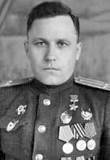
My grandfather, Georgy Brodovoy, went through three wars - the Finnish war, the Great Patriotic War, and the Japanese war. He was a senior paramedic, Lieutenant of the Medical Service, provided medical care to the wounded on the battlefields and in field hospitals. The beginning of the Great Patriotic War found him close to the Western border of the USSR. He with a train of wounded fell into the German encirclement on June 25, 1941. He remembered that the Germans left them in an open field, hastily surrounded by a fence; there were no medicines and bandages. Three days later, he escaped from captivity and came to his own. He got into a Special Department, was demoted for "treason" and sent to a penal battalion, where he fought as a private for six months. He was wounded, and after treatment continued the war as a military paramedic. He participated in the liberation of Leningrad in February 1944, in the assault on Konigsberg in 1945 as a member of the 43rd Separate Battalion of Knapsack Flamethrowers of the 9th Assault Engineering and Sapper Brigade of the Top Command Reserve of the 3rd Belarusian Front. For providing timely medical care to 92 soldiers and officers during the breakthrough of the long-term enemy defense in the Pilkallen area (now Dobrovolsk, Kaliningrad Region) in January 1945, Georgy Brodovoy was awarded the Order of the Red Star (order #1/n of 16.01.1945 9).
After the Great Patriotic War he with the 9th Assault Engineering and Sapper Brigade was transferred to the Far East, where he participated in the storming of the fortified regions of the Japanese Kwantung army (9th AESB was assigned to the 39th Army). He was demobilized in 1948, having spent about nine years in the active army. He finished the war with the rank of First Lieutenant of Medical Service.
Georgy Brodovoy
Rank: Senior Paramedic
Branch of Service: Military Medical Staff
My grandfather, Georgy Brodovoy, went through three wars - the Finnish war, the Great Patriotic War, and the Japanese war. He was a senior paramedic, Lieutenant of the Medical Service, provided medical care to the wounded on the battlefields and in field hospitals. The beginning of the Great Patriotic War found him close to the Western border of the USSR. He with a train of wounded fell into the German encirclement on June 25, 1941. He remembered that the Germans left them in an open field, hastily surrounded by a fence; there were no medicines and bandages. Three days later, he escaped from captivity and came to his own. He got into a Special Department, was demoted for "treason" and sent to a penal battalion, where he fought as a private for six months. He was wounded, and after treatment continued the war as a military paramedic. He participated in the liberation of Leningrad in February 1944, in the assault on Konigsberg in 1945 as a member of the 43rd Separate Battalion of Knapsack Flamethrowers of the 9th Assault Engineering and Sapper Brigade of the Top Command Reserve of the 3rd Belarusian Front. For providing timely medical care to 92 soldiers and officers during the breakthrough of the long-term enemy defense in the Pilkallen area (now Dobrovolsk, Kaliningrad Region) in January 1945, Georgy Brodovoy was awarded the Order of the Red Star (order #1/n of 16.01.1945 9).
After the Great Patriotic War he with the 9th Assault Engineering and Sapper Brigade was transferred to the Far East, where he participated in the storming of the fortified regions of the Japanese Kwantung army (9th AESB was assigned to the 39th Army). He was demobilized in 1948, having spent about nine years in the active army. He finished the war with the rank of First Lieutenant of Medical Service.
0 comment




2026 © Russian Military Historical Society Developed by Jetmix