Images of War
Images of War
Images of War
Images of War
RU
EN
Send a photo
Topics
CAMD
Russia-Serbia Belgorod-Belgrade
Donbass 2014-2025, SWO
We accuse - only facts
Faces of war
Yevdokia Alekseevna Ruleva
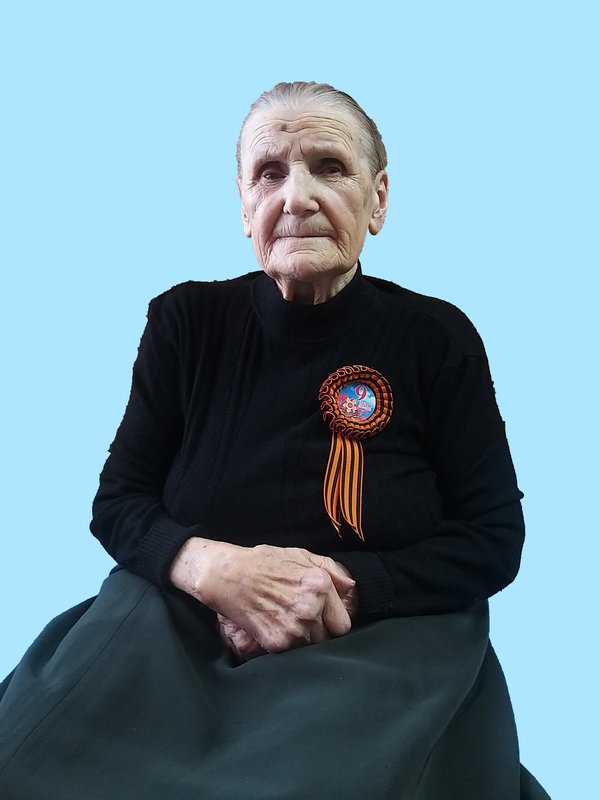
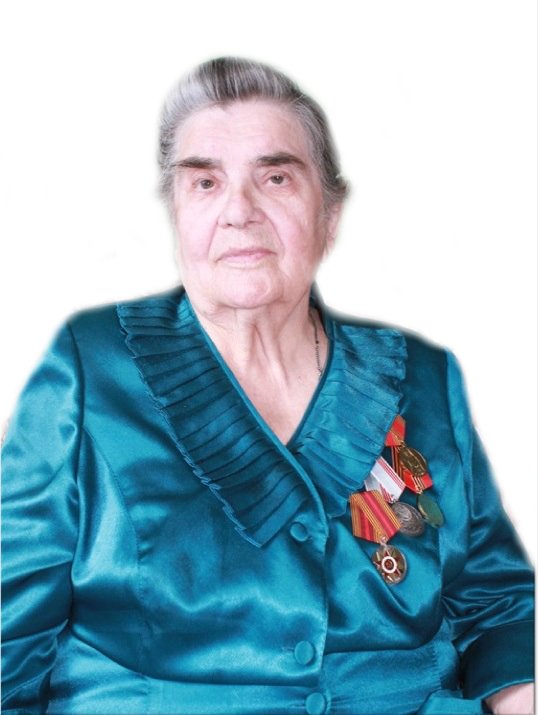
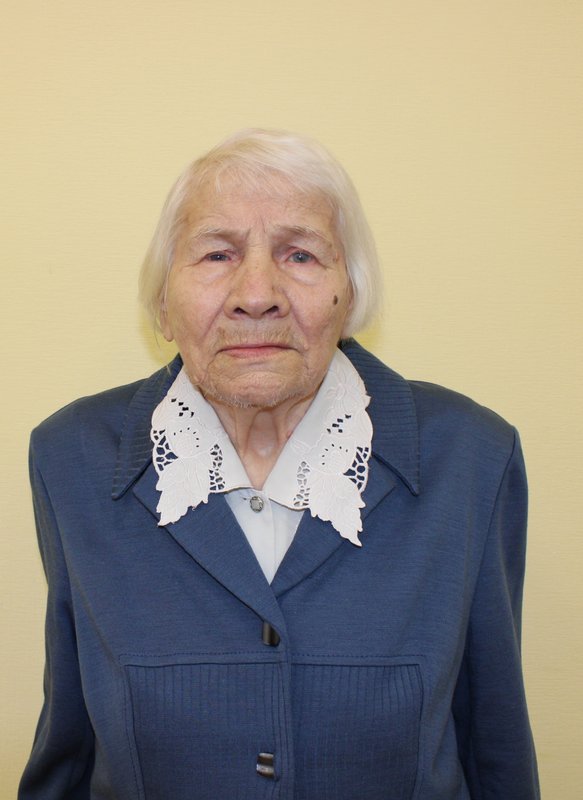
Yevdokia Alekseevna Ruleva Ruleva Evdokiya Alekseevna (home front worker) Evdokiya Alekseevna was born on 1 March 1923 in the village of Bykov Otrog, Balakovsky district, and grew up in a large friendly family, together with her sister and three brothers. When the war broke out, Evdokiya was eighteen years old. She had already finished 10th grade of secondary school and entered the Balakovo Teachers' Training College. She went to the front in the first hours of the war at the call of the military committee. There, together with the soldiers, for 18 months the young girl dug trenches, anti-tank ditches, dug trenches in the territory from Saratov to Stalingrad, bringing the great victory closer. "It was especially hard in winter. Men dug the ditches with tractors, while we girls, yesterday's schoolgirls, threw tons of frozen land up with shovels, from dawn to dusk," recalls Yevdokia Alexeevna. At the end of the hostilities, she returns to her native Balakovo district and receives a primary school teacher's diploma. By distribution, the girl goes to Siberia, to the city of Taishet, where she has been working in the field of pedagogy for a long time. Evdokia Alexeevna has a daughter, Elena, who continues the family tradition of working as a teacher at school.
To favorites
Zinaida Yakovlevna Solyukova
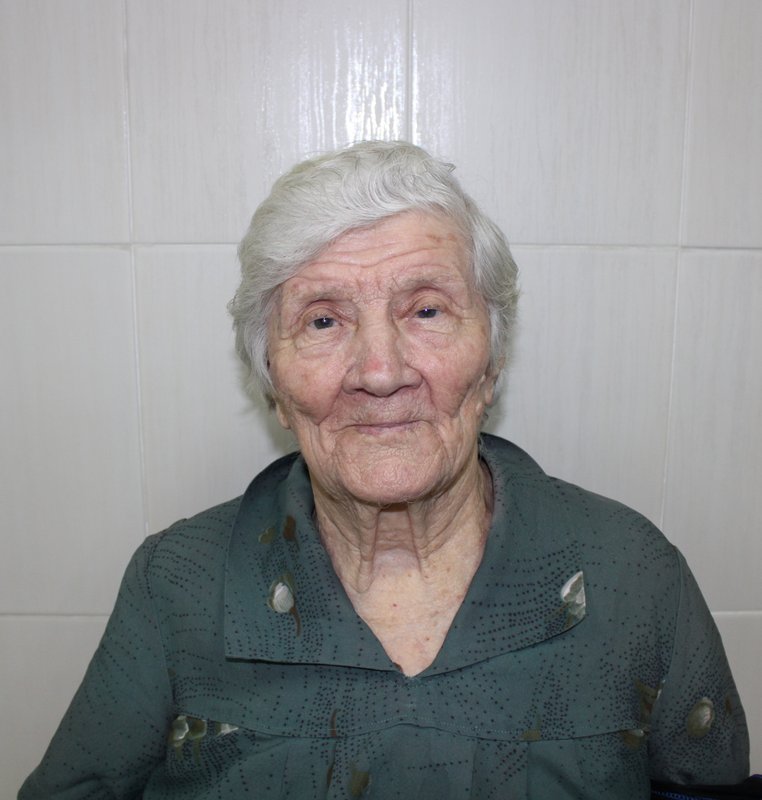
Zinaida Yakovlevna Solyukova (worker in the rear) was born on October 12, 1926 in the village of Pavlovka, Ulyanovsk region, in a large family. Mother, Alexandra Ivanovna, had poor health, so the entire household was on the eldest daughter, Zinaida. The head of the family, Yakov Andreevich, worked as a shoemaker. As soon as the news of the beginning of the war came, he went to the front to defend his family and Fatherland. Zinaida Yakovlevna graduated from the 7th grade of secondary school and got a job as a cutter at a local shoe factory. The girl was sure it was necessary for everyone to defend the Motherland, and she underwent military training at the end of 1944 but, did not go to the front. Zinaida Yakovlevna remained in the rear, with her sick mother, younger brothers and sister. The girl works in a factory, receiving 500 grams of bread per day. In 1947, when life began to improve slowly, Zinaida Yakovlevna left for the city of Nizhny Tagil, where she married a front-line soldier, Georgy Sidorovich Solyukov.
To favorites
Elena Pavlovna Sidorshina
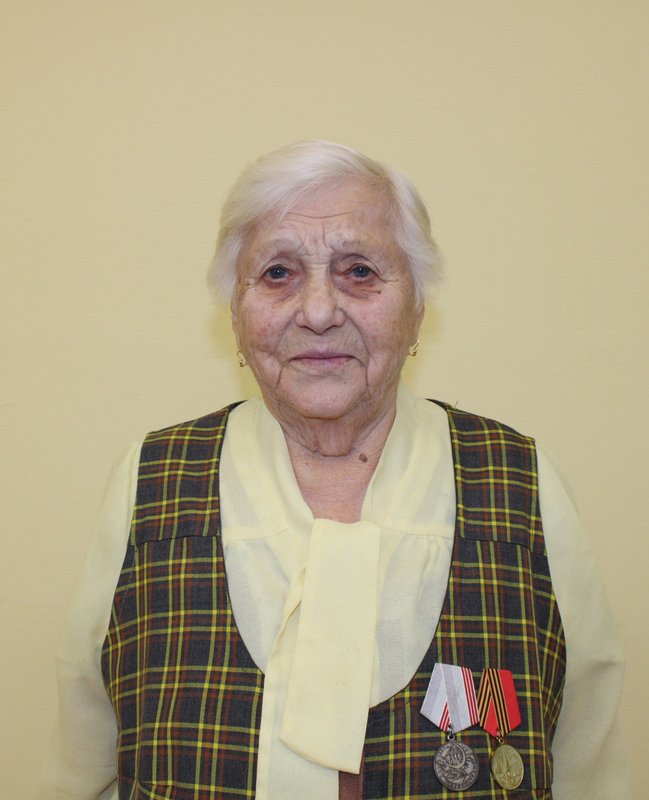
Elena Pavlovna Sidorshina (worker in the rear) was born on July 26, 1930 in the village of Bolshoy Krasny Yar, Balakovo region, in the family of a carpenter and housewife. In 1938, the girl went to first grade. As soon as the war began, together with classmates they went out to work - to plant gardens outside the village, but they did not stop studying. “It was difficult, but still we lived steadily and worked hard”- recalls Elena Pavlovna. The joyful event about the end of the war came when Elena drove out the herd in the morning and the neighbour's wife, Olga Mikhailovna, came out onto the front porch and loudly said: “The war is over! The war is over! " In 1948, Elena Pavlovna graduated from the 10th grade and entered the Saratov Pedagogical Institute, the Faculty of Mathematics. Soon, due to the lack of an opportunity to rent a flat, the student was transferred to the Volsky Pedagogical Institute. In 1950, on assignment, Elena was sent to Belarus, to the Kaptsevichi station of the Brest region. There she works as a teacher for a short time, then returned to her homeland due to the illness of her parents - the difficult war years affected. Elena Pavlovna did not give up her studies even in difficult years of her life - first she entered the remote course in Saratov, and then to the Kuibyshev Aviation College, where she remained to work as a teacher.
To favorites
Butuzova Raisa Andreevna
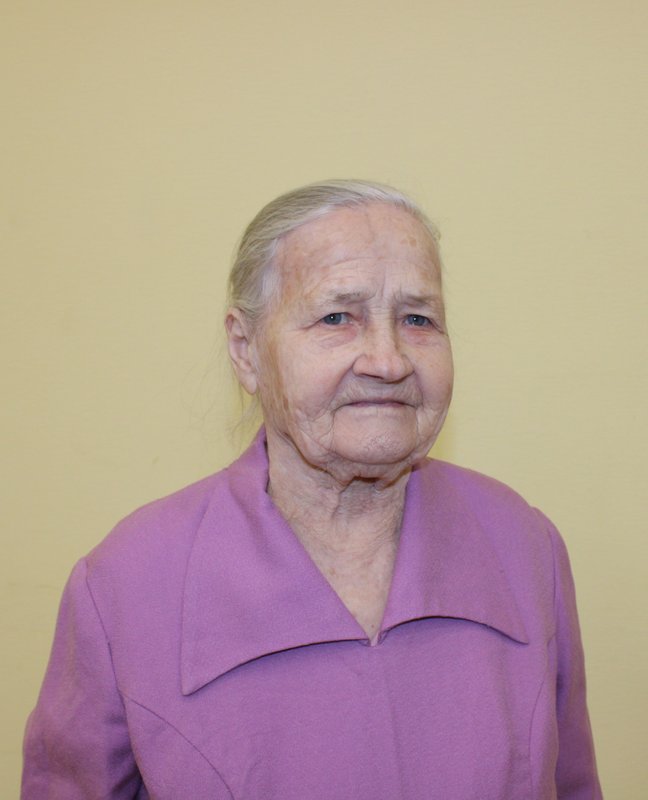
Butuzova Raisa Andreevna (worker in the rear) was born on May 30, 1918 in the village of Ilyushino, Pavlovsky district, Saratov region, in the family of the carpenter Andrei Alekseevich and housewife Anastasia Feodorovna Gordeeva. There were three more brothers in the family - Alexander, Matvey and Stepan. They lived modestly, but did not starve. Everyone worked in the family, at a small farm. The brothers of Raisa Andreevna quickly learned the carpentry and from an early age worked with their father. Twice the local authorities dispossessed the Gordeevs' savings. The head of the family was forced to join the collective farm in order to protect loved ones from reprisals. Raisa Andreevna studied for only two years of elementary school. The children wore clothes one by one to go to school, usually borrowing everything after adults. In 1939, the girl married the teacher of the local school, Stepan Fyodorovich Butuzov. And in 1940 their son Grisha was born. When the news about the beginning of the war thundered, Raisa Andreevna, together with her father, began to work in the forestry enterprise. “The work was not easy, but we understood that the preparation of firewood for our army and the rear was vital” -says Raisa Andreevna. In 1945, a daughter, Zina, appeared in the Butuzov;s family. The news of the Victory and the birth of a daughter were two joyful and unforgettable moments in their life. Later the Butuzovs moved to the village of Alekseevka. Here Raisa Andreevna had been working in a kindergarten for 16 years, first as a nanny, and then as a cook.
To favorites
Kravtsova Antonina Stepanovna
Kravtsova Antonina Stepanovna (worker in the rear) was born on July 19, 1929 in the village of Alekseevka, Samoilovsky district, Saratov region. The family consisted of three people - a mother and two children. The younger brother of Antonina Stepanovna soon died of hunger. From the age of five, the girl helped her mother with the housework, looked after the cattle, helped to heat the stove. Later when she grew up a bit, like many of her peers, she went to work on a collective farm. “When I was 12 years old, the foreman gathered all the people at work, at that time I took care of cattle, and announced that the war had begun” - Antonina Stepanovna recalls. During the war, the girl worked a lot in the fields, sowed and prepared hay, made bricks, from which they later built cowsheds and stables. “There was nothing to eat at that time of hunger. We picked up unripe oats, boiled it and ate it, but I really wanted at least a piece of bread ”- the veteran shares her memories. Antonina Stepanovna learned that the war was over from the radio messages. In her recollections, everyone around was crying with happiness, sang songs and rejoiced at the Victory. After the war, Antonina Stepanovna remained to live in her native village. In 1946, she married a soldier. Together they built a big house, started a farm. The husband worked as a driver, and the veteran continued to work on the collective farm until her retirement.
To favorites
Reshetnyak Nina Petrovna
Reshetnyak Nina Petrovna (worker in the rear) was born on March 11, 1931 in the city of Atkarsk, Saratov region. Nina Petrovna's family lived at the Koppela station. After graduating from 6 classes, the girl went to work on the railway as a railroad worker. “Once crossing the railway tracks, I saw broken rails, to which a military train was approaching. I started swinging my briefcase, drawing attention to myself to avoid the train going off the tracks. The driver stopped the train came out to me and thanked for the lives saved ”- recalls Nina Petrovna. With the outbreak of the war, there was a shortage of food. They lived very poorly, ate cakes made of "grey" flour and orach. According to the veteran's memories, it was seen how the besieged city was burning 300 kilometres away during the days of the Battle of Stalingrad. There was very little left to Saratov. But there were also joyful moments. Nina Petrovna recalls with particular warmth the letters from her uncle, who served at the front. He often wrote about how he managed to liberate a village in some area or even an entire city. “At such moments I was very proud of our family, our heroic people, who beat the fascists and drove them from their native land” -recalls Nina Petrovna. The woman worked as a railroad worker until her retirement, ensuring the smooth movement of trains. In this craft she was the best.
To favorites
Rusanova Lydia Semyonovna
Rusanova Lydia Semyonovna (worker in the rear) was born on May 15, 1929 in the village of Sytinka, Pavlovsky district, Kuibyshev region. The family consisted of three people: a mother and two daughters. According to the words of Lydia Semyonovna, the adults did not tell the children about the war until the military arrived at the collective farm and were transported from there to the front. At this moment, the carefree childhood ended for her. The teenagers worked all day on the collective farm: they worked in the fields and nursed little lambs. The war years were remembered by her hard work, hunger and cold. “It was very difficult, in the forty-degree frost we walked on half-bare feet, carried straw and hay to the sheep”- says the veteran. Lydia Semyonovna met the news of the victory with all the villagers at the building of the administration. “People did not hide their tears, they cried with joy and grief of irreparable losses and lives taken away forever”- the woman recalls. After the war, the girl went to work as an assistant cook in the collective farm canteen. She got married, gave birth to a son, and remained to live in her native village.
To favorites
Stepanova Vera Grigorievna
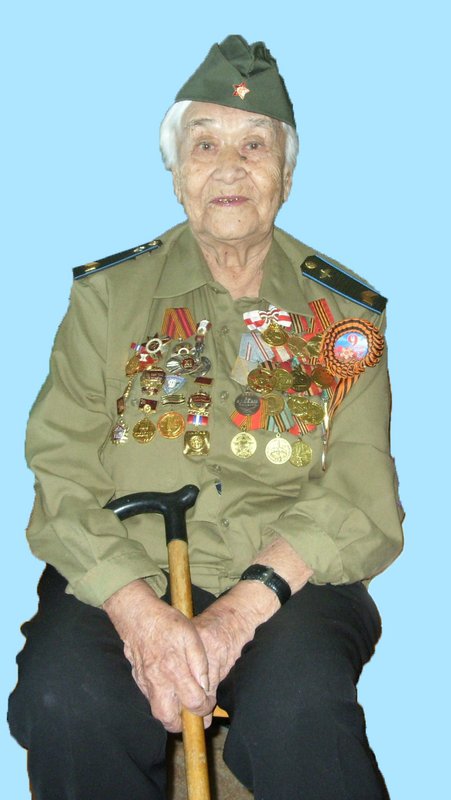
Stepanova Vera Grigorievna (war participant) was born in 1925. At the age of sixteen, hiding her real year of birth, Vera Grigorievna volunteered for the front. She took part in the battles for Voronezh. Then, after graduating from the school of Senior Sergeants, she became a signalman of the 761st Guards Fighter Polotsk, Vitebsk Aviation Regiment. In protracted battles on the fiery Kursk, the young girl brilliantly completed the combat mission from the regiment command, showing real valour and courage. For her heroism and fearlessness Vera Grigorievna was awarded the medal "For Courage" and was honourably accepted into the ranks of the Communist Party. During the liberation of Belarus, the unit in which the girl served, was surrounded. The commander gave her the task to get to the "friends". Vera Grigorievna complied with the order and delivered the report to its destination. Subsequently, for her courage, she was awarded the Medal for “Military Merit”. Then Lithuania was liberated with battles. Just before the Victory, they entered enemy territory - East Prussia. The air unit in which Vera Grigorievna served was located near the town of Labiau. Here she and her fellow soldiers met the long-awaited Victory. Returning home, Vera Grigorievna entered a cook course, and later worked as a catering director.
To favorites
Raisa Feodorovna Nesterova
Raisa Feodorovna Nesterova (worker in the rear) was born on June 1, 1929 in the city of Barnaul, Altai Territory. The family was large. And as soon as the war began, father and elder brother were taken to the front. All household chores fell on women's shoulders. I had to work hard. Since the bread was given out in a small portion, the vegetable garden was very helpful. In 1945, Raisa Feodorovna entered the technical school in Semipalatinsk. She studied away from home, missed her relatives very much. “It was difficult to study, it was even harder to live on a scholarship of 75 roubles. For comparison, the cost of a loaf of bread on the market at that time was 300 roubles. The situation improved when the director of the technical school managed to arrange for the students to be fed in the cafeteria. The frontline guys were neighbours in the hostel, they persuaded me to go home and bring potatoes. When I came back, the guys helped me with the bags and ran to cook potatoes. It was one of the few moments when I managed to eat enough” - Raisa Feodorovna recalls her youth. After the end of the war, Raisa Feodorovna was sent to Vladivostok according to the distribution. She worked as a district technologist, then as an expert merchandiser. “Through our organization, all Kamchatka and Chukotka were supplied with goods”- recalls Raisa Feodorovna.
To favorites
Anna Pavlovna Kukoleva
Anna Pavlovna Kukoleva (worker in the rear) was born on January 27, 1926 in the Saratov region. She lived in the village of Bolshaya Kamenka. All her youth passed in the years of war, years of fear and hardship. She studied at school for 7 years, after which she went to work. The work that the young girl was doing was not easy. “We laid a gas pipeline from the Kologrivovka station to Saratov. When the war began, I was only 15 years old. Sometimes instead of making a gas pipeline, we had to dig anti-tank trenches, which were much deeper and wider than usual. And in winter it was especially difficult to work, the frozen ground almost did not lend itself to excavation, and the frost and snow were very disturbing. I remember how many livestock perished in these trenches, it was a pity to watch how the animals were dying, but it was impossible to help them. There was nothing to eat, and no one knew where the strength for such hard work was taken from! And we worked conscientiously, because we understood that we were also helping to defend the Motherland ”-Anna Pavlovna recalls the war years.
To favorites
Dymchenko Lyubov Pimovna
Dymchenko Lyubov Pimovna (worker in the rear) was born on December 7, 1928 in the village of Pyatikhatka in the Crimea. When she was nine years old, she moved with her parents to the city of Armyansk, went to school, but managed to finish only five classes. The family of Lyubov Pimovna was evacuated to the village of Bek-Bulachi at the beginning of the war. Since all the teenagers were taken to the front, the remaining children and adolescents went to work on the collective farm. “We were children on the collective farm, the rest were disabled”- says Lyubov Pimovna. She worked at various jobs: weeding, digging up the earth, pruning grapes. "All the teenagers worked with bare feet and wore rags"- Lyubov Pimovna recalls how she had to carry for sale a jug with millet or peas poured by her mother for 15 km in order to use the proceeds to buy things necessary in everyday life: soap, kerosene, matches and salt. “We got together with the girls and went looking around like animals. It was scary! ”- recalls the veteran. The villagers were afraid of the arrival of harsh people from the NKVD, and the sound of an approaching enemy plane. “But, despite the harsh wartime, the teenagers tried not to lose heart: the girls wore headscarves in the evenings and went out to sing”- Lyubov Pimovna shares her memories
To favorites
Maria Egorovna Karlova
Maria Egorovna Karlova (worker in the rear) was born on November 28, 1931 in the village of Balakhna in the Zadonsky District of the Lipetsk Region. Parents worked on a collective farm. When the war began, Maria Egorovna was only 10 years old. She and other teenagers were actively involved in work on the collective farm: sowing millet, planting and weeding cucumbers and cabbage. Not far from the village there was a "pickling station" where cabbage was transported. The sauerkraut was sent to the front. “During the war it was very difficult, we studied in unheated rooms and the water froze in the ink from the cold. The house was heated with chicken dung. There were no clothes and shoes, they made blocks of wood, tied them to their feet, and used as boots. During the cold weather, her family was forced to keep a cow with a calf in the house in order to save the life of the cattle, which saved the family in times of hunger with milk ”- Maria Egorovna shares her memories. Her family learned about the end of the war from the chairman, who came to the village and invited everyone to a meeting at the club. Everyone started dancing, many were crying. The post-war years were lean. I had to go to the Don, collect shells, which were then used for food. They also ate orach, linden leaves, burdocks. “Every root of the apple tree was taxed. Therefore, many began to cut down apple trees. My grandfather told my mother not to touch the trees, because apples saved the family from hunger in difficult years ”- says Maria Egorovna.
To favorites
Litovchenko Alexandra Egorovna
Litovchenko Alexandra Egorovna (worker in the rear) was born on December 26, 1929 in the village of Sulak, Krasnopartizansky district. Parents worked on a collective farm. The war began when she was ten years old. She worked on a collective farm, ploughed with bulls. All adults were taken to the front, almost only teenagers worked. “During the war, the father died, then the mother was gone. The elder brother was at the front, the elder sister worked in the civil service, the middle one was a tractor driver. The elder brother returned from the war sick and died almost immediately. The elder sister returned from the north and got married” - Alexandra Egorovna recalls with difficulty those the years of her life“ In 1947, Gazrazvedka hired people to work in the fields in the summer. I got a job there. We lived in a hostel. Later I went to work at the plant as a compressor driver, where I finished her career, ”-the veteran tells.
To favorites
Aleksey Andreyevich Nikolenko
Aleksey Andreyevich Nikolenko (worker in the rear) was born on March 8, 1927 in the "Udarnik" state farm of the Lysogorsk district of the Saratov region. The collective farm peasantry made a significant contribution to achieving victory. The army could not win, not only without the necessary equipment with modern weapons, but also without a sufficient amount of bread and food. “There was not a single collective farm and state farm, not a single collective farmer and collective farmer, not a single worker who did not take part in rendering assistance to the front. Victory was approaching not only with soldier's bayonets: in the collective farm fields it was made by the hands of children and old people, Victory was forged in the rear of the country”-recalls Aleksey Andreevich. During the war, he brought water to the brigades working in the fields. In 1945, he married and worked as a tractor driver.
To favorites
Valentina Sergeevna Denisova
Valentina Sergeevna Denisova (worker in the rear) was born on February 20, 1928 in the village of Lysye Gory, Saratov Region, then moved with her parents to Novaya Nikolaevka. When the war began and the men went to the front, numerous professions for women were formed. “During the war, I went to study to be a tractor driver. I got up for school at five in the morning and walked for ten kilometres away study in Bald Mountains. After graduating, I worked on my speciality. After the war I worked on a collective farm. In 1946, the collective farm chairman gave 200 grams of wheat per workday, so I used to go to the mill, grind it and take home. All the household were happy with fresh bread. Once a representative man came to the village to take potatoes and took not only the potatoes, but also me to Saratov”-Valentina Sergeevna recalls about wartime and life after it.
To favorites
1
. . .
54
55
56
. . .
234
Show more
2026 © Russian Military Historical Society
Developed by Jetmix