Back to
album
album

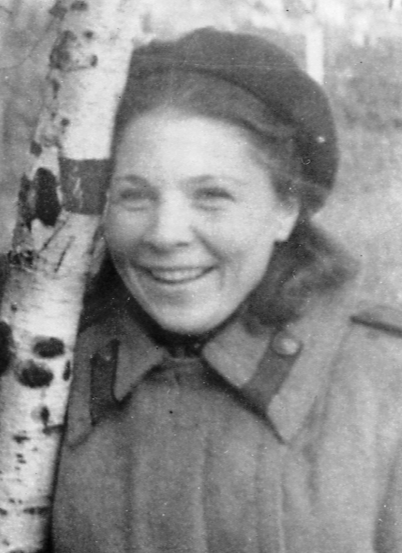
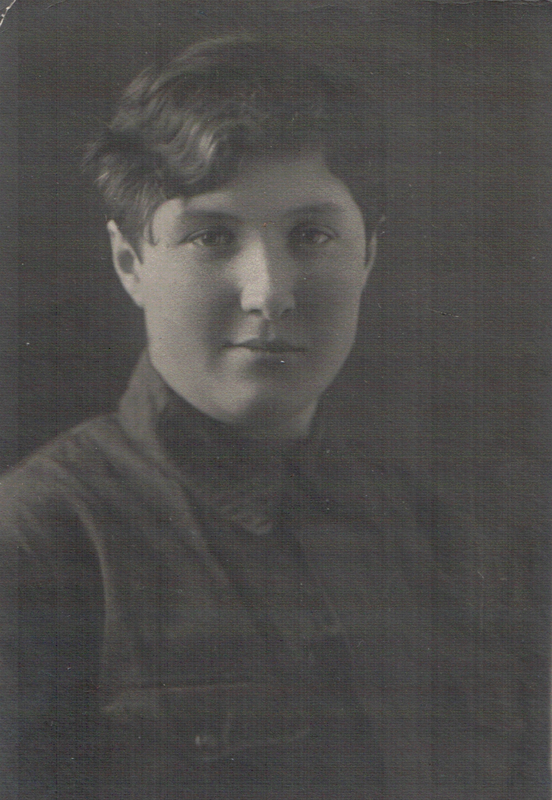
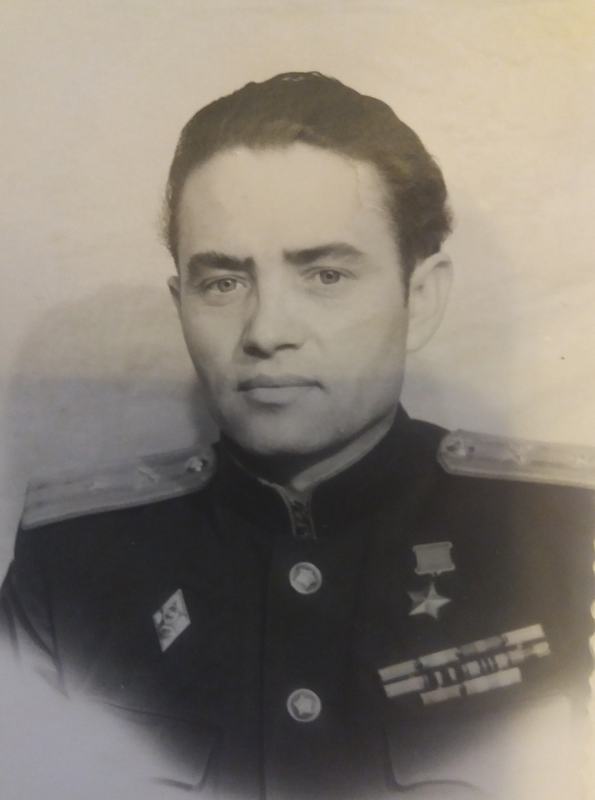

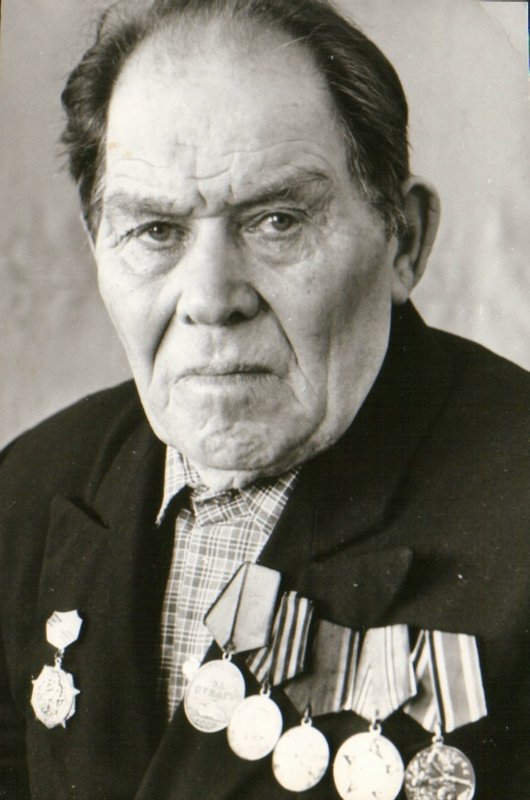
Evgeniya Zapolnova
From my memories:_x000D_
I left voluntarily after finishing the first year of the Armament Department of the Moscow Aviation Institute. I was enlisted in a dive bomber regiment as an armament mechanic in October 1941, since I had no flying experience. The formation of the regiments took place in the city of Engels. We and our instructors faced a difficult task - to master new equipment and all the subtleties of aviation weapons in a short time. And we did it._x000D_
At the front, it was difficult at first: training bombs are one thing, but combat bombs are quite diffrent. For each flight, it was necessary to hang 10 bombs of 100 kilograms each or two cassettes (large boxes of 200 kilograms with an opening bottom) with small bombs. And sometimes there was not enough time to prepare the planes. If there were three departures a day, one had to move three tons of cargo, grab the bomb by the stabilizer and drag it along. We wound the cartridge belts around ourselves and climbed into the plane, and then put them in the cartridge box in the cockpit. The work of the armament mechanics on the PE-2 bomber was exceedingly difficult and responsible. If the weapon fails in a battle, the crew may die, bombs would not be dropped, and the combat mission would be disrupted._x000D_
It was exceedingly difficult for us on the Stalingrad Front. There were severe frosts. Combat sorties followed one after another, and there were not enough armament mechanics. The entire crew helped us to hang the bombs. In a word, the amount of work was huge, but this exam was passed with honor._x000D_
Under Yelnya we were overcome by snow drifts. Nights had to be spent on a storm alert near the planes, and during the day shoveling snow, digging out bombs, the stock of which about the planes was decent. There was enough work to do. We lived literally in the field. In the summer we spent nights under the planes, and in the winter - in a dugout, where sometimes there was nothing to heat the stove with to dry uniforms and boots. Once, on the way to the guard duty, Masha Kaloshina and I had to cross into the ditch. The water was above my knees, and my boots were full. With wet feet in a freezing temperature, we stood at the post for four hours. But we were already so physically hardened that we did not even got a cold._x000D_
We technicians - gunsmiths, instrument makers, mechanics, motorists - were very worried about our planes and crews. We were looking forward to their return from combat missions. When the planes were just approaching the airfield, we counted all them to make sure that everyone returned home._x000D_
Finally, May of 1945 came. It was a great happiness. And soon we with the best crews of the regiment flew to Moscow to participate in the Victory Parade. It was then - June 24, 1945 - that the feeling of victory became complete.
Evgeniya Zapolnova
From my memories:_x000D_
I left voluntarily after finishing the first year of the Armament Department of the Moscow Aviation Institute. I was enlisted in a dive bomber regiment as an armament mechanic in October 1941, since I had no flying experience. The formation of the regiments took place in the city of Engels. We and our instructors faced a difficult task - to master new equipment and all the subtleties of aviation weapons in a short time. And we did it._x000D_
At the front, it was difficult at first: training bombs are one thing, but combat bombs are quite diffrent. For each flight, it was necessary to hang 10 bombs of 100 kilograms each or two cassettes (large boxes of 200 kilograms with an opening bottom) with small bombs. And sometimes there was not enough time to prepare the planes. If there were three departures a day, one had to move three tons of cargo, grab the bomb by the stabilizer and drag it along. We wound the cartridge belts around ourselves and climbed into the plane, and then put them in the cartridge box in the cockpit. The work of the armament mechanics on the PE-2 bomber was exceedingly difficult and responsible. If the weapon fails in a battle, the crew may die, bombs would not be dropped, and the combat mission would be disrupted._x000D_
It was exceedingly difficult for us on the Stalingrad Front. There were severe frosts. Combat sorties followed one after another, and there were not enough armament mechanics. The entire crew helped us to hang the bombs. In a word, the amount of work was huge, but this exam was passed with honor._x000D_
Under Yelnya we were overcome by snow drifts. Nights had to be spent on a storm alert near the planes, and during the day shoveling snow, digging out bombs, the stock of which about the planes was decent. There was enough work to do. We lived literally in the field. In the summer we spent nights under the planes, and in the winter - in a dugout, where sometimes there was nothing to heat the stove with to dry uniforms and boots. Once, on the way to the guard duty, Masha Kaloshina and I had to cross into the ditch. The water was above my knees, and my boots were full. With wet feet in a freezing temperature, we stood at the post for four hours. But we were already so physically hardened that we did not even got a cold._x000D_
We technicians - gunsmiths, instrument makers, mechanics, motorists - were very worried about our planes and crews. We were looking forward to their return from combat missions. When the planes were just approaching the airfield, we counted all them to make sure that everyone returned home._x000D_
Finally, May of 1945 came. It was a great happiness. And soon we with the best crews of the regiment flew to Moscow to participate in the Victory Parade. It was then - June 24, 1945 - that the feeling of victory became complete.
0 comment



2026 © Russian Military Historical Society Developed by Jetmix