Back to
album
album
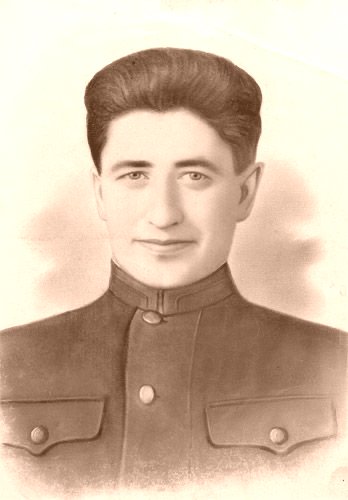


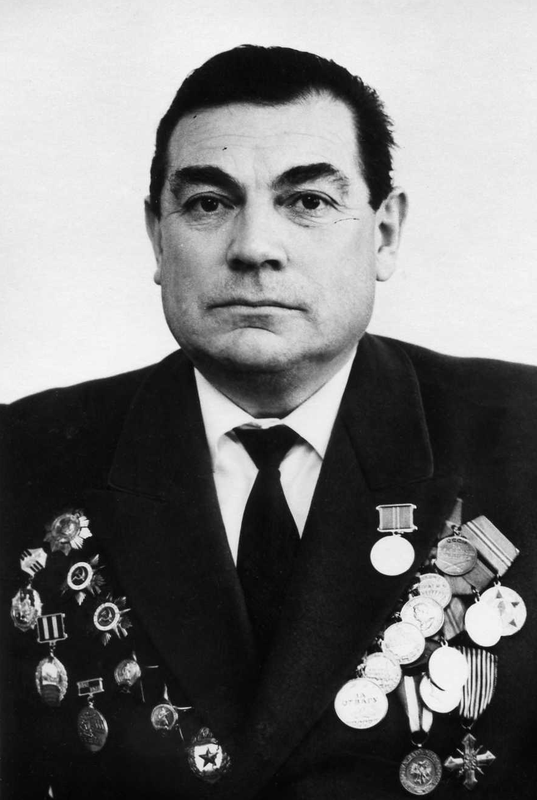


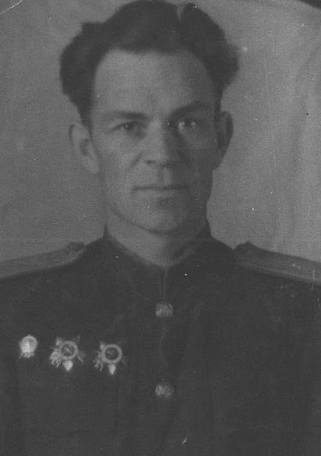
Kutexov Dmitri Fedorovich
Rank: Red Army soldier.
Branch of military: Army, Air Forces (except naval aviation), Coast Guards, the troops of the NKVD, Border Guards.
Division: 2nd Moscow rifle division of the people's militia (Stalinsky district).
He was born in a large peasant family. Communist. Participated in the civil war. From the first days after the establishment of Soviet power, he worked where the party directed. Worked in Yegoryevsk and Shatura districts and Zaraysk. In Zaraysk, he was, as they would say now, a hospital administrator. In 1927, he came to Moscow with his family and worked first in Metrostroy, then in the Kalinin Executive Committee. The family settled down to live in the working town named after Bauman (Izmailovsky island) in a rented apartment, occupying a "corner" in a large room with huge ceilings, in the building of the Northern soldiers ' corps, the former Nikolaev hospital for veterans of the War of 1812. The family of the often inebriated owner also lived in the same room. The wall of the "corner" being removed, adjacent to the Pokrovsky Cathedral, was wet, and in winter it froze. Before the war the family moved to an unpretentious wooden house on Mochalski (now St Ibragimov) street. Grandfather had already fixed it: replaced the rotted floors, made a pile around the house, covering it with slag. The family had four children by this time. In June 1941 Dmitry Fyodorovich was in his fortieth year, and was not subject to conscription in the first days of the war. But like many, he wanted to protect his Homeland. The War was not a complete surprise to him. Thinking people have sensed its approach for a long time. The working day was lengthened, it was forbidden to change the place of work, and other toughening of labor legislation was introduced. Dmitry Fyodorovich told his wife that war is inevitable and will be "not for life, but to the death." As soon as the call to the people's militia was announced (July 3, 1941), my grandfather immediately enlisted as a volunteer and was mobilized on July 9, 1941. My grandfather's friend Kosarev (unfortunately, my mother does not remember his name and patronymic) served in the same division and often went to Moscow (the militia were supplied with food from Moscow warehouses). With it, my grandfather could send infrequent messages to his family. In one of them, he reported that they were located near Mozhaisk. And my grandmother did not hesitate, taking her daughter with her. I went to visit my Mitya. It was the end of August 1941. We got to the meeting place for more than a day, changing trains. Civilian trains passed military trains. Leaving early in the morning, they did not reach the place until the evening of the following day. As my mother recalls, they were standing with my grandmother at the edge of the forest, and columns of soldiers were walking past them. And mom suddenly saw her father walking to the right of the column, and rushed to him. It was a miracle to find him among the mass of soldiers. My father told them to wait for him here in the forest, and by nightfall he came to them. Dmitry Fyodorovich lit a fire and built a hut out of branches for his daughter. Tired of the long ride and waiting, Rosa fell asleep, while Dmitry Fyodorovich (Mitya) and Pelageya Andreyevna (Lelya) sat by the fire all night. At dawn, the service was waiting for him, and his wife and daughter had a hard road back to Moscow. This was their last meeting Grandfather went missing in October 1941 in the battle of Vyazma. In the last letter of September 14, 1941 (Active army, division 929, ORB), he congratulated his son Vladimir on his birthday, wrote that he was alive and well and that "they have not smelled gunpowder yet". (Maybe this phrase was to calm the family) Unfortunately, the letter was not saved. But I remember this worn piece of paper that my grandmother kept. Dmitry Fyodorovich's eldest son, Vladimir (born in 1925), graduated from the artillery school in 1943 and ended the war as a commander of a mortar platoon in December 1945 in Hungary. Daughter Rosa - my mother, from the age of 14, worked at the Moscow factory No. 67, collecting grenades and shells, was awarded the medal "for valiant labor in the second world war 1941-1945", the medal " 800 years. Moscow", Anniversary medals.
Kutexov Dmitri Fedorovich
Rank: Red Army soldier.
Branch of military: Army, Air Forces (except naval aviation), Coast Guards, the troops of the NKVD, Border Guards.
Division: 2nd Moscow rifle division of the people's militia (Stalinsky district).
He was born in a large peasant family. Communist. Participated in the civil war. From the first days after the establishment of Soviet power, he worked where the party directed. Worked in Yegoryevsk and Shatura districts and Zaraysk. In Zaraysk, he was, as they would say now, a hospital administrator. In 1927, he came to Moscow with his family and worked first in Metrostroy, then in the Kalinin Executive Committee. The family settled down to live in the working town named after Bauman (Izmailovsky island) in a rented apartment, occupying a "corner" in a large room with huge ceilings, in the building of the Northern soldiers ' corps, the former Nikolaev hospital for veterans of the War of 1812. The family of the often inebriated owner also lived in the same room. The wall of the "corner" being removed, adjacent to the Pokrovsky Cathedral, was wet, and in winter it froze. Before the war the family moved to an unpretentious wooden house on Mochalski (now St Ibragimov) street. Grandfather had already fixed it: replaced the rotted floors, made a pile around the house, covering it with slag. The family had four children by this time. In June 1941 Dmitry Fyodorovich was in his fortieth year, and was not subject to conscription in the first days of the war. But like many, he wanted to protect his Homeland. The War was not a complete surprise to him. Thinking people have sensed its approach for a long time. The working day was lengthened, it was forbidden to change the place of work, and other toughening of labor legislation was introduced. Dmitry Fyodorovich told his wife that war is inevitable and will be "not for life, but to the death." As soon as the call to the people's militia was announced (July 3, 1941), my grandfather immediately enlisted as a volunteer and was mobilized on July 9, 1941. My grandfather's friend Kosarev (unfortunately, my mother does not remember his name and patronymic) served in the same division and often went to Moscow (the militia were supplied with food from Moscow warehouses). With it, my grandfather could send infrequent messages to his family. In one of them, he reported that they were located near Mozhaisk. And my grandmother did not hesitate, taking her daughter with her. I went to visit my Mitya. It was the end of August 1941. We got to the meeting place for more than a day, changing trains. Civilian trains passed military trains. Leaving early in the morning, they did not reach the place until the evening of the following day. As my mother recalls, they were standing with my grandmother at the edge of the forest, and columns of soldiers were walking past them. And mom suddenly saw her father walking to the right of the column, and rushed to him. It was a miracle to find him among the mass of soldiers. My father told them to wait for him here in the forest, and by nightfall he came to them. Dmitry Fyodorovich lit a fire and built a hut out of branches for his daughter. Tired of the long ride and waiting, Rosa fell asleep, while Dmitry Fyodorovich (Mitya) and Pelageya Andreyevna (Lelya) sat by the fire all night. At dawn, the service was waiting for him, and his wife and daughter had a hard road back to Moscow. This was their last meeting Grandfather went missing in October 1941 in the battle of Vyazma. In the last letter of September 14, 1941 (Active army, division 929, ORB), he congratulated his son Vladimir on his birthday, wrote that he was alive and well and that "they have not smelled gunpowder yet". (Maybe this phrase was to calm the family) Unfortunately, the letter was not saved. But I remember this worn piece of paper that my grandmother kept. Dmitry Fyodorovich's eldest son, Vladimir (born in 1925), graduated from the artillery school in 1943 and ended the war as a commander of a mortar platoon in December 1945 in Hungary. Daughter Rosa - my mother, from the age of 14, worked at the Moscow factory No. 67, collecting grenades and shells, was awarded the medal "for valiant labor in the second world war 1941-1945", the medal " 800 years. Moscow", Anniversary medals.
0 comment




2026 © Russian Military Historical Society Developed by Jetmix