Back to
album
album
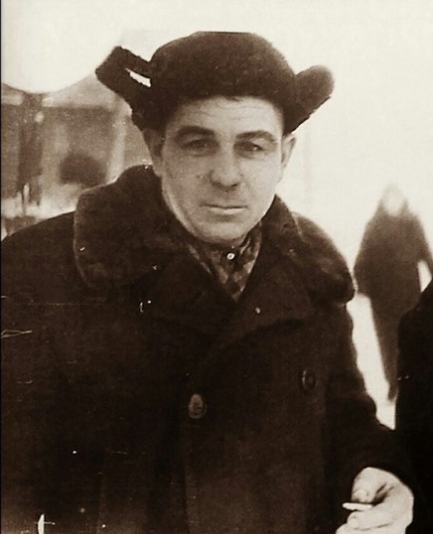
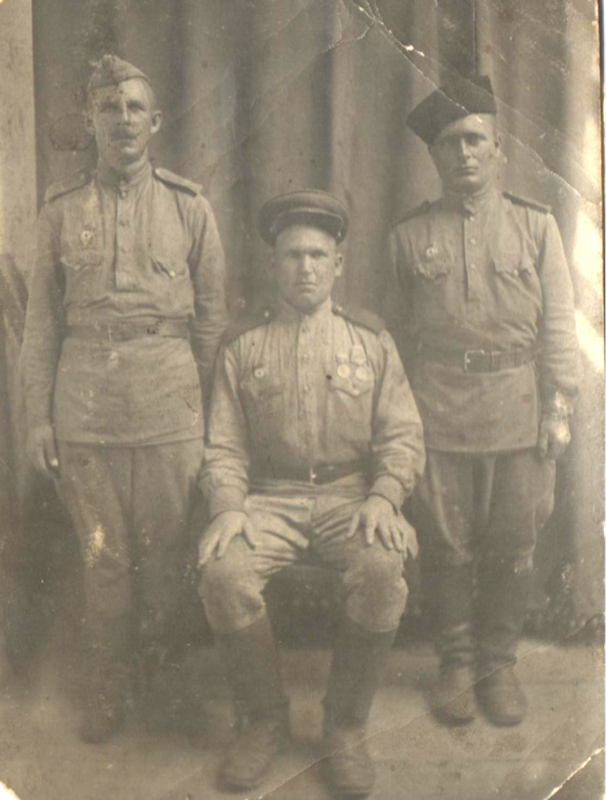
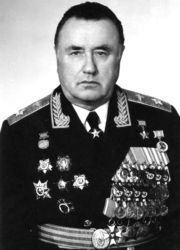
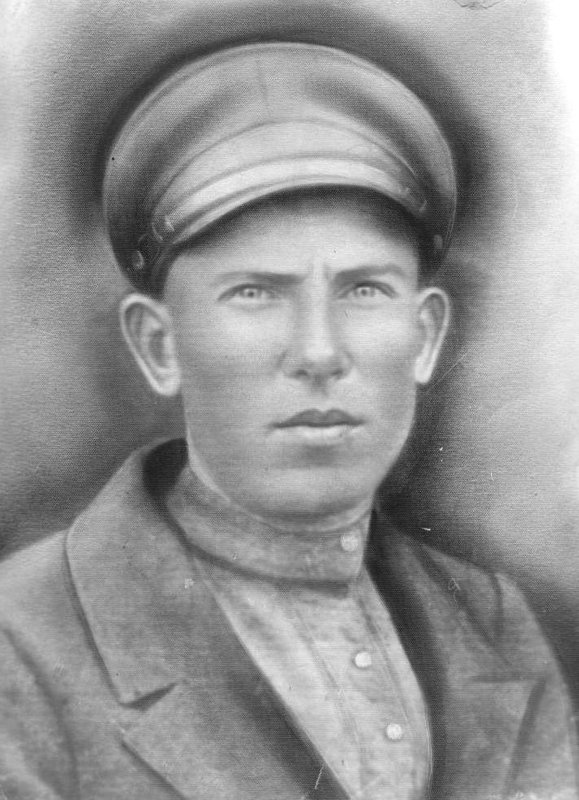
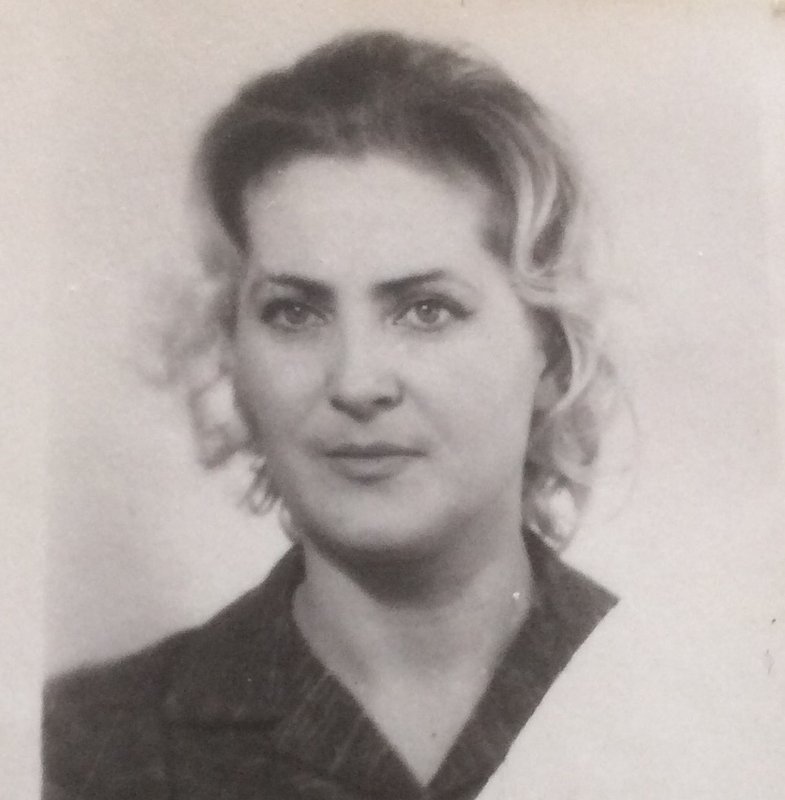
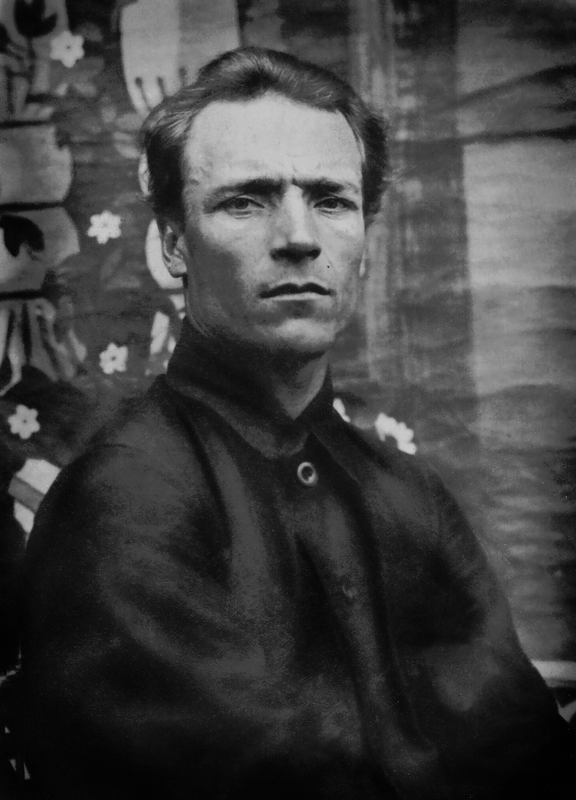
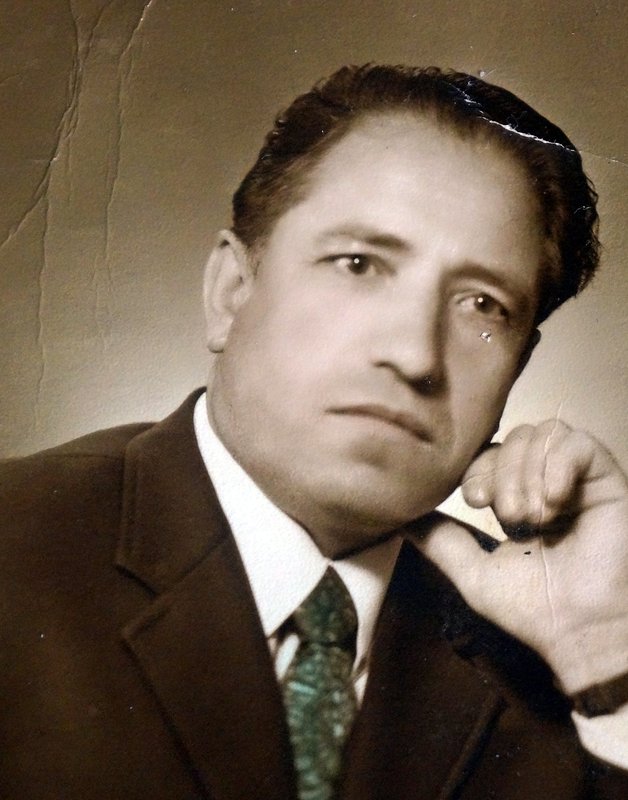
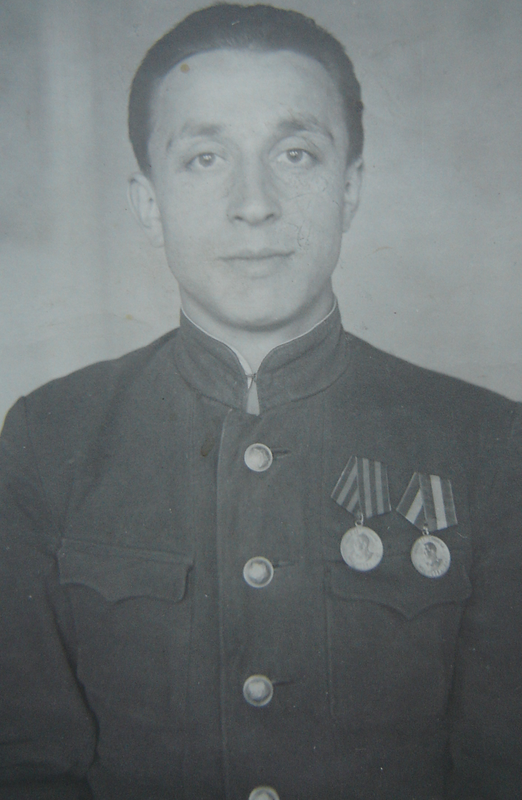
Yakov Pryakhin
01.01.1901 - 08.08.1943_x000D_
Rank: Red army soldier_x000D_
In April 2015, a very significant event occurred in our family. My son and I found the burial place of our grandfather, great-grandfather, great-great-grandfather - Yakov Pryakhin._x000D_
Nothing was known about him for a long time._x000D_
We didn't even know the year of his birth. The fact is that grandfather Yakov's daughter, my grandmother Anna, was a five-year-old child when she last saw her father alive. Yakov and Anastasia Pryakhin lived Prajini in the Mordovian ASSR Tengushevskiy District, the village of Shoksha. The family had three children: Ekaterina, Praskovya and the youngest – Anna (my grandmother). My great-grandfather was called to the front in 1941. The only thing my grandmother knew was that he had been in the hospital and had been killed in a bomb attack. Yakov's wife Anastasia was very worried all her life that she did not know where her husband was buried. My grandmother, too, has come to terms with the idea that she will not be able to come to her father's grave. But life decided otherwise._x000D_
I periodically looked through the memorial.ru website wth a hope to find at least one document, but there was no information for a long time. Once again on April 2, 2015, when I went to the site and made a request for the name of my grandfather, I saw the search results!_x000D_
The last place of service was specified as 957th Rifle Regiment that was a part of the 309th Rifle Division. The document stated that Yakov Pryakhin was buried in the city of Kurgan in the military cemetery in a mass grave. I found a photo of the memorial on the Internet. I used the zoom function to read my great-grandfather's name on the plaque. How exciting it was! To see the name of your loved one carved on a cast-iron plaque on a memorial almost two thousand kilometers away! I wrote an email to our friend Nina Komarskikh, who lives in this city, asked her to photograph this memorial and lay flowers on behalf of our family._x000D_
This memorial is an object of cultural heritage of regional significance. The remains of eight mass graves were reburied into one in 1975, and the monument was reconstructed. Three plates of pig iron were installed on the tombstone in 1978. They were supplemented in the 1980th and now 8 cast-iron plates with the names of buried soldiers are installed on the wall. The cemetery was named Victory Park in 1985. The center of the Park is a mass grave of soldiers who died of wounds in Kurgan hospitals in 1941-1945. The authors of the project were the sculptor S. Goloshchapov and the architect A. Yakushenko. The compositional solution of the sculptural group is an explosion and a falling soldier. The Order of Victory completes the composition._x000D_
Natalia Zakharova joined the search efforts. She, in turn, contacted the search teams of the Republic of Mordovia (since her great-great-grandfather was from Mordovia). It turns out that in the database, he was recorded as a soldier fallen in the Voronezh Region. All the documents we found and a photo of my great-great-grandfather were sent to Mordovia by email. Now they are thinking about how to correct their records._x000D_
The document shows the number of the evacuation center: #98, the city of Chelyabinsk. I searched for information about this center and found some information that I wrote about below. Local evacuation center #98 began deployment on June 25, 1941 in Chelyabinsk on the basis of evacuation hospital #1723. The Chelyabinsk medical district included the Chelyabinsk and Kurgan Regions (the latter was withdrawn from the Chelyabinsk Region in March 1943, the RSFSR, and the Kustanai Region of the Kazakh SSR). During the implementation of the mobilization plan, 10 evacuation hospitals were deployed by July 22, 1941... The evacuation was carried out from the Stalingrad front since the second half of 1942. The trains went along the Kuibyshev railway to Chelyabinsk in 1932-1943. The wounded came from different fronts since 1943. In General, the Chelyabinsk medical district received the wounded after partial unloading of other regions of the Urals. I again contacted Nina, and she, in turn, asked for help from the search teams of Kurgan, who found information that Yakov Pryakhin was in hospital #1729 in Kurgan._x000D_
It was very difficult to understand why the great-grandfathers had two dates of death: in one report on irretrievable losses, the date was on January 20, 1943, he was marked as killed; in the other - August 18, 1943, he had sepsis. My grandmother also knows from the words of her mother Anastasia that the train carrying my grandfather from the hospital was bombed. Still, I tried to put all the pieces of information together. It is quite acceptable that inaccuracies and mistakes were made in those war years. I found information about the 309th Rifle Division (which included the 957th Rifle Regiment) in order to restore some of the events that happened to my great-great-grandfather. Here is a brief history of the division:_x000D_
03.12.1941 – Siberian Military District order #0093_x000D_
Initiated the formation of the division (originally as the 449th rifle). Commander - Colonel A. Afanasyev._x000D_
13.04.1942 - by order of the Siberian Military District, the 449th Rifle Division was renamed the 309th Rifle Division._x000D_
07.07.1942 G. –The division first encountered the enemy on the Don River, near the railway station Liski, Voronezh Front._x000D_
07.07.1942- 11.08.1942 - Active defensive battles near Voronezh. Capture of the Shchuchyensky bridgehead on the west bank of the Don River._x000D_
14.01.1943-27.01.1943 - As a part of the 18th Separate Rifle Corps participated in the Ostrogozhsk-Rossosh defensive operation._x000D_
Since the record of retirement dates back to 20.01.43, there is a reason to assume that the grandfather was a participant of the Ostrogozhsky-Rossoshansky operation (January 13-27, 1943), since he was a soldier of the 309th Rifle Division, which took an active part in the battles. There is also an entry in the document "Memory Books. Republic of Mordovia" that the burial place of Ya. Pryakhin is Ostrogozhsky District, the village of Polubyanka._x000D_
As I wrote above, the Chelyabinsk hospital received the wounded from different fronts by rail._x000D_
Judging by the fact that the name of the great-great-grandfather was in the document, which listed the wounded who died, he was wounded in the battle and was evacuated to the hospital by train with others. Next, I think the train was bombed. The fact that the train was bombed was claimed by Yakov's wife, Anastasia. To me, this information came from the mouth of his daughter Anastasia, my grandmother – Anna Cherasheva. This is how I can explain the recorded date of the leaving of Ya. Pryakhin on 20.01.43. Perhaps there was no time (or opportunity) to specify who was left alive and all were recorded as dead. The survivors were sent on by another train. And since the region and place of departure was the Voronezh Region, Ostrogozhsky District, village of Polubyanka, I assume that the bombing was in that area. I can't say what happened to my great-grandfather during the period from January to August (however, as in the previous period). Maybe he was sent to the hospital, then discharged and again took part in the fighting and was wounded a second time… Nothing is known. No documents were found. We only know the date of his death, the cause and place of burial: August 8, 1943. He died of sepsis, and was buried in a mass grave in Kurgan. There are a lot of questions and I don't know if I can find the answers… Perhaps something will become clear later._x000D_
The Gallery of memory was opened on May 9, 2015._x000D_
Photos of fallen soldiers are placed on huge stands. We managed to send a photo of my great-grandfather to Kurgan._x000D_
On the website of Kurgan there is a video about Victory Park. After watching it, I was very impressed. It turned out that people had to protect this Holy place in peacetime! Says the journalist Lyudmila Ganeeva, an eyewitness and participant of those events:_x000D_
"... the city was planning to build garages. They brought backhoes and began to open the graves. Bones and skulls everywhere… It was scary. And then we together with the Prosecutor of Kurgan Abdulin we called people to defend the Victory Park. And veterans on the eve of May 9 came here, came from different cities for a clean-up day. There were 150 people in total. We cleaned it all up. And today I am very sad. None of those who were with me at that time is around… Eternal memory to them”. Low bow to this woman and to those people who did not allow them to destroy our past, our memory!_x000D_
My great-grandmother Anna and grandmother Olga went to the city of Kurgan in June. The daughter, who has only one photo left to remember her father, had finally found her dad. Before leaving, great-grandmother Anna took earth from the grave of Anastasia Pryakhina to pour out on the grave of her husband._x000D_
Great-grandmother bravely endured the long road. The guests were met by the same Nina Komarsky who helped us in the search._x000D_
And now, June 7, 2015. an unforgettable event took place, which was later reported in the Kurgan Newspapers: the daughter and granddaughter finally found their father, grandfather…
Yakov Pryakhin
01.01.1901 - 08.08.1943_x000D_
Rank: Red army soldier_x000D_
In April 2015, a very significant event occurred in our family. My son and I found the burial place of our grandfather, great-grandfather, great-great-grandfather - Yakov Pryakhin._x000D_
Nothing was known about him for a long time._x000D_
We didn't even know the year of his birth. The fact is that grandfather Yakov's daughter, my grandmother Anna, was a five-year-old child when she last saw her father alive. Yakov and Anastasia Pryakhin lived Prajini in the Mordovian ASSR Tengushevskiy District, the village of Shoksha. The family had three children: Ekaterina, Praskovya and the youngest – Anna (my grandmother). My great-grandfather was called to the front in 1941. The only thing my grandmother knew was that he had been in the hospital and had been killed in a bomb attack. Yakov's wife Anastasia was very worried all her life that she did not know where her husband was buried. My grandmother, too, has come to terms with the idea that she will not be able to come to her father's grave. But life decided otherwise._x000D_
I periodically looked through the memorial.ru website wth a hope to find at least one document, but there was no information for a long time. Once again on April 2, 2015, when I went to the site and made a request for the name of my grandfather, I saw the search results!_x000D_
The last place of service was specified as 957th Rifle Regiment that was a part of the 309th Rifle Division. The document stated that Yakov Pryakhin was buried in the city of Kurgan in the military cemetery in a mass grave. I found a photo of the memorial on the Internet. I used the zoom function to read my great-grandfather's name on the plaque. How exciting it was! To see the name of your loved one carved on a cast-iron plaque on a memorial almost two thousand kilometers away! I wrote an email to our friend Nina Komarskikh, who lives in this city, asked her to photograph this memorial and lay flowers on behalf of our family._x000D_
This memorial is an object of cultural heritage of regional significance. The remains of eight mass graves were reburied into one in 1975, and the monument was reconstructed. Three plates of pig iron were installed on the tombstone in 1978. They were supplemented in the 1980th and now 8 cast-iron plates with the names of buried soldiers are installed on the wall. The cemetery was named Victory Park in 1985. The center of the Park is a mass grave of soldiers who died of wounds in Kurgan hospitals in 1941-1945. The authors of the project were the sculptor S. Goloshchapov and the architect A. Yakushenko. The compositional solution of the sculptural group is an explosion and a falling soldier. The Order of Victory completes the composition._x000D_
Natalia Zakharova joined the search efforts. She, in turn, contacted the search teams of the Republic of Mordovia (since her great-great-grandfather was from Mordovia). It turns out that in the database, he was recorded as a soldier fallen in the Voronezh Region. All the documents we found and a photo of my great-great-grandfather were sent to Mordovia by email. Now they are thinking about how to correct their records._x000D_
The document shows the number of the evacuation center: #98, the city of Chelyabinsk. I searched for information about this center and found some information that I wrote about below. Local evacuation center #98 began deployment on June 25, 1941 in Chelyabinsk on the basis of evacuation hospital #1723. The Chelyabinsk medical district included the Chelyabinsk and Kurgan Regions (the latter was withdrawn from the Chelyabinsk Region in March 1943, the RSFSR, and the Kustanai Region of the Kazakh SSR). During the implementation of the mobilization plan, 10 evacuation hospitals were deployed by July 22, 1941... The evacuation was carried out from the Stalingrad front since the second half of 1942. The trains went along the Kuibyshev railway to Chelyabinsk in 1932-1943. The wounded came from different fronts since 1943. In General, the Chelyabinsk medical district received the wounded after partial unloading of other regions of the Urals. I again contacted Nina, and she, in turn, asked for help from the search teams of Kurgan, who found information that Yakov Pryakhin was in hospital #1729 in Kurgan._x000D_
It was very difficult to understand why the great-grandfathers had two dates of death: in one report on irretrievable losses, the date was on January 20, 1943, he was marked as killed; in the other - August 18, 1943, he had sepsis. My grandmother also knows from the words of her mother Anastasia that the train carrying my grandfather from the hospital was bombed. Still, I tried to put all the pieces of information together. It is quite acceptable that inaccuracies and mistakes were made in those war years. I found information about the 309th Rifle Division (which included the 957th Rifle Regiment) in order to restore some of the events that happened to my great-great-grandfather. Here is a brief history of the division:_x000D_
03.12.1941 – Siberian Military District order #0093_x000D_
Initiated the formation of the division (originally as the 449th rifle). Commander - Colonel A. Afanasyev._x000D_
13.04.1942 - by order of the Siberian Military District, the 449th Rifle Division was renamed the 309th Rifle Division._x000D_
07.07.1942 G. –The division first encountered the enemy on the Don River, near the railway station Liski, Voronezh Front._x000D_
07.07.1942- 11.08.1942 - Active defensive battles near Voronezh. Capture of the Shchuchyensky bridgehead on the west bank of the Don River._x000D_
14.01.1943-27.01.1943 - As a part of the 18th Separate Rifle Corps participated in the Ostrogozhsk-Rossosh defensive operation._x000D_
Since the record of retirement dates back to 20.01.43, there is a reason to assume that the grandfather was a participant of the Ostrogozhsky-Rossoshansky operation (January 13-27, 1943), since he was a soldier of the 309th Rifle Division, which took an active part in the battles. There is also an entry in the document "Memory Books. Republic of Mordovia" that the burial place of Ya. Pryakhin is Ostrogozhsky District, the village of Polubyanka._x000D_
As I wrote above, the Chelyabinsk hospital received the wounded from different fronts by rail._x000D_
Judging by the fact that the name of the great-great-grandfather was in the document, which listed the wounded who died, he was wounded in the battle and was evacuated to the hospital by train with others. Next, I think the train was bombed. The fact that the train was bombed was claimed by Yakov's wife, Anastasia. To me, this information came from the mouth of his daughter Anastasia, my grandmother – Anna Cherasheva. This is how I can explain the recorded date of the leaving of Ya. Pryakhin on 20.01.43. Perhaps there was no time (or opportunity) to specify who was left alive and all were recorded as dead. The survivors were sent on by another train. And since the region and place of departure was the Voronezh Region, Ostrogozhsky District, village of Polubyanka, I assume that the bombing was in that area. I can't say what happened to my great-grandfather during the period from January to August (however, as in the previous period). Maybe he was sent to the hospital, then discharged and again took part in the fighting and was wounded a second time… Nothing is known. No documents were found. We only know the date of his death, the cause and place of burial: August 8, 1943. He died of sepsis, and was buried in a mass grave in Kurgan. There are a lot of questions and I don't know if I can find the answers… Perhaps something will become clear later._x000D_
The Gallery of memory was opened on May 9, 2015._x000D_
Photos of fallen soldiers are placed on huge stands. We managed to send a photo of my great-grandfather to Kurgan._x000D_
On the website of Kurgan there is a video about Victory Park. After watching it, I was very impressed. It turned out that people had to protect this Holy place in peacetime! Says the journalist Lyudmila Ganeeva, an eyewitness and participant of those events:_x000D_
"... the city was planning to build garages. They brought backhoes and began to open the graves. Bones and skulls everywhere… It was scary. And then we together with the Prosecutor of Kurgan Abdulin we called people to defend the Victory Park. And veterans on the eve of May 9 came here, came from different cities for a clean-up day. There were 150 people in total. We cleaned it all up. And today I am very sad. None of those who were with me at that time is around… Eternal memory to them”. Low bow to this woman and to those people who did not allow them to destroy our past, our memory!_x000D_
My great-grandmother Anna and grandmother Olga went to the city of Kurgan in June. The daughter, who has only one photo left to remember her father, had finally found her dad. Before leaving, great-grandmother Anna took earth from the grave of Anastasia Pryakhina to pour out on the grave of her husband._x000D_
Great-grandmother bravely endured the long road. The guests were met by the same Nina Komarsky who helped us in the search._x000D_
And now, June 7, 2015. an unforgettable event took place, which was later reported in the Kurgan Newspapers: the daughter and granddaughter finally found their father, grandfather…
0 comment




2026 © Russian Military Historical Society Developed by Jetmix