Back to
album
album
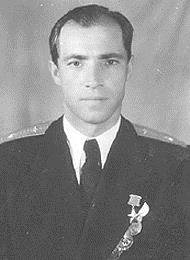
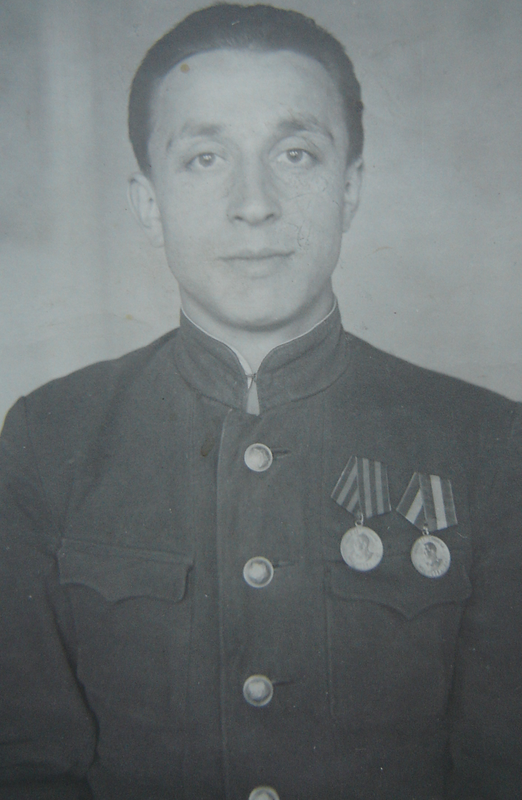
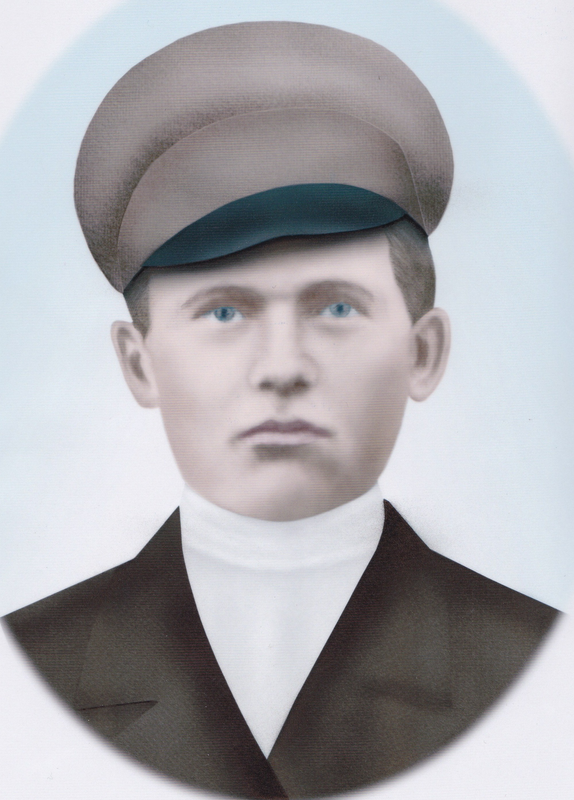
Ivan Prokaev
Village of Nizhniy Myval_x000D_
15.01.1915 - 01.06.2008_x000D_
Rank: Red Army Soldier_x000D_
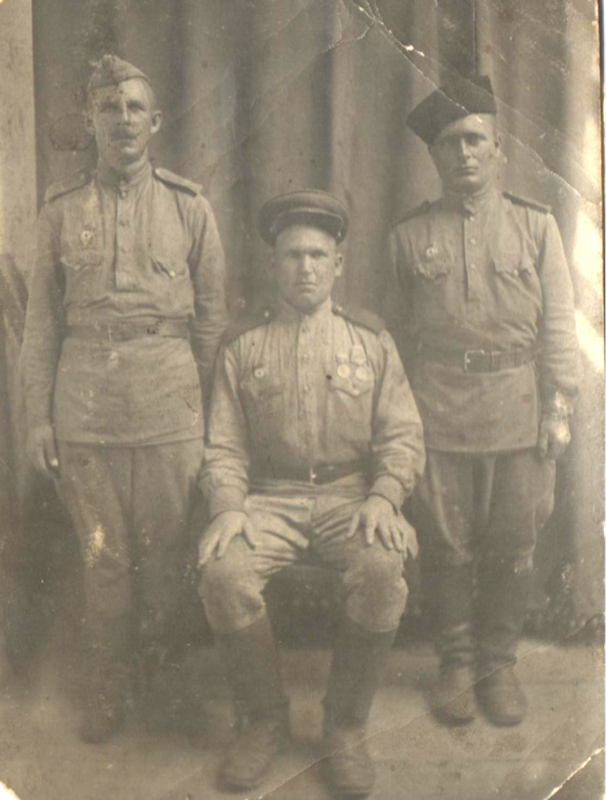
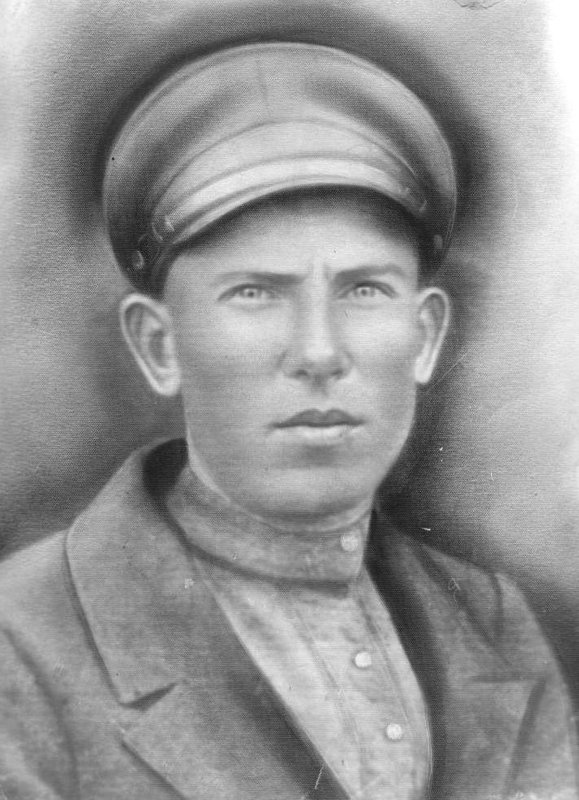
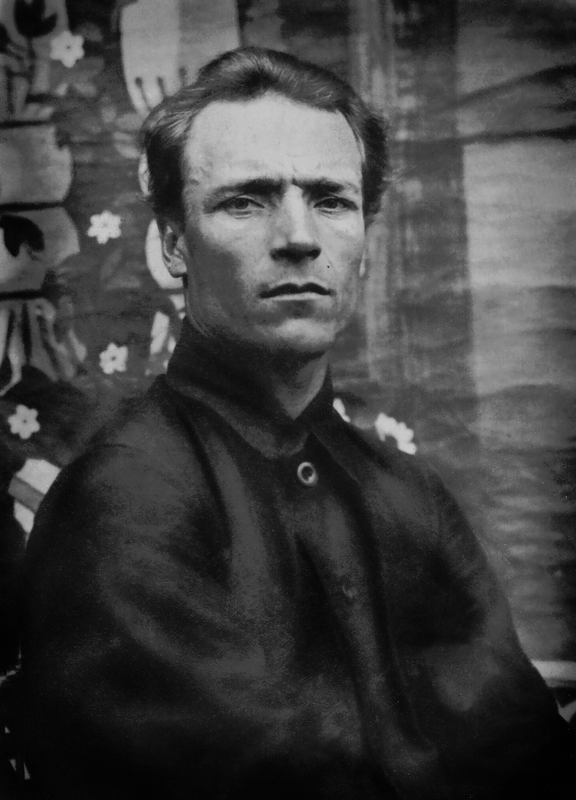
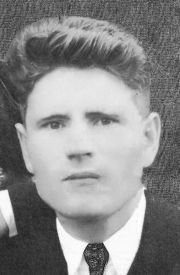
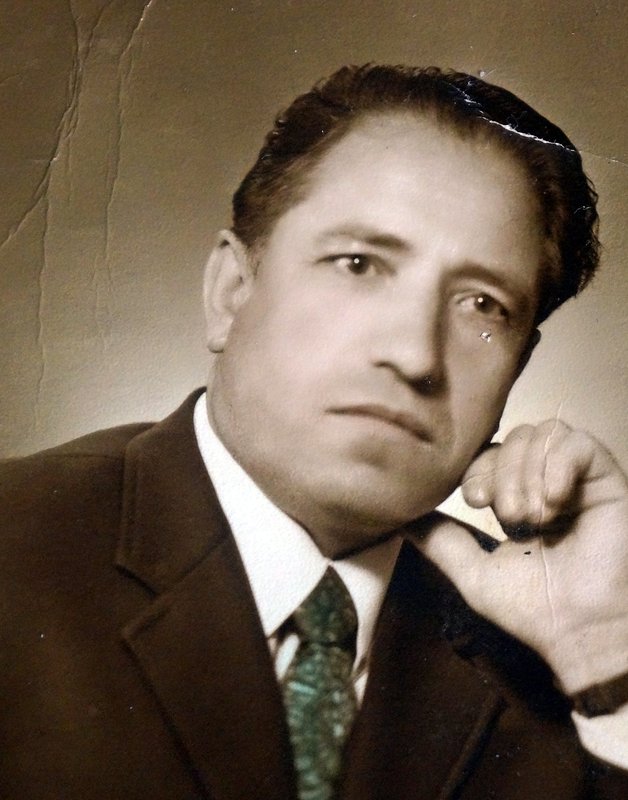
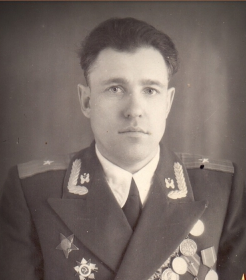
The historical memory has a great power. The current generation of Russian people should accept and continue the wonderful tradition of respect for our history, our past, and keep a grateful memory of those who valiantly defended and saved our Homeland from enslavement. I want to tell you a story about my grandfather Ivan Prokaev. Ivan was born in 1915. He grew up a strong boy, early joined the working life of his family. This was the only way a peasant family could survive. Early hard work was the law of survival. He received his primary education at a local school. The arrest and execution of his father changed his whole way of life. A 14-year-old boy found himself in a very difficult psychological situation, having lost a sense of security and confidence in the future. From fragmentary memoirs of grandchildren, it became known that at the end of 1929, Tatyana secretly took the family out of the village at night, and they for a long time, bypassing large localities, reached Siberia, where their relatives lived. This was the decision of the mother, who feared for the lives of her children. Upon reaching the age of 17, Ivan went to work. There is information that for some time, namely, in 1933-1935, he worked for the Tatarskaya Station of the West Siberian (former Omsk) Railway. He returned to his homeland in 1936, and worked for the cloth factory "Tvorets Rabochiy" in Sosnovoborsk, Penza Region until 1939. By the beginning of the war, he lived with his wife Matrena on 14 Rabochaya Street in the village of Bogatoe. Mobilized in the Red Rrmy by the Bogatovsky District Military Commissariat in 1941 at the age of 26. On the OBD-Memorial website, there are several documents relating to Ivan Prokaev, the second of the sons in the Prokaev family. It was not possible to establish the date and month of mobilization, there is no information about movements and injuries, but it is known for sure that by the summer of 1942, he was serving in the 676th Rifle Regiment of the 15th Rifle Division. The 15th Rifle Division was stationed in Bendery and Tiraspol on 22.06.1941. Took the first battle in the area of Skulyan on 24.06.1941, and then moved beyond the Dniester. The division was encircled near Uman in July 1941, and was virtually destroyed. Individual soldiers were leaving the encirclement until the end of September 1941. The exit from the boiler ended unsuccessfully for the division. Its entire command was captured. But the division was not disbanded and continued to fight under its own banners. The 676th Regiment was part of the 15th Division from pre-war times. In the first military episodes mentioned above, most likely, Ivan has not yet participated. He could join the regiment when it was re-formed in September-October 1941. I found an interesting page on the Internet dedicated to the Hero of the Soviet Union Andrey Varyukhin. He at the final stage of the war, Commander of the 47th Rifle Regiment of the 15th Rifle Division, Colonel, participant of all the battles of the division. Before us are lines from the Internet page: "after recovering in October 1941, Varyukhin returned to his division and, having received the rank of Major, was appointed a Chief of Staff of the 676th Rifle Regiment. At this time, the troops of the Southern Front, having suffered another defeat in the area of Melitopol, retreated to the East. Varyukhin's regiment participated in defensive battles in the Donbass and Voroshilovgrad Regions, fought for the cities of Konstantinovka, Artemovsk, Popasnaya. North of the city of Kadiyevka at the end of November 1941, the enemy was finally stopped. After the liberation of Rostov, having joined the 37th Army of the Southern Front, Varyukhin's division held the defense in this sector of the front throughout the winter and part of the spring of 1942. "In April-may 1942, the 15th Rifle Division was withdrawn to the rear in the city of Bobrov, Voronezh Region, for rest and re-formation. During such periods, as a rule, the division's regiments were replenished. But in June 1942, it was transferred to the 13th Army of the Bryansk Front, and it took up defense at the turn of the Tim River in the Kursk Region North of the Cheremisinovo station. Information from another source varies somewhat, but the fact of the division's arrival is confirmed. "Meanwhile, reinforcements, artillery, tanks, vehicles, and weapons began to arrive in the formations. In May, the regiments of the famous 15th Siwash Rifle Division under the command of Colonel A. Slyshkin were unloaded at Studenyi station. Now the army has five rifle divisions and one tank brigade." (From the Livenskaya Oborona website). The general situation on the Soviet-German front suggested that, after the greatest defeats in the winter of 1941/42, the German-fascist command will undoubtedly try to take revenge in the summer. At the same time, it was clear that he would not be able to advance on the entire front, and it would choose to strike in only one direction. It was not excluded that such a direction could be Voronezh, allowing, if successful, to reach the deep rear of the Moscow group of the Red Army. Large enemy forces were deployed in front of the defense front of the 13th and 40th Armies. Army scouts were assigned an important task - by capturing prisoners to establish reliably the intentions and composition of the enemy group. As you know, in such situations, along with the capture of the "language", special operations were also organized in the regiments by forces up to the battalion in order to identify the enemy's capabilities, their number and composition of troops. This tactic was called "combat reconnaissance". A large group from the 676th Regiment of the 15th Division on June 9, 1942, went to the rear of the enemy at night to perform a combat mission. In the report of the division headquarters dated July 31, 1942, #0865, it is recorded that 33 soldiers were missing during this battle. Most likely, there were more losses, the missing officers were accounted for in another report. Some of the soldiers were killed, and the survivors were captured. As time has shown, Ivan Prokaev was captured on June 9 during a night raid behind enemy lines. This day divided a person's life into parts "before" and "after". The brutal war continued. As confirmed by intelligence, the main blow was inflicted by the Nazis in the defense zone of the 15th Division next to positions of the 40th Army. Here a shock group of three infantry and one tank divisions was advancing. Two infantry divisions and an SS brigade carried out an auxiliary attack on Livni. This group was supported from the North by another infantry division. Under the cover of artillery and air force at 5 o'clock, the advanced battalions of infantry divisions began to cross the Tim in the Zibrovo and Pyatina districts. Tanks came to the river bank and also opened fire on the 676th Rifle Regiment of the 15th Division. It was here that on June 28, 1942, Hitler's troops began their Grand summer offensive. "Major Varyukhin's regiment and other regiments of the division could not hold back the tank Armada of the Weihs group and began to retreat first to the border of the Kshen river, and then in early July 1942, to the area of the village of Terbuny in the Lipetsk Region. Here, the units of the 676th Regiment despite the strong attacks of the enemy did not let it through. For the rest of the summer and fall of 1942, Varyukhin's regiment held the defense at Terbuny. The land in the area of this village, as well as at Stalingrad, was thickly stuffed with iron-shrapnel, bullets, mines, stained with the blood of the fallen." But the Nazis did not manage to bypass Voronezh from the North. Between 1 June and 30 June 1942, the 15th Division lost 3,174 men from soldiers and non-commissioned officers. This is almost half of the original personell namber. I will give a short excerpt from the same above-mentioned report #0865: "at the same time I inform that for a Separate Training battalion for 116 people. no complete data because in the result of battles 28.06.1942, lost all command of the battalion documents, and data to clarify is not possible, as most of the company, platoon and squads leaders killed and missing, and with them remained, and lists of units." It was not possible to establish the numbers of the German transit camps that my grandfather Ivan Prokaev passed through. But from the fragmentary recollections of relatives, it is known that he was in the deep enemy rear in the West Germany. The prisoners were used in the grueling work of rebuilding and building Railways. Few survived by working to the limit of their physical capacity in conditions of hunger, cold, and disease. At the end of the war, the camp was liberated by American divisions. Ivan lived a long post-war life, but about this - in another story. After the end of the war, Ivan like other prisoners, waited to be taken Home. However, no one came for them, they were not needed. At the suggestion of a man who struck up a friendship while in captivity, Ivan left for Uruguay. Began to live and work there, and after a while moved to Boston (USA). Due to the repression of former prisoners of war, Ivan could not return to his family and could not even report that he was alive. He was afraid that his family would be prosecuted. My grandfather wrote a letter to his family that he was alive and well only in 1975. There was a long-awaited reunion with his family in 1995.
Ivan Prokaev
Village of Nizhniy Myval_x000D_
15.01.1915 - 01.06.2008_x000D_
Rank: Red Army Soldier_x000D_
The historical memory has a great power. The current generation of Russian people should accept and continue the wonderful tradition of respect for our history, our past, and keep a grateful memory of those who valiantly defended and saved our Homeland from enslavement. I want to tell you a story about my grandfather Ivan Prokaev. Ivan was born in 1915. He grew up a strong boy, early joined the working life of his family. This was the only way a peasant family could survive. Early hard work was the law of survival. He received his primary education at a local school. The arrest and execution of his father changed his whole way of life. A 14-year-old boy found himself in a very difficult psychological situation, having lost a sense of security and confidence in the future. From fragmentary memoirs of grandchildren, it became known that at the end of 1929, Tatyana secretly took the family out of the village at night, and they for a long time, bypassing large localities, reached Siberia, where their relatives lived. This was the decision of the mother, who feared for the lives of her children. Upon reaching the age of 17, Ivan went to work. There is information that for some time, namely, in 1933-1935, he worked for the Tatarskaya Station of the West Siberian (former Omsk) Railway. He returned to his homeland in 1936, and worked for the cloth factory "Tvorets Rabochiy" in Sosnovoborsk, Penza Region until 1939. By the beginning of the war, he lived with his wife Matrena on 14 Rabochaya Street in the village of Bogatoe. Mobilized in the Red Rrmy by the Bogatovsky District Military Commissariat in 1941 at the age of 26. On the OBD-Memorial website, there are several documents relating to Ivan Prokaev, the second of the sons in the Prokaev family. It was not possible to establish the date and month of mobilization, there is no information about movements and injuries, but it is known for sure that by the summer of 1942, he was serving in the 676th Rifle Regiment of the 15th Rifle Division. The 15th Rifle Division was stationed in Bendery and Tiraspol on 22.06.1941. Took the first battle in the area of Skulyan on 24.06.1941, and then moved beyond the Dniester. The division was encircled near Uman in July 1941, and was virtually destroyed. Individual soldiers were leaving the encirclement until the end of September 1941. The exit from the boiler ended unsuccessfully for the division. Its entire command was captured. But the division was not disbanded and continued to fight under its own banners. The 676th Regiment was part of the 15th Division from pre-war times. In the first military episodes mentioned above, most likely, Ivan has not yet participated. He could join the regiment when it was re-formed in September-October 1941. I found an interesting page on the Internet dedicated to the Hero of the Soviet Union Andrey Varyukhin. He at the final stage of the war, Commander of the 47th Rifle Regiment of the 15th Rifle Division, Colonel, participant of all the battles of the division. Before us are lines from the Internet page: "after recovering in October 1941, Varyukhin returned to his division and, having received the rank of Major, was appointed a Chief of Staff of the 676th Rifle Regiment. At this time, the troops of the Southern Front, having suffered another defeat in the area of Melitopol, retreated to the East. Varyukhin's regiment participated in defensive battles in the Donbass and Voroshilovgrad Regions, fought for the cities of Konstantinovka, Artemovsk, Popasnaya. North of the city of Kadiyevka at the end of November 1941, the enemy was finally stopped. After the liberation of Rostov, having joined the 37th Army of the Southern Front, Varyukhin's division held the defense in this sector of the front throughout the winter and part of the spring of 1942. "In April-may 1942, the 15th Rifle Division was withdrawn to the rear in the city of Bobrov, Voronezh Region, for rest and re-formation. During such periods, as a rule, the division's regiments were replenished. But in June 1942, it was transferred to the 13th Army of the Bryansk Front, and it took up defense at the turn of the Tim River in the Kursk Region North of the Cheremisinovo station. Information from another source varies somewhat, but the fact of the division's arrival is confirmed. "Meanwhile, reinforcements, artillery, tanks, vehicles, and weapons began to arrive in the formations. In May, the regiments of the famous 15th Siwash Rifle Division under the command of Colonel A. Slyshkin were unloaded at Studenyi station. Now the army has five rifle divisions and one tank brigade." (From the Livenskaya Oborona website). The general situation on the Soviet-German front suggested that, after the greatest defeats in the winter of 1941/42, the German-fascist command will undoubtedly try to take revenge in the summer. At the same time, it was clear that he would not be able to advance on the entire front, and it would choose to strike in only one direction. It was not excluded that such a direction could be Voronezh, allowing, if successful, to reach the deep rear of the Moscow group of the Red Army. Large enemy forces were deployed in front of the defense front of the 13th and 40th Armies. Army scouts were assigned an important task - by capturing prisoners to establish reliably the intentions and composition of the enemy group. As you know, in such situations, along with the capture of the "language", special operations were also organized in the regiments by forces up to the battalion in order to identify the enemy's capabilities, their number and composition of troops. This tactic was called "combat reconnaissance". A large group from the 676th Regiment of the 15th Division on June 9, 1942, went to the rear of the enemy at night to perform a combat mission. In the report of the division headquarters dated July 31, 1942, #0865, it is recorded that 33 soldiers were missing during this battle. Most likely, there were more losses, the missing officers were accounted for in another report. Some of the soldiers were killed, and the survivors were captured. As time has shown, Ivan Prokaev was captured on June 9 during a night raid behind enemy lines. This day divided a person's life into parts "before" and "after". The brutal war continued. As confirmed by intelligence, the main blow was inflicted by the Nazis in the defense zone of the 15th Division next to positions of the 40th Army. Here a shock group of three infantry and one tank divisions was advancing. Two infantry divisions and an SS brigade carried out an auxiliary attack on Livni. This group was supported from the North by another infantry division. Under the cover of artillery and air force at 5 o'clock, the advanced battalions of infantry divisions began to cross the Tim in the Zibrovo and Pyatina districts. Tanks came to the river bank and also opened fire on the 676th Rifle Regiment of the 15th Division. It was here that on June 28, 1942, Hitler's troops began their Grand summer offensive. "Major Varyukhin's regiment and other regiments of the division could not hold back the tank Armada of the Weihs group and began to retreat first to the border of the Kshen river, and then in early July 1942, to the area of the village of Terbuny in the Lipetsk Region. Here, the units of the 676th Regiment despite the strong attacks of the enemy did not let it through. For the rest of the summer and fall of 1942, Varyukhin's regiment held the defense at Terbuny. The land in the area of this village, as well as at Stalingrad, was thickly stuffed with iron-shrapnel, bullets, mines, stained with the blood of the fallen." But the Nazis did not manage to bypass Voronezh from the North. Between 1 June and 30 June 1942, the 15th Division lost 3,174 men from soldiers and non-commissioned officers. This is almost half of the original personell namber. I will give a short excerpt from the same above-mentioned report #0865: "at the same time I inform that for a Separate Training battalion for 116 people. no complete data because in the result of battles 28.06.1942, lost all command of the battalion documents, and data to clarify is not possible, as most of the company, platoon and squads leaders killed and missing, and with them remained, and lists of units." It was not possible to establish the numbers of the German transit camps that my grandfather Ivan Prokaev passed through. But from the fragmentary recollections of relatives, it is known that he was in the deep enemy rear in the West Germany. The prisoners were used in the grueling work of rebuilding and building Railways. Few survived by working to the limit of their physical capacity in conditions of hunger, cold, and disease. At the end of the war, the camp was liberated by American divisions. Ivan lived a long post-war life, but about this - in another story. After the end of the war, Ivan like other prisoners, waited to be taken Home. However, no one came for them, they were not needed. At the suggestion of a man who struck up a friendship while in captivity, Ivan left for Uruguay. Began to live and work there, and after a while moved to Boston (USA). Due to the repression of former prisoners of war, Ivan could not return to his family and could not even report that he was alive. He was afraid that his family would be prosecuted. My grandfather wrote a letter to his family that he was alive and well only in 1975. There was a long-awaited reunion with his family in 1995.
0 comment




2026 © Russian Military Historical Society Developed by Jetmix