Back to
album
album


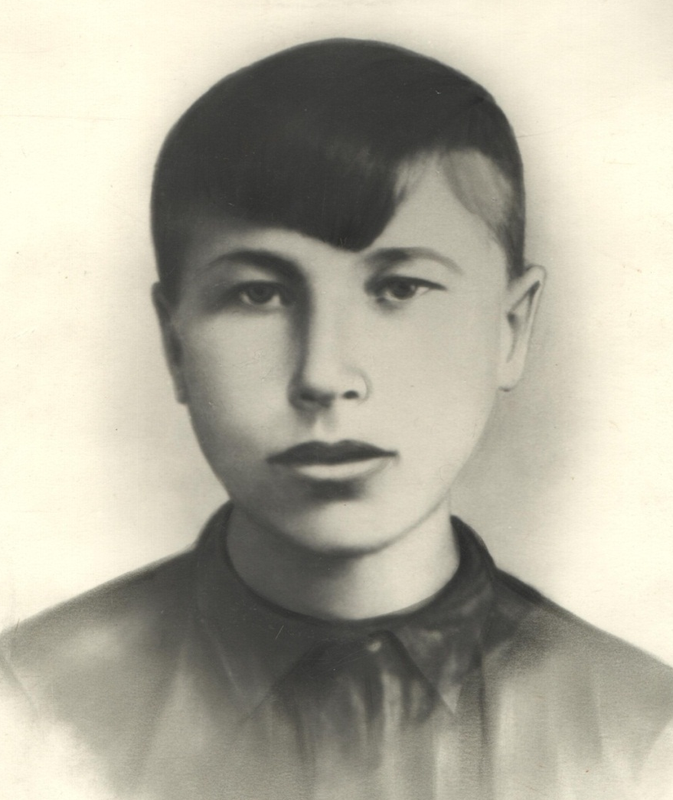
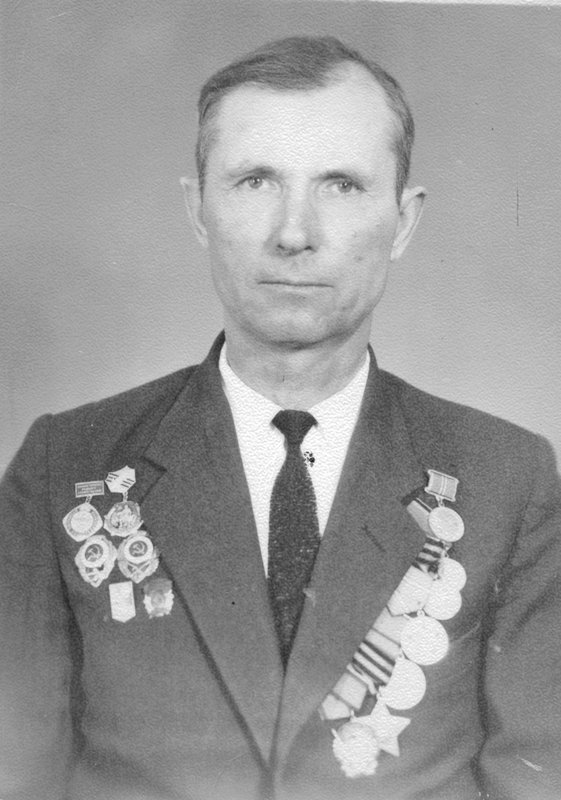
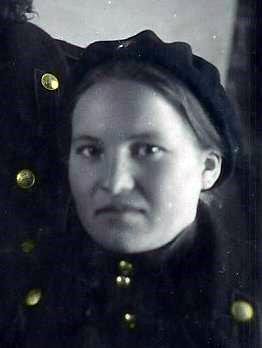
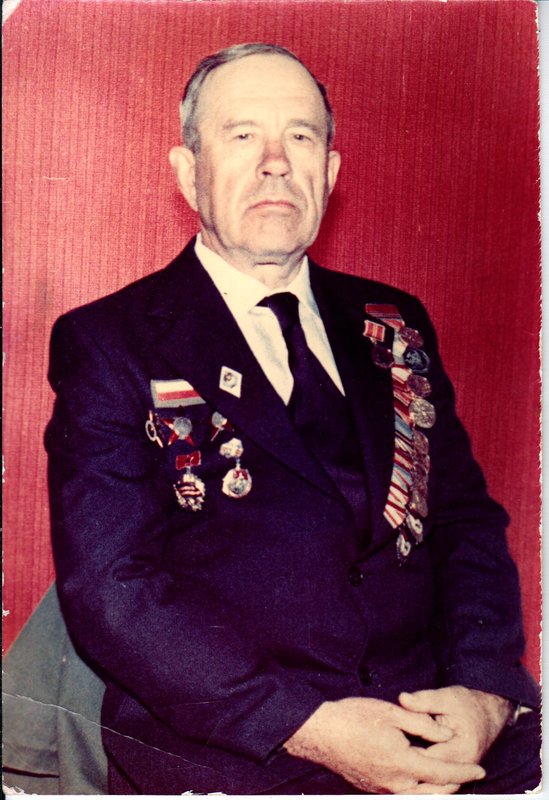

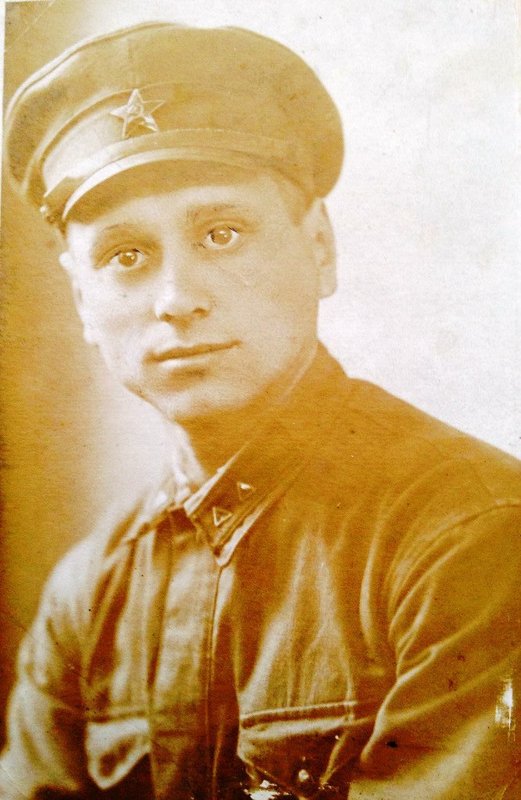
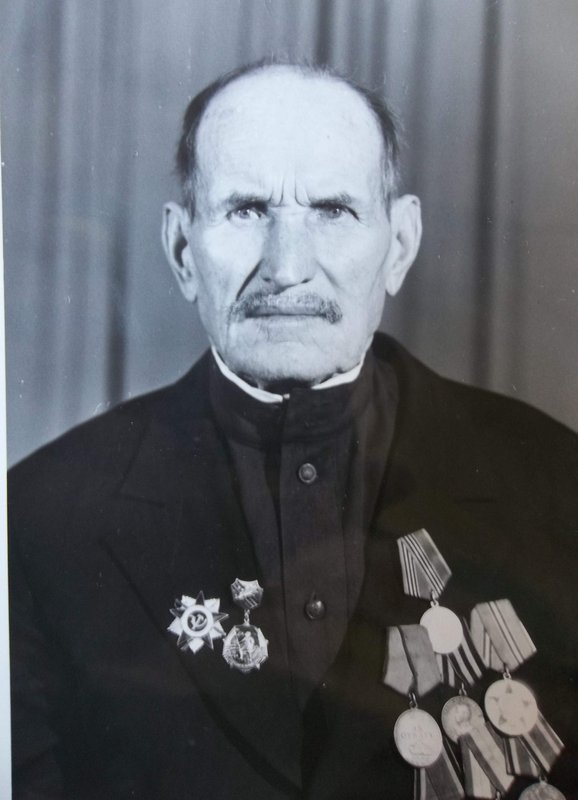

Dubrovina (Samodurova) Alexandra Ivanovna
Dubrovina (Samodurova) Alexandra Ivanovna_x000D_
_x000D_
On March 7, 1916 (old style) in Moscow, Ivan Mikhailovich Samodurov and his wife Anna Dmitrievna had a daughter, Alexandra. In the same year, her father, Ivan Mikhailovich Samodurov, was taken to the 1st world war, it was difficult to live in Moscow with five children, and his wife decided to return home to the village of Novo-Krasnoe, Sapozhkovsky district, Ryazan region. When my father returned from the war, we decided to stay in the village. They worked a lot, lived well, my mother often recalled "all the young people go for a walk in the evening on the outskirts, but my father does not let them, because they started working with the first roosters, and if you do not get enough sleep, what kind of worker are you". Twice they tried to dekulakize them, but they never had employees, they did everything with their own hands, so this initiative did not have support at the village meeting." But it had consequences for her brother. In 1932, when he served in the ranks of the worker-peasant army, conscripts from the village of Novo-Red part of the letter where it was written that the collective meeting decided: "son of a wealthy, not conscious farmer cannot serve the worker-peasant army" and was expelled, and he dreamed of becoming a military. From the first days of the war, he was at the front and died while crossing the Dnieper. And two more brothers went through the roads of war and returned alive with awards. And her sister in the war worked at a machine-building factory as an assembler.May 19, 1927 she completed the course of the Novo-Krasno-Sloboda school of the 1st stage, having studied there for 4 years. 1934-married Fyodor Ilyich Dubrovin, and in 1935 they had their first son Vasily. Her husband was called up for military service in 1936 for two years.In 1938, after her husband's military service in the army, they returned to Moscow, where he was offered to work in the Oktyabrsky district military Commissariat as a storekeeper with the provision of official housing (rooms in Moscow). In 1939, a second son, Viktor, was born. In 1940, the husband leaves, vacates office housing and the whole family moves to the village of Kutuzovo (currently it is Moscow, Zelenograd, the village of Kutuzovo). Dubrovina Alexandra Ivanovna June 20, 1941 accompanied her husband to retraining for a month, and it turned out to be the war, for a long 4 years. She was left with two children (born in 1935 and 1939), and at the fourth month of pregnancy she will live in an Annex to a chicken coop in the village of Kutuzovo (now a district of Zelenograd). From the first days of the war, the village of Kryukovo began to rebuild its life in a military way. The people's militia — local air defense teams-began to be created, and German air Raids on Moscow began on the streets exactly a month after the start of the war. They were held daily, day and night. Women and children were on duty on the roofs of houses, putting out fire from incendiary bombs. Life changed dramatically. Entered cards for bread. On the field between the villages of Kutuzovo and Kamenka, air defense sound detectors were installed, notifying of the approach of Nazi bombers. The radio was giving an "air alert" signal. The raids began in July. Every evening, after dark, there was a growing hum of aircraft engines, and the silhouettes of bombers flying towards Moscow appeared in the sky. Construction of defensive structures began. Pillboxes and bunkers were built on the Leningrad highway, and anti-tank ditches were dug. In August, it was sent to dig trenches and anti-tank ditches. We worked at these sites for a week, put up wire barriers, anti-tank "hedgehogs". Still, she felt deep in the rear. Although the Germans arrived and threw their bombs,but still the cannonade was not heard, and the anti-aircraft guns were the rule. There were a lot of them along the railway track on both sides in trenches-every 500-800 meters. A lot of hedgehogs and concrete blocks were installed near the bridge and the station , so that a narrow lane remained on the highway for passage… War, panic, bombing, and the trains ran at first. The fascists usually arrived after 5-6 PM, so that the sun blinded the anti-aircraft gunners. At first rarely, and then more and more often. They beat the station, hunted our trains. And the war was getting closer every day. At night in the direction of the front was moving military convoys and armored trains. Back they were dragged, wounded, with an opportunity, sometimes even clinging in parts to suburban trains. Ambulance trains went to the front in the morning in order to bring the wounded at night. They were constantly bombed…How many cars and locomotives lay broken on the slopes that autumn! Twenty pieces per kilometer. To clear the tracks, cars were manually derailed. There were air alerts 2-3 times a day, as well as at night. The Germans wanted to encircle Moscow and take it from both sides. October-November 1941 was a very difficult time for Moscow. The fifteenth of October I. V. Stalin ordered the evacuation of factories from Moscow to the East. German bombing raids on Moscow, which were announced by the alarm horns of locomotives, searchlights searching for uninvited aliens from the West, and stars of anti-aircraft shell bursts, became commonplace. One night, the bombs of a German bomber, which were not carried to the capital, were dropped on the village. Even in the frozen ground, the craters from the explosions were astonishing in size. By November, the evacuation from Moscow was over, but the enemy literally stood at the gates of our homes. Residents of Kryukovo did not have time to evacuate. They began to build shelters-dugouts in case of bombings, and every night they went to them from their homes with their children. The Germans were approaching their village. There were air alerts 4-5 times during the day and 3-4 times at night. Our troops were retreating. On the twenty-third of November, the Germans occupied Solnechnogorsk, and the next day, in the Kryukovo area, they bombed a passenger train traveling towards Moscow. On November 27-28, our troops retreated to Moscow. The soldiers advised residents to leave their homes immediately and move towards Moscow. But it was no longer possible to evacuate the population, and it was not only nowhere to go, but also dangerous. When our soldiers retreated, they received an order: "leave Nothing to the enemy!". On November 28, was blown up a railway bridge at the station Kryukovo railway station, the school burned, burned all the stores, bakery, clinic, demolished two brick factories, a dairy, a library, a destroyed platform. In the evening, the railway track to Skhodnya station was blown up. On November 30, the Germans occupied the village of Alabushevo. It was very close. At the end of November, the front approached Kryukovo. German planes began to fly during the day. At night, a roar could be heard from the West, and the glow of fires could be seen. All this gave rise to some kind of anxiety, a sense of impending big trouble. On the evening of November 30, green figures of Germans appeared on the edge of the forest. A machine gun was fired from the Kamensky hillock, and they quickly disappeared into the forest. Obviously, this was intelligence. On the same night of December 1, German troops broke into Kryukovo. German tanks were moving through the village in a heavy avalanche, crushing trees, shrubs, and fences. Soldiers (behind tanks) entered on motorcycles, apparently, they were scouts. They immediately began to expel residents from their homes and dugouts and occupy them themselves. The Germans were led by a former Forester from Alabushevo; the entire tank column, 24 tanks, spent the forest. German tanks approached where our medical unit was. Those who could walk, all left, there were only bedridden. They dragged them to the road and crushed them with tanks. Then, in March, residents buried them, bandaged — in a large trench, on the settlement. On the morning of December 1, the Germans were in charge of Kamenka. The space 1.5-2 km wide between our and the enemy's lines of defense can be called "no man's land": there were combat guards (to warn of possible attacks), snipers and individual machine gunners came out here, looking for targets. She lived with her children on the edge of a ravine, and the front line passed through this ravine, on the other side was the village of Kamenka in which the Germans created a strong fortified area. The family moved to the cellar. She said that a heavy tank took up a firing position not far from the house. Its size, the powerful roar of the engine, the gun, inspired hope for our victory. The commander got out of the tank, who warned her to stay away from the tank with children: "We will shoot, and they will shoot at us too." Despite numerous directives to recapture Kryukovo, this could not be done. The Germans held fast to the village. They turned it into a strong base, using a large advantage in tanks and natural hills. In the direction of Pyatnitskoe highway, the village of Kamenka was captured, also rising above the terrain. The Germans repeatedly moved out of Kryukovo, but in the evening, after heavy fighting, returned the tanks back. On December 3-4, they appeared on the outskirts of Ruzino and Kutuzovo, the Germans crossed the bridge over the Goretovka river, entered the lower part of the village,but could not advance up the mountain. On the night of December 3, a combat order was issued, in which the task was to return Kryukovo and Kamenka. On December 3, at 3 am, after 15 minutes of artillery preparation, the attack began. In just one day there were 3 attacks, and all of them were unsuccessful, with heavy losses for our units. And very accurately on December 4, the pattern of the previous day was repeated: artillery preparation, attack, advance of several hundred meters, return fire from machine guns, submachine guns, guns, mortars, and - retreat to the starting position. In the sky above the Stove appeared links of Nazi dive-bombers. Fierce fighting took place on monay field to the West of the village. On the night of December 7, the roar was stronger than usual. They were sitting in the cellar, pressed against each other in anticipation of death. That's how they lived on the front line, hiding in a cellar, and their house turned into a sieve from bullets and shrapnel, and then completely collapsed from a shell hit. And on the eve of a counter-offensive to them, the military came and said, "she is better here with the kids to leave here tomorrow will be a fierce battle, and to survive there will be little chance that the Germans will shoot us and we in them." When she got out of the cellar, she didn't see the tank, only traces of its wide tracks remained. As expected, the projectiles intended for him did not spare her home. There was a cannon at the edge of the village. Nearby, about three meters away, lay a horse harnessed to a cart, and the torn corpse of our soldier. Apparently, during the battle, a shell landed in the calculation, the traces of the explosion of which were visible in the snow. The front line was somewhere close, and sometimes bullets flew up to their homes and disappeared with a slight hiss in the snow. Many residential buildings and administrative buildings were burned down. On the field, they saw the corpses of our soldiers already dusted with snow-the result of the morning's frontal attack on the village of Kamenka. Under fire, they left the village and walked across a snow-covered field towards the Skhodnya station. On December 7, she and her two sons, the eldest Vasily is 6 years old, and the youngest Viktor is 2 years old, left for Moscow. They walked all the way, in the cold, carrying their youngest son on a sled. They were hit by artillery fire, fell into the snow. Only the sled with the youngest son remained on the road. Then they walked for a long time along the road towards the Gangplank. She couldn't remember the name of the village where they had been assigned to the military unit. They were placed in a hut, warmed, and fed porridge. Her children were given a lump of sugar and moved on. They were bombed: there was a growing hum of aircraft engines, silhouettes of bombers appeared in the sky, flying towards Moscow. Over the Gangway broke out the flares. The dead whistle of bombs, from which there was no place to hide, flooded the station tracks, where military trains were unloaded, as new units arrived and went on foot to the front line. Immediately, bombs fell from invisible planes, and everything was drowned in dust and flames. Bombed and aircraft factories and in Khimki. The first planes dropped subs-glowing aerial bombs and lighting rockets on parachutes. It was getting as light as day. Anti-aircraft guns opened fire. Fire trails crisscrossed the sky. The darkness was broken by the beams of hundreds of searchlights. Searchlights searched for bombers flying in the night, blinded German pilots, preventing them from carrying out targeted bombing. And they went, and from two sides there was a battle from the left for Krasnaya Polyana (now this is the Lobnya district) and from the right there was a battle for Nefedevo. Later, she learns that the decisive role in the outcome of the multi-day battle was played by a blow to bypass Kryukov in the direction of Kamenka. This is confirmed by K. K.'s memoirs. Rokossovsky: "by December 8, as a result of almost three days of fighting, often reaching hand-to-hand fights, as well as bypassing the village from the South-West, the enemy's resistance was broken. By nightfall on December 8, Kryukovo and Kamenka were completely liberated from the Nazis." When they reached Moscow, they saw anti-aircraft guns on the streets of Moscow. Defensive fortifications at bridges and on streets there are a lot of "hedgehogs", barrage balloons on Moscow boulevards, fighters of anti-aircraft batteries watching the sky near the Bolshoi theater, the downed German plane on Sverdlov square. Moscow lived a front-line life. We went to a relative who lived in a house behind the Bolshoi theater. From the first days of the war, the metro was used as a shelter, including the unfinished third line. During the day, the metro worked, and after 19 hours, and on some days after 17 hours it turned into a shelter. At least you can get some sleep here. On December 13, 1941, her third son, Eugene, was born in a bomb shelter located in the metro station "Sverdlov square" (now "Teatralnaya" station). In 1942, Moscow was hungry and cold. There was no wood. At night, the houses were stripped of their planks. When they ran out, they burned books and searched for old wooden barrels. Everything that could burn was burned in the house. Only the iron beds were left of the furniture. Bread for dependent cards was given out twice as much as for workers. All valuables were exchanged for flour and potatoes. The queue for receiving bread was occupied at 4 PM, and bread was delivered at 11 am. The winter of 1942 was very cold, snowy, and frosts reached minus 32-33 degrees. For bread stood all night. There were no other products. Twice (at night and in the morning) they made a roll call. If you are absent during the check - from the lists (receiving bread) crossed out. It was very cold. I frostbite my nose and hands several times. They no longer needed two rooms. Together with a relative, they lived in the same, smallest room, where they put the stove "bourgeois", they slept together in the same bed, it was warmer, the room was semi-dark, so it was easier to observe the blackout. They ate bread, frozen potatoes, and drank carrot tea. Even the potato peelings were not thrown away, but used for making pancakes. They ate quinoa, which also had to be bought (at the market it cost 20 rubles at that time). per kilogram, and a loaf of black bread – 600 rubles.).So they lived until spring. In the spring, they returned to their native village. They were sheltered by neighbors, from whom they learned that the Germans had shot the Chairman of the collective farm Yaroslavtsev. It was issued by a "German woman" - a German language teacher. When and where it came from, no one really knew. On the streets of the village of Kryukovo and the village of Kamenka were abandoned by the Germans cars and tank_x000D_
. In Kamenka, in a clearing behind the fire shed, the corpses of our soldiers lay in piles covered with tarpaulins. There was no way to bury them because of severe frosts, only in the spring they were put in a large pit of the burned-down collective farm vegetable storage and covered with earth. They lived there for a short time, because there was nothing left of the house. I didn't even have the strength or the ability to build a mud hut. Therefore, she and her three children and mother-in-law decided to rent part of the house near the Skhodnya station in the village of Morchikhino. The Germans did not reach the Gangplank and there was no such destruction. They lived in poverty, the money that came from the front from her husband was not enough. And when the youngest son was one year old, in February 1943. she went to work as a train conductor on the Oktyabrskaya railway. Leningrad was then under siege and steam-powered trains ran to Bologoe station. There you could buy cheap berries, mushrooms and fish, as well as firewood. Therefore, when the train was returning to Moscow passed by the Skhodnya station, his eldest son was waiting for him, who was eight years old, and his mother threw him a bundle of food or a woodpile. At the same time, Leningrad and Moscow railway workers were preparing the Red arrow Express for the first flight after the blockade. The first after the blockade "Red arrow" went on March 20, 1944, and it worked as a guide Dubrovina Alexandra Ivanovna. On the way, the train could still be attacked by German planes, so the line of cars was closed by an armored platform with anti-aircraft machine guns. On the Red arrow Express, he worked as a conductor until August 1945. After being dismissed, I bought a hut in the forest not far from the Skhodnya station and a plot of land where potatoes and cabbage grew, there was a supply of firewood, for 10,000 rubles. And I started to equip a new place of residence, the hut was certainly a wreck, but it was possible to live in it in the winter and it was already my own home. In October, my husband Fyodor Dubrovin returned from the front, a knight of three orders of Glory, the order of the Patriotic war, second class, and the medal for bravery. In 1946, the fourth son Vladimir was born. She worked in the metro station" Kirovsky radius " as a worker. In 1954, the fifth son Alexander was born. In 1955, she was awarded THE "motherhood MEDAL" of the 2nd degree. She worked at the Moscow furniture and Assembly plant No. 1. In 1977. A labor veteran and veteran of the great Patriotic war, retired due to old age retirement. In a place with her husband, Fyodor Ilyich Dubrovin, she raised five sons, gave them an education and taught them to work for the benefit of the Motherland: Vasily Dubrovin – for his work and scientific developments in the defense of the region, awarded the order of the Badge of honor. Viktor F. Dubrovin - became a universal welder of the highest qualification, he was entrusted with welding in critical areas. Evgeny F. Dubrovin-holder of two orders of "Labor glory", winner of the"prize of the Council of Ministers of the USSR". Vladimir F. Dubrovin-awarded the "academician V. P. Glushko" medal by the Russian Federation of cosmonautics. Alexander F. Dubrovin-a veteran of the FSB, took part in the testing of super-accurate weapons, has a state license to
Dubrovina (Samodurova) Alexandra Ivanovna
Dubrovina (Samodurova) Alexandra Ivanovna_x000D_
_x000D_
On March 7, 1916 (old style) in Moscow, Ivan Mikhailovich Samodurov and his wife Anna Dmitrievna had a daughter, Alexandra. In the same year, her father, Ivan Mikhailovich Samodurov, was taken to the 1st world war, it was difficult to live in Moscow with five children, and his wife decided to return home to the village of Novo-Krasnoe, Sapozhkovsky district, Ryazan region. When my father returned from the war, we decided to stay in the village. They worked a lot, lived well, my mother often recalled "all the young people go for a walk in the evening on the outskirts, but my father does not let them, because they started working with the first roosters, and if you do not get enough sleep, what kind of worker are you". Twice they tried to dekulakize them, but they never had employees, they did everything with their own hands, so this initiative did not have support at the village meeting." But it had consequences for her brother. In 1932, when he served in the ranks of the worker-peasant army, conscripts from the village of Novo-Red part of the letter where it was written that the collective meeting decided: "son of a wealthy, not conscious farmer cannot serve the worker-peasant army" and was expelled, and he dreamed of becoming a military. From the first days of the war, he was at the front and died while crossing the Dnieper. And two more brothers went through the roads of war and returned alive with awards. And her sister in the war worked at a machine-building factory as an assembler.May 19, 1927 she completed the course of the Novo-Krasno-Sloboda school of the 1st stage, having studied there for 4 years. 1934-married Fyodor Ilyich Dubrovin, and in 1935 they had their first son Vasily. Her husband was called up for military service in 1936 for two years.In 1938, after her husband's military service in the army, they returned to Moscow, where he was offered to work in the Oktyabrsky district military Commissariat as a storekeeper with the provision of official housing (rooms in Moscow). In 1939, a second son, Viktor, was born. In 1940, the husband leaves, vacates office housing and the whole family moves to the village of Kutuzovo (currently it is Moscow, Zelenograd, the village of Kutuzovo). Dubrovina Alexandra Ivanovna June 20, 1941 accompanied her husband to retraining for a month, and it turned out to be the war, for a long 4 years. She was left with two children (born in 1935 and 1939), and at the fourth month of pregnancy she will live in an Annex to a chicken coop in the village of Kutuzovo (now a district of Zelenograd). From the first days of the war, the village of Kryukovo began to rebuild its life in a military way. The people's militia — local air defense teams-began to be created, and German air Raids on Moscow began on the streets exactly a month after the start of the war. They were held daily, day and night. Women and children were on duty on the roofs of houses, putting out fire from incendiary bombs. Life changed dramatically. Entered cards for bread. On the field between the villages of Kutuzovo and Kamenka, air defense sound detectors were installed, notifying of the approach of Nazi bombers. The radio was giving an "air alert" signal. The raids began in July. Every evening, after dark, there was a growing hum of aircraft engines, and the silhouettes of bombers flying towards Moscow appeared in the sky. Construction of defensive structures began. Pillboxes and bunkers were built on the Leningrad highway, and anti-tank ditches were dug. In August, it was sent to dig trenches and anti-tank ditches. We worked at these sites for a week, put up wire barriers, anti-tank "hedgehogs". Still, she felt deep in the rear. Although the Germans arrived and threw their bombs,but still the cannonade was not heard, and the anti-aircraft guns were the rule. There were a lot of them along the railway track on both sides in trenches-every 500-800 meters. A lot of hedgehogs and concrete blocks were installed near the bridge and the station , so that a narrow lane remained on the highway for passage… War, panic, bombing, and the trains ran at first. The fascists usually arrived after 5-6 PM, so that the sun blinded the anti-aircraft gunners. At first rarely, and then more and more often. They beat the station, hunted our trains. And the war was getting closer every day. At night in the direction of the front was moving military convoys and armored trains. Back they were dragged, wounded, with an opportunity, sometimes even clinging in parts to suburban trains. Ambulance trains went to the front in the morning in order to bring the wounded at night. They were constantly bombed…How many cars and locomotives lay broken on the slopes that autumn! Twenty pieces per kilometer. To clear the tracks, cars were manually derailed. There were air alerts 2-3 times a day, as well as at night. The Germans wanted to encircle Moscow and take it from both sides. October-November 1941 was a very difficult time for Moscow. The fifteenth of October I. V. Stalin ordered the evacuation of factories from Moscow to the East. German bombing raids on Moscow, which were announced by the alarm horns of locomotives, searchlights searching for uninvited aliens from the West, and stars of anti-aircraft shell bursts, became commonplace. One night, the bombs of a German bomber, which were not carried to the capital, were dropped on the village. Even in the frozen ground, the craters from the explosions were astonishing in size. By November, the evacuation from Moscow was over, but the enemy literally stood at the gates of our homes. Residents of Kryukovo did not have time to evacuate. They began to build shelters-dugouts in case of bombings, and every night they went to them from their homes with their children. The Germans were approaching their village. There were air alerts 4-5 times during the day and 3-4 times at night. Our troops were retreating. On the twenty-third of November, the Germans occupied Solnechnogorsk, and the next day, in the Kryukovo area, they bombed a passenger train traveling towards Moscow. On November 27-28, our troops retreated to Moscow. The soldiers advised residents to leave their homes immediately and move towards Moscow. But it was no longer possible to evacuate the population, and it was not only nowhere to go, but also dangerous. When our soldiers retreated, they received an order: "leave Nothing to the enemy!". On November 28, was blown up a railway bridge at the station Kryukovo railway station, the school burned, burned all the stores, bakery, clinic, demolished two brick factories, a dairy, a library, a destroyed platform. In the evening, the railway track to Skhodnya station was blown up. On November 30, the Germans occupied the village of Alabushevo. It was very close. At the end of November, the front approached Kryukovo. German planes began to fly during the day. At night, a roar could be heard from the West, and the glow of fires could be seen. All this gave rise to some kind of anxiety, a sense of impending big trouble. On the evening of November 30, green figures of Germans appeared on the edge of the forest. A machine gun was fired from the Kamensky hillock, and they quickly disappeared into the forest. Obviously, this was intelligence. On the same night of December 1, German troops broke into Kryukovo. German tanks were moving through the village in a heavy avalanche, crushing trees, shrubs, and fences. Soldiers (behind tanks) entered on motorcycles, apparently, they were scouts. They immediately began to expel residents from their homes and dugouts and occupy them themselves. The Germans were led by a former Forester from Alabushevo; the entire tank column, 24 tanks, spent the forest. German tanks approached where our medical unit was. Those who could walk, all left, there were only bedridden. They dragged them to the road and crushed them with tanks. Then, in March, residents buried them, bandaged — in a large trench, on the settlement. On the morning of December 1, the Germans were in charge of Kamenka. The space 1.5-2 km wide between our and the enemy's lines of defense can be called "no man's land": there were combat guards (to warn of possible attacks), snipers and individual machine gunners came out here, looking for targets. She lived with her children on the edge of a ravine, and the front line passed through this ravine, on the other side was the village of Kamenka in which the Germans created a strong fortified area. The family moved to the cellar. She said that a heavy tank took up a firing position not far from the house. Its size, the powerful roar of the engine, the gun, inspired hope for our victory. The commander got out of the tank, who warned her to stay away from the tank with children: "We will shoot, and they will shoot at us too." Despite numerous directives to recapture Kryukovo, this could not be done. The Germans held fast to the village. They turned it into a strong base, using a large advantage in tanks and natural hills. In the direction of Pyatnitskoe highway, the village of Kamenka was captured, also rising above the terrain. The Germans repeatedly moved out of Kryukovo, but in the evening, after heavy fighting, returned the tanks back. On December 3-4, they appeared on the outskirts of Ruzino and Kutuzovo, the Germans crossed the bridge over the Goretovka river, entered the lower part of the village,but could not advance up the mountain. On the night of December 3, a combat order was issued, in which the task was to return Kryukovo and Kamenka. On December 3, at 3 am, after 15 minutes of artillery preparation, the attack began. In just one day there were 3 attacks, and all of them were unsuccessful, with heavy losses for our units. And very accurately on December 4, the pattern of the previous day was repeated: artillery preparation, attack, advance of several hundred meters, return fire from machine guns, submachine guns, guns, mortars, and - retreat to the starting position. In the sky above the Stove appeared links of Nazi dive-bombers. Fierce fighting took place on monay field to the West of the village. On the night of December 7, the roar was stronger than usual. They were sitting in the cellar, pressed against each other in anticipation of death. That's how they lived on the front line, hiding in a cellar, and their house turned into a sieve from bullets and shrapnel, and then completely collapsed from a shell hit. And on the eve of a counter-offensive to them, the military came and said, "she is better here with the kids to leave here tomorrow will be a fierce battle, and to survive there will be little chance that the Germans will shoot us and we in them." When she got out of the cellar, she didn't see the tank, only traces of its wide tracks remained. As expected, the projectiles intended for him did not spare her home. There was a cannon at the edge of the village. Nearby, about three meters away, lay a horse harnessed to a cart, and the torn corpse of our soldier. Apparently, during the battle, a shell landed in the calculation, the traces of the explosion of which were visible in the snow. The front line was somewhere close, and sometimes bullets flew up to their homes and disappeared with a slight hiss in the snow. Many residential buildings and administrative buildings were burned down. On the field, they saw the corpses of our soldiers already dusted with snow-the result of the morning's frontal attack on the village of Kamenka. Under fire, they left the village and walked across a snow-covered field towards the Skhodnya station. On December 7, she and her two sons, the eldest Vasily is 6 years old, and the youngest Viktor is 2 years old, left for Moscow. They walked all the way, in the cold, carrying their youngest son on a sled. They were hit by artillery fire, fell into the snow. Only the sled with the youngest son remained on the road. Then they walked for a long time along the road towards the Gangplank. She couldn't remember the name of the village where they had been assigned to the military unit. They were placed in a hut, warmed, and fed porridge. Her children were given a lump of sugar and moved on. They were bombed: there was a growing hum of aircraft engines, silhouettes of bombers appeared in the sky, flying towards Moscow. Over the Gangway broke out the flares. The dead whistle of bombs, from which there was no place to hide, flooded the station tracks, where military trains were unloaded, as new units arrived and went on foot to the front line. Immediately, bombs fell from invisible planes, and everything was drowned in dust and flames. Bombed and aircraft factories and in Khimki. The first planes dropped subs-glowing aerial bombs and lighting rockets on parachutes. It was getting as light as day. Anti-aircraft guns opened fire. Fire trails crisscrossed the sky. The darkness was broken by the beams of hundreds of searchlights. Searchlights searched for bombers flying in the night, blinded German pilots, preventing them from carrying out targeted bombing. And they went, and from two sides there was a battle from the left for Krasnaya Polyana (now this is the Lobnya district) and from the right there was a battle for Nefedevo. Later, she learns that the decisive role in the outcome of the multi-day battle was played by a blow to bypass Kryukov in the direction of Kamenka. This is confirmed by K. K.'s memoirs. Rokossovsky: "by December 8, as a result of almost three days of fighting, often reaching hand-to-hand fights, as well as bypassing the village from the South-West, the enemy's resistance was broken. By nightfall on December 8, Kryukovo and Kamenka were completely liberated from the Nazis." When they reached Moscow, they saw anti-aircraft guns on the streets of Moscow. Defensive fortifications at bridges and on streets there are a lot of "hedgehogs", barrage balloons on Moscow boulevards, fighters of anti-aircraft batteries watching the sky near the Bolshoi theater, the downed German plane on Sverdlov square. Moscow lived a front-line life. We went to a relative who lived in a house behind the Bolshoi theater. From the first days of the war, the metro was used as a shelter, including the unfinished third line. During the day, the metro worked, and after 19 hours, and on some days after 17 hours it turned into a shelter. At least you can get some sleep here. On December 13, 1941, her third son, Eugene, was born in a bomb shelter located in the metro station "Sverdlov square" (now "Teatralnaya" station). In 1942, Moscow was hungry and cold. There was no wood. At night, the houses were stripped of their planks. When they ran out, they burned books and searched for old wooden barrels. Everything that could burn was burned in the house. Only the iron beds were left of the furniture. Bread for dependent cards was given out twice as much as for workers. All valuables were exchanged for flour and potatoes. The queue for receiving bread was occupied at 4 PM, and bread was delivered at 11 am. The winter of 1942 was very cold, snowy, and frosts reached minus 32-33 degrees. For bread stood all night. There were no other products. Twice (at night and in the morning) they made a roll call. If you are absent during the check - from the lists (receiving bread) crossed out. It was very cold. I frostbite my nose and hands several times. They no longer needed two rooms. Together with a relative, they lived in the same, smallest room, where they put the stove "bourgeois", they slept together in the same bed, it was warmer, the room was semi-dark, so it was easier to observe the blackout. They ate bread, frozen potatoes, and drank carrot tea. Even the potato peelings were not thrown away, but used for making pancakes. They ate quinoa, which also had to be bought (at the market it cost 20 rubles at that time). per kilogram, and a loaf of black bread – 600 rubles.).So they lived until spring. In the spring, they returned to their native village. They were sheltered by neighbors, from whom they learned that the Germans had shot the Chairman of the collective farm Yaroslavtsev. It was issued by a "German woman" - a German language teacher. When and where it came from, no one really knew. On the streets of the village of Kryukovo and the village of Kamenka were abandoned by the Germans cars and tank_x000D_
. In Kamenka, in a clearing behind the fire shed, the corpses of our soldiers lay in piles covered with tarpaulins. There was no way to bury them because of severe frosts, only in the spring they were put in a large pit of the burned-down collective farm vegetable storage and covered with earth. They lived there for a short time, because there was nothing left of the house. I didn't even have the strength or the ability to build a mud hut. Therefore, she and her three children and mother-in-law decided to rent part of the house near the Skhodnya station in the village of Morchikhino. The Germans did not reach the Gangplank and there was no such destruction. They lived in poverty, the money that came from the front from her husband was not enough. And when the youngest son was one year old, in February 1943. she went to work as a train conductor on the Oktyabrskaya railway. Leningrad was then under siege and steam-powered trains ran to Bologoe station. There you could buy cheap berries, mushrooms and fish, as well as firewood. Therefore, when the train was returning to Moscow passed by the Skhodnya station, his eldest son was waiting for him, who was eight years old, and his mother threw him a bundle of food or a woodpile. At the same time, Leningrad and Moscow railway workers were preparing the Red arrow Express for the first flight after the blockade. The first after the blockade "Red arrow" went on March 20, 1944, and it worked as a guide Dubrovina Alexandra Ivanovna. On the way, the train could still be attacked by German planes, so the line of cars was closed by an armored platform with anti-aircraft machine guns. On the Red arrow Express, he worked as a conductor until August 1945. After being dismissed, I bought a hut in the forest not far from the Skhodnya station and a plot of land where potatoes and cabbage grew, there was a supply of firewood, for 10,000 rubles. And I started to equip a new place of residence, the hut was certainly a wreck, but it was possible to live in it in the winter and it was already my own home. In October, my husband Fyodor Dubrovin returned from the front, a knight of three orders of Glory, the order of the Patriotic war, second class, and the medal for bravery. In 1946, the fourth son Vladimir was born. She worked in the metro station" Kirovsky radius " as a worker. In 1954, the fifth son Alexander was born. In 1955, she was awarded THE "motherhood MEDAL" of the 2nd degree. She worked at the Moscow furniture and Assembly plant No. 1. In 1977. A labor veteran and veteran of the great Patriotic war, retired due to old age retirement. In a place with her husband, Fyodor Ilyich Dubrovin, she raised five sons, gave them an education and taught them to work for the benefit of the Motherland: Vasily Dubrovin – for his work and scientific developments in the defense of the region, awarded the order of the Badge of honor. Viktor F. Dubrovin - became a universal welder of the highest qualification, he was entrusted with welding in critical areas. Evgeny F. Dubrovin-holder of two orders of "Labor glory", winner of the"prize of the Council of Ministers of the USSR". Vladimir F. Dubrovin-awarded the "academician V. P. Glushko" medal by the Russian Federation of cosmonautics. Alexander F. Dubrovin-a veteran of the FSB, took part in the testing of super-accurate weapons, has a state license to
0 comment



2026 © Russian Military Historical Society Developed by Jetmix