
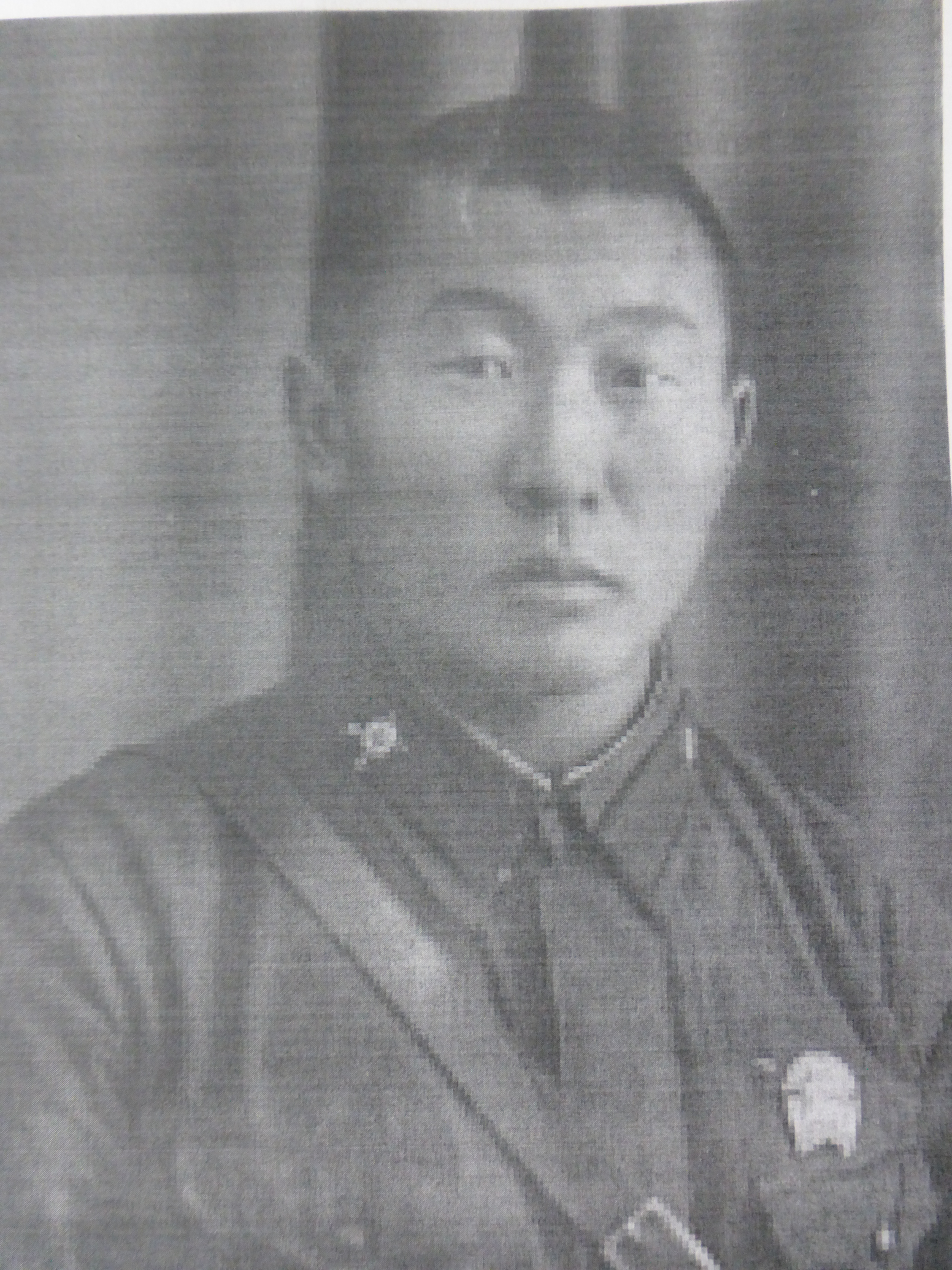
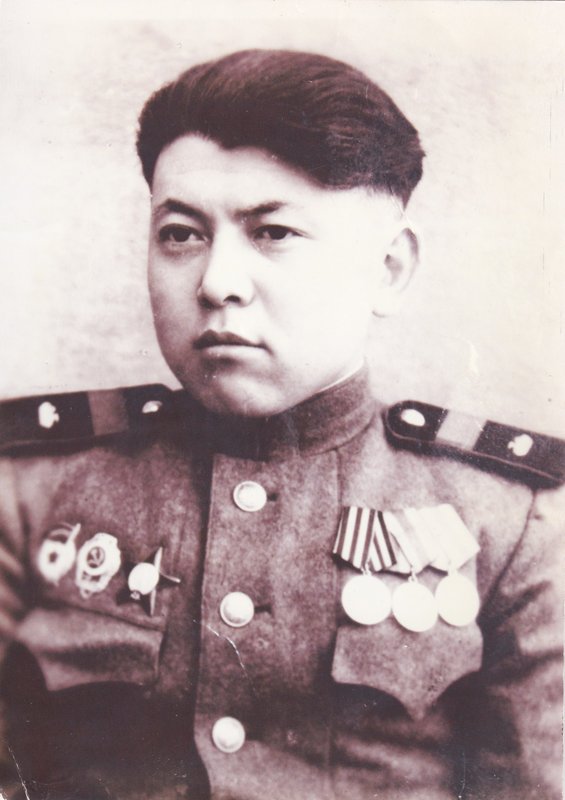

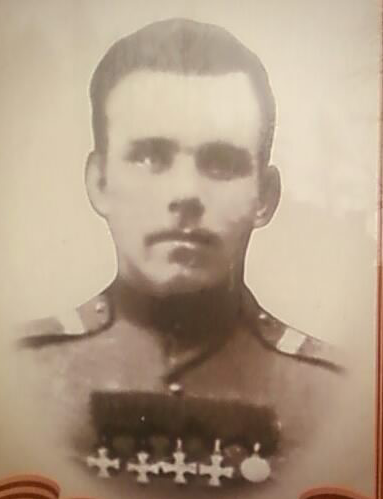

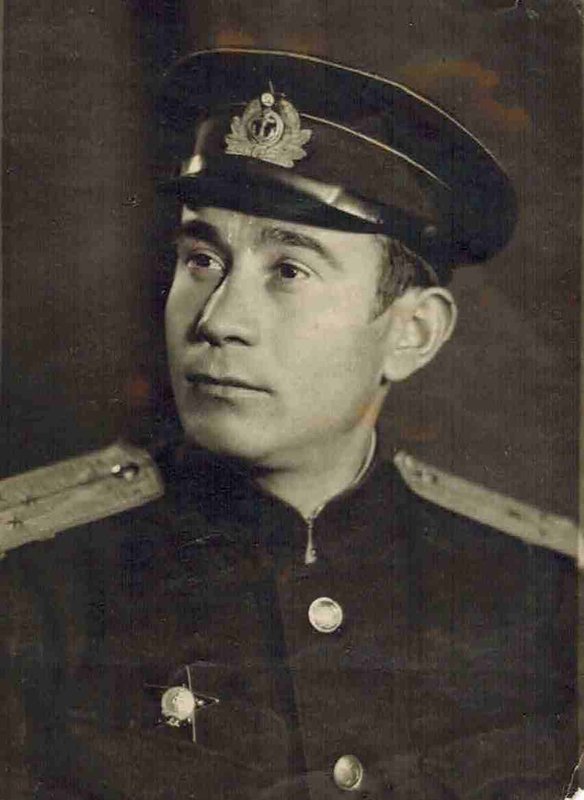

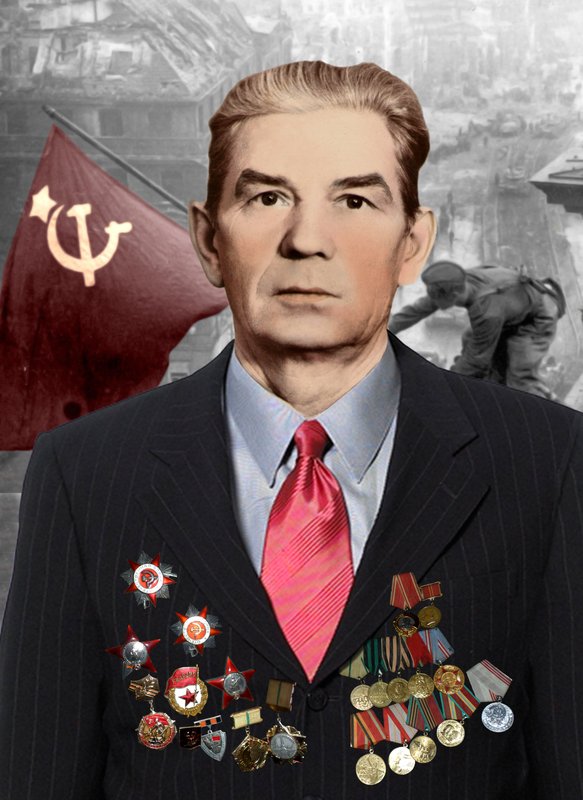


Khamizov Khusen Ismelovich
Rank: Sergeant. Type of troops: Signal troops. Division: 38th Infantry Division (2nd Formation). In the fall of 1939, the brothers Husen and his twin brother Khasen were drafted into the army. They became Red Army soldiers. Participation in a short war with Finland went well for the Khamizovs, and the brothers continued to serve in the Red Army in good faith. The attack of Hitler's Germany on the Soviet Union found the Caucasians at the western border. Fate decreed that Khasen died in a fiery whirlwind of war somewhere near Stalingrad, and his brother Husen became a sergeant. Fate threw a brave competent signalman to different combat points of the country. Remaining as a signalman, Husen had to let the Nazis close at close range and shoot them with a machine gun to help the unit cross the river. Later, Husen was admitted to the All-Union Communist Party of Bolsheviks, was appointed chief of the company, and the communists of the company elected him party organizer. During the liberation of Ukraine, Khamizov was seriously wounded. After treatment in the hospital, he was demobilized for disability. Returning home, Husen was immediately appointed instructor of the Zolsk district party committee and plunged into work. The war continued, the front demanded weapons, ammunition, fuel, clothing, food. Although the collective farms were left without men, equipment and horses, the district exceeded the grain supply plan and sent thousands of clothing and footwear and hundreds of tons of food to the front. And this is a considerable merit of the workers of the district party committee, including the war-disabled communist Khusen Khamizov. Throughout his life, Husen Ismelovich was worried about issues not only of his work. So in the days of Khrushchev, a law was being prepared for the complete destruction of donkeys. Husen Ismelovich began the struggle to preserve these unpretentious four-legged workers, reliable assistants of the mountaineers. In a letter to Prime Minister Kosygin, Khusen Khamizov proved that without the help of donkeys that brought ammunition in the harsh conditions of the highlands, our army would not have held the passes, and the invaders would have broken through into the Transcaucasus. After receiving this letter, Kosygin ordered to end the campaign to destroy the donkey tribe.
Khamizov Khusen Ismelovich
Rank: Sergeant. Type of troops: Signal troops. Division: 38th Infantry Division (2nd Formation). In the fall of 1939, the brothers Husen and his twin brother Khasen were drafted into the army. They became Red Army soldiers. Participation in a short war with Finland went well for the Khamizovs, and the brothers continued to serve in the Red Army in good faith. The attack of Hitler's Germany on the Soviet Union found the Caucasians at the western border. Fate decreed that Khasen died in a fiery whirlwind of war somewhere near Stalingrad, and his brother Husen became a sergeant. Fate threw a brave competent signalman to different combat points of the country. Remaining as a signalman, Husen had to let the Nazis close at close range and shoot them with a machine gun to help the unit cross the river. Later, Husen was admitted to the All-Union Communist Party of Bolsheviks, was appointed chief of the company, and the communists of the company elected him party organizer. During the liberation of Ukraine, Khamizov was seriously wounded. After treatment in the hospital, he was demobilized for disability. Returning home, Husen was immediately appointed instructor of the Zolsk district party committee and plunged into work. The war continued, the front demanded weapons, ammunition, fuel, clothing, food. Although the collective farms were left without men, equipment and horses, the district exceeded the grain supply plan and sent thousands of clothing and footwear and hundreds of tons of food to the front. And this is a considerable merit of the workers of the district party committee, including the war-disabled communist Khusen Khamizov. Throughout his life, Husen Ismelovich was worried about issues not only of his work. So in the days of Khrushchev, a law was being prepared for the complete destruction of donkeys. Husen Ismelovich began the struggle to preserve these unpretentious four-legged workers, reliable assistants of the mountaineers. In a letter to Prime Minister Kosygin, Khusen Khamizov proved that without the help of donkeys that brought ammunition in the harsh conditions of the highlands, our army would not have held the passes, and the invaders would have broken through into the Transcaucasus. After receiving this letter, Kosygin ordered to end the campaign to destroy the donkey tribe.
0 comment



2026 © Russian Military Historical Society Developed by Jetmix