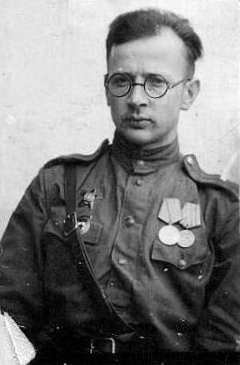


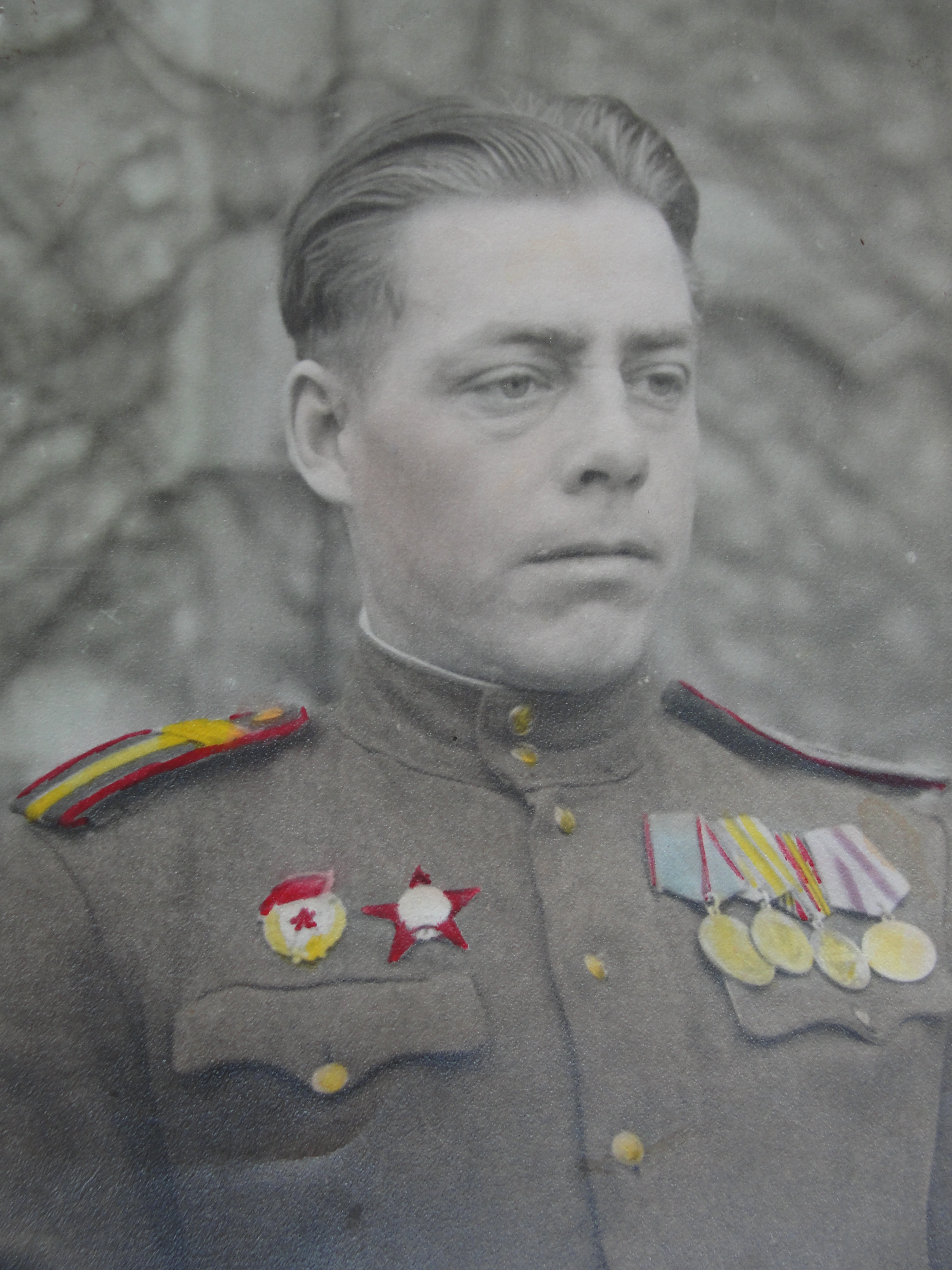
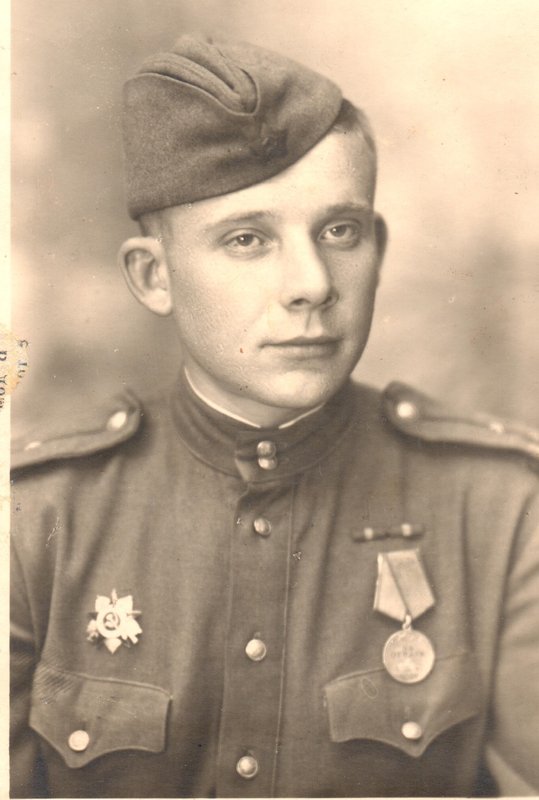
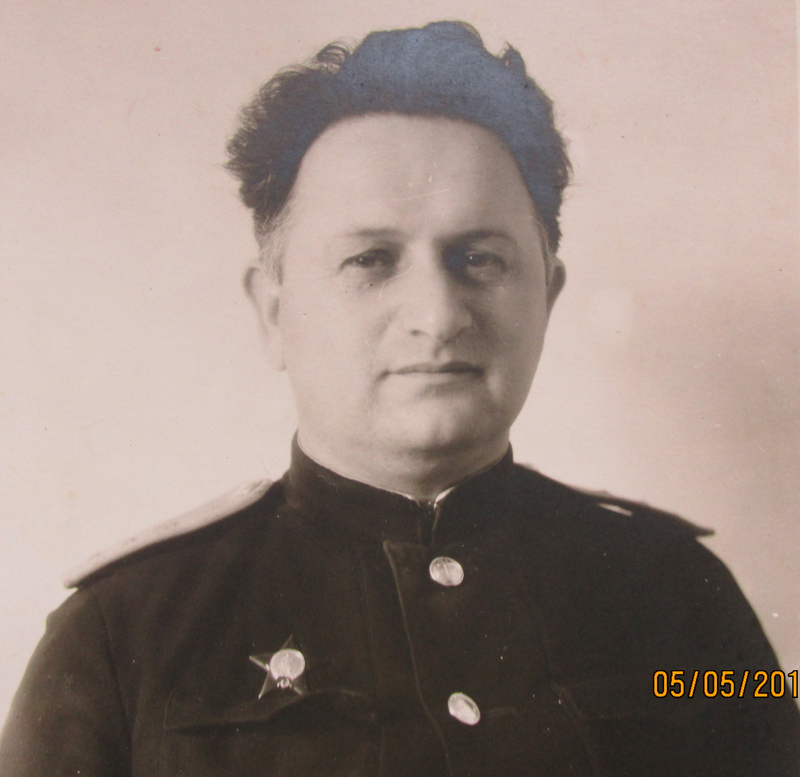
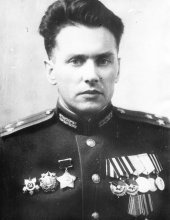

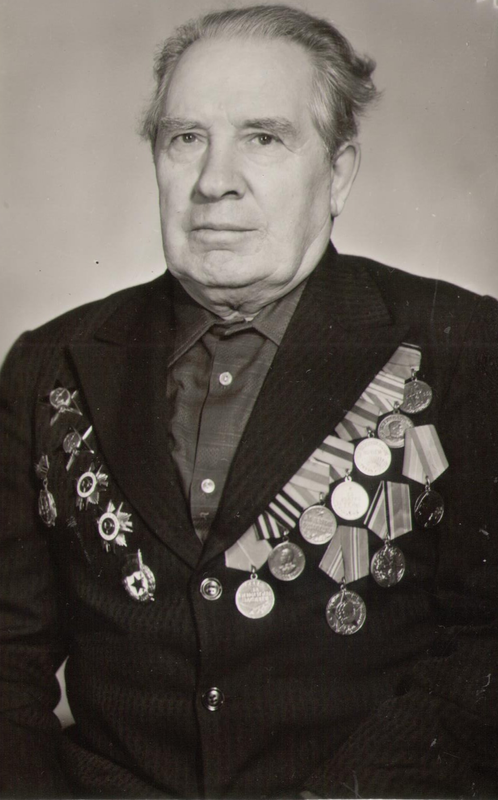
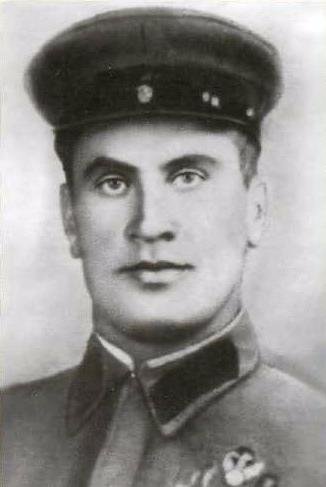
Khairkizov Kichibatyr Alimurzaevich
Rank: Lieutenant. Type of troops: Artillery. Division: 17th Tank Division. Born in the village of Verkhnyaya Mara in a large family. A tall, handsome young man was well educated and respected not only by his peers, but also by his elders. He was drafted into the army on the eve of the warriors. Together with many of his peers from Karachai, he ended up in Western Belarus, where he served in the 257th artillery regiment of the 17th Panzer Transbaikal Artillery Division. After graduating from the regimental school, he became a sergeant and commanded a squad. His regiment entered the battle with the German fascists to the west of Minsk on June 24, 1941. A heavy battle ensued. The Germans overpowered with bomber aircraft, and there were no anti-aircraft installations in the regiment. Sergeant Major Khairkizov and his fighting friends repelled three attacks of the fascists. During the third attack, the platoon commander, Lieutenant Gushchin, dies a hero's death. Kichibatyr Khairkizov became the platoon commander. By lunchtime in the 257th regiment, there were only 3 guns in three divisions. A lot of soldiers were killed. Khairkizov tirelessly fired from the one remaining cannon. He is a commander, a gunner and a gunner. In the Khairkizov division, no one was left alive, and a fighter from another division brought him shells. Fighters from other divisions of the division fought in the same difficult conditions. It soon became clear that, despite their desperate resistance, the Nazis went around on the flanks and closed the encirclement ring. At night, the remnants of the division (20-23 people) gathered, led by one of the staff officers, and decided to try to break through the encirclement. Kichibatyr Khairkizov, when he came to the dugout of the headquarters, found there five seriously wounded soldiers and a nurse. She bandaged a through wound in Khairkizov's shoulder and reported in which direction the others had gone. He went after his comrades in arms. By the end of the night Kichibatyr reached the forest and began to make his way further. He was overcome by pain in his shoulder, hunger, fatigue, sleep. He sat down to rest - he could not sleep, there was no strength to get up. In the evening I fell asleep, and woke up early in the morning to a bird song. He took out a map, got his bearings and decided to head east through a dense forest, where the Germans would not pass, and go out to his own. I went along a barely noticeable path onto a small road, and then ended up at the house of the forester Ignat. The forester advised Khairkizov to rest, gather strength, and then make his way to his own. He spent three days with the forester. Ignat provided the warrior with food, and on the fourth day Kichibatyr set off on the road. I followed the route suggested by the forester. I got to a small farm. He decided whether to turn there or pass by. Suddenly he noticed the rustling and swaying of the branches of the bush, became alert, prepared to shoot. Khairkizov noticed a rifle barrel aimed at him. Both paused and began talking. Before him is the same encirclement, making his way to his own, moreover, it turned out to be his fellow countryman - Yunus Karaketov. They were delighted and decided to make their way together. It was not far from Minsk near Borisov. They managed to find out that the Germans passed these places. They learned that the Nazis were driving captured Soviet soldiers to the West along these roads. We decided to act without wasting time. They lay in wait for the convoy: five fascists escorted about 70-80 Soviet prisoners of war. In the forest, in a convenient place, they organized an ambush. When the column approached closer, three fascists were killed by Kichibatyr Khairkizov and Yunus Karaketov, and the other two were quickly destroyed by the prisoners themselves. Then 55 Soviet prisoners of war were freed north of Borisov. They were not taken prisoner, but to be shot. The activities of the two partisans began to instill fear in the Nazis. For their capture, the German Gestapo appointed a substantial monetary bonus and two cows. Friends became known in the Borisov area under the names "Lenya Cherny" (K. Khairkizov) and "Kolya Cherny"; (Yu. Karaketov). In one of the battles, when they had to fight together against a whole platoon of Germans, partisans from Leonov's brigade, led by the commander himself, came to the rescue. The Nazis were defeated, and both friends from that day joined the brigade of the captain (senior political instructor), who soon became a lieutenant colonel, Vasily Sergeevich Leonov. Kichibatyr Khairkizov and Yunus Karaketov were the organizers of the first two partisan detachments of the Leonov brigade. In these units, at first there were 60-70 fighters each, later it became more. In 1943, the number of partisans in the brigade exceeded 800 people. These were soldiers who made their way out of the German encirclement, freed with the help of the first partisans, former German prisoners of war, etc. For the effective organization of activities in 1943, the partisans were divided into six groups. Weapons workshops, reconnaissance units, food detachments, groups for liaison with nearby settlements, etc. were equipped. In the fall of 1942, Khairkizov's detachment attacked a distillery, which was carefully guarded by the Nazis.Several tasks were immediately solved: the first - the partisans showed that they were capable of performing the most difficult combat operations, the second - they procured a lot of weapons and ammunition for the detachment, the third - they provided the hospital with alcohol. The guards of the plant were basically liquidated, they captured rich trophies of war - 30 rifles, 5 boxes of cartridges, more than a hundred grenades, explosives and much more. Then the plant was blown up. After that, Khairkizov's detachment attacked the Vyatno railway station. They fired at a train with German soldiers and officers. Meanwhile, the partisans were attacked by fascists from the nearby garrisons. A heated battle ensued. The partisans managed to disable the water pumping station and the telephone and telegraph communication system, disrupt the system for regulating and divorcing trains, and exterminate many fascists. The partisans seized 3 cars, loaded them with food, and blew up the warehouses. Khairkizov was simultaneously the commander of one of the partisan detachments, the chief of intelligence and the deputy commander of the Leonov brigade. He led the brigade's most responsible combat operations, took part in major battles with punitive forces. He carefully studied the maps, the terrain and was very well oriented: which path to go where, from where enemies might unexpectedly attack, etc. By the spring of 1943 near Khairkizov, the number of partisans in the detachment exceeded 100 people. He made frequent and unexpected raids. Once, during an attack on the Nazis, his detachment destroyed 90 Nazis. The Germans realized that they would not have peace if they did not destroy the partisans. They removed an entire regiment from the front, reinforced it with police units. These units were sent to the Senninsky and Chashnitsky districts, where the partisans of the Leonov brigade operated. However, liaison brigades from settlements timely notified the partisans about the impending punitive act. The partisans prepared well, set up an ambush, surrounding the fascists from all sides. In this battle, one tank and two armored personnel carriers were burned, 150 fascists were destroyed, and many more were wounded. The punishers, realizing their helplessness, retreated. And in this battle Khairkizov Kichibatyr commanded his detachment and managed to fulfill the duties of the deputy brigade commander. Detachment Khairkizov in the second half of 1942 to the first half of 1943 derailed 7 enemy trains. They, with their commissar M.I. The Mazovtsevs bypassed, personally examined the border of the detachment and, with the consent of the brigade commander, strengthened it as a state border. So, in the first half of 1943, the detachment exterminated 400 fascists who wanted to break through to the territory where the partisan detachment was stationed. At one of the meetings of the headquarters, Khairkizov said: "We must make sure that the enemy does not dare to stick his head out of his garrison. And we must strike more organized and strong blows against their garrisons." Through his contacts, he manages to recognize and neutralize the fascist provocateur Ilya Kozachenko, who was sent by the Nazis to eliminate Khairkizov, as the most dangerous partisan commander. Under the leadership of Kichibatyr Khairkizov, a whole series of remarkable operations were prepared and successfully implemented, over 50 German soldiers and officers were personally killed by Khairkizov in military operations against the fascist invaders. The commander and chief of staff of the brigade more than once celebrated his military exploits, entrusting the most important tasks. Kichibatyr more than once led the brigade to carry out a combat mission and always came out of fights with victory. He carried out the most risky operations with composure, was a master of partisan battles and came up with dizzying tricks, looked for moves unexpected for the enemy. Here is one of the episodes of his combat life. The fascist security service, with the help of traitors, revealed many partisan messengers and scouts. The Gestapo carried out a massive raid in the brigade's area of operation. 29 patriots were arrested. They were put in a prison in the village of Vyatno, tortured, hoping to get information from them about partisans and underground fighters by force. All partisans were doomed to be shot. Kichibatyr turned to the brigade commander with a request to allow him to release the prisoners. Leonov agreed with his plan of operation, and Kichibatyr set off in broad daylight with a group of partisans to Vyatno. Some of them were disguised as policemen, who allegedly brought a dozen of those arrested in two trucks. Kichibatyr, introducing himself as the senior of the convoy, told the guards to accept the arrested. When they began to examine the papers, the partisans finished them off with knives, freed their comrades and took them in two trucks to the forest to the partisan base. Khairkizov led the rout of the police garrison in Podvoretsk, an ambush near the village of Marintsa, where 18 SS men were killed. The combat description of the brigade command says that Kichibatyr Khairkizov was a thunderstorm for the Germans. Never knew fear. He was twice wounded, but did not agree to leave his duties. Moreover, he always went into battle ahead of the attackers, showing an example of personal courage and courage, inspiring the partisans with his example.You are not careful, you will hit a bullet! "- the brigade commander warned him more than once. But Kichibatyr did not think about caution. He fought like a horseman, and died like a horseman. Colonel VA Nezhinsky in his book" Soldiers die with weapons " "The partisans were" cites the following document about the last battle of Kichibatyr on June 8, 1943: "On June 8, 1943, Khairkizov received information that a convoy of punishers was moving along the highway from the village of Novo-Belitsa to Senno. Khairkizov was taken by the partisan detachment of Comrade. Pashchenko, organized an ambush in the forest in the area north of the village of Koroli and mined the highway. When the front car exploded and the highway was closed, the squad ran into the enemy. More than 25 Germans were killed and many were wounded. The battle lasted about 2 hours. The Nazis defended themselves fiercely. Raising the partisans to attack, Khairkizov was killed. The detachment began to withdraw from the battle, not having time to collect trophies. "The hero was buried with military honors by the entire brigade and local residents in the village of Kamenshina, Chashnitsa district, Vitebsk region, where there were no occupiers at that time. It was very hard for Kichibatyr's relatives, especially him friend and countryman Yunus Karaketov, who took an oath at the grave of a friend to avenge the death of his countryman. But he himself died exactly a year later. Both fighters died without learning about the monstrous atrocities against their people - Karachais, their relatives and friends. K. Khairkizov was awarded in 1943 with the Order of the Red Banner. Their subsequent submissions to high awards after the expulsion of the Karachais were not considered. The archival certificate of the National Archives of the Republic of Belarus No. 3504 dated November 24, 1994 states: "For personal courage and heroism shown in the struggle against the German fascist invaders in March 1943. Khairkizov K.A. by the command of the Sonno Brigade, he was nominated for the title of Hero of the Soviet Union (the original of the award list is kept in the NARB). This is also confirmed in the letter of the Director of the Belarusian State Museum of the History of the Great Patriotic War dated November 22, 1994, No. 5/386, addressed to the Chairman of the Council of Ministers of the Karachai-Cherkess Republic, V.I. It notes: "As evidenced by the documents stored in the museum's funds, the Karachai partisans in the difficult conditions of the occupation showed exceptional courage, internationalism, boundless devotion to the Motherland. They made a worthy contribution to the struggle of the people's avengers for the liberation of their native land from the Nazis. In the names of the famous partisans Osman Kasayev, Yunus Karaketov, Kichibatyr Khairkizov were named partisan detachments. The peoples of Karachay-Cherkessia can rightfully be proud of them. It is further emphasized that Khairkizov K.A. was also nominated for the title of Hero of the Soviet Union. However, justice in relation to Kichibatyr Khairkizov was very late, but it triumphed. By the decree of the President of the Russian Federation BN Yeltsin of October 5, 1995. "For courage and heroism shown in the struggle against the Nazi invaders in the Great Patriotic War of 1941-1945" awarded the title of Hero of the Russian Federation (posthumously) Khairkizov Kichibatyr Alimurzaevich. Khairk Izov K.A. in 1996, a monument was erected in his native village.
Khairkizov Kichibatyr Alimurzaevich
Rank: Lieutenant. Type of troops: Artillery. Division: 17th Tank Division. Born in the village of Verkhnyaya Mara in a large family. A tall, handsome young man was well educated and respected not only by his peers, but also by his elders. He was drafted into the army on the eve of the warriors. Together with many of his peers from Karachai, he ended up in Western Belarus, where he served in the 257th artillery regiment of the 17th Panzer Transbaikal Artillery Division. After graduating from the regimental school, he became a sergeant and commanded a squad. His regiment entered the battle with the German fascists to the west of Minsk on June 24, 1941. A heavy battle ensued. The Germans overpowered with bomber aircraft, and there were no anti-aircraft installations in the regiment. Sergeant Major Khairkizov and his fighting friends repelled three attacks of the fascists. During the third attack, the platoon commander, Lieutenant Gushchin, dies a hero's death. Kichibatyr Khairkizov became the platoon commander. By lunchtime in the 257th regiment, there were only 3 guns in three divisions. A lot of soldiers were killed. Khairkizov tirelessly fired from the one remaining cannon. He is a commander, a gunner and a gunner. In the Khairkizov division, no one was left alive, and a fighter from another division brought him shells. Fighters from other divisions of the division fought in the same difficult conditions. It soon became clear that, despite their desperate resistance, the Nazis went around on the flanks and closed the encirclement ring. At night, the remnants of the division (20-23 people) gathered, led by one of the staff officers, and decided to try to break through the encirclement. Kichibatyr Khairkizov, when he came to the dugout of the headquarters, found there five seriously wounded soldiers and a nurse. She bandaged a through wound in Khairkizov's shoulder and reported in which direction the others had gone. He went after his comrades in arms. By the end of the night Kichibatyr reached the forest and began to make his way further. He was overcome by pain in his shoulder, hunger, fatigue, sleep. He sat down to rest - he could not sleep, there was no strength to get up. In the evening I fell asleep, and woke up early in the morning to a bird song. He took out a map, got his bearings and decided to head east through a dense forest, where the Germans would not pass, and go out to his own. I went along a barely noticeable path onto a small road, and then ended up at the house of the forester Ignat. The forester advised Khairkizov to rest, gather strength, and then make his way to his own. He spent three days with the forester. Ignat provided the warrior with food, and on the fourth day Kichibatyr set off on the road. I followed the route suggested by the forester. I got to a small farm. He decided whether to turn there or pass by. Suddenly he noticed the rustling and swaying of the branches of the bush, became alert, prepared to shoot. Khairkizov noticed a rifle barrel aimed at him. Both paused and began talking. Before him is the same encirclement, making his way to his own, moreover, it turned out to be his fellow countryman - Yunus Karaketov. They were delighted and decided to make their way together. It was not far from Minsk near Borisov. They managed to find out that the Germans passed these places. They learned that the Nazis were driving captured Soviet soldiers to the West along these roads. We decided to act without wasting time. They lay in wait for the convoy: five fascists escorted about 70-80 Soviet prisoners of war. In the forest, in a convenient place, they organized an ambush. When the column approached closer, three fascists were killed by Kichibatyr Khairkizov and Yunus Karaketov, and the other two were quickly destroyed by the prisoners themselves. Then 55 Soviet prisoners of war were freed north of Borisov. They were not taken prisoner, but to be shot. The activities of the two partisans began to instill fear in the Nazis. For their capture, the German Gestapo appointed a substantial monetary bonus and two cows. Friends became known in the Borisov area under the names "Lenya Cherny" (K. Khairkizov) and "Kolya Cherny"; (Yu. Karaketov). In one of the battles, when they had to fight together against a whole platoon of Germans, partisans from Leonov's brigade, led by the commander himself, came to the rescue. The Nazis were defeated, and both friends from that day joined the brigade of the captain (senior political instructor), who soon became a lieutenant colonel, Vasily Sergeevich Leonov. Kichibatyr Khairkizov and Yunus Karaketov were the organizers of the first two partisan detachments of the Leonov brigade. In these units, at first there were 60-70 fighters each, later it became more. In 1943, the number of partisans in the brigade exceeded 800 people. These were soldiers who made their way out of the German encirclement, freed with the help of the first partisans, former German prisoners of war, etc. For the effective organization of activities in 1943, the partisans were divided into six groups. Weapons workshops, reconnaissance units, food detachments, groups for liaison with nearby settlements, etc. were equipped. In the fall of 1942, Khairkizov's detachment attacked a distillery, which was carefully guarded by the Nazis.Several tasks were immediately solved: the first - the partisans showed that they were capable of performing the most difficult combat operations, the second - they procured a lot of weapons and ammunition for the detachment, the third - they provided the hospital with alcohol. The guards of the plant were basically liquidated, they captured rich trophies of war - 30 rifles, 5 boxes of cartridges, more than a hundred grenades, explosives and much more. Then the plant was blown up. After that, Khairkizov's detachment attacked the Vyatno railway station. They fired at a train with German soldiers and officers. Meanwhile, the partisans were attacked by fascists from the nearby garrisons. A heated battle ensued. The partisans managed to disable the water pumping station and the telephone and telegraph communication system, disrupt the system for regulating and divorcing trains, and exterminate many fascists. The partisans seized 3 cars, loaded them with food, and blew up the warehouses. Khairkizov was simultaneously the commander of one of the partisan detachments, the chief of intelligence and the deputy commander of the Leonov brigade. He led the brigade's most responsible combat operations, took part in major battles with punitive forces. He carefully studied the maps, the terrain and was very well oriented: which path to go where, from where enemies might unexpectedly attack, etc. By the spring of 1943 near Khairkizov, the number of partisans in the detachment exceeded 100 people. He made frequent and unexpected raids. Once, during an attack on the Nazis, his detachment destroyed 90 Nazis. The Germans realized that they would not have peace if they did not destroy the partisans. They removed an entire regiment from the front, reinforced it with police units. These units were sent to the Senninsky and Chashnitsky districts, where the partisans of the Leonov brigade operated. However, liaison brigades from settlements timely notified the partisans about the impending punitive act. The partisans prepared well, set up an ambush, surrounding the fascists from all sides. In this battle, one tank and two armored personnel carriers were burned, 150 fascists were destroyed, and many more were wounded. The punishers, realizing their helplessness, retreated. And in this battle Khairkizov Kichibatyr commanded his detachment and managed to fulfill the duties of the deputy brigade commander. Detachment Khairkizov in the second half of 1942 to the first half of 1943 derailed 7 enemy trains. They, with their commissar M.I. The Mazovtsevs bypassed, personally examined the border of the detachment and, with the consent of the brigade commander, strengthened it as a state border. So, in the first half of 1943, the detachment exterminated 400 fascists who wanted to break through to the territory where the partisan detachment was stationed. At one of the meetings of the headquarters, Khairkizov said: "We must make sure that the enemy does not dare to stick his head out of his garrison. And we must strike more organized and strong blows against their garrisons." Through his contacts, he manages to recognize and neutralize the fascist provocateur Ilya Kozachenko, who was sent by the Nazis to eliminate Khairkizov, as the most dangerous partisan commander. Under the leadership of Kichibatyr Khairkizov, a whole series of remarkable operations were prepared and successfully implemented, over 50 German soldiers and officers were personally killed by Khairkizov in military operations against the fascist invaders. The commander and chief of staff of the brigade more than once celebrated his military exploits, entrusting the most important tasks. Kichibatyr more than once led the brigade to carry out a combat mission and always came out of fights with victory. He carried out the most risky operations with composure, was a master of partisan battles and came up with dizzying tricks, looked for moves unexpected for the enemy. Here is one of the episodes of his combat life. The fascist security service, with the help of traitors, revealed many partisan messengers and scouts. The Gestapo carried out a massive raid in the brigade's area of operation. 29 patriots were arrested. They were put in a prison in the village of Vyatno, tortured, hoping to get information from them about partisans and underground fighters by force. All partisans were doomed to be shot. Kichibatyr turned to the brigade commander with a request to allow him to release the prisoners. Leonov agreed with his plan of operation, and Kichibatyr set off in broad daylight with a group of partisans to Vyatno. Some of them were disguised as policemen, who allegedly brought a dozen of those arrested in two trucks. Kichibatyr, introducing himself as the senior of the convoy, told the guards to accept the arrested. When they began to examine the papers, the partisans finished them off with knives, freed their comrades and took them in two trucks to the forest to the partisan base. Khairkizov led the rout of the police garrison in Podvoretsk, an ambush near the village of Marintsa, where 18 SS men were killed. The combat description of the brigade command says that Kichibatyr Khairkizov was a thunderstorm for the Germans. Never knew fear. He was twice wounded, but did not agree to leave his duties. Moreover, he always went into battle ahead of the attackers, showing an example of personal courage and courage, inspiring the partisans with his example.You are not careful, you will hit a bullet! "- the brigade commander warned him more than once. But Kichibatyr did not think about caution. He fought like a horseman, and died like a horseman. Colonel VA Nezhinsky in his book" Soldiers die with weapons " "The partisans were" cites the following document about the last battle of Kichibatyr on June 8, 1943: "On June 8, 1943, Khairkizov received information that a convoy of punishers was moving along the highway from the village of Novo-Belitsa to Senno. Khairkizov was taken by the partisan detachment of Comrade. Pashchenko, organized an ambush in the forest in the area north of the village of Koroli and mined the highway. When the front car exploded and the highway was closed, the squad ran into the enemy. More than 25 Germans were killed and many were wounded. The battle lasted about 2 hours. The Nazis defended themselves fiercely. Raising the partisans to attack, Khairkizov was killed. The detachment began to withdraw from the battle, not having time to collect trophies. "The hero was buried with military honors by the entire brigade and local residents in the village of Kamenshina, Chashnitsa district, Vitebsk region, where there were no occupiers at that time. It was very hard for Kichibatyr's relatives, especially him friend and countryman Yunus Karaketov, who took an oath at the grave of a friend to avenge the death of his countryman. But he himself died exactly a year later. Both fighters died without learning about the monstrous atrocities against their people - Karachais, their relatives and friends. K. Khairkizov was awarded in 1943 with the Order of the Red Banner. Their subsequent submissions to high awards after the expulsion of the Karachais were not considered. The archival certificate of the National Archives of the Republic of Belarus No. 3504 dated November 24, 1994 states: "For personal courage and heroism shown in the struggle against the German fascist invaders in March 1943. Khairkizov K.A. by the command of the Sonno Brigade, he was nominated for the title of Hero of the Soviet Union (the original of the award list is kept in the NARB). This is also confirmed in the letter of the Director of the Belarusian State Museum of the History of the Great Patriotic War dated November 22, 1994, No. 5/386, addressed to the Chairman of the Council of Ministers of the Karachai-Cherkess Republic, V.I. It notes: "As evidenced by the documents stored in the museum's funds, the Karachai partisans in the difficult conditions of the occupation showed exceptional courage, internationalism, boundless devotion to the Motherland. They made a worthy contribution to the struggle of the people's avengers for the liberation of their native land from the Nazis. In the names of the famous partisans Osman Kasayev, Yunus Karaketov, Kichibatyr Khairkizov were named partisan detachments. The peoples of Karachay-Cherkessia can rightfully be proud of them. It is further emphasized that Khairkizov K.A. was also nominated for the title of Hero of the Soviet Union. However, justice in relation to Kichibatyr Khairkizov was very late, but it triumphed. By the decree of the President of the Russian Federation BN Yeltsin of October 5, 1995. "For courage and heroism shown in the struggle against the Nazi invaders in the Great Patriotic War of 1941-1945" awarded the title of Hero of the Russian Federation (posthumously) Khairkizov Kichibatyr Alimurzaevich. Khairk Izov K.A. in 1996, a monument was erected in his native village.
0 comment




2026 © Russian Military Historical Society Developed by Jetmix