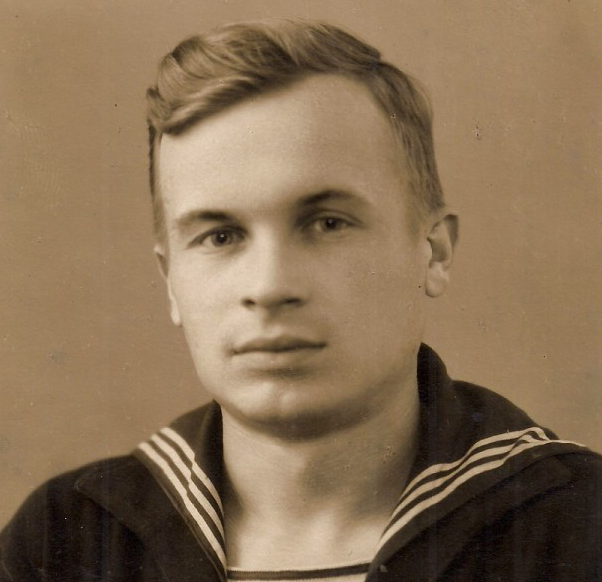
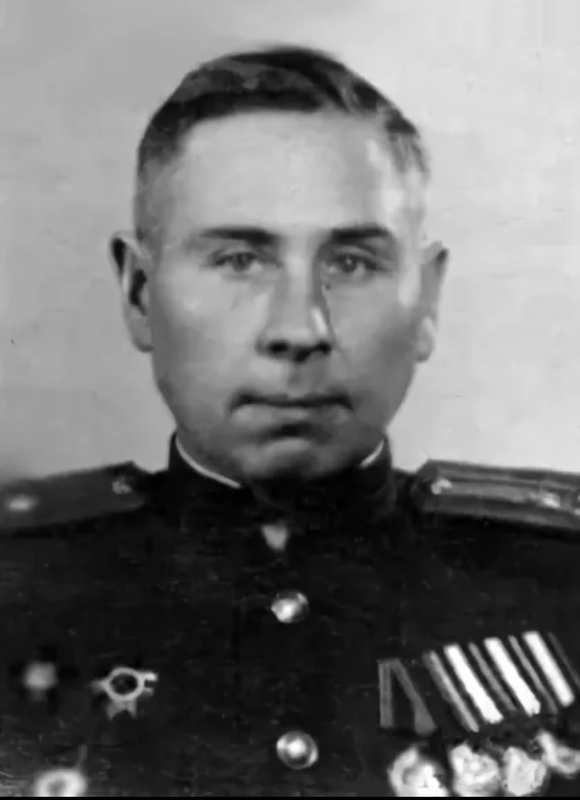
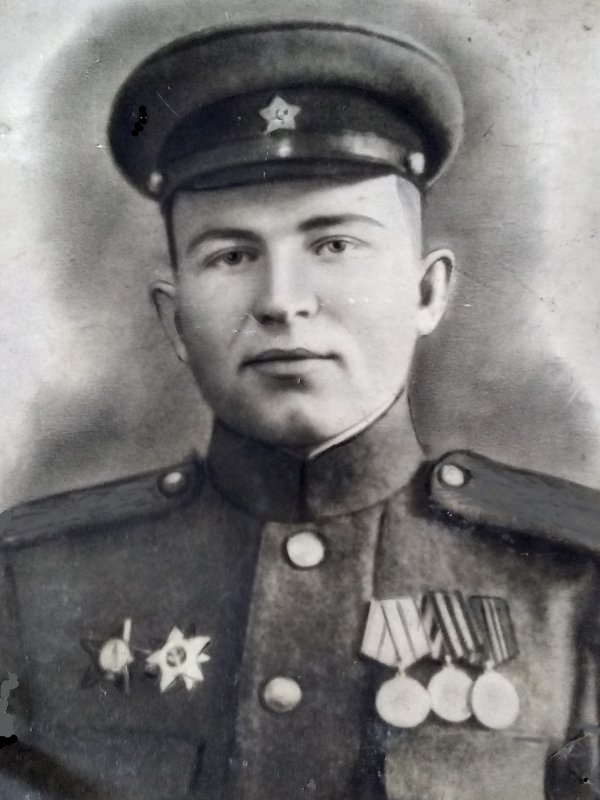
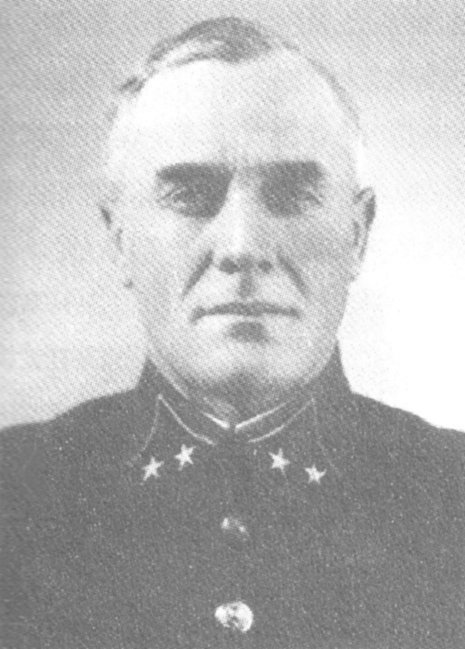
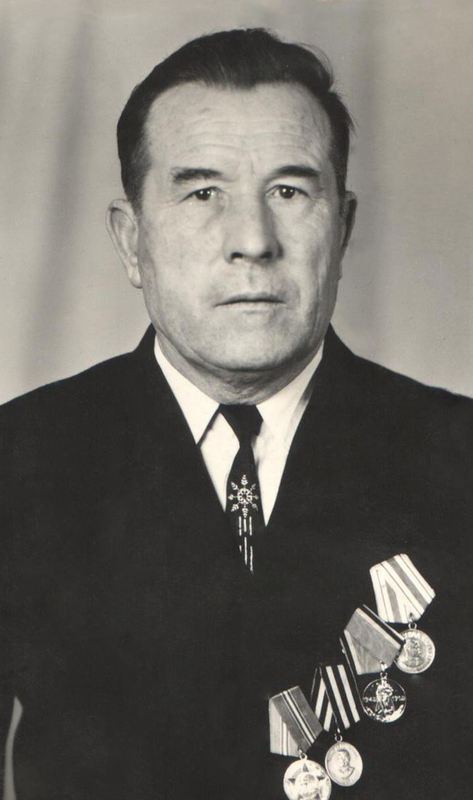
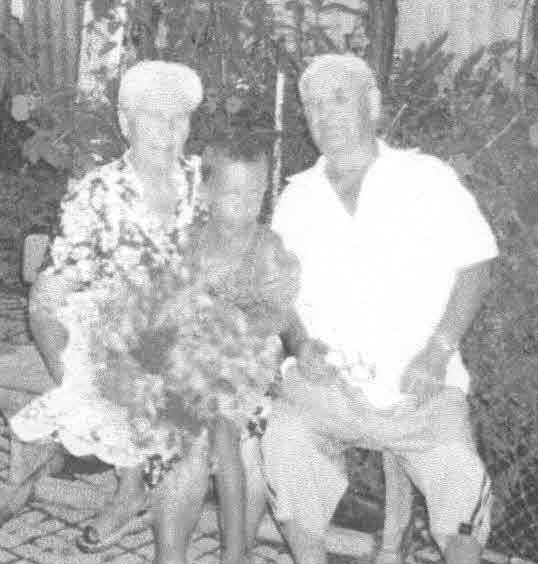
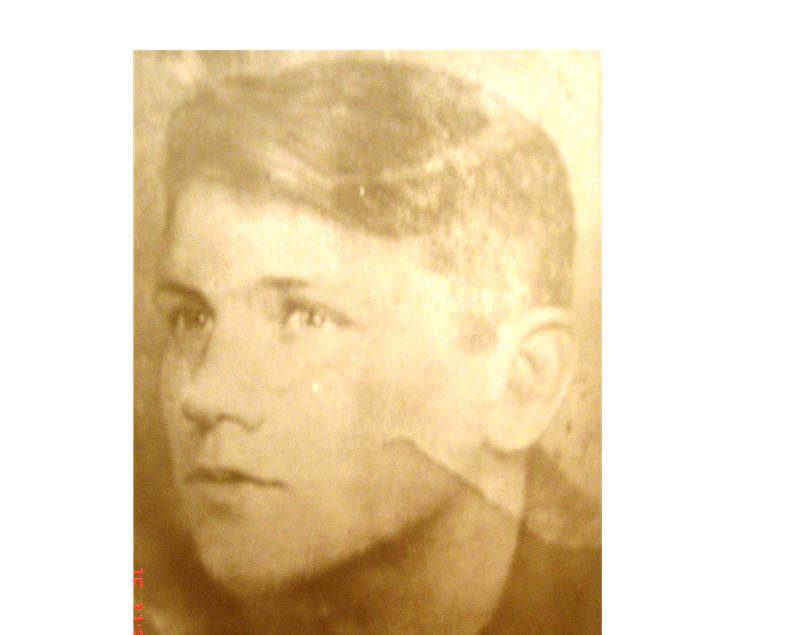
Kachan Boris Petrovich
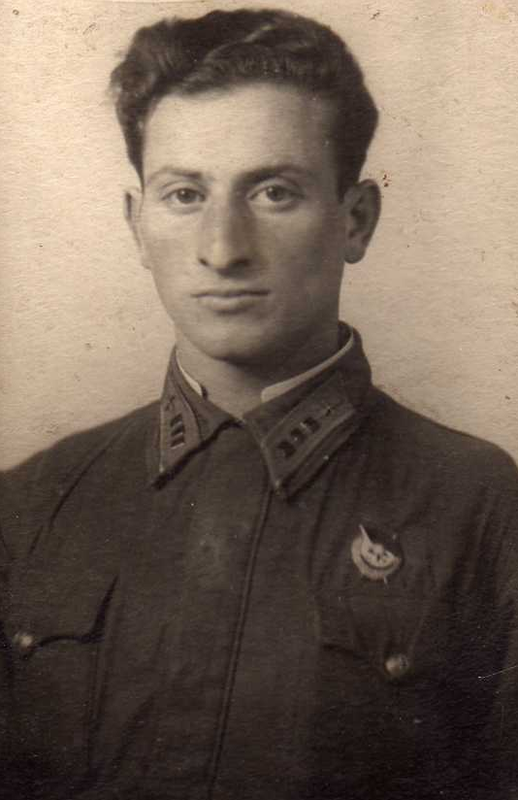
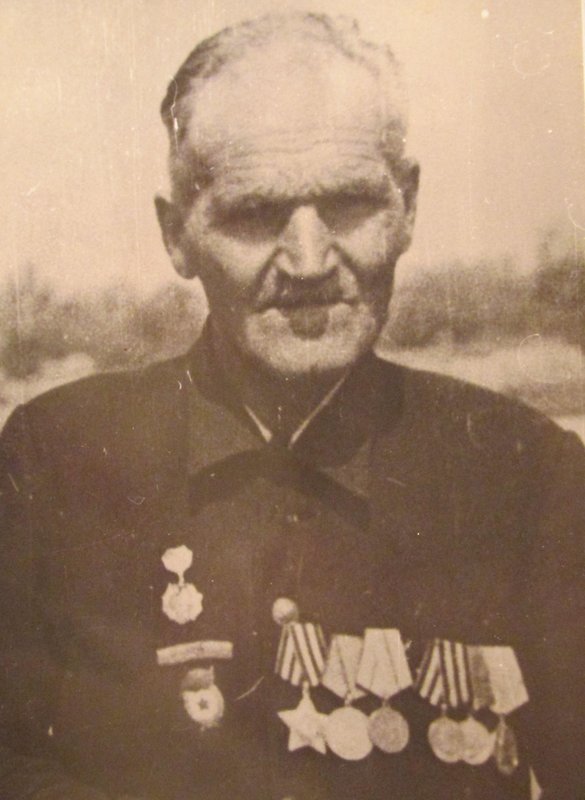
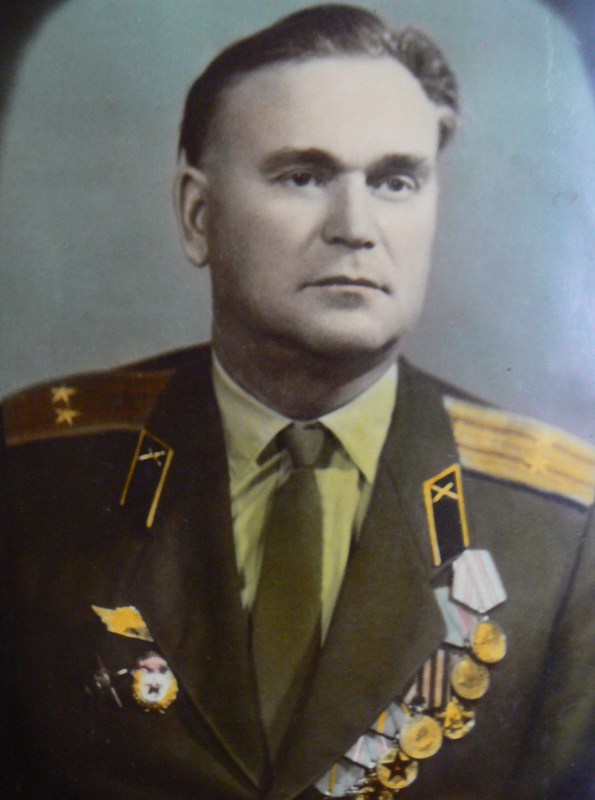
Boris Kachan is well known in the Borisov Region. On the facade of the secondary school No. 8 in Borisov there is a memorial plaque with the name of B. Kachan and his colleagues in the anti-fascist struggle. The school Museum "History of the school in the history of the country" contains the memories of Boris's father and his wife, and the stand "military hard times" shows: "Boris Kachan. Since 1942-scout of the "Uncle Koli" brigade. In February 1944, he was killed while performing a combat mission. The Borisov Museum of local lore also has an exhibition about the development of the underground and partisan movement in the Borisov region. There is also a sculpture group by A. Kroholev "partisans-scouts", which embodies the images of two comrades, fellow wrestlers Boris Kachan and Artur Rzheutsky, as well as a photo of them. Boris Petrovich Kachan was born in 1922 in Borisov, Minsk region. Graduated from 8 classes of secondary school No. 8.Barysau. Recalls Maria Nikolaevna Kachan (she became the wife of her father after the death of Boris): "I didn't want to study longer, I asked my father to take him to work at the factory. His father got him a job as a locksmith. Boris read a lot of books about accidents. He loved physical education and was devoted to it. And in particular, it was his Boxing...he was desperate, he was not afraid to jump on the car and jump out on the move, he always had victory on his side...". Boris was fond of various sports: he swam a lot, ran on skates, loved athletics, and was an excellent shot. The usual way of life was disrupted by the War. Father Kachan Pyotr Alexandrovich as an employee of rembaza No. 20 was called to the front. Boris and the mother of Sophia Spiridonovka remained in the occupied Borisov. When the mother asked her son what to do now, he did not hesitate to answer: "We'll find a case." On the advice of his uncle - a member of the underground district Committee of the CP(b)B Vladimir Alexandrovich Kachan-together with his friends Arthur Rzheutsky, Kolya Kapshay, cousin Lelya Shapchits collects weapons and ammunition, hides them in a dugout dug and equipped with them in the forest 3 kilometers from Borisov. "August 1, 1941. We built a pillbox. They dug a dugout in the dense thickets of birch trees near Bald mountain, near the village of Bolshoe Stakhovo. Our headquarters will be there. Boris Kachan was chosen as the commander, and I, as his Deputy, was entrusted with staff Affairs, "Nikolai Kapshay writes in the" Journal of combat operations of the Borisov youth group". After the war, Nikolai Antonovich became an architect. In 1958, in the village of Budenichi, Ikansky village Council of Borisovsky district, the sculpture "Partisan liberator" (a soldier and two children) was installed on a mass grave where 250 Soviet soldiers and partisans who fell in 1941-1944 in battles with the Nazi invaders are buried. One of the authors of the sculpture, N. A. Kapshay, based the composition on the image of Boris. After visiting this place, I found out that in 2009 the monument was dismantled due to severe destruction. A memorial plaque is installed in its place. Many remarkable combat operations were carried out in Borisov by an underground youth organization headed by Boris Kachan. It included Arthur Rzewski, Lucy Chalovska, Nicholas Kapshai, Boris Frolkina, Lola Shapchits, Maria Komar and others. Their activities were initially led by V. A. Kachan (uncle of B. Kachan, shot by the Nazis in 1942), and later by Deputy brigade commanders V. Anikushin, V. Rudak, and I. Zolotar. Their activities were diverse: exposing fascist propaganda, involving the population in the fight against the invaders (in particular, they were involved in the work of mayor Borisova Parabkovich), collecting intelligence about the enemy in the garrison and its surroundings, and transmitting this data to the partisans, helping the partisan brigades to expose and destroy spies and saboteurs sent by the fascist intelligence for subversive activities. The children took to the forest, to the villages of those whom the Nazis were going to destroy or take to Germany. They collected and handed over weapons, ammunition and medical supplies to the partisans. They liked to tease the invaders. In the autumn of 1941, the Nazis began to spread news of the capture of Moscow. Underground worker Anikushin in this regard wrote a satirical poster with the image of a large thist, and the guys at night were able to attach it next to the Hitler portrait near the entrance of the Borisovsky brewery. After That, N. kapshay draws a whole series of portraits and hangs them around the city along with reports of the Sovinformburo. The commandant of the city, Colonel Kering, promises a reward of 5,000 marks for the head of each of the three friends. In the summer of 1942 the underground party authorities decided to send the children to a partisan detachment. Having seized the car from the power plant, B. Kachan, A. Rzheutsky and N. Kapshay went into the forest and became scouts of the "Uncle Koli" brigade, which was headed by P. G. Lopatin, later a Hero of the Soviet Union. Under the direct supervision of the head of the special Department of the brigade V. Rudak group B. Kachan established location of the school of the Abwehr "Saturn" in the military camp Stoves, stole the chief of staff of Waldenmaier and chief 93rd sabotage school "Saturn" Colonel Neulinger, which the brigade command was sent by plane to Moscow. They destroyed the commandant of Borisov, Colonel Kering, who was responsible for the mass executions of Soviet prisoners of War, partisans, underground workers and civilians. The scout of this group Nadezhda Troyan participated in the destruction of the General Commissioner of Belarus Gauleiter V. Kube.Boris made 54 combat trips to the occupied city in order to gather intelligence, communicate with underground workers, and conduct sabotage. On his account, about 100 killed Nazis. In early January (according to some sources in February), 1944, the reconnaissance group of the special purpose detachment of the MGB of the USSR under the command Of I. Zolotar went to meet with the scout "Felix". Partisans accompanied them through the forest, and the scouts went out alone on the road. Near the village of Diarova Smolevichi district to meet the guerrillas drove a car with the Germans. A shootout began, in which Kachan Boris, Artur Rzheutsky, and Volodya Rudak were killed. When the partisans returned at night to collect the bodies of the dead, they were not there. For this reason, the brigade command was denied the title of Hero of the Soviet Union to V. Rudak and B. Kachan. It was only 20 years later that the award found a hero on the recommendation of the Borisovsky CC KPB. By decree of the Presidium of the Supreme Soviet of the USSR on May 8, 1965, Boris Petrovich Kachan was awarded the order of the Patriotic War II degree for No. 928240. The order and award book were transferred to the Museum. The hero has no other awards. There are no documents about his birth, education, lost funeral. The exact date of birth is unknown, as is the exact date of death. On the pomnimvas website.by/poisk [ http://pomnimvas.by / poisk] indicates the burial place of B. P. Kachan-D. Makovye, which is unlikely. A famous hero? Yes, but everything that is known about him is based on the memories of a friend of N. Kapshay, a woman who became the wife of Boris's father M. N. Kachan, as well as his commander I. Zolotar. You can't make them remember, but you can teach them to remember…
Kachan Boris Petrovich
Boris Kachan is well known in the Borisov Region. On the facade of the secondary school No. 8 in Borisov there is a memorial plaque with the name of B. Kachan and his colleagues in the anti-fascist struggle. The school Museum "History of the school in the history of the country" contains the memories of Boris's father and his wife, and the stand "military hard times" shows: "Boris Kachan. Since 1942-scout of the "Uncle Koli" brigade. In February 1944, he was killed while performing a combat mission. The Borisov Museum of local lore also has an exhibition about the development of the underground and partisan movement in the Borisov region. There is also a sculpture group by A. Kroholev "partisans-scouts", which embodies the images of two comrades, fellow wrestlers Boris Kachan and Artur Rzheutsky, as well as a photo of them. Boris Petrovich Kachan was born in 1922 in Borisov, Minsk region. Graduated from 8 classes of secondary school No. 8.Barysau. Recalls Maria Nikolaevna Kachan (she became the wife of her father after the death of Boris): "I didn't want to study longer, I asked my father to take him to work at the factory. His father got him a job as a locksmith. Boris read a lot of books about accidents. He loved physical education and was devoted to it. And in particular, it was his Boxing...he was desperate, he was not afraid to jump on the car and jump out on the move, he always had victory on his side...". Boris was fond of various sports: he swam a lot, ran on skates, loved athletics, and was an excellent shot. The usual way of life was disrupted by the War. Father Kachan Pyotr Alexandrovich as an employee of rembaza No. 20 was called to the front. Boris and the mother of Sophia Spiridonovka remained in the occupied Borisov. When the mother asked her son what to do now, he did not hesitate to answer: "We'll find a case." On the advice of his uncle - a member of the underground district Committee of the CP(b)B Vladimir Alexandrovich Kachan-together with his friends Arthur Rzheutsky, Kolya Kapshay, cousin Lelya Shapchits collects weapons and ammunition, hides them in a dugout dug and equipped with them in the forest 3 kilometers from Borisov. "August 1, 1941. We built a pillbox. They dug a dugout in the dense thickets of birch trees near Bald mountain, near the village of Bolshoe Stakhovo. Our headquarters will be there. Boris Kachan was chosen as the commander, and I, as his Deputy, was entrusted with staff Affairs, "Nikolai Kapshay writes in the" Journal of combat operations of the Borisov youth group". After the war, Nikolai Antonovich became an architect. In 1958, in the village of Budenichi, Ikansky village Council of Borisovsky district, the sculpture "Partisan liberator" (a soldier and two children) was installed on a mass grave where 250 Soviet soldiers and partisans who fell in 1941-1944 in battles with the Nazi invaders are buried. One of the authors of the sculpture, N. A. Kapshay, based the composition on the image of Boris. After visiting this place, I found out that in 2009 the monument was dismantled due to severe destruction. A memorial plaque is installed in its place. Many remarkable combat operations were carried out in Borisov by an underground youth organization headed by Boris Kachan. It included Arthur Rzewski, Lucy Chalovska, Nicholas Kapshai, Boris Frolkina, Lola Shapchits, Maria Komar and others. Their activities were initially led by V. A. Kachan (uncle of B. Kachan, shot by the Nazis in 1942), and later by Deputy brigade commanders V. Anikushin, V. Rudak, and I. Zolotar. Their activities were diverse: exposing fascist propaganda, involving the population in the fight against the invaders (in particular, they were involved in the work of mayor Borisova Parabkovich), collecting intelligence about the enemy in the garrison and its surroundings, and transmitting this data to the partisans, helping the partisan brigades to expose and destroy spies and saboteurs sent by the fascist intelligence for subversive activities. The children took to the forest, to the villages of those whom the Nazis were going to destroy or take to Germany. They collected and handed over weapons, ammunition and medical supplies to the partisans. They liked to tease the invaders. In the autumn of 1941, the Nazis began to spread news of the capture of Moscow. Underground worker Anikushin in this regard wrote a satirical poster with the image of a large thist, and the guys at night were able to attach it next to the Hitler portrait near the entrance of the Borisovsky brewery. After That, N. kapshay draws a whole series of portraits and hangs them around the city along with reports of the Sovinformburo. The commandant of the city, Colonel Kering, promises a reward of 5,000 marks for the head of each of the three friends. In the summer of 1942 the underground party authorities decided to send the children to a partisan detachment. Having seized the car from the power plant, B. Kachan, A. Rzheutsky and N. Kapshay went into the forest and became scouts of the "Uncle Koli" brigade, which was headed by P. G. Lopatin, later a Hero of the Soviet Union. Under the direct supervision of the head of the special Department of the brigade V. Rudak group B. Kachan established location of the school of the Abwehr "Saturn" in the military camp Stoves, stole the chief of staff of Waldenmaier and chief 93rd sabotage school "Saturn" Colonel Neulinger, which the brigade command was sent by plane to Moscow. They destroyed the commandant of Borisov, Colonel Kering, who was responsible for the mass executions of Soviet prisoners of War, partisans, underground workers and civilians. The scout of this group Nadezhda Troyan participated in the destruction of the General Commissioner of Belarus Gauleiter V. Kube.Boris made 54 combat trips to the occupied city in order to gather intelligence, communicate with underground workers, and conduct sabotage. On his account, about 100 killed Nazis. In early January (according to some sources in February), 1944, the reconnaissance group of the special purpose detachment of the MGB of the USSR under the command Of I. Zolotar went to meet with the scout "Felix". Partisans accompanied them through the forest, and the scouts went out alone on the road. Near the village of Diarova Smolevichi district to meet the guerrillas drove a car with the Germans. A shootout began, in which Kachan Boris, Artur Rzheutsky, and Volodya Rudak were killed. When the partisans returned at night to collect the bodies of the dead, they were not there. For this reason, the brigade command was denied the title of Hero of the Soviet Union to V. Rudak and B. Kachan. It was only 20 years later that the award found a hero on the recommendation of the Borisovsky CC KPB. By decree of the Presidium of the Supreme Soviet of the USSR on May 8, 1965, Boris Petrovich Kachan was awarded the order of the Patriotic War II degree for No. 928240. The order and award book were transferred to the Museum. The hero has no other awards. There are no documents about his birth, education, lost funeral. The exact date of birth is unknown, as is the exact date of death. On the pomnimvas website.by/poisk [ http://pomnimvas.by / poisk] indicates the burial place of B. P. Kachan-D. Makovye, which is unlikely. A famous hero? Yes, but everything that is known about him is based on the memories of a friend of N. Kapshay, a woman who became the wife of Boris's father M. N. Kachan, as well as his commander I. Zolotar. You can't make them remember, but you can teach them to remember…
0 comment



2026 © Russian Military Historical Society Developed by Jetmix