


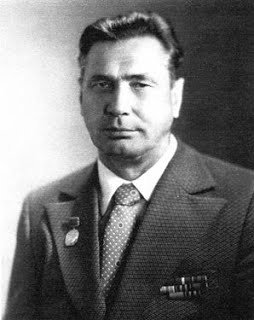


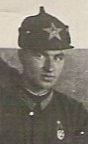


Kuznetsov Mikhail Mikhailovich
Military Rank: Petty Officer (Starshina).
On January 11, 1943, the plan was approved. By order of the Suprime Headquarters, its implementation was supposed to begin immediately, so the implementation of the plan “Mountain” began the very next day. The offensive was difficult, but in this part it was ended with success: by January 23rd, the German defense was broken south of Krasnodar, and the path of withdrawal of German troops from the North Caucasus was cut off. During the battles, which lasted until the beginning of February, Soviet troops reached the Sea of Azov and took Maykop. The time has come to begin the maritime phase of the operation. The main landing group under the command of Colonel Gordeev included the 83rd and 255th Marine Brigades, the 165th Infantry Brigade, a separate front-line Airborne regiment, a separate Machine-gun Battalion, the 563rd Tank Battalion, and the 29th anti-tank Artillery Regiment. The auxiliary landing under the command of Major Kunnikov included 275th Marine soldiers without heavy weapons. The plan was provided for the landing immediately after the breakthrough of the front near Novorossiysk by the forces of the 47th Army of the Black Sea Group. The landing was supposed to arrange under the cover of the fire of support ships and aviation bombardment, suppress enemy resistance on the shore, connect with the landed airborne paratroopers, then break through to Novorossiysk, connect with the main forces, provide blocking and subsequent capture of the city. The main forces of the naval landing reached the landing point only when the fire training, under the cover of which they were supposed to land, came to an end. The Paratroopers met with dense fire from all types of weapons. Gunboats, which were considered to support the landing with fire, could not approach the shore. Only the first echelon of the landing stepped down, about 1,500 people with 16 tanks, ships with the remaining paratroopers were forced to withdraw. For three days, the landing troops fought without receiving reinforcements and ammunition. A small detachment made its way to Stanichka, where an auxiliary landing was fighting, 25 people joined the parachute landing and were later removed by ships, and a few people went to the mountains. The actions of the auxiliary detachment of Major Kunnikov were much more successful: approaching the shore in the estimated time, the ships opened fire at enemy firing points, put a smoke screen along the coast, under the cover of which the advance detachment of the landing quickly and organized landed and entrenched on the shore after an hour. Then, after the landing of the main forces, the bridgehead was expanded, the paratroopers captured several quarters in the southern part of Stanichka. When the situation was reported to the Front Commander, Tyulenev personally ordered Oktyabrsky to land the remains of the landing on the captured bridgehead and hold it by any means. But the moment of surprise was finally missed. Despite the fact that the attempt to capture Novorossiysk failed, but the efforts of the troops did not disappear in vain: the captured bridgehead created a real and constant threat to the right wing of the enemy's So a new large unit was formed in the 18th Army - a landing group of troops under the command of General Grechkin. The bridgehead Myskhako went down in the history of Great Patriotic War under the name "Malaya Zemlya." At first, it was only a narrow strip of the coast 4 km long, the depth of which was brought to 5-6 km only as a result of stubborn multi-day battles. The total area of the bridgehead was barely 28 square km The only way that connected the paratroopers with the main forces of the Soviet troops was the sea. However, it was not a free path. The enemy not only mined water in front of the bridgehead, but also installed magneto-acoustic mines in the Gelendzhik and Tsemesskaya bays, from where transports with replenishment and food were sent to Malaya Zemlya. The enemy kept all sea communications under intense artillery fire. The banks of the Malaya Zemlya were steep and inconvenient for unloading, and they were so well targeted by the enemy that large vessels could not approach them. Transports sent to Myshako under the protection of fleet ships had to be stopped at sea 1.5-2.0 km from the coast and unloaded into motorboats that delivered cargo to the shore, and the wounded were taken from the shore to deliver them to the ships. It was clear that in such conditions, the supply of paratroopers was extremely difficult. It was necessary to bear significant losses both in watercraft and in the delivered cargo. Quite often it happened that during the night it was not possible to unload and the ships returned with cargo to their ports without taking on board a single wounded person.The defenders were in extremely unfavorable conditions, in an open, well-shot area, while the enemy owned all the surrounding heights. Therefore, defense was possible only by conducting huge-scale sapper work: the entire occupied territory was dug with trenches, including in the rocky ground, 230 hidden observation points and more than 500 firing points were equipped, underground warehouses were created, and the command post was located in a rock shelter at a depth of six meters. The delivery of supplies and resupply was obviously difficult, so the defenders of Malaya Zemlya were constantly experiencing difficulties with supplies, including ammunition and food. On April 17, the enemy attempted to eliminate the bridgehead. The offensive was conducted with the support of aviation and heavy artillery, the bombardment was conducted almost continuously, the enemy's aircraft had an overwhelming numerical superiority. At the sea, a specially created group "Box", which included torpedo boats and submarines, was assigned the task of cutting communications and destroying the retreating Soviet troops. Three days passed in continuous attacks and bombardment, however, the bridgehead held. Wanting to preserve Malaya Zemlya at all costs, the command allocated three Aviation Corps from the Stavka reserve, which provided air superiority and bomb attacks on German positions. Aviation managed to destroy two German airfields, after which the intensity of bombing of Malaya Zemlya immediately decreased. The fighting on Malaya Zemlya continued for another three and a half months. On September 9, the operation to capture Novorossiysk began, in which the bridgehead in the Stanichka area played a role — one of the three groups of troops that ensured the blocking and capture of the city was advancing from it. By September 16, Novorossiysk was liberated. This date is also considered the end date of the defense of Malaya Zemlya, which lasted 225 days.
Kuznetsov Mikhail Mikhailovich
Military Rank: Petty Officer (Starshina).
On January 11, 1943, the plan was approved. By order of the Suprime Headquarters, its implementation was supposed to begin immediately, so the implementation of the plan “Mountain” began the very next day. The offensive was difficult, but in this part it was ended with success: by January 23rd, the German defense was broken south of Krasnodar, and the path of withdrawal of German troops from the North Caucasus was cut off. During the battles, which lasted until the beginning of February, Soviet troops reached the Sea of Azov and took Maykop. The time has come to begin the maritime phase of the operation. The main landing group under the command of Colonel Gordeev included the 83rd and 255th Marine Brigades, the 165th Infantry Brigade, a separate front-line Airborne regiment, a separate Machine-gun Battalion, the 563rd Tank Battalion, and the 29th anti-tank Artillery Regiment. The auxiliary landing under the command of Major Kunnikov included 275th Marine soldiers without heavy weapons. The plan was provided for the landing immediately after the breakthrough of the front near Novorossiysk by the forces of the 47th Army of the Black Sea Group. The landing was supposed to arrange under the cover of the fire of support ships and aviation bombardment, suppress enemy resistance on the shore, connect with the landed airborne paratroopers, then break through to Novorossiysk, connect with the main forces, provide blocking and subsequent capture of the city. The main forces of the naval landing reached the landing point only when the fire training, under the cover of which they were supposed to land, came to an end. The Paratroopers met with dense fire from all types of weapons. Gunboats, which were considered to support the landing with fire, could not approach the shore. Only the first echelon of the landing stepped down, about 1,500 people with 16 tanks, ships with the remaining paratroopers were forced to withdraw. For three days, the landing troops fought without receiving reinforcements and ammunition. A small detachment made its way to Stanichka, where an auxiliary landing was fighting, 25 people joined the parachute landing and were later removed by ships, and a few people went to the mountains. The actions of the auxiliary detachment of Major Kunnikov were much more successful: approaching the shore in the estimated time, the ships opened fire at enemy firing points, put a smoke screen along the coast, under the cover of which the advance detachment of the landing quickly and organized landed and entrenched on the shore after an hour. Then, after the landing of the main forces, the bridgehead was expanded, the paratroopers captured several quarters in the southern part of Stanichka. When the situation was reported to the Front Commander, Tyulenev personally ordered Oktyabrsky to land the remains of the landing on the captured bridgehead and hold it by any means. But the moment of surprise was finally missed. Despite the fact that the attempt to capture Novorossiysk failed, but the efforts of the troops did not disappear in vain: the captured bridgehead created a real and constant threat to the right wing of the enemy's So a new large unit was formed in the 18th Army - a landing group of troops under the command of General Grechkin. The bridgehead Myskhako went down in the history of Great Patriotic War under the name "Malaya Zemlya." At first, it was only a narrow strip of the coast 4 km long, the depth of which was brought to 5-6 km only as a result of stubborn multi-day battles. The total area of the bridgehead was barely 28 square km The only way that connected the paratroopers with the main forces of the Soviet troops was the sea. However, it was not a free path. The enemy not only mined water in front of the bridgehead, but also installed magneto-acoustic mines in the Gelendzhik and Tsemesskaya bays, from where transports with replenishment and food were sent to Malaya Zemlya. The enemy kept all sea communications under intense artillery fire. The banks of the Malaya Zemlya were steep and inconvenient for unloading, and they were so well targeted by the enemy that large vessels could not approach them. Transports sent to Myshako under the protection of fleet ships had to be stopped at sea 1.5-2.0 km from the coast and unloaded into motorboats that delivered cargo to the shore, and the wounded were taken from the shore to deliver them to the ships. It was clear that in such conditions, the supply of paratroopers was extremely difficult. It was necessary to bear significant losses both in watercraft and in the delivered cargo. Quite often it happened that during the night it was not possible to unload and the ships returned with cargo to their ports without taking on board a single wounded person.The defenders were in extremely unfavorable conditions, in an open, well-shot area, while the enemy owned all the surrounding heights. Therefore, defense was possible only by conducting huge-scale sapper work: the entire occupied territory was dug with trenches, including in the rocky ground, 230 hidden observation points and more than 500 firing points were equipped, underground warehouses were created, and the command post was located in a rock shelter at a depth of six meters. The delivery of supplies and resupply was obviously difficult, so the defenders of Malaya Zemlya were constantly experiencing difficulties with supplies, including ammunition and food. On April 17, the enemy attempted to eliminate the bridgehead. The offensive was conducted with the support of aviation and heavy artillery, the bombardment was conducted almost continuously, the enemy's aircraft had an overwhelming numerical superiority. At the sea, a specially created group "Box", which included torpedo boats and submarines, was assigned the task of cutting communications and destroying the retreating Soviet troops. Three days passed in continuous attacks and bombardment, however, the bridgehead held. Wanting to preserve Malaya Zemlya at all costs, the command allocated three Aviation Corps from the Stavka reserve, which provided air superiority and bomb attacks on German positions. Aviation managed to destroy two German airfields, after which the intensity of bombing of Malaya Zemlya immediately decreased. The fighting on Malaya Zemlya continued for another three and a half months. On September 9, the operation to capture Novorossiysk began, in which the bridgehead in the Stanichka area played a role — one of the three groups of troops that ensured the blocking and capture of the city was advancing from it. By September 16, Novorossiysk was liberated. This date is also considered the end date of the defense of Malaya Zemlya, which lasted 225 days.
0 comment




2026 © Russian Military Historical Society Developed by Jetmix