

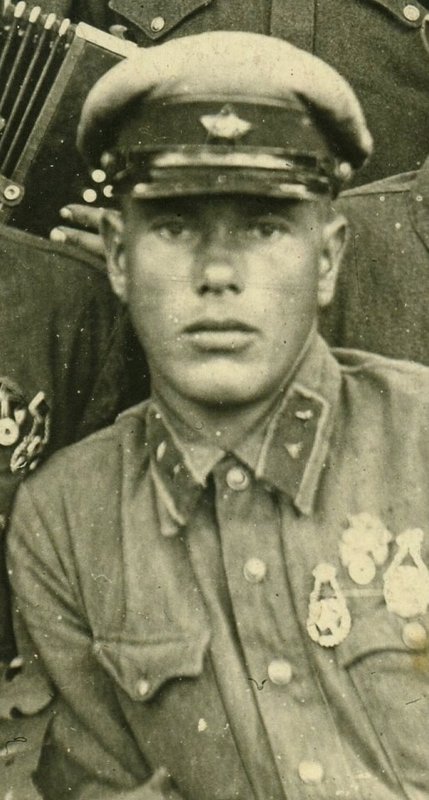
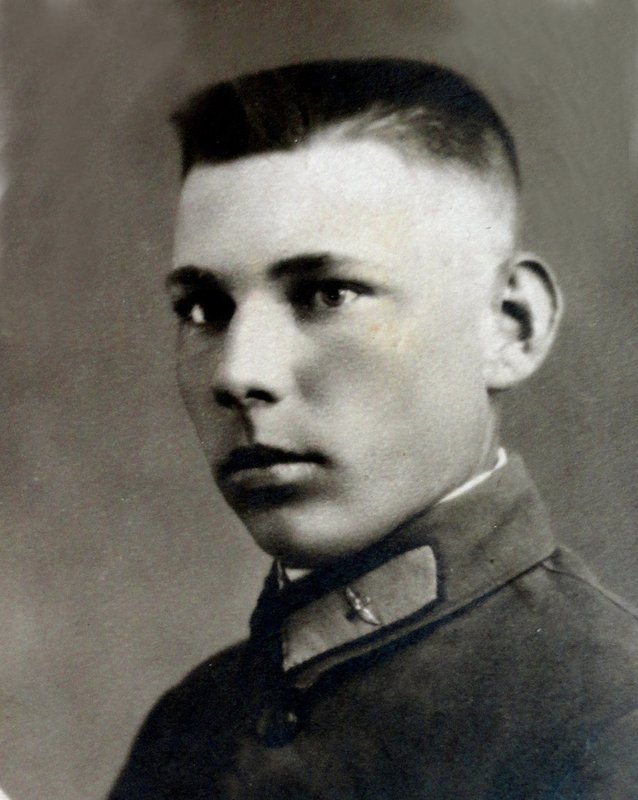
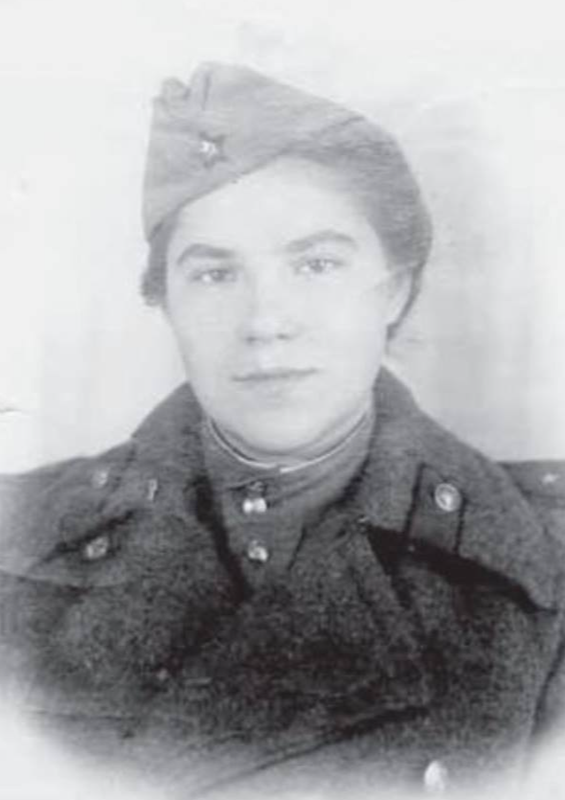
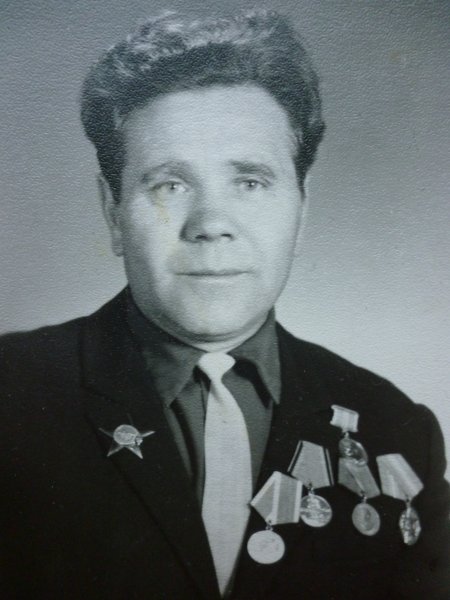
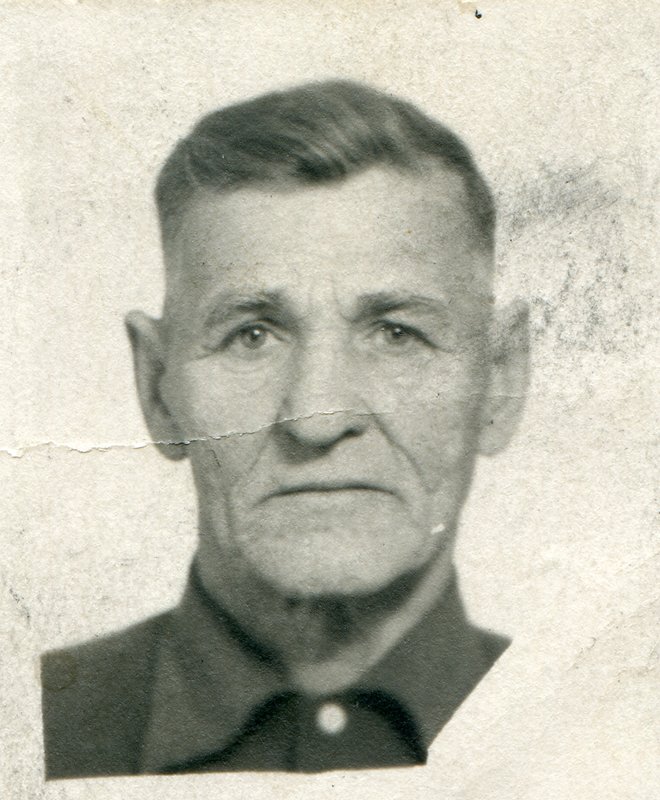
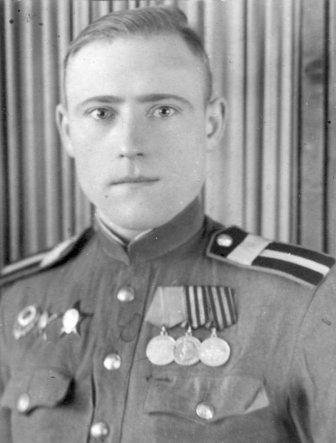
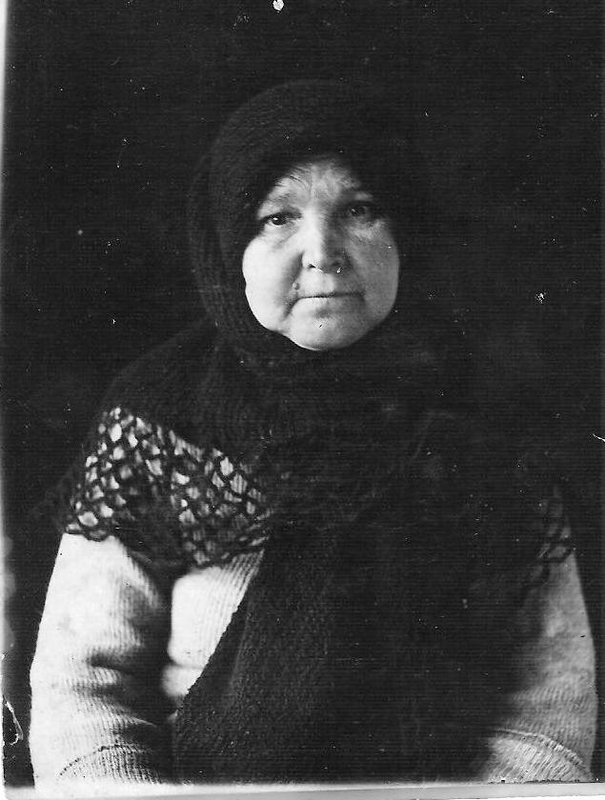
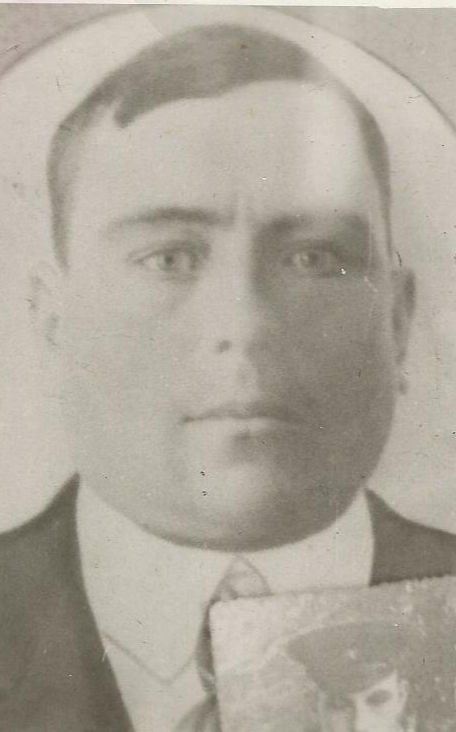
Kiryakov Vasiliy Vasilievich
Military rank is Red Army man. Branch of troops is Ground Forces, Air Forcers (except Naval aviation) and Frontier troops. He has been assigned to subdivision of the 110th Rifle division (2nd formation).
Vasiliy Vasilievich Kiryakov was born in the village of Novo-Krasnoe, Ryazan region, in 1909. He got married to Kiryakova Maria Ilinichna (ne’e Debrovina). After the first child birth, a daughter Zinaida in 1934 and later two sons, Nikolay and Iliya in 1936 and 1938, the family moved to live in Moscow region, Orekhovo-Zuyevsky district, village Korotkovo. In 1940 the third son Boris was born, but he died in 1942 of smallpox. Vasiliy Kiryakov worked at the Dulev Porcelain Factory and had an exemption from military service. The factory has produced TF-2 isolators for military signalmen. At the very outbreak of the war, a detachment of volunteers left the Dulev factory and V. V. Kiryakov volunteered with this detachment. Their detachment was included in the 4th Moscow Rifle People’s Volunteer Division of Kuibyshev district. This Division was transformed on September 26 1941 into the 110th Rifle Division of 2nd formation. Vasiliy Kiryakov was assigned to this Division as a scout of the 1287th Rifle Regiment.
Below there is information about the last days in the life of Vasily Kiryakov:
Fighting in the offensive zone of the 33rd Army did not stop for a minute. Soldiers and commanders understood that stopping meant letting the enemy breathe. Short breaks in combat action were used to replenish ammunition and eat. And again forward on the enemy! There were severe frosts: the thermometer stem fell below 20 degrees, but even more interfered with blows and snowfalls, without which it could not do for more than one day.
December 29, 1941 Having resumed the offensive in the morning, the army formations again met strong enemy fire resistance on the entire front. Units of the 110th RD rested during the first half of the day and were preparing to continue the offensive in the direction of Shchekutino and Bashkino. Under the cover of twilight the 1287-th RR attacked a village Skotino, however, the enemy was able to repel this attack. The 1291-st Rifle Regiment (RR), advancing on Bashkino by passing Shchekutino from the north, was also stopped by German infantry fire.
December 30, 1941: German troops continued to offer stubborn resistance. Especially fierce fighting took place in the center of the army's offensive line. Stubbornly defending the line Novinskoe, Alekseyevka, 75 km detour, Kotovo, Shchekutino, Rozhdestveno, Bashkino and Nefedovo, the enemy managed to restrain the advance of the 222nd Rifle Division, the 1st Motorized Rifle Division, and the 110th and 338th Rifle Divisions. The 1287th Rifle Regiment of the 110th Rifle Division at 03:30 am again launched an offensive on the locality of Shchekutino. Encountering extremely persistent resistance from the 183rd Infantry Division, the regiment lost 120 men killed and wounded and was forced to retreat to the junction of roads at the height of the hill 196.7, where arranged itself during the day. At the same time, the 1291th Rifle Regiment was stopped by crossfire and enemy engineering barriers in the form of forest debris at the Shchekutino and Bashkino line. Being under enemy fire, the regiment began to look for other ways bypassing to continue the offensive on village Tatarka.
31 December, 1941: It was the last day of 1941 year that marked the beginning of incredible suffering, trials and losses for every Soviet family. The end of the year gave the people some confidence that the enemy will still be defeated and expelled from the country. The 1287th Rifle regiment of the 110th Rifle Division was fighting from 4 o’clock in the morning to take possession of Schekutino, but could not take possession of the settlement. The 1291st Rifle Regiment assigned by the order of the division Commander Lieutenant Colonel Bezzubov in the area of collective farm "New life", brought itself into order. By evening, light snow came; the air temperature froze at twenty degrees Celsius.
1st January, 1942: Despite the obvious successes of the left-flank divisions, which fought their way to the approaches to Borovsk, the situation in the 33rd Army's combat zone continued to be difficult. Units of the 222nd Rifle Division and the 1st Guard Motor-Rifle Division fought hard battles in the immediate vicinity of Naro-Fominsk town. The 110th, 338th and 201st Rifle Divisions fought the enemy without success just a few kilometers west of the town, on the approaches to the settlements of Shchekutino, Nefedovo, Kolodkino and Inyutino. The units of 1287th Rifle Regiment of the 110th Rifle Division during the night and the first half of the day unsuccessfully fought to capture the village of Shchekutino. Having lost 22 men killed and 128 injured, the regiment was forced to retreat to the edge of the forest east of the village. The 1291st Rifle Regiment without much success led the battle south of village Skotino, stepping in the direction of station Baccino near village Tatarka. Seeing the fruitlessness of the attacks, tired of the continuous fighting of Red Army men and commanders, the Division Commander, Lieutenant Colonel Bezzubov gave the order at 14 o'clock to stop the offensive. Leaving a reinforced guard at the reached borders, the personnel of the units were taken to rest and bring in order themselves in the area of village Erokhino and the collective farm "New life". After some rest and heating, the division’s units continue their offensive in 24 hours, slightly changing its direction. It was decided to bypass the strong points of resistance in the settlements of Rozhdestveno and Bakshino, acting a little bit southerly.
January 2, 1942: Night attack of the 110-th Rifle Division units in the direction to Kaurtsevo-Tatarka had no success. Having opened heavy machine gun and mortar fire, units of the 330th Infantry Regiment immediately forced the advancing units of the enemy to lie down. Fighting with enemy infantry all night long, the 1287th Rifle Regiment’s squads were unable to advance a single step in the indicated direction. The 1291st Rifle Regiment attacking Bashkino from the south was also stopped by heavy enemy fire. In the morning the regiments suffered heavy losses were forced to retreat again to the collective farm «New life» and the village of Yeryukhino, where during the day they kept themselves in order, preparing for another night attack of village Shchekutino.
On January 3, 1942, the units of the 110th Rifle Division did not conduct any combat actions on this day, rehabilitating itself after another unsuccessful night attack on Shchekutino. This time the losses were enormous: the 1291th RR lost 83 people who were killed, 108 were injured, and 31 were missing in actions; in the 1287-th RR 8 people were killed, 117 were injured and 155 were missing in actions. Totally, the division, which numbered about a thousand men in the combat units of two Rifle Regiments, lost 502 men that night.
January 4, 1942: The 110th Division was allocated in the area Erokhino and the collective farm "New life" rehabilitating itself. Towards evening replenishment arrived which was immediately assigned to the units.
January 5, 1942: The 110th RD continued to rehabilitate itself and was preparing to attack at Skotino. January 6, 1942: The units offencive of the 110th RD was stopped by heavy enemy artillery and mortar fire at the edge of the forest east of Shchekutin and 1 km north-east of Rozhdestveno. The mobile detachment of the division in the number of 102 men, operating from the area of Kolodkino, bypassing Tatarka did not advance either. January 7, 1942:
To the left of it, the 1289th RR took up the defense, which replaced the units of the 175th MRR in this area. The regiment was returned and joined to the 110th Rifle Division, thus taking a place on the division’s right flank. The three-month rotation of the 1289th Rifle RR initially in the 1st Guards Moto RR and then in 222nd RD was ended. The 1287th and 1291st Rifle Regiments of the 110th Rifle Division continued actions throughout the day to capture the localities of Shchekutino and Rozhdestveno. The enemy fire and counterattacks of small infantry units provided stubborn resistance and as a result these localities could not be captured again. The ten-day "trampling" on the spot near the small village of Shchekutino, where the division lost more than 700 of its soldiers and commanders killed and wounded, caused obvious irritation not only to the army commander, but also to the command of the Western front. The front Commander, the Army General Zhukov, ordered General Efremov to take urgent measures to eliminate this node of the enemy resistance. General Efremov, having summoned the commander of the 110th RD, ordered to knock out the enemy from Shchekutino in the next day or two. Towards evening, Lieutenant-Colonel N. A. Bezzubov issued an order that assigned combat tasks to the regiments for the offensive which was assigned to them at 9 o’clock morning on January 8.
January 8, 1942. All day long the formations and units of the army fought heavy and bloody battles. The enemy continued to resist stubbornly and turning in some places to counterattacks by infantry with small groups of tanks, sought to prevent our units from developing an offensive, showing special activity to the south of Vereya. All attempts of the left-flank divisions to reach the Vereya-Medyn road were unsuccessful. The position of the army units did not change significantly during the day. The 110th RD fought a fire battle with the enemy on the line from the brick factory to the village of Christmas. The mobile detachment of the 1287th RR under the command of Lieutenant Leonenko in the afternoon was able secretly to go deep into the enemy's defense, bypassing village Shchekutino from the south, and joining with the battalion of the 1138th RR of the 338th RD by the end of the day tied the battle for the village Tartarka. To strength it 25 men of the 1287th RR were sent by order of the division Commander, as well as an officer of the 971st AR to adjust the artillery fire. However, it was not possible to capture the locality of Tatarka by the end of the day. The competent actions of the German garrisons of Kotovo, Shchekutino, Rozhdestveno and others were primarily due to the skillful preparation of settlements for defense and the well-thought-out organization of the fire system.
January 9, 1942: At this time, events were rapidly unfolding in the 110th RD lane. While the 1291st RR was engaged in a fierce battle for Shchekutino, a combined detachment under the command of Lieutenant Leonenko was able to capture the village Kaurtsewo most of the time. Then Lieutenant-Colonel Bezzubov ordered to attack Kaurtsevo with the main forces of the 1287th RR under the command of Major Iniuk. Having driven the enemy out of the village, the regiment, developing success, defeated the small German garrison defending the Bashkino crossing and began to move rapidly in the direction of the village Tartarka. In this battle, Kiryakov Vasiliy Vasilievich, Red Army soldier of the 110th Rifle division, scout of the 1287th Rifle Regiment, born in 1909 in the Ryazan region, the village of Novo-Krasnoe was killed. Vasily Kiryakov was buried in Moscow region, Naro-Fominsky district, in village Schekutino.
January 10, 1941. On the night of January 10, the 1291-th RR of the 110th RD again attacked the village of Shchekutino. The battle for the locality went on, without stopping, all night and the first half of the day. The enemy was driven out of the village by the heroic actions of the regiment's soldiers. This was largely facilitated by the fact that the 1289th Rifle Regiment which was operating to the right, bypassed enemy strong points in the area of Kotovo village, had gone to the rear of the enemy, who, to avoid encirclement, had to retreat, leaving the occupied line. A heroic feat during the battle for Shchekutino was performed by a platoon under the command of Sergeant Okhapkin, who, having captured the dominant height the day before, located north of the settlement, repelled several attacks by enemy infantry. After dark, the Nazis tried several more times to knock out our soldiers from the height, but each time they were forced to retreat. Political Commissar Pashukhin, who made his way to the height, found Sergeant Okhapkin, Sergeant Samoshkin, Red Army soldiers Petrov, Sumkin, and several other men whose names, unfortunately, the history has not preserved. The rest of the Red Army platoon were killed and wounded. At dawn, the German infantry, supported by heavy mortar and artillery fire, made several more attacks, but the small garrison of the hill, despite heavy losses, held out and won.
Kiryakov Vasiliy Vasilievich
Military rank is Red Army man. Branch of troops is Ground Forces, Air Forcers (except Naval aviation) and Frontier troops. He has been assigned to subdivision of the 110th Rifle division (2nd formation).
Vasiliy Vasilievich Kiryakov was born in the village of Novo-Krasnoe, Ryazan region, in 1909. He got married to Kiryakova Maria Ilinichna (ne’e Debrovina). After the first child birth, a daughter Zinaida in 1934 and later two sons, Nikolay and Iliya in 1936 and 1938, the family moved to live in Moscow region, Orekhovo-Zuyevsky district, village Korotkovo. In 1940 the third son Boris was born, but he died in 1942 of smallpox. Vasiliy Kiryakov worked at the Dulev Porcelain Factory and had an exemption from military service. The factory has produced TF-2 isolators for military signalmen. At the very outbreak of the war, a detachment of volunteers left the Dulev factory and V. V. Kiryakov volunteered with this detachment. Their detachment was included in the 4th Moscow Rifle People’s Volunteer Division of Kuibyshev district. This Division was transformed on September 26 1941 into the 110th Rifle Division of 2nd formation. Vasiliy Kiryakov was assigned to this Division as a scout of the 1287th Rifle Regiment.
Below there is information about the last days in the life of Vasily Kiryakov:
Fighting in the offensive zone of the 33rd Army did not stop for a minute. Soldiers and commanders understood that stopping meant letting the enemy breathe. Short breaks in combat action were used to replenish ammunition and eat. And again forward on the enemy! There were severe frosts: the thermometer stem fell below 20 degrees, but even more interfered with blows and snowfalls, without which it could not do for more than one day.
December 29, 1941 Having resumed the offensive in the morning, the army formations again met strong enemy fire resistance on the entire front. Units of the 110th RD rested during the first half of the day and were preparing to continue the offensive in the direction of Shchekutino and Bashkino. Under the cover of twilight the 1287-th RR attacked a village Skotino, however, the enemy was able to repel this attack. The 1291-st Rifle Regiment (RR), advancing on Bashkino by passing Shchekutino from the north, was also stopped by German infantry fire.
December 30, 1941: German troops continued to offer stubborn resistance. Especially fierce fighting took place in the center of the army's offensive line. Stubbornly defending the line Novinskoe, Alekseyevka, 75 km detour, Kotovo, Shchekutino, Rozhdestveno, Bashkino and Nefedovo, the enemy managed to restrain the advance of the 222nd Rifle Division, the 1st Motorized Rifle Division, and the 110th and 338th Rifle Divisions. The 1287th Rifle Regiment of the 110th Rifle Division at 03:30 am again launched an offensive on the locality of Shchekutino. Encountering extremely persistent resistance from the 183rd Infantry Division, the regiment lost 120 men killed and wounded and was forced to retreat to the junction of roads at the height of the hill 196.7, where arranged itself during the day. At the same time, the 1291th Rifle Regiment was stopped by crossfire and enemy engineering barriers in the form of forest debris at the Shchekutino and Bashkino line. Being under enemy fire, the regiment began to look for other ways bypassing to continue the offensive on village Tatarka.
31 December, 1941: It was the last day of 1941 year that marked the beginning of incredible suffering, trials and losses for every Soviet family. The end of the year gave the people some confidence that the enemy will still be defeated and expelled from the country. The 1287th Rifle regiment of the 110th Rifle Division was fighting from 4 o’clock in the morning to take possession of Schekutino, but could not take possession of the settlement. The 1291st Rifle Regiment assigned by the order of the division Commander Lieutenant Colonel Bezzubov in the area of collective farm "New life", brought itself into order. By evening, light snow came; the air temperature froze at twenty degrees Celsius.
1st January, 1942: Despite the obvious successes of the left-flank divisions, which fought their way to the approaches to Borovsk, the situation in the 33rd Army's combat zone continued to be difficult. Units of the 222nd Rifle Division and the 1st Guard Motor-Rifle Division fought hard battles in the immediate vicinity of Naro-Fominsk town. The 110th, 338th and 201st Rifle Divisions fought the enemy without success just a few kilometers west of the town, on the approaches to the settlements of Shchekutino, Nefedovo, Kolodkino and Inyutino. The units of 1287th Rifle Regiment of the 110th Rifle Division during the night and the first half of the day unsuccessfully fought to capture the village of Shchekutino. Having lost 22 men killed and 128 injured, the regiment was forced to retreat to the edge of the forest east of the village. The 1291st Rifle Regiment without much success led the battle south of village Skotino, stepping in the direction of station Baccino near village Tatarka. Seeing the fruitlessness of the attacks, tired of the continuous fighting of Red Army men and commanders, the Division Commander, Lieutenant Colonel Bezzubov gave the order at 14 o'clock to stop the offensive. Leaving a reinforced guard at the reached borders, the personnel of the units were taken to rest and bring in order themselves in the area of village Erokhino and the collective farm "New life". After some rest and heating, the division’s units continue their offensive in 24 hours, slightly changing its direction. It was decided to bypass the strong points of resistance in the settlements of Rozhdestveno and Bakshino, acting a little bit southerly.
January 2, 1942: Night attack of the 110-th Rifle Division units in the direction to Kaurtsevo-Tatarka had no success. Having opened heavy machine gun and mortar fire, units of the 330th Infantry Regiment immediately forced the advancing units of the enemy to lie down. Fighting with enemy infantry all night long, the 1287th Rifle Regiment’s squads were unable to advance a single step in the indicated direction. The 1291st Rifle Regiment attacking Bashkino from the south was also stopped by heavy enemy fire. In the morning the regiments suffered heavy losses were forced to retreat again to the collective farm «New life» and the village of Yeryukhino, where during the day they kept themselves in order, preparing for another night attack of village Shchekutino.
On January 3, 1942, the units of the 110th Rifle Division did not conduct any combat actions on this day, rehabilitating itself after another unsuccessful night attack on Shchekutino. This time the losses were enormous: the 1291th RR lost 83 people who were killed, 108 were injured, and 31 were missing in actions; in the 1287-th RR 8 people were killed, 117 were injured and 155 were missing in actions. Totally, the division, which numbered about a thousand men in the combat units of two Rifle Regiments, lost 502 men that night.
January 4, 1942: The 110th Division was allocated in the area Erokhino and the collective farm "New life" rehabilitating itself. Towards evening replenishment arrived which was immediately assigned to the units.
January 5, 1942: The 110th RD continued to rehabilitate itself and was preparing to attack at Skotino. January 6, 1942: The units offencive of the 110th RD was stopped by heavy enemy artillery and mortar fire at the edge of the forest east of Shchekutin and 1 km north-east of Rozhdestveno. The mobile detachment of the division in the number of 102 men, operating from the area of Kolodkino, bypassing Tatarka did not advance either. January 7, 1942:
To the left of it, the 1289th RR took up the defense, which replaced the units of the 175th MRR in this area. The regiment was returned and joined to the 110th Rifle Division, thus taking a place on the division’s right flank. The three-month rotation of the 1289th Rifle RR initially in the 1st Guards Moto RR and then in 222nd RD was ended. The 1287th and 1291st Rifle Regiments of the 110th Rifle Division continued actions throughout the day to capture the localities of Shchekutino and Rozhdestveno. The enemy fire and counterattacks of small infantry units provided stubborn resistance and as a result these localities could not be captured again. The ten-day "trampling" on the spot near the small village of Shchekutino, where the division lost more than 700 of its soldiers and commanders killed and wounded, caused obvious irritation not only to the army commander, but also to the command of the Western front. The front Commander, the Army General Zhukov, ordered General Efremov to take urgent measures to eliminate this node of the enemy resistance. General Efremov, having summoned the commander of the 110th RD, ordered to knock out the enemy from Shchekutino in the next day or two. Towards evening, Lieutenant-Colonel N. A. Bezzubov issued an order that assigned combat tasks to the regiments for the offensive which was assigned to them at 9 o’clock morning on January 8.
January 8, 1942. All day long the formations and units of the army fought heavy and bloody battles. The enemy continued to resist stubbornly and turning in some places to counterattacks by infantry with small groups of tanks, sought to prevent our units from developing an offensive, showing special activity to the south of Vereya. All attempts of the left-flank divisions to reach the Vereya-Medyn road were unsuccessful. The position of the army units did not change significantly during the day. The 110th RD fought a fire battle with the enemy on the line from the brick factory to the village of Christmas. The mobile detachment of the 1287th RR under the command of Lieutenant Leonenko in the afternoon was able secretly to go deep into the enemy's defense, bypassing village Shchekutino from the south, and joining with the battalion of the 1138th RR of the 338th RD by the end of the day tied the battle for the village Tartarka. To strength it 25 men of the 1287th RR were sent by order of the division Commander, as well as an officer of the 971st AR to adjust the artillery fire. However, it was not possible to capture the locality of Tatarka by the end of the day. The competent actions of the German garrisons of Kotovo, Shchekutino, Rozhdestveno and others were primarily due to the skillful preparation of settlements for defense and the well-thought-out organization of the fire system.
January 9, 1942: At this time, events were rapidly unfolding in the 110th RD lane. While the 1291st RR was engaged in a fierce battle for Shchekutino, a combined detachment under the command of Lieutenant Leonenko was able to capture the village Kaurtsewo most of the time. Then Lieutenant-Colonel Bezzubov ordered to attack Kaurtsevo with the main forces of the 1287th RR under the command of Major Iniuk. Having driven the enemy out of the village, the regiment, developing success, defeated the small German garrison defending the Bashkino crossing and began to move rapidly in the direction of the village Tartarka. In this battle, Kiryakov Vasiliy Vasilievich, Red Army soldier of the 110th Rifle division, scout of the 1287th Rifle Regiment, born in 1909 in the Ryazan region, the village of Novo-Krasnoe was killed. Vasily Kiryakov was buried in Moscow region, Naro-Fominsky district, in village Schekutino.
January 10, 1941. On the night of January 10, the 1291-th RR of the 110th RD again attacked the village of Shchekutino. The battle for the locality went on, without stopping, all night and the first half of the day. The enemy was driven out of the village by the heroic actions of the regiment's soldiers. This was largely facilitated by the fact that the 1289th Rifle Regiment which was operating to the right, bypassed enemy strong points in the area of Kotovo village, had gone to the rear of the enemy, who, to avoid encirclement, had to retreat, leaving the occupied line. A heroic feat during the battle for Shchekutino was performed by a platoon under the command of Sergeant Okhapkin, who, having captured the dominant height the day before, located north of the settlement, repelled several attacks by enemy infantry. After dark, the Nazis tried several more times to knock out our soldiers from the height, but each time they were forced to retreat. Political Commissar Pashukhin, who made his way to the height, found Sergeant Okhapkin, Sergeant Samoshkin, Red Army soldiers Petrov, Sumkin, and several other men whose names, unfortunately, the history has not preserved. The rest of the Red Army platoon were killed and wounded. At dawn, the German infantry, supported by heavy mortar and artillery fire, made several more attacks, but the small garrison of the hill, despite heavy losses, held out and won.
0 comment




2026 © Russian Military Historical Society Developed by Jetmix