



Yeruntsov Nikolay Vasilievich
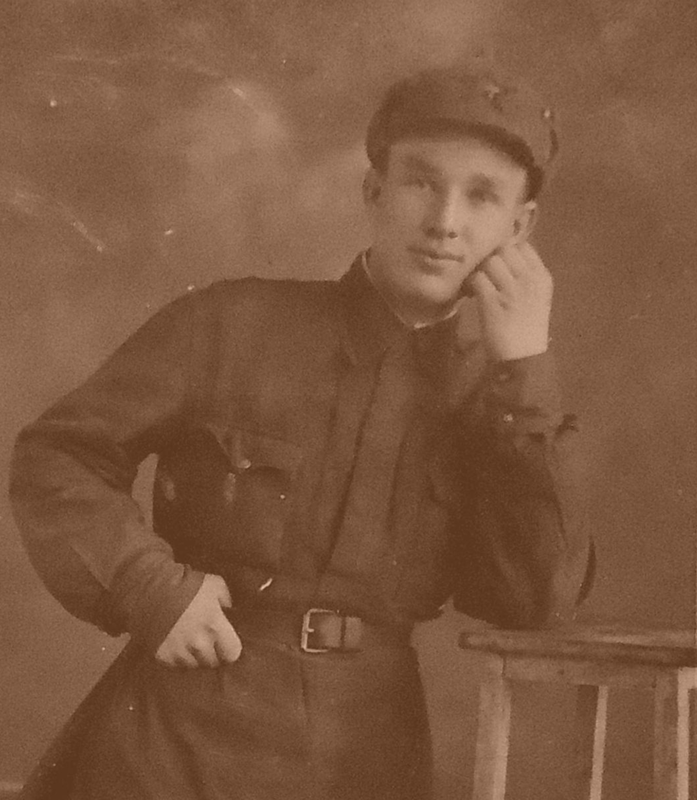
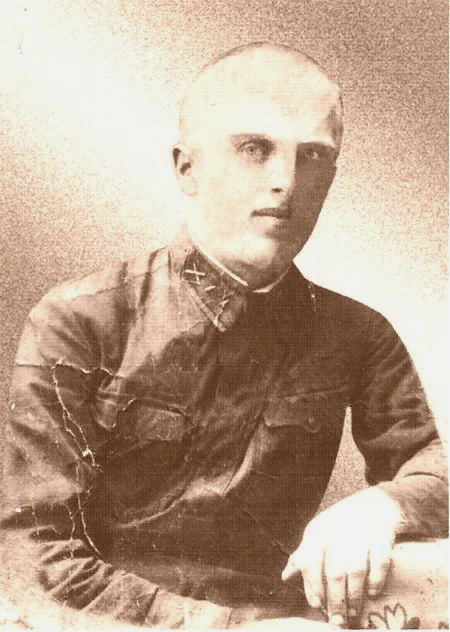
This story is written on the basis of my farther’s tellings, who served from the first days of the war until 1947, as well as from his documents and photos. Nikolay Yeruntsov was a descendant of the Cossacks hitherto known in the 4th generation from the farm Dyadino, who later moved to the farm Kononov. Nikolay's grandfather, Eustaphius Yeruntsov, was one of the Cossacks who wrote a petition to the Diocese for the construction of the Holy Trinity Church in the Dyadin farm, who gave up their territory of kuren free of charge for the construction of the church and was buried later in the old believers cemetery in the Dyadin farm, whose tombstone still lies on the guard of the former rich and numerous, but now forgotten farm. My father was a statuesque Cossack with Grishka Melekhov’s nose (Grigoriy Melikhov, a character of the novel “Quiet Flows the Don” by M. Sholokhov), jet-black hair, and a cossack forelock. Being brought up on the Cossack regulations, attached to work, love for the Motherland and family, respect for parents and elders could not stay away when the fascist evil spirits were introduced to the borders of the Soviet Union. Nikolay Vasilyevich Yeruntsov was 17 years old when the war began. 4 of his brothers went to the front, he was not 18, and yet on July 13, 1941, being in the Litvinovsky military Commissariat, he asked to go to the front adding an extra year to his age. They went almost on foot to Stalingrad, and then the Stalingrad artillery training center, transferred to the Chebarkul camp, where young soldiers were trained and prepared for artillery units.” After 6 months, my father ended up as scout observer in the 467th anti-tank fighter regiment, where he served until December 1943. Thus his life at the front began. From the memoirs of Nikolay Vasilyevich: "Every day we crawled and examined the enemy's positions. And both day and night. The task was always the same: to find out the location of the enemy, and this was the location of the trenches. To find out the fire points (then, it was followed to establish what fire points were available) and capture a prisoner for interrogation. This was done in any weather and under any conditions." He captured the German prisoners, went on a reconnaissance mission to the rear of the enemy to find out the location of German equipment. And they smashed the vaunted "Tigers"and "Panthers". They called themselves "Farewell Motherland" as they were destined in every battle - either to stop the enemy or to perish. The equipment was heavy, and when the Germans advanced, it was impossible to retreat with it, and leaves the enemy too. He talked about Stalin's order No. 227 - "Not a step back." Scouts and saboteurs were the only people in the army who spent the entire war, as they say, face to face with the enemy and with death. In literal sense…And any horror movie will seem to you a lyrical comedy, after the honest story of a military intelligence officer about what he had to see and experience in intelligence. After all, they very, very often had to kill Germans not with machine guns, but cut them with knives and strangle them with their hands… Think for yourself what is behind the phrase: "I removed the sentry" or "we quietly defused the guard...". From the memoirs of Nikolay Vasilyevich: "Immediately after arriving in the regiment, I was handed a bowie-knife in a scabbar that was being the hallmark of a scout. I was the youngest scout… And then combat training began. In the field, everything looked so simple and easy to understand. Training in scout tactics, night marches, overcoming obstacles, knife fighting, shooting battle, actions to capture a prisoner for interrogation, the basics of disguise, and all these things seemed to be as easy as pie. It was then, in the first battles, we quickly figured out what misfortune is all about in intelligence. We have learned from our own mistakes. The scouts were not too fond of alcohol, but there were times when before the reconnaissance battle we drank 200 grams of vodka, or even more. Reconnaissance by battle was called "reconnaissance by death". Those who know what combat reconnaissance is, they will understand me now. As a rule, we did not drink before the usual scouting, it was a normal job for us, and we did not need to stimulate our courage with alcohol. The score of the prisoners for interrogation went to the pair of scouts from the capture group who directly took these prisoners. The entire office "on tests" was conducted at the headquarters and in the intelligence department of the division. Only a prisoner taken in a prepared search in the conditions of stationary enemy defense was considered to be a valid prisoner for interrogation. And if you captured "half a platoon" or "half a battery" of the Germans in battle, then they were not considered to be as “test prisoners for interrogation". For a person, who has fought for several years in intelligence, the figure of 25-30 prisoners for interrogation available on a personal account seems to me the maximum. The life time and luck for scouts were limited. And then any lucky scout could be killed or maimed. But for us, the main thing was to complete the task; no one thought about their life and did not regret themselves. And every search for us was a mandatory meeting with death. Often the scouts were torn by mines, but mostly died when retreating to their own or right in front of the German trenches, being discovered by the opponents. I had some vague hopes of survival. The first time, a grenade fragment hit my leg. The second time I was caught by a sniper bullet. For the third time, while in the vicinity of the enemy, I transmitted data obtained using a large stereo tube. I was atop tree, and my companions were down there. An explosion occurred. I hurried down, and one of my comrades was killed. It was only at the bottom that I was told that my back was bloodied complitely. A grenade fragment hit me in the back, close to my heart. "Got me, German bitch..” I said. Then another-explosion, pain and complete failure… I came into mind in the hospital on the third day, being all wounded by shrapnel. The surgeon took out more than one fragment from the back.” Later, 40 years after the war, when the unbearable pain made itself felt, it turned out with the help of X-rays that there was a bullet in the spine itself. Children and grandchildren remember this picture as a relic that their great-grandfather showed them with pride and a sly smile. But the surgeons did not advise removing it, since no one could guess the consequences. From the memories of Nikolay Vasilievich: "For a long time I couldn't understand what kind of world I was in. The surgeon who operated on me said: «Don’t push your luck, boy, you will be killed! » A good scout has to get used to the idea that one might be killed at any moment. One needs to get used to it. If you think about how to survive, you are no longer reliable. But I wanted to live! You know, after the Kursk Bulge, there were still almost two years of terrible carnage ahead, and it was impossible for a scout to survive it… At least on my example, you can see this”. By chance, after the hospital, until the very end of the war, Nikolay Vasilievich was the Commander of Intelligence department of the 78th Guards howitzer artillery regiment. Passed, or rather traveled along the roads of war: Stalingrad, Sapun-mountain Crimea, Poland, Germany, where he beat the Nazis in the very lair – Berlin. He smashed the enemy with a" weapon of retribution " - a song Katyusha. He spoke with pride about the power of Katyusha , this terrifying humming sound that rang out overhead during the flight of shells, and the powerful column of dust when the volley was fired. M-13 for its time, of course, were good! Unexpected and mass attacks caused terrible fear in the German ranks. From my father's memoirs: "the following often happened on the battlefields. During the preparation for the launch, they often forgot to remove the spacers that hold the projectile in a wooden box (factory packaging) during transportation. If the struts were not removed, then the whole "thing" started together with the box, and there were cases that together with the machine! This design had dimensions of about 1.5 by 2 meters, which led to conversations in the ranks of the Germans that the Russians were completely "fucked up" and were shooting at them with sheds!”
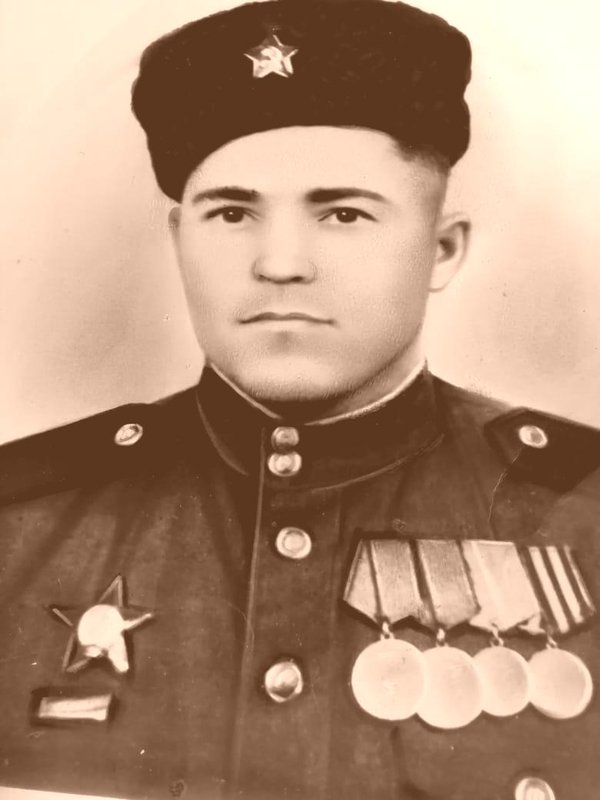
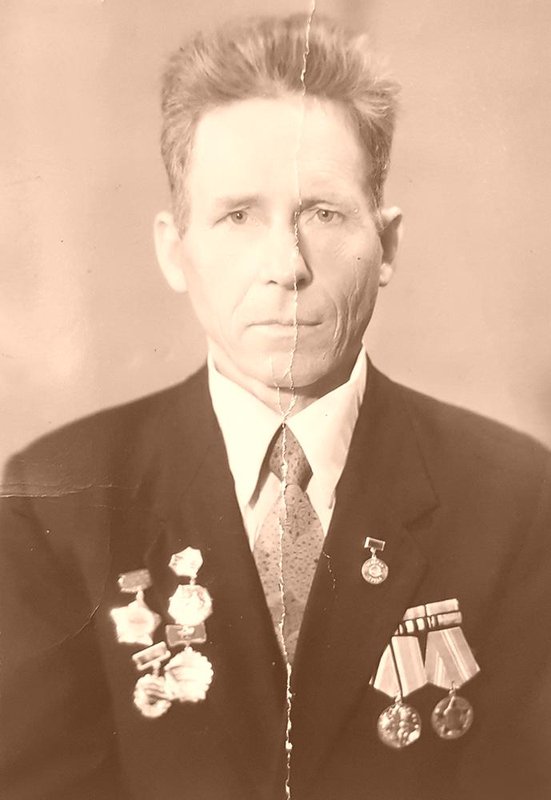
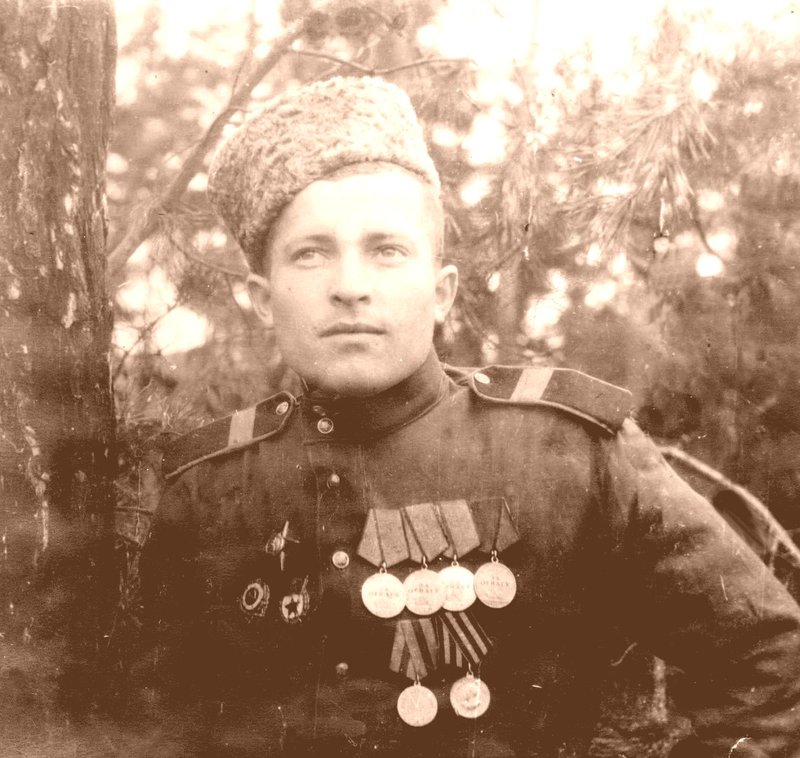
And between fights they sang, and then another friend got into the hands of Katyusha and shells! Being a scout - observer, Nikolay returned from the mission not only with the prisoner for interrogation, but also with a personal trophy, a German accordion. Nikolay independently learned to play the accordion in the moments of silence between fights. The music warmed my soul, I remembered the Don region and my mother's singing at work. Victory day found Nicholay in Berlin, and after the end of the war, Nikolay Vasilyevich devoted another 2 years to serving the Motherland. He valued his military awards very much. They were the most "soldier's" – two orders of the Red Star, 4 medals "For Bravery", "For the liberation of Warsaw", "For the Victory over Germany", "Order of the Patriotic war II Class", and a large number of commemorative medals. After the war, only three of the five brothers returned. Yeruntsov Peter Vasilyevich born in 1914, called up on 15.10.1941. went missing in July 1942; Yeruntsov Pavel Vasilyevich born in 1909, called up on 30.11.1941. went missing in January 1942. It was subsequently established that Paul had been burned while in captivity; Yeruntsov Alexander Vasilyevich born in 1918, left for service in 1938, after which he immediately went to the front. He had passed a great, glorious way of fighting. He was awarded the Red Star order; the Order of Glory Third Class; medals: "For the capture of Budapest", "For the liberation of Prague", "For the defense of Leningrad" and many others. Yeruntsov Ivan Vasilyevich born in 1922 was a sniper, with the rank of Junior commander. He had the Order of the Patriotic war 2nd Calss; the medal "For Military actions", the medal "For Bravery". And my father, Yeruntsov Nikolay Vasilyevich born in 1924 commander of the intelligence Department of the regiment's management, guard Sergeant of the 78th Guards howitzer artillery regiment. He went through the war from 1941 to 1947. He married a girl named Katyusha, who bore him three children. He had participated in the construction of village “Vostochny” after the war, and then worked for a long time at the mine “Severnaya”. We remember how proud he was to wear a jacket with medals on holidays. May 9 was a day of special pride and joy for him. We, his children, grandchildren and great-grandchildren, continue this tradition and now his photos and medals are always on the festive table on May 9, and his favorite songs still continue to sound - "Katyusha" and "March of the gunners".
The Gunners, Stalin gave the order! Gunners, the Fatherland calls us! From many thousands of batteries, for the tears of our mothers, for our Homeland — fire! Fire!
Yeruntsov Nikolay Vasilievich
This story is written on the basis of my farther’s tellings, who served from the first days of the war until 1947, as well as from his documents and photos. Nikolay Yeruntsov was a descendant of the Cossacks hitherto known in the 4th generation from the farm Dyadino, who later moved to the farm Kononov. Nikolay's grandfather, Eustaphius Yeruntsov, was one of the Cossacks who wrote a petition to the Diocese for the construction of the Holy Trinity Church in the Dyadin farm, who gave up their territory of kuren free of charge for the construction of the church and was buried later in the old believers cemetery in the Dyadin farm, whose tombstone still lies on the guard of the former rich and numerous, but now forgotten farm. My father was a statuesque Cossack with Grishka Melekhov’s nose (Grigoriy Melikhov, a character of the novel “Quiet Flows the Don” by M. Sholokhov), jet-black hair, and a cossack forelock. Being brought up on the Cossack regulations, attached to work, love for the Motherland and family, respect for parents and elders could not stay away when the fascist evil spirits were introduced to the borders of the Soviet Union. Nikolay Vasilyevich Yeruntsov was 17 years old when the war began. 4 of his brothers went to the front, he was not 18, and yet on July 13, 1941, being in the Litvinovsky military Commissariat, he asked to go to the front adding an extra year to his age. They went almost on foot to Stalingrad, and then the Stalingrad artillery training center, transferred to the Chebarkul camp, where young soldiers were trained and prepared for artillery units.” After 6 months, my father ended up as scout observer in the 467th anti-tank fighter regiment, where he served until December 1943. Thus his life at the front began. From the memoirs of Nikolay Vasilyevich: "Every day we crawled and examined the enemy's positions. And both day and night. The task was always the same: to find out the location of the enemy, and this was the location of the trenches. To find out the fire points (then, it was followed to establish what fire points were available) and capture a prisoner for interrogation. This was done in any weather and under any conditions." He captured the German prisoners, went on a reconnaissance mission to the rear of the enemy to find out the location of German equipment. And they smashed the vaunted "Tigers"and "Panthers". They called themselves "Farewell Motherland" as they were destined in every battle - either to stop the enemy or to perish. The equipment was heavy, and when the Germans advanced, it was impossible to retreat with it, and leaves the enemy too. He talked about Stalin's order No. 227 - "Not a step back." Scouts and saboteurs were the only people in the army who spent the entire war, as they say, face to face with the enemy and with death. In literal sense…And any horror movie will seem to you a lyrical comedy, after the honest story of a military intelligence officer about what he had to see and experience in intelligence. After all, they very, very often had to kill Germans not with machine guns, but cut them with knives and strangle them with their hands… Think for yourself what is behind the phrase: "I removed the sentry" or "we quietly defused the guard...". From the memoirs of Nikolay Vasilyevich: "Immediately after arriving in the regiment, I was handed a bowie-knife in a scabbar that was being the hallmark of a scout. I was the youngest scout… And then combat training began. In the field, everything looked so simple and easy to understand. Training in scout tactics, night marches, overcoming obstacles, knife fighting, shooting battle, actions to capture a prisoner for interrogation, the basics of disguise, and all these things seemed to be as easy as pie. It was then, in the first battles, we quickly figured out what misfortune is all about in intelligence. We have learned from our own mistakes. The scouts were not too fond of alcohol, but there were times when before the reconnaissance battle we drank 200 grams of vodka, or even more. Reconnaissance by battle was called "reconnaissance by death". Those who know what combat reconnaissance is, they will understand me now. As a rule, we did not drink before the usual scouting, it was a normal job for us, and we did not need to stimulate our courage with alcohol. The score of the prisoners for interrogation went to the pair of scouts from the capture group who directly took these prisoners. The entire office "on tests" was conducted at the headquarters and in the intelligence department of the division. Only a prisoner taken in a prepared search in the conditions of stationary enemy defense was considered to be a valid prisoner for interrogation. And if you captured "half a platoon" or "half a battery" of the Germans in battle, then they were not considered to be as “test prisoners for interrogation". For a person, who has fought for several years in intelligence, the figure of 25-30 prisoners for interrogation available on a personal account seems to me the maximum. The life time and luck for scouts were limited. And then any lucky scout could be killed or maimed. But for us, the main thing was to complete the task; no one thought about their life and did not regret themselves. And every search for us was a mandatory meeting with death. Often the scouts were torn by mines, but mostly died when retreating to their own or right in front of the German trenches, being discovered by the opponents. I had some vague hopes of survival. The first time, a grenade fragment hit my leg. The second time I was caught by a sniper bullet. For the third time, while in the vicinity of the enemy, I transmitted data obtained using a large stereo tube. I was atop tree, and my companions were down there. An explosion occurred. I hurried down, and one of my comrades was killed. It was only at the bottom that I was told that my back was bloodied complitely. A grenade fragment hit me in the back, close to my heart. "Got me, German bitch..” I said. Then another-explosion, pain and complete failure… I came into mind in the hospital on the third day, being all wounded by shrapnel. The surgeon took out more than one fragment from the back.” Later, 40 years after the war, when the unbearable pain made itself felt, it turned out with the help of X-rays that there was a bullet in the spine itself. Children and grandchildren remember this picture as a relic that their great-grandfather showed them with pride and a sly smile. But the surgeons did not advise removing it, since no one could guess the consequences. From the memories of Nikolay Vasilievich: "For a long time I couldn't understand what kind of world I was in. The surgeon who operated on me said: «Don’t push your luck, boy, you will be killed! » A good scout has to get used to the idea that one might be killed at any moment. One needs to get used to it. If you think about how to survive, you are no longer reliable. But I wanted to live! You know, after the Kursk Bulge, there were still almost two years of terrible carnage ahead, and it was impossible for a scout to survive it… At least on my example, you can see this”. By chance, after the hospital, until the very end of the war, Nikolay Vasilievich was the Commander of Intelligence department of the 78th Guards howitzer artillery regiment. Passed, or rather traveled along the roads of war: Stalingrad, Sapun-mountain Crimea, Poland, Germany, where he beat the Nazis in the very lair – Berlin. He smashed the enemy with a" weapon of retribution " - a song Katyusha. He spoke with pride about the power of Katyusha , this terrifying humming sound that rang out overhead during the flight of shells, and the powerful column of dust when the volley was fired. M-13 for its time, of course, were good! Unexpected and mass attacks caused terrible fear in the German ranks. From my father's memoirs: "the following often happened on the battlefields. During the preparation for the launch, they often forgot to remove the spacers that hold the projectile in a wooden box (factory packaging) during transportation. If the struts were not removed, then the whole "thing" started together with the box, and there were cases that together with the machine! This design had dimensions of about 1.5 by 2 meters, which led to conversations in the ranks of the Germans that the Russians were completely "fucked up" and were shooting at them with sheds!”
And between fights they sang, and then another friend got into the hands of Katyusha and shells! Being a scout - observer, Nikolay returned from the mission not only with the prisoner for interrogation, but also with a personal trophy, a German accordion. Nikolay independently learned to play the accordion in the moments of silence between fights. The music warmed my soul, I remembered the Don region and my mother's singing at work. Victory day found Nicholay in Berlin, and after the end of the war, Nikolay Vasilyevich devoted another 2 years to serving the Motherland. He valued his military awards very much. They were the most "soldier's" – two orders of the Red Star, 4 medals "For Bravery", "For the liberation of Warsaw", "For the Victory over Germany", "Order of the Patriotic war II Class", and a large number of commemorative medals. After the war, only three of the five brothers returned. Yeruntsov Peter Vasilyevich born in 1914, called up on 15.10.1941. went missing in July 1942; Yeruntsov Pavel Vasilyevich born in 1909, called up on 30.11.1941. went missing in January 1942. It was subsequently established that Paul had been burned while in captivity; Yeruntsov Alexander Vasilyevich born in 1918, left for service in 1938, after which he immediately went to the front. He had passed a great, glorious way of fighting. He was awarded the Red Star order; the Order of Glory Third Class; medals: "For the capture of Budapest", "For the liberation of Prague", "For the defense of Leningrad" and many others. Yeruntsov Ivan Vasilyevich born in 1922 was a sniper, with the rank of Junior commander. He had the Order of the Patriotic war 2nd Calss; the medal "For Military actions", the medal "For Bravery". And my father, Yeruntsov Nikolay Vasilyevich born in 1924 commander of the intelligence Department of the regiment's management, guard Sergeant of the 78th Guards howitzer artillery regiment. He went through the war from 1941 to 1947. He married a girl named Katyusha, who bore him three children. He had participated in the construction of village “Vostochny” after the war, and then worked for a long time at the mine “Severnaya”. We remember how proud he was to wear a jacket with medals on holidays. May 9 was a day of special pride and joy for him. We, his children, grandchildren and great-grandchildren, continue this tradition and now his photos and medals are always on the festive table on May 9, and his favorite songs still continue to sound - "Katyusha" and "March of the gunners".
The Gunners, Stalin gave the order! Gunners, the Fatherland calls us! From many thousands of batteries, for the tears of our mothers, for our Homeland — fire! Fire!
0 comment




2026 © Russian Military Historical Society Developed by Jetmix