

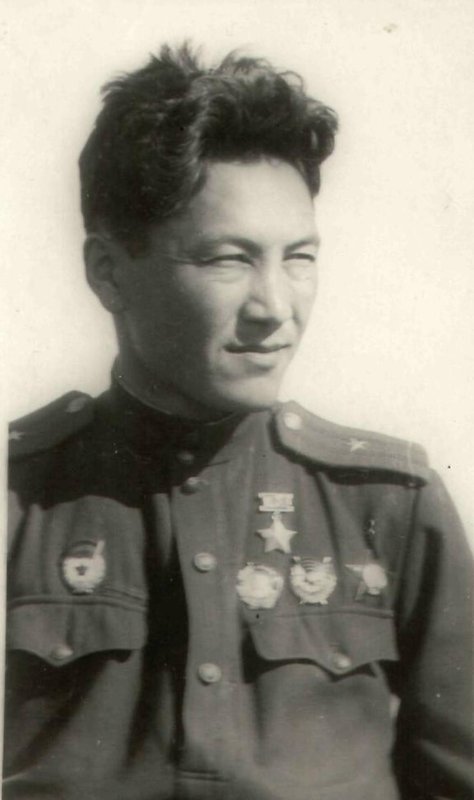
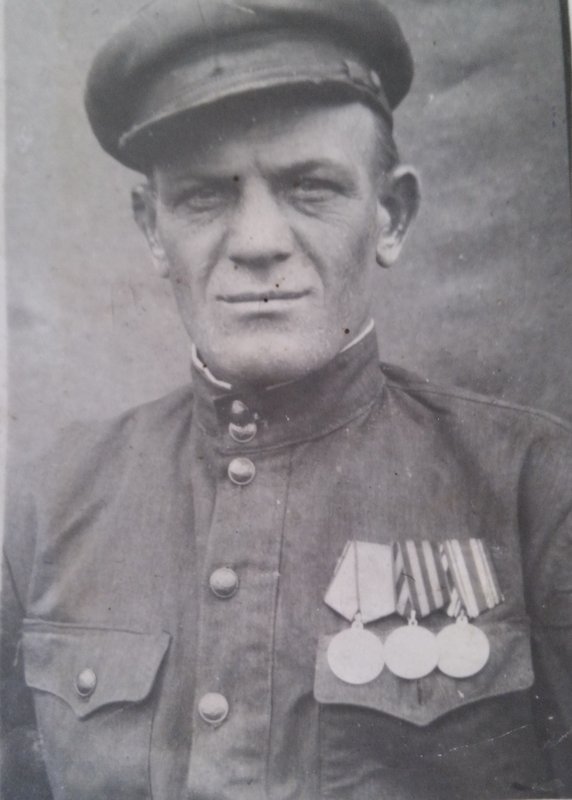


Gordeev Fedor Kirillovich
Rank: Sergeant. Type of troops: Land Forces, Air Force (except naval aviation), Coast Service, NKVD troops, Border troops. In January 1991 an article was published in the newspaper " Soviet Transbaikalia" It was devoted to my grandfather -Fedor Kirillovich Gordeev. Here is the story told by him personally. " Our village Udycha was very good. The place is beautiful, a lot of people lived there. They hunted, fished, and worked in artels. I was drafted into the Army on the 1939th. I served only for two years, then the the war began. I didn't have to fight for long. They took us to the front in September. The army was retreating, you know. Our division fought on the Borodino field, the famous one. That's where I was concussed. I woke up and couldn't find a machine gun.I could hardly figure out where was I, and the Germans were walking around the field, picking up who was still alive. They came up to me and told me to get in line. I was taken a prisoner. First we were in Vyazma camp. Many of our people were killed there. We lived in a great hunger. German guards threw briquettes of pea soup to crowds from a tower, and then watched how the prisoners grabbed them. They often threw a grenade instead of a briquette or gave gun shots. They just had fun. Later we were transferred to the camp of Klintsy. I spent almost six months there. Here our people were sent to mine clearance. They formed a line from people, who were moving forward follewed by German guns. I was lucky,I never got into this team. Later I got to Germany. All of us were divided into groups of four. When someone of those four escaped another soldier was shot. We worked together with free Germans. They treated us well, even gave us food. Our section of the mine has closed. They began to send prisoners to different places, and three of us were lucky again: we got to the mill, where coal was ground into dust, so we packed bags of coal dust there.The fields of rutabagas were growing nearby. We ran away, pulled it from ground and ate. We did it together with German workers. After working at the mill we were sent to the railways to load the bags. The Americans bombed us almost on May, 1945. The guards were sitting by the fire warming themselves. When I asked them to join, they allowed. They began to recognize me after I explained to them my origin. One asks: "Are you Mongol?" And I said to him: "Neither Mongol nor Russian, but so in the middle." They laughed for a long time, and then they began to understand They gave me sigarets and bread. I had two days off in a month. We all lived in a camp, where the Chief Guard amused himself by throwing pieces of bread through the wire and watching the prisoners fight. But he didn't shoot at least, he only smiled. The Americans released us and later handed гы over to Soviet side. I was checked in a special Department for a month and left to serve in Germany for another year. Only in May,1946 I was discharged. I returned back to the village of Udycha. After two years of working I was called to the investigator. I was asked about everything in details. He filled in the information card and released me. I began to forget about this visit. Ten years have passed and I was called to the military enlistment office. They gave me the Medal "For military merit". I was really lucky again that I didn't get to our camp after captivity, like many people did. I stayed alive again while working at the railways. An American plane threw a bomb at the station. I hid under the car and was safe. The next car was smashed to splinters, but my car was intact, and so was I. And after the war, they often insulted me with this captivity. seemed like I was captured of my own will. It was a shame to tears. And they called me a traitor. I don't blame them. Today the military enlistment office forgot about us. They even don't congratulate on Victory Day. I forgave them all". Fyodor Kirillovich's face was slightly touched by a smile. This is the smile of a kind, good person who, in spite of everything, believes that he has often been lucky in life.
Gordeev Fedor Kirillovich
Rank: Sergeant. Type of troops: Land Forces, Air Force (except naval aviation), Coast Service, NKVD troops, Border troops. In January 1991 an article was published in the newspaper " Soviet Transbaikalia" It was devoted to my grandfather -Fedor Kirillovich Gordeev. Here is the story told by him personally. " Our village Udycha was very good. The place is beautiful, a lot of people lived there. They hunted, fished, and worked in artels. I was drafted into the Army on the 1939th. I served only for two years, then the the war began. I didn't have to fight for long. They took us to the front in September. The army was retreating, you know. Our division fought on the Borodino field, the famous one. That's where I was concussed. I woke up and couldn't find a machine gun.I could hardly figure out where was I, and the Germans were walking around the field, picking up who was still alive. They came up to me and told me to get in line. I was taken a prisoner. First we were in Vyazma camp. Many of our people were killed there. We lived in a great hunger. German guards threw briquettes of pea soup to crowds from a tower, and then watched how the prisoners grabbed them. They often threw a grenade instead of a briquette or gave gun shots. They just had fun. Later we were transferred to the camp of Klintsy. I spent almost six months there. Here our people were sent to mine clearance. They formed a line from people, who were moving forward follewed by German guns. I was lucky,I never got into this team. Later I got to Germany. All of us were divided into groups of four. When someone of those four escaped another soldier was shot. We worked together with free Germans. They treated us well, even gave us food. Our section of the mine has closed. They began to send prisoners to different places, and three of us were lucky again: we got to the mill, where coal was ground into dust, so we packed bags of coal dust there.The fields of rutabagas were growing nearby. We ran away, pulled it from ground and ate. We did it together with German workers. After working at the mill we were sent to the railways to load the bags. The Americans bombed us almost on May, 1945. The guards were sitting by the fire warming themselves. When I asked them to join, they allowed. They began to recognize me after I explained to them my origin. One asks: "Are you Mongol?" And I said to him: "Neither Mongol nor Russian, but so in the middle." They laughed for a long time, and then they began to understand They gave me sigarets and bread. I had two days off in a month. We all lived in a camp, where the Chief Guard amused himself by throwing pieces of bread through the wire and watching the prisoners fight. But he didn't shoot at least, he only smiled. The Americans released us and later handed гы over to Soviet side. I was checked in a special Department for a month and left to serve in Germany for another year. Only in May,1946 I was discharged. I returned back to the village of Udycha. After two years of working I was called to the investigator. I was asked about everything in details. He filled in the information card and released me. I began to forget about this visit. Ten years have passed and I was called to the military enlistment office. They gave me the Medal "For military merit". I was really lucky again that I didn't get to our camp after captivity, like many people did. I stayed alive again while working at the railways. An American plane threw a bomb at the station. I hid under the car and was safe. The next car was smashed to splinters, but my car was intact, and so was I. And after the war, they often insulted me with this captivity. seemed like I was captured of my own will. It was a shame to tears. And they called me a traitor. I don't blame them. Today the military enlistment office forgot about us. They even don't congratulate on Victory Day. I forgave them all". Fyodor Kirillovich's face was slightly touched by a smile. This is the smile of a kind, good person who, in spite of everything, believes that he has often been lucky in life.
0 comment




2026 © Russian Military Historical Society Developed by Jetmix