

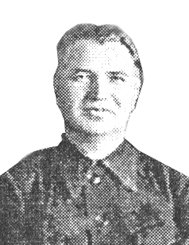
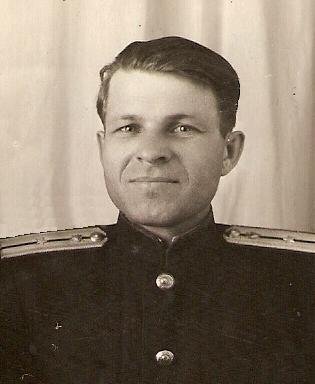


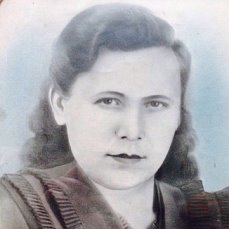
Babikova Anna Leontievna
Rank: Red army Type of troops: coastal defense and air defense Artillery, coastal units, aviation of the red army AND Naval forces of the NKVD border troops back in 1925, a black-eyed and black-haired girl was born in a family of simple peasants Zhuravlev Leonti Petrovich and Pelageya Romanovna, who was affectionately called Annushka. It is now she is a gray-haired grandmother, surrounded by grandchildren and great-grandchildren, and then my father had to use a club to drive away the village grooms who paid attention to a beautiful girl. - "Morals at that time were strict, not what they are now" - recalls Anna Leontievna. When she was 14 years old, like many families, the family of Anna Leontievna, at the call of the party, moved to the Kuban to save their Homeland from starvation: to plow, sow wheat, harvest bread, that is, to help in any way they can. So in 1939, she found herself on the fertile Kuban land. At first, everything was strange. Still: in the village of Miroshniki in the Volgograd region, where she came from, did not grow such large apples, and even the steppes surprised. It was then planted woodlands. And children's memory stores dust storms, from which there was nowhere to hide.So they lived; the children went to school and helped their parents with household chores. Annushka, like all the girls, made her girlish plans for the future: to study at the Platnirov agricultural school, which she entered at the age of 17, and where she went on foot to classes 20 kilometers away. But this is nothing compared to making a dream come true. I wanted to help my beloved country and, of course, my beloved family. Everything was cut short by the war. The fascists were getting closer and closer to Rostov-on-don. The country needed everyone. In a month, Anna has mastered not a woman's business at all. Fragile girlish hands, instead of undead and caressing children, firmly gripped the steering wheel of the tractor. The country needed bread, metal, and shells. In the system became all, regardless of age.Before the capture of the village of Razdolnaya by the Nazis, Anna worked as a tractor driver.The first thing that the fascists did when they came to razdolnenskaya land, they rounded up people from all the nearby farms and villages and distributed them in huts. Every morning, in any weather, both adults and children, under the supervision of the Germans and supervisors recruited from local residents, went to dig anti-tank ditches. This continued until 1943, when in February the Red Army liberated the village of Razdolnaya and the korenovsky district from the Nazis. The invaders left behind only ashes: Sovetskaya and Torgovaya streets, once flourishing, were burned to the ground. Not a single whole house remained, the reed roofs burned like gunpowder, and Anna stood and watched her home burn with fire, and an idea was born in her soul: I will avenge the damned Frits for my home, my family. In the meantime, people were hiding in trenches and cellars. Early in the morning, two young soldiers looked into the cellar where Anna and her sister Dusya were hiding. They noticed the steam coming from the ground: - " Ours! Nashi! " - shouted sister Dusya, seeing the stars on the shoulder straps.- "Get out and go to Ust-Labinsk. If we don't get the Krauts out of here tonight, our Katyushas will hit this place tomorrow, and then there won't be many left alive»They reached the Alimovs, who lived at the other end of the village, spent the night, and at dawn they were going to go further, but the good news changed their plans to escape: the village was already liberated.Never afraid of work, Anna first went to harvest reeds to cover the burned roof, restore the walls of the house, the Windows had to be plugged with rags and pillows from the cold, the stove was heated hot with the same reeds, climbed on the Russian stove and warmed up, warmed up, until they fell asleep, happy and warm. So they lived until the spring, when they had to go out into the field.They plowed on the surviving and repaired tractors, cows that were saved from the Nazis, sowed wheat, corn, sunflower, sometimes they had to sow manually.In 1944, after a shift came home, my mother met with tears in her eyes: - " Annushka! You have a summons." So a simple Russian girl became a soldier. In the red army book appeared the inscription: red army man, observer of the 3rd company of air surveillance aircraft identification. The difficult military service began. 3 village girls Samkova-Nesterenko Luda, Severina Klava and she, Babikova Anna, got first to study in Krasnodar, and after distribution, Anna got to Simferopol, where for a month she learned how to recognize planes: her own and the enemy, by sound and pitch. This information was then transmitted to searchlight and anti-aircraft units. The company was based in Yevpatoria, where it served until may 1945, and was demobilized in June.
Babikova Anna Leontievna
Rank: Red army Type of troops: coastal defense and air defense Artillery, coastal units, aviation of the red army AND Naval forces of the NKVD border troops back in 1925, a black-eyed and black-haired girl was born in a family of simple peasants Zhuravlev Leonti Petrovich and Pelageya Romanovna, who was affectionately called Annushka. It is now she is a gray-haired grandmother, surrounded by grandchildren and great-grandchildren, and then my father had to use a club to drive away the village grooms who paid attention to a beautiful girl. - "Morals at that time were strict, not what they are now" - recalls Anna Leontievna. When she was 14 years old, like many families, the family of Anna Leontievna, at the call of the party, moved to the Kuban to save their Homeland from starvation: to plow, sow wheat, harvest bread, that is, to help in any way they can. So in 1939, she found herself on the fertile Kuban land. At first, everything was strange. Still: in the village of Miroshniki in the Volgograd region, where she came from, did not grow such large apples, and even the steppes surprised. It was then planted woodlands. And children's memory stores dust storms, from which there was nowhere to hide.So they lived; the children went to school and helped their parents with household chores. Annushka, like all the girls, made her girlish plans for the future: to study at the Platnirov agricultural school, which she entered at the age of 17, and where she went on foot to classes 20 kilometers away. But this is nothing compared to making a dream come true. I wanted to help my beloved country and, of course, my beloved family. Everything was cut short by the war. The fascists were getting closer and closer to Rostov-on-don. The country needed everyone. In a month, Anna has mastered not a woman's business at all. Fragile girlish hands, instead of undead and caressing children, firmly gripped the steering wheel of the tractor. The country needed bread, metal, and shells. In the system became all, regardless of age.Before the capture of the village of Razdolnaya by the Nazis, Anna worked as a tractor driver.The first thing that the fascists did when they came to razdolnenskaya land, they rounded up people from all the nearby farms and villages and distributed them in huts. Every morning, in any weather, both adults and children, under the supervision of the Germans and supervisors recruited from local residents, went to dig anti-tank ditches. This continued until 1943, when in February the Red Army liberated the village of Razdolnaya and the korenovsky district from the Nazis. The invaders left behind only ashes: Sovetskaya and Torgovaya streets, once flourishing, were burned to the ground. Not a single whole house remained, the reed roofs burned like gunpowder, and Anna stood and watched her home burn with fire, and an idea was born in her soul: I will avenge the damned Frits for my home, my family. In the meantime, people were hiding in trenches and cellars. Early in the morning, two young soldiers looked into the cellar where Anna and her sister Dusya were hiding. They noticed the steam coming from the ground: - " Ours! Nashi! " - shouted sister Dusya, seeing the stars on the shoulder straps.- "Get out and go to Ust-Labinsk. If we don't get the Krauts out of here tonight, our Katyushas will hit this place tomorrow, and then there won't be many left alive»They reached the Alimovs, who lived at the other end of the village, spent the night, and at dawn they were going to go further, but the good news changed their plans to escape: the village was already liberated.Never afraid of work, Anna first went to harvest reeds to cover the burned roof, restore the walls of the house, the Windows had to be plugged with rags and pillows from the cold, the stove was heated hot with the same reeds, climbed on the Russian stove and warmed up, warmed up, until they fell asleep, happy and warm. So they lived until the spring, when they had to go out into the field.They plowed on the surviving and repaired tractors, cows that were saved from the Nazis, sowed wheat, corn, sunflower, sometimes they had to sow manually.In 1944, after a shift came home, my mother met with tears in her eyes: - " Annushka! You have a summons." So a simple Russian girl became a soldier. In the red army book appeared the inscription: red army man, observer of the 3rd company of air surveillance aircraft identification. The difficult military service began. 3 village girls Samkova-Nesterenko Luda, Severina Klava and she, Babikova Anna, got first to study in Krasnodar, and after distribution, Anna got to Simferopol, where for a month she learned how to recognize planes: her own and the enemy, by sound and pitch. This information was then transmitted to searchlight and anti-aircraft units. The company was based in Yevpatoria, where it served until may 1945, and was demobilized in June.
0 comment



2026 © Russian Military Historical Society Developed by Jetmix